Autistic Masking: When Your Social Battery Dies Mid-Conversation
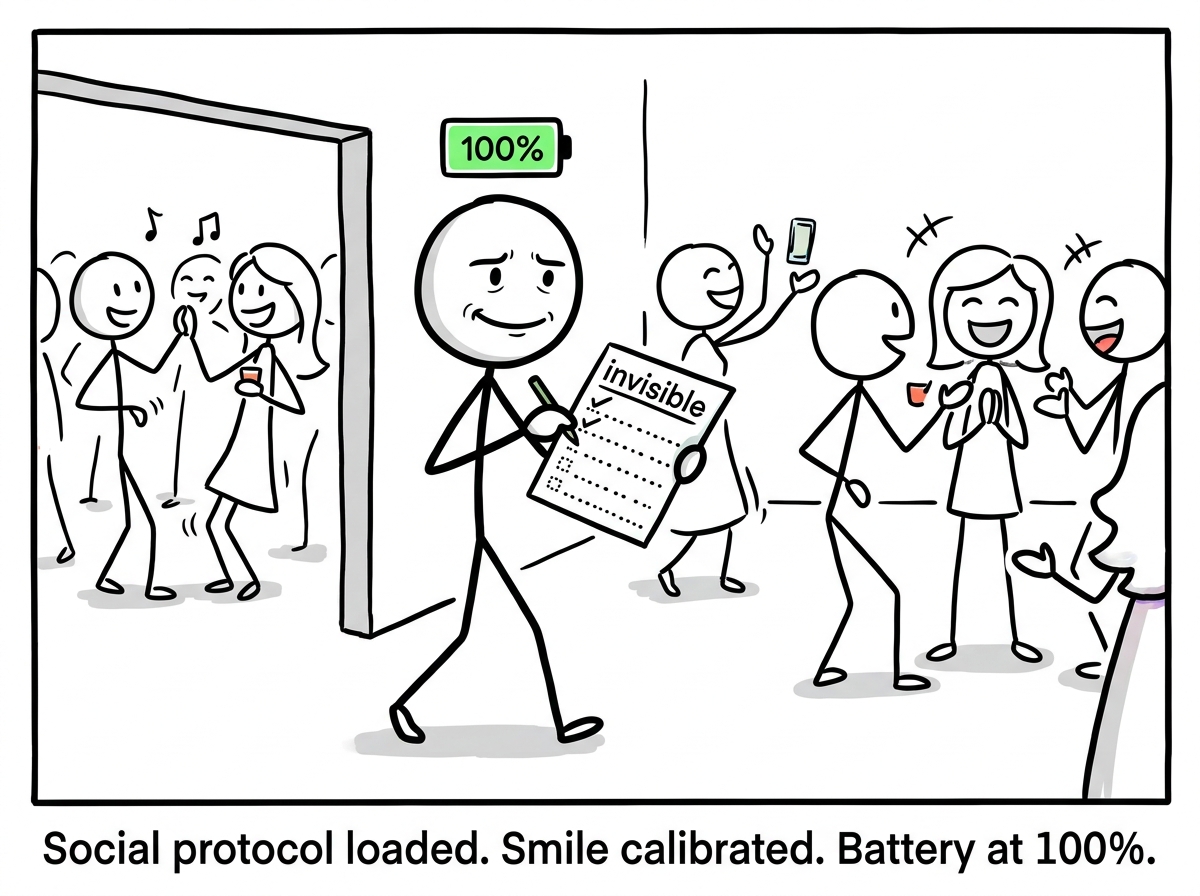
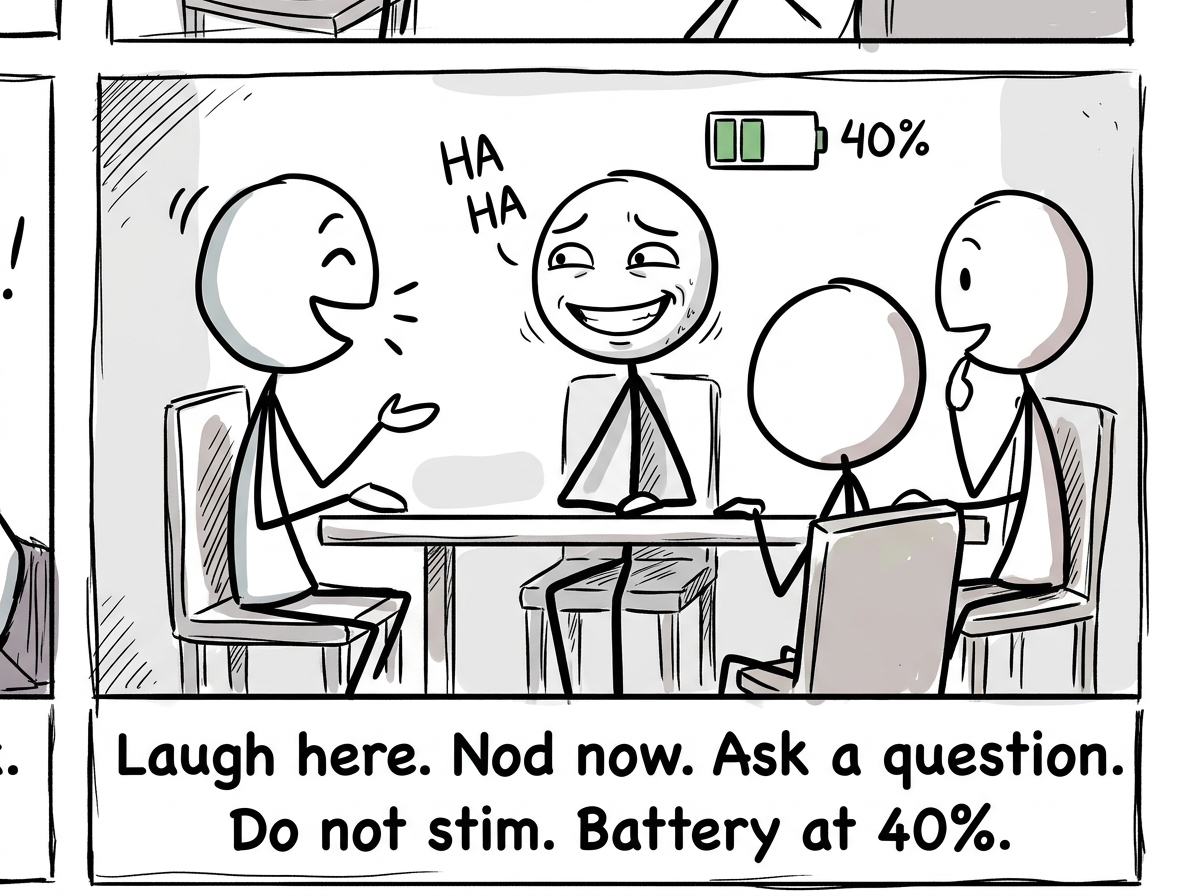
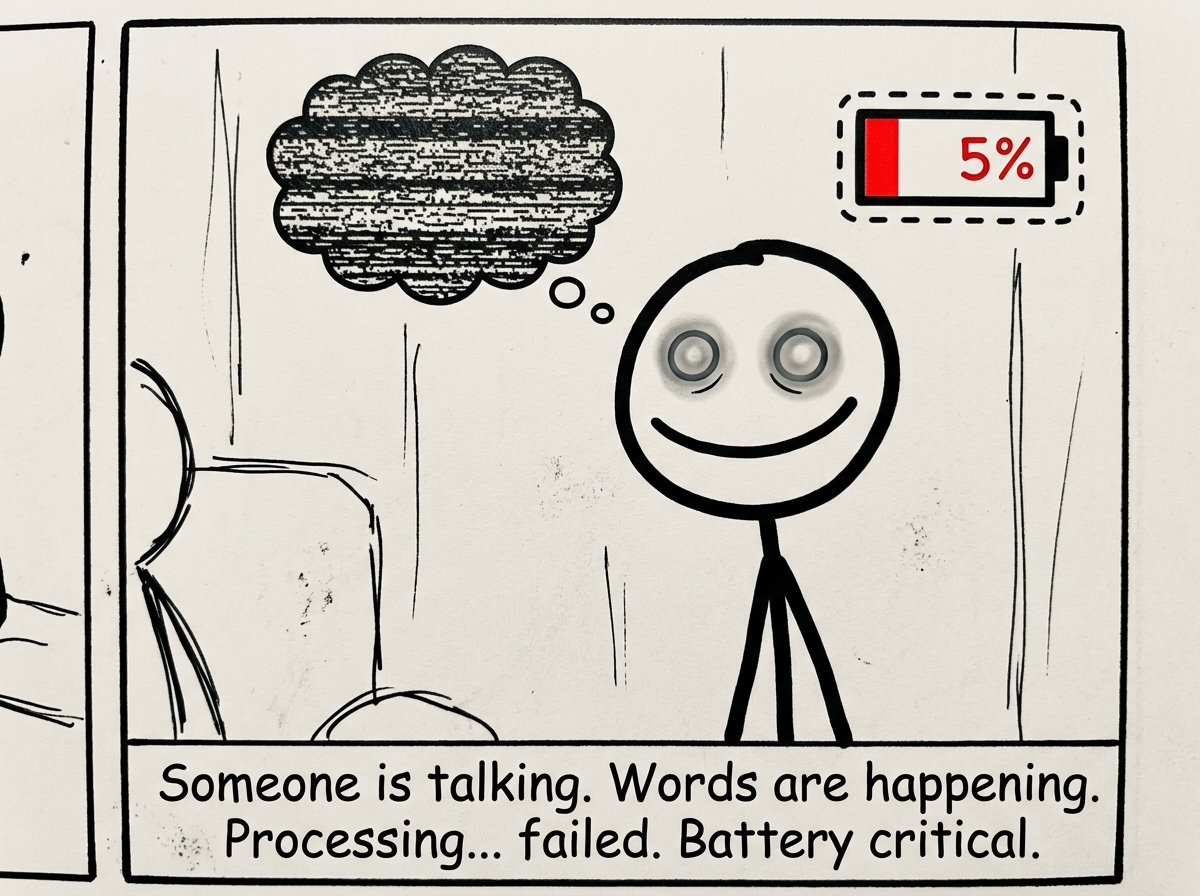
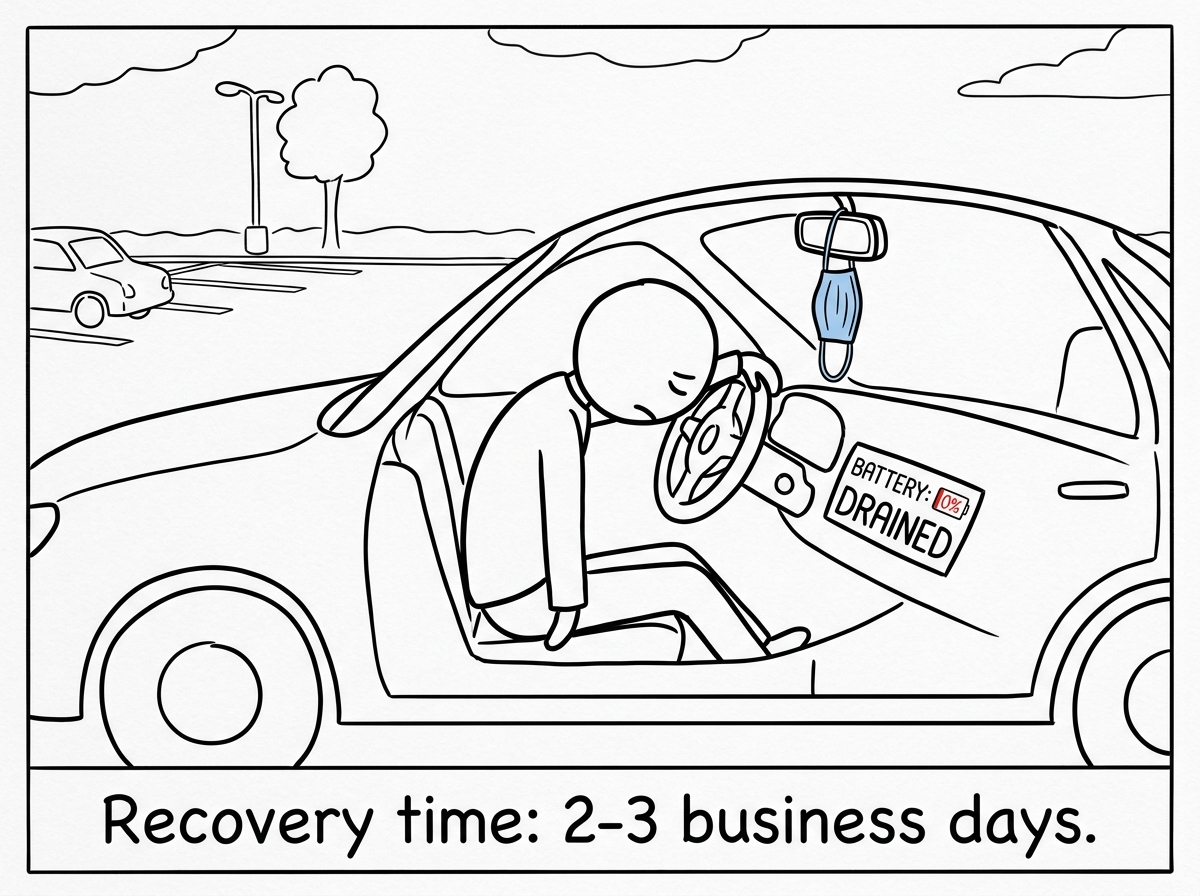
An autistic person performs neurotypical social behaviors at a party until their internal resources are completely depleted, showing the invisible cost of masking.
Explanation
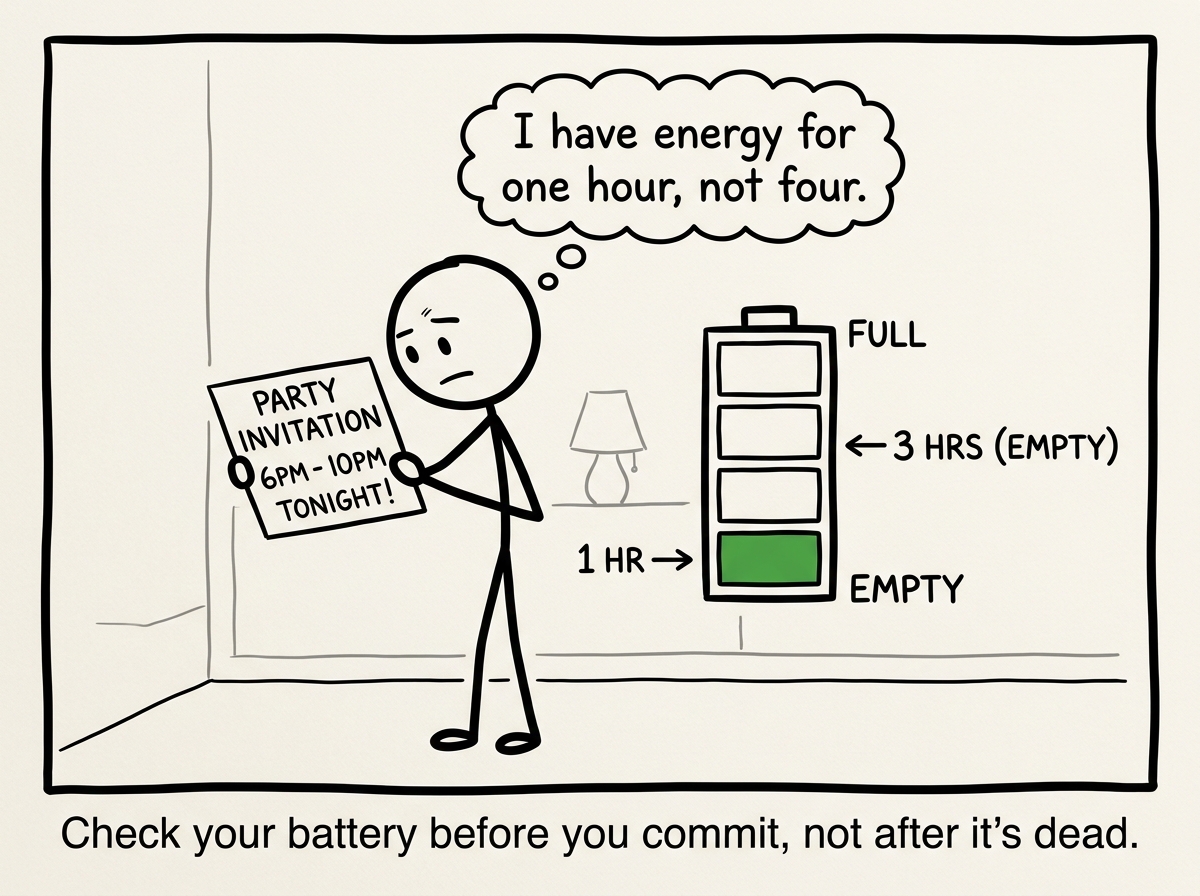
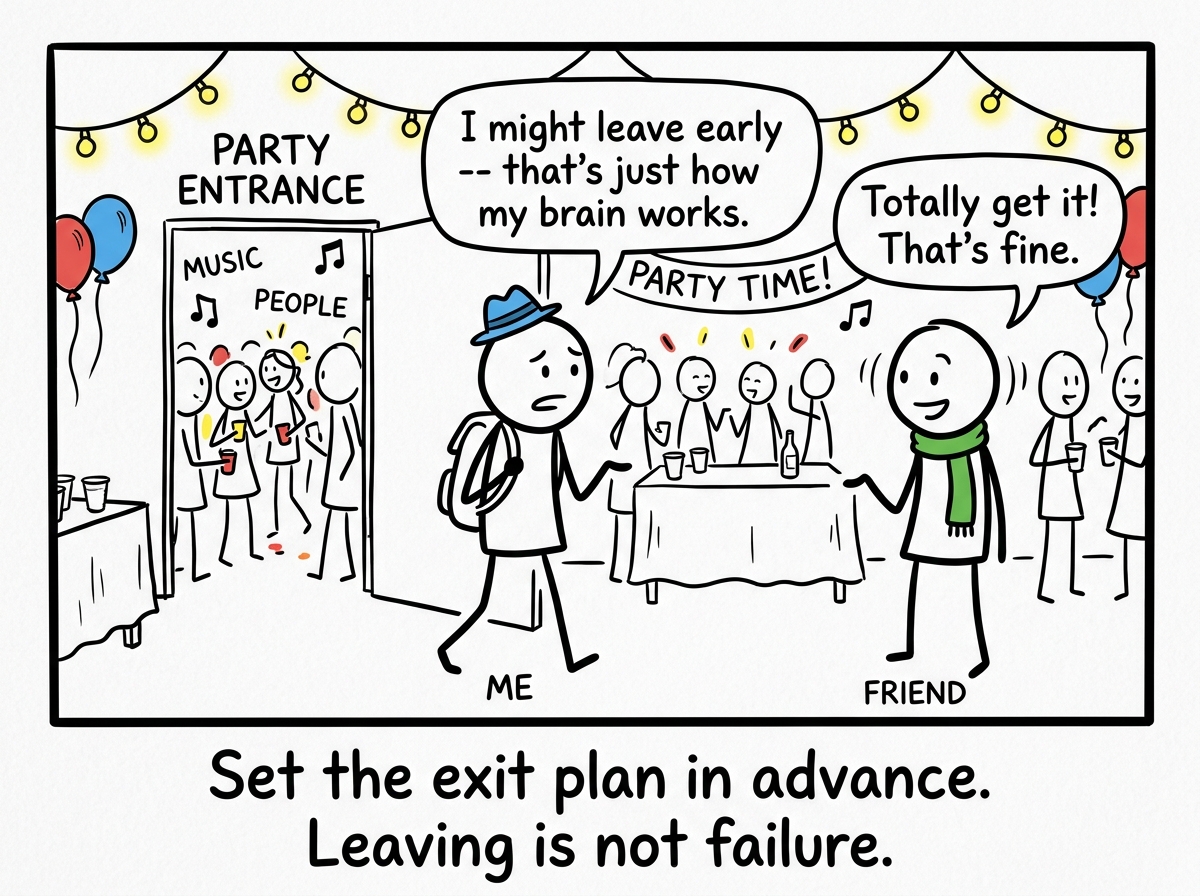
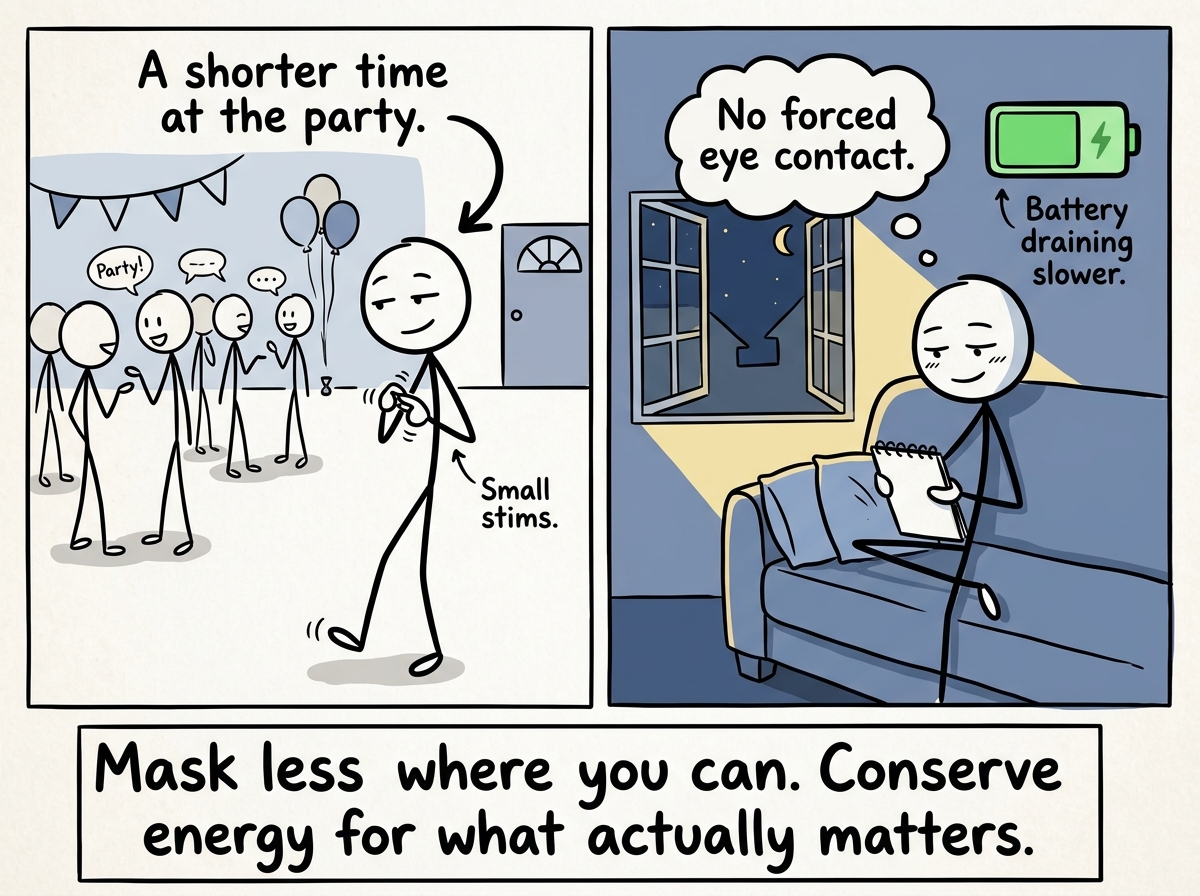
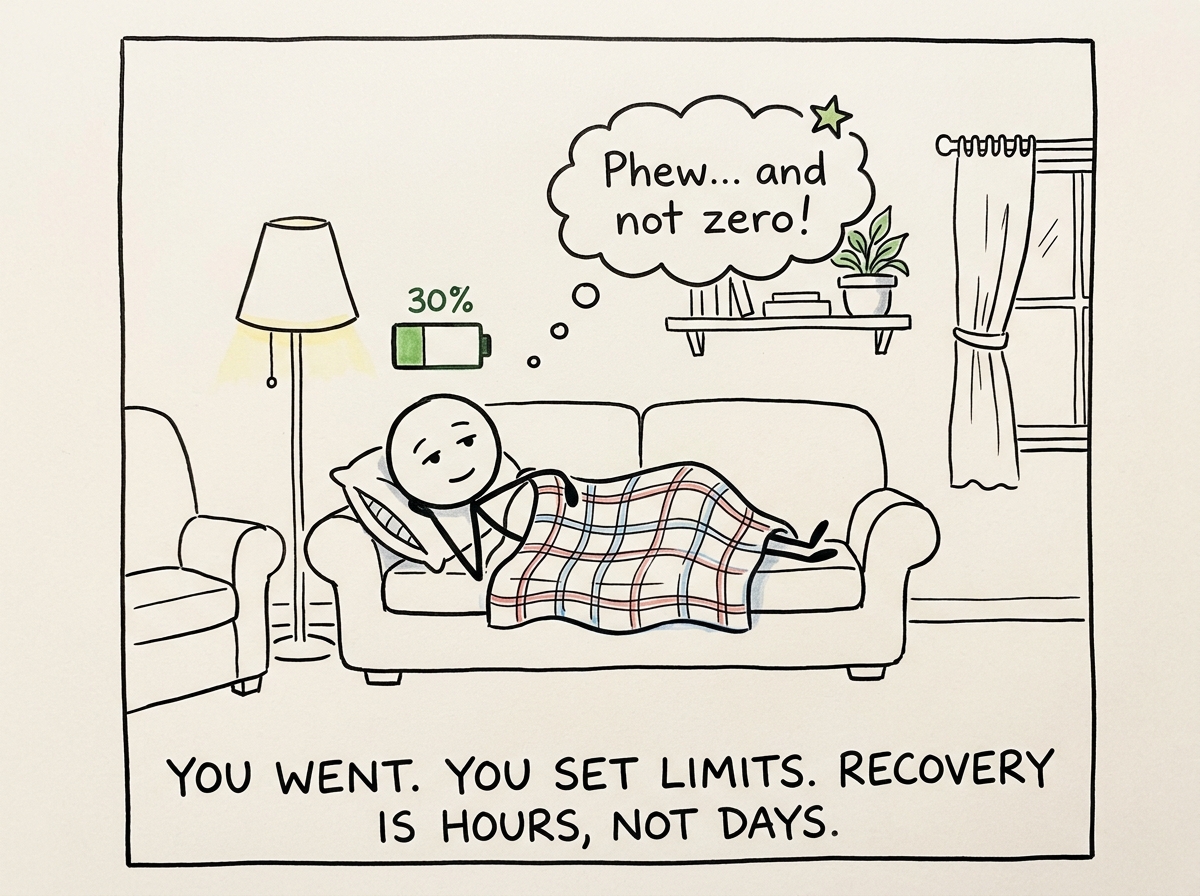
You arrived at the party with your script prepared. Make eye contact -- not too much, not too little. Laugh when others laugh. Ask follow-up questions. Mirror their body language. Nod at the right intervals. Maintain a facial expression that communicates interest even when the fluorescent lights are drilling into your skull and three overlapping conversations are hitting your ears like static. To everyone else, you look like a normal person having a normal time. Inside, you are running a complex social operating system that is burning through your cognitive resources at an unsustainable rate. Autistic masking is a survival strategy, not a social skill. Research by Dr. Laura Hull identified three core components of camouflaging: compensation (learning and rehearsing social strategies), masking (hiding autistic characteristics), and assimilation (trying to fit in with others). Each of these requires enormous cognitive effort because you are manually performing processes that neurotypical brains handle automatically. It is like running software in emulation mode -- you can do it, but it uses ten times the processing power and generates ten times the heat. The social battery metaphor is apt because masking literally depletes executive function resources, leaving you unable to speak, think clearly, or regulate emotions once the mask drops. The aftermath of sustained masking is often invisible to others but devastating to you. You may need hours or days to recover. You may experience autistic burnout -- a prolonged state of exhaustion with loss of skills you previously had. The healthier alternative is not forcing yourself to mask better but finding environments and people where masking is unnecessary, where your authentic communication style is accepted, and where recovery time is built into your social calendar rather than treated as weakness.
Key Takeaway
Masking is not the same as being okay -- it is performing okayness at the expense of everything else.