
Boundaries vs. Walls
The important difference between setting healthy boundaries that allow connection and building emotional walls that shut everyone out.
Explanation
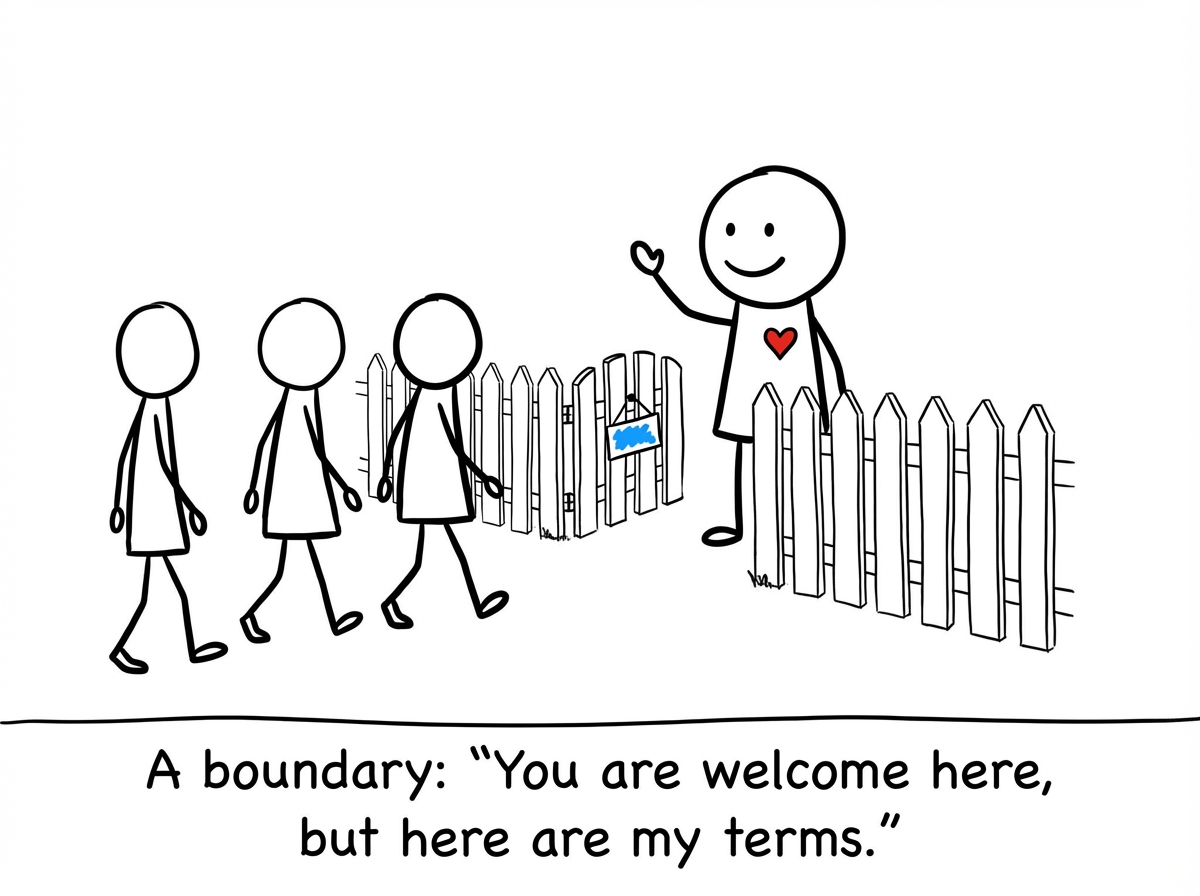
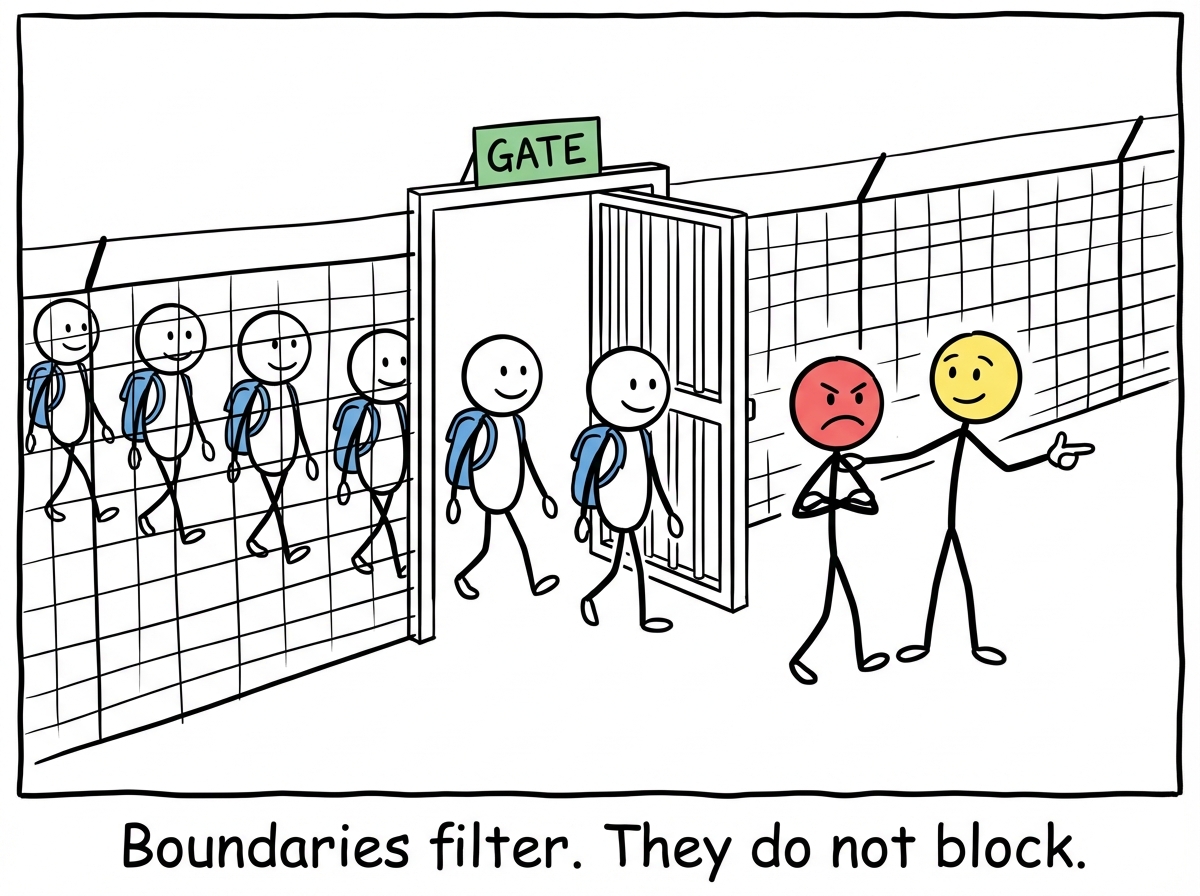
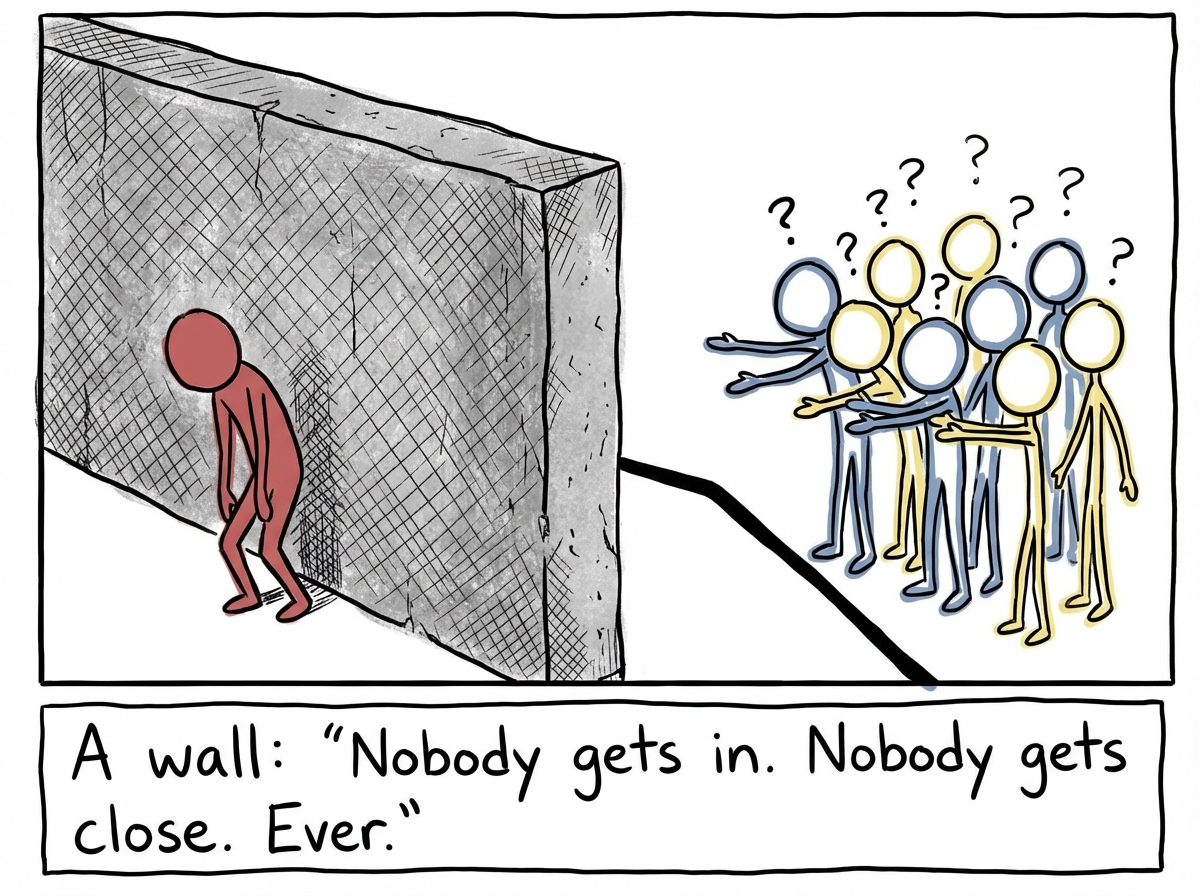
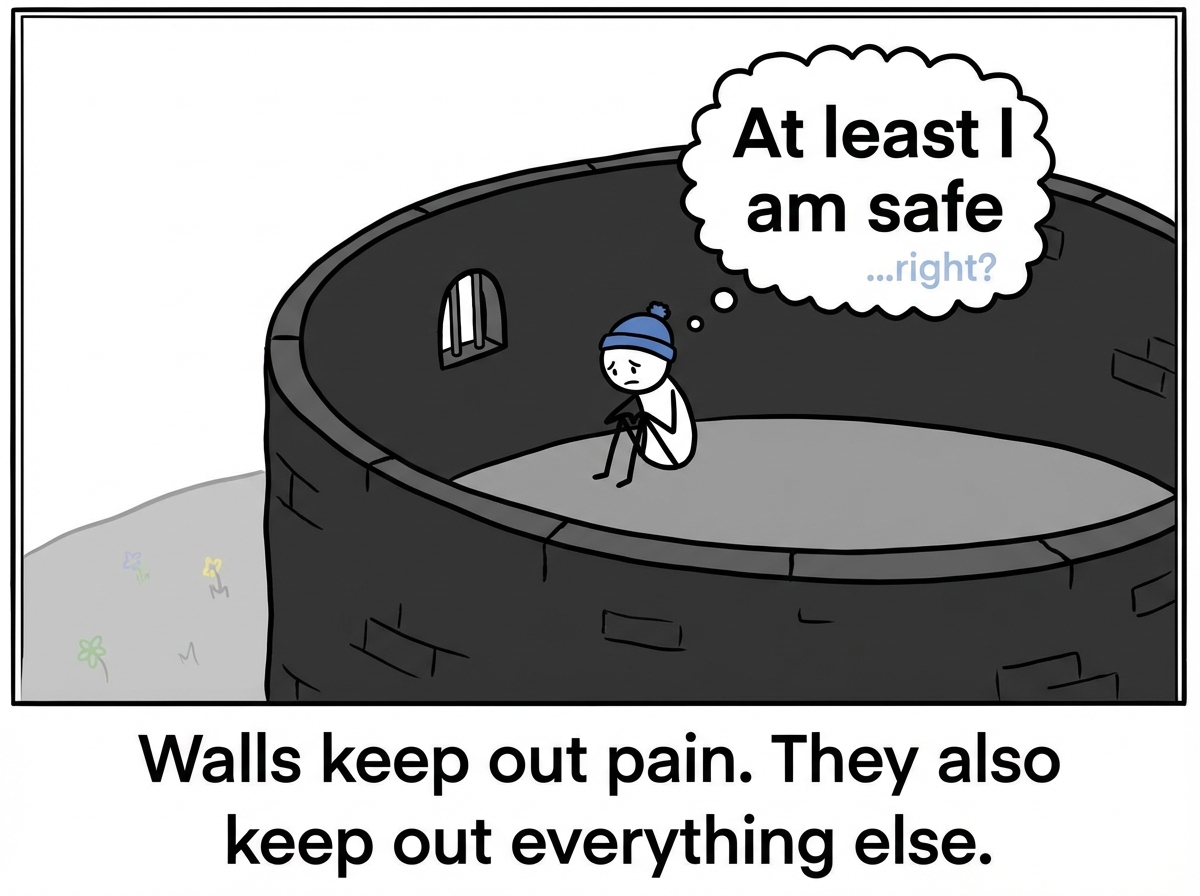
People often confuse boundaries with walls, but they serve opposite purposes. A boundary is a gate -- it lets the right things in and keeps the harmful things out. You get to decide who enters, under what conditions, and when. A wall is a fortress -- nothing gets in, nothing gets out. It protects you completely, but at the cost of connection, intimacy, and growth. Both are responses to pain, but only one allows for healthy relationships. Walls often develop after being hurt. If you trusted someone and they betrayed you, your brain might decide the safest option is to never let anyone that close again. You become emotionally self-sufficient to a fault. You pride yourself on not needing anyone. You mistake emotional isolation for strength. And while walls absolutely prevent you from being hurt, they also prevent you from being loved, known, or supported. You trade vulnerability for safety, but the safety feels a lot like loneliness. Boundaries, on the other hand, require ongoing discernment. They ask you to stay open while being selective. They require you to communicate your limits rather than silently enforcing them through withdrawal. The key difference is this: boundaries come from self-respect, walls come from self-protection. A boundary says 'I value myself enough to communicate what I need.' A wall says 'I have been hurt enough that I will not let anyone close enough to hurt me again.' Moving from walls to boundaries is one of the bravest things you can do.
Key Takeaway
Boundaries let the right people in. Walls keep everyone out. Know which one you are building.
A stick figure behind a massive wall, noticing that they feel safe but profoundly lonely, with a thought bubble: 'I built this to protect me. It is also trapping me'
The figure carefully removing one brick from the wall and replacing it with a gate, looking nervous but deliberate
The figure standing at the gate, letting one trusted person through while keeping the gate ready to close if needed
The figure behind a fence with a gate, connected to people on the other side, looking lighter and more alive than behind the wall