
Catastrophizing: When They Don't Reply in 5 Minutes
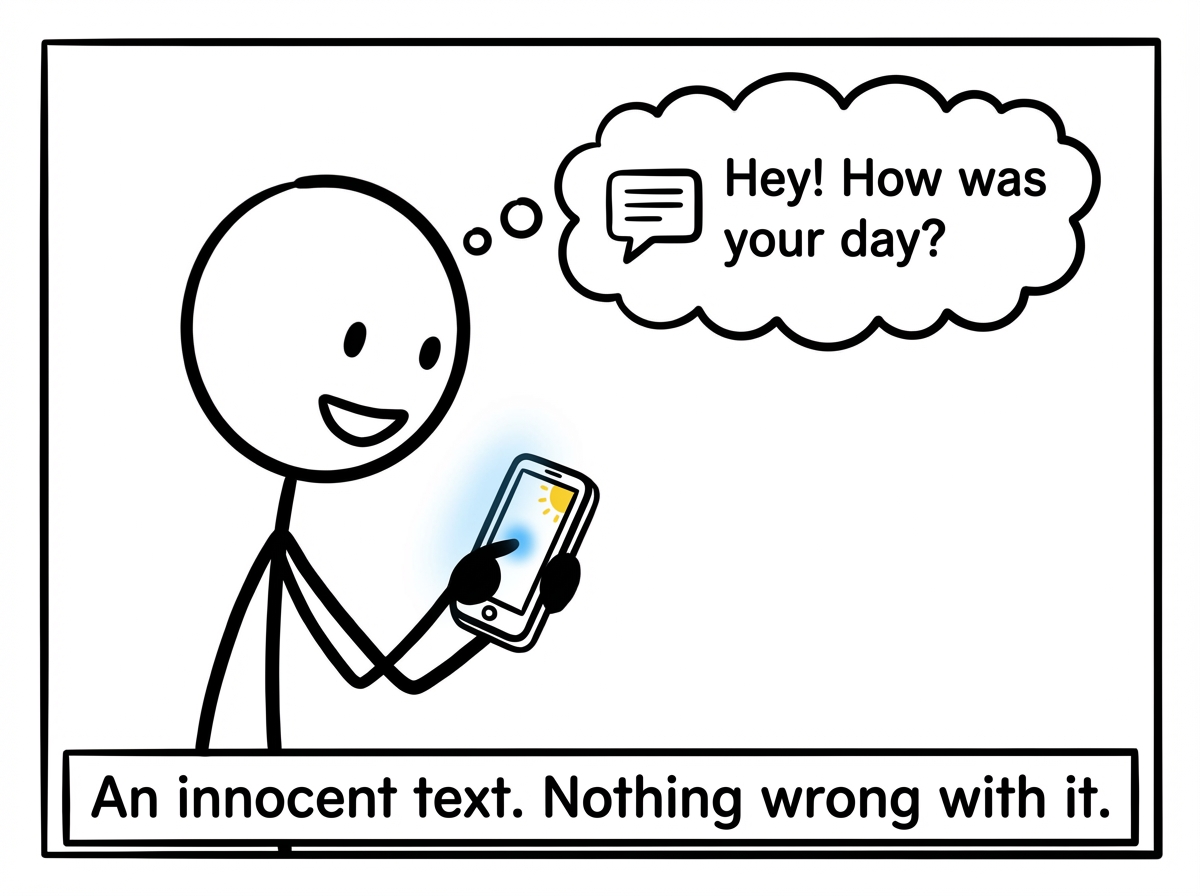
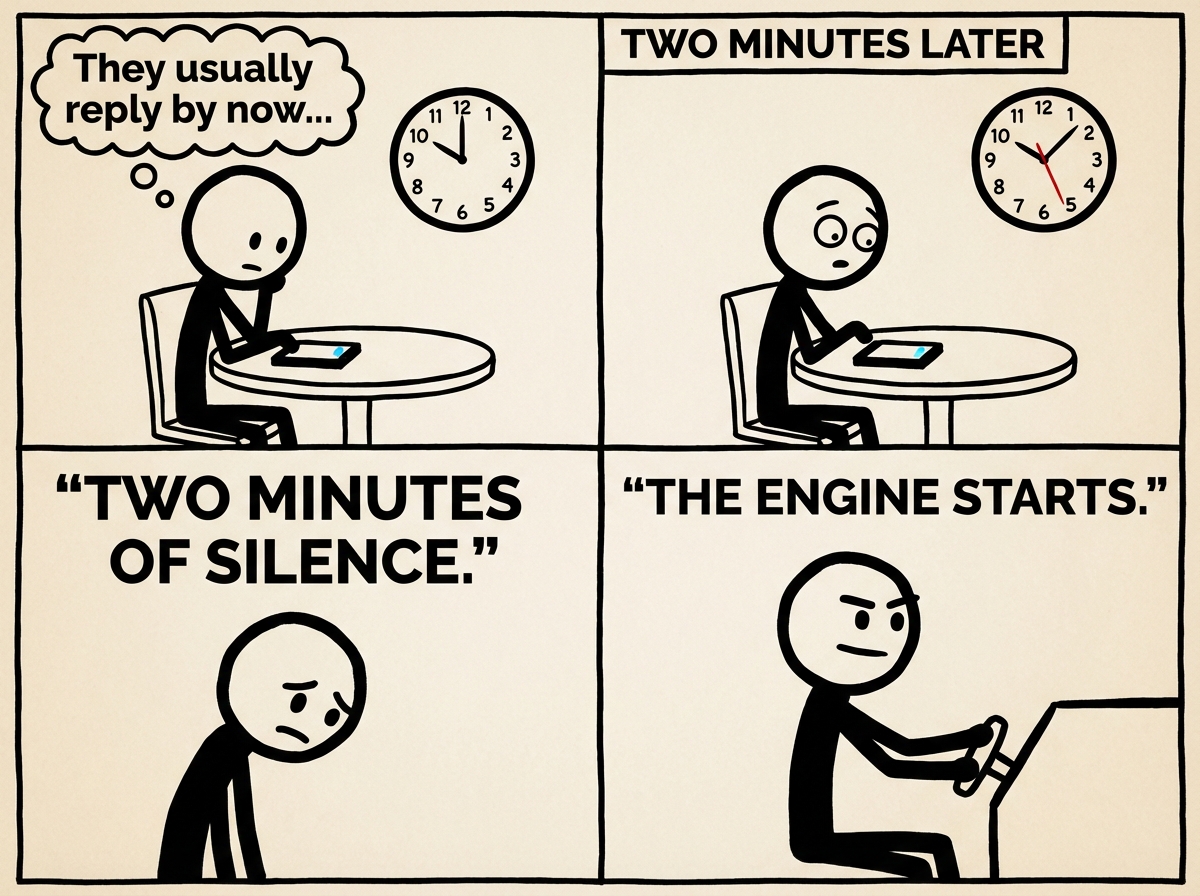
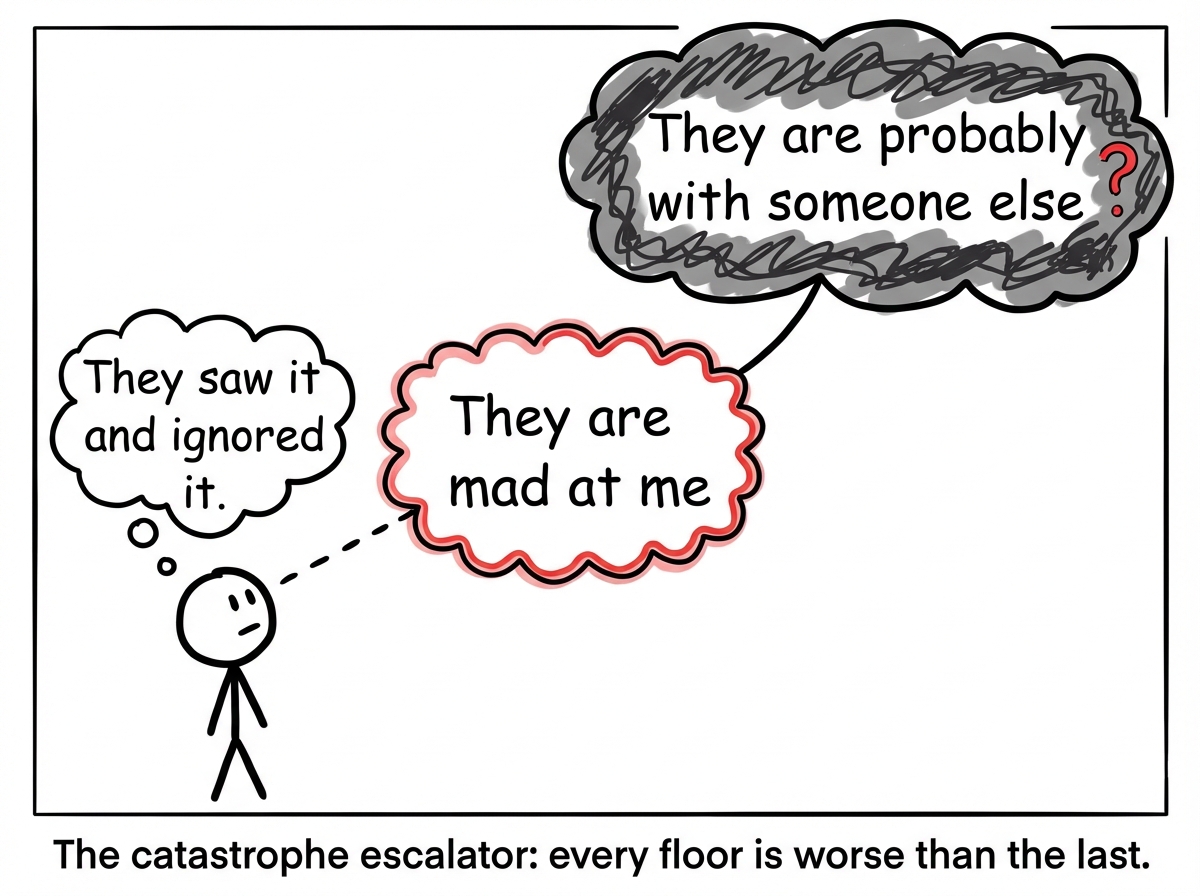
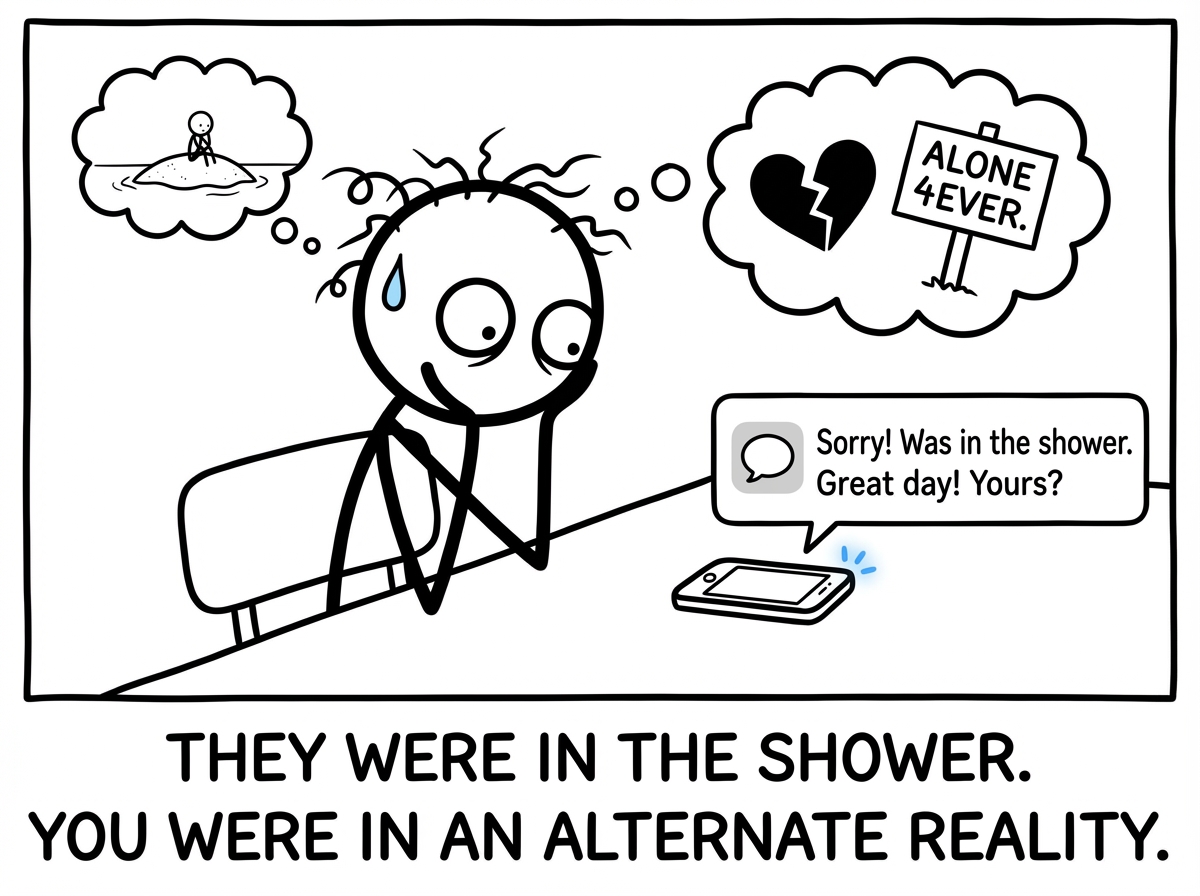
A person's brain leaps from a delayed text reply to the absolute worst-case scenario in record time, demonstrating the cognitive distortion of catastrophizing.
Explanation
Catastrophizing is the cognitive distortion where your brain takes a small piece of ambiguous information and fast-forwards to the most devastating possible outcome. A delayed text reply becomes 'they are breaking up with me.' A minor mistake at work becomes 'I am going to be fired.' A headache becomes 'this is definitely a brain tumor.' Your mind skips every reasonable explanation and lands on the disaster scenario as though it were confirmed fact. What makes catastrophizing so convincing is that it feels like preparation rather than distortion. Your brain tells you that imagining the worst is a form of protection -- if you expect the worst, you will not be blindsided. But research consistently shows the opposite: catastrophizing does not prepare you for bad outcomes, it just forces you to experience the emotional pain of a bad outcome that usually never happens. You suffer twice -- once in your imagination and potentially once in reality -- but the imagined version is almost always worse than what actually occurs. The cognitive behavioral therapy technique for managing catastrophizing is called 'decatastrophizing.' It involves asking yourself three questions: What is the worst that could happen? What is the best that could happen? What is most likely to happen? Nine times out of ten, the most likely outcome is mundane and unremarkable. They were in the shower. They were driving. Their phone was on silent. Training your brain to consider the most likely explanation, rather than the most dramatic one, is a skill that gets easier with practice.
Key Takeaway
Your brain's worst-case scenario is almost never the most likely scenario -- it is just the loudest one.
A stick figure staring at an unanswered text and feeling the catastrophe spiral start, then catching themselves with a thought: 'My brain is doing the thing'
The stick figure asking 'What is the worst, best, and most likely explanation?' and realizing the most likely is completely mundane
The stick figure putting the phone down and doing something else instead of monitoring the screen for a reply
The phone buzzing with a cheerful reply while the stick figure looks sheepish, realizing the catastrophe was entirely self-generated