The Headache That Became a Brain Tumor
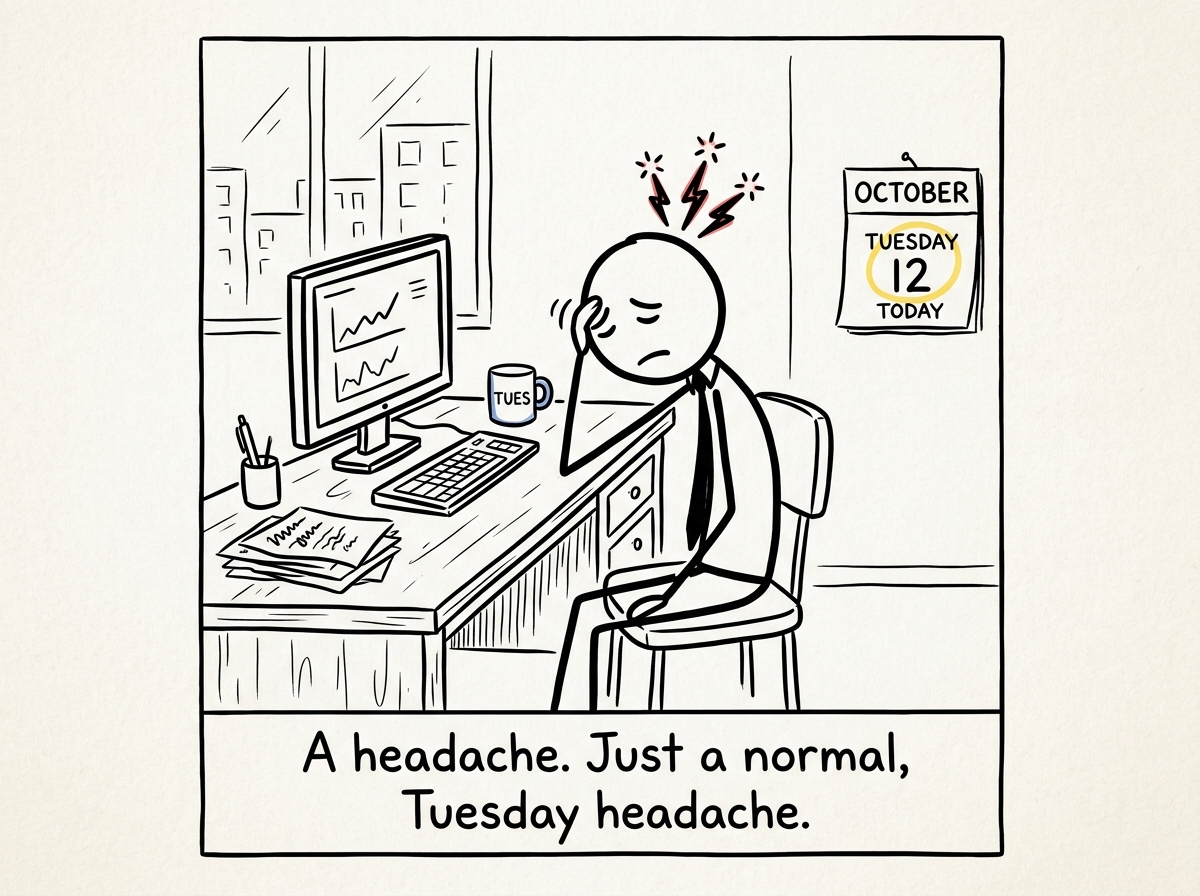
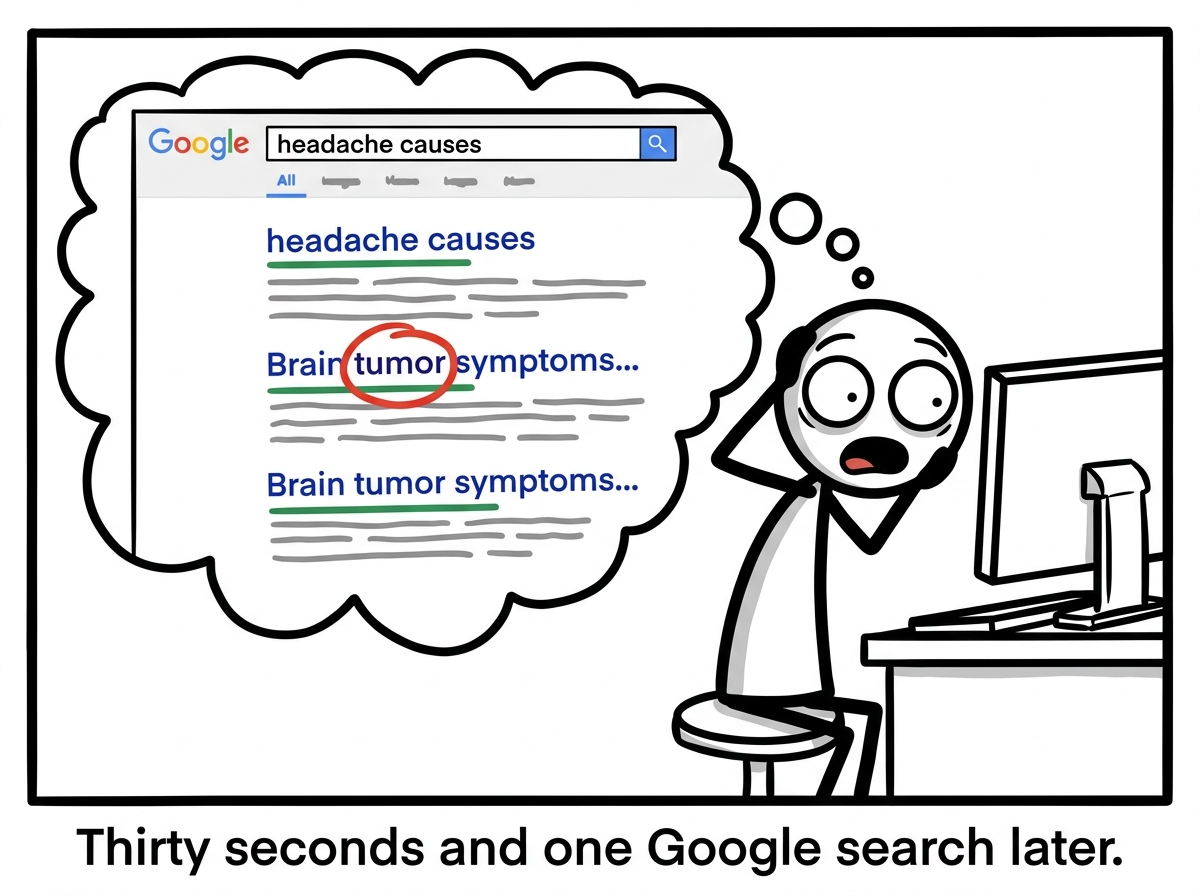
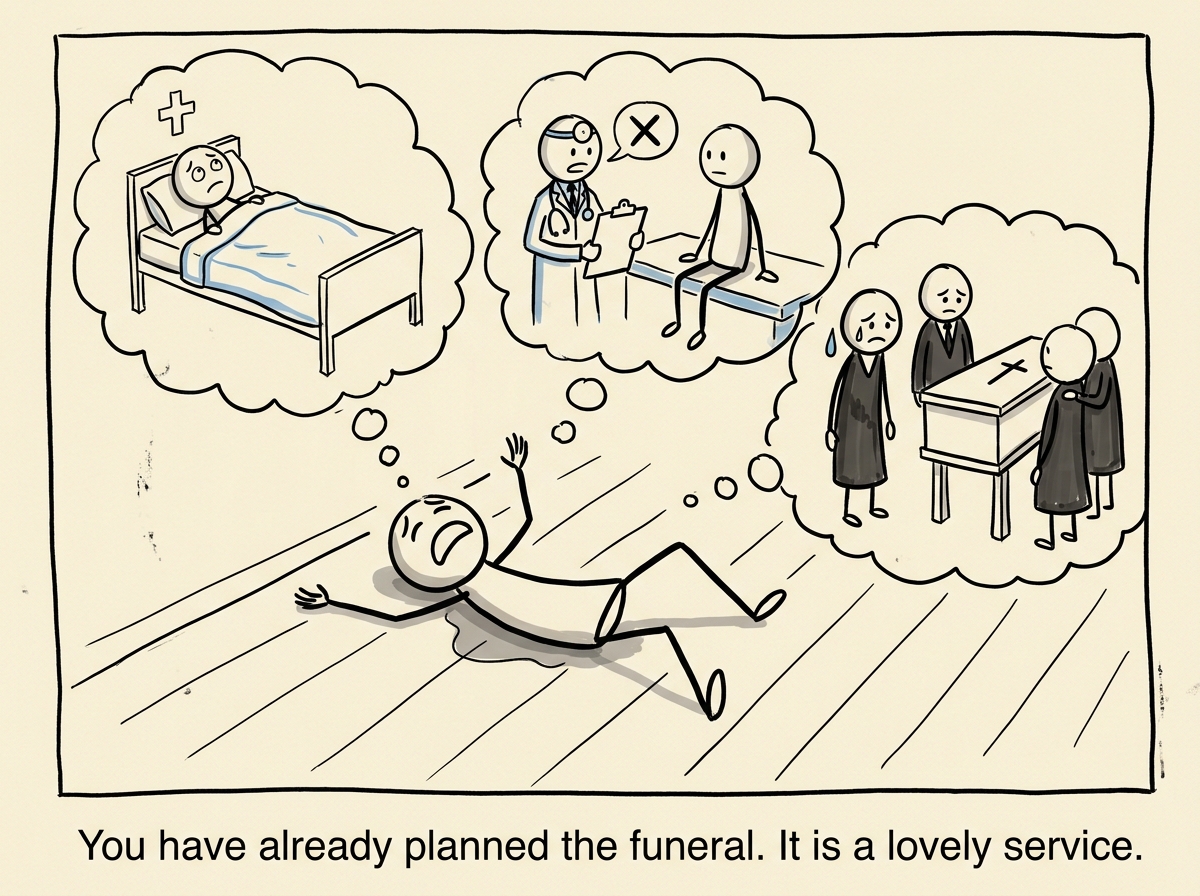
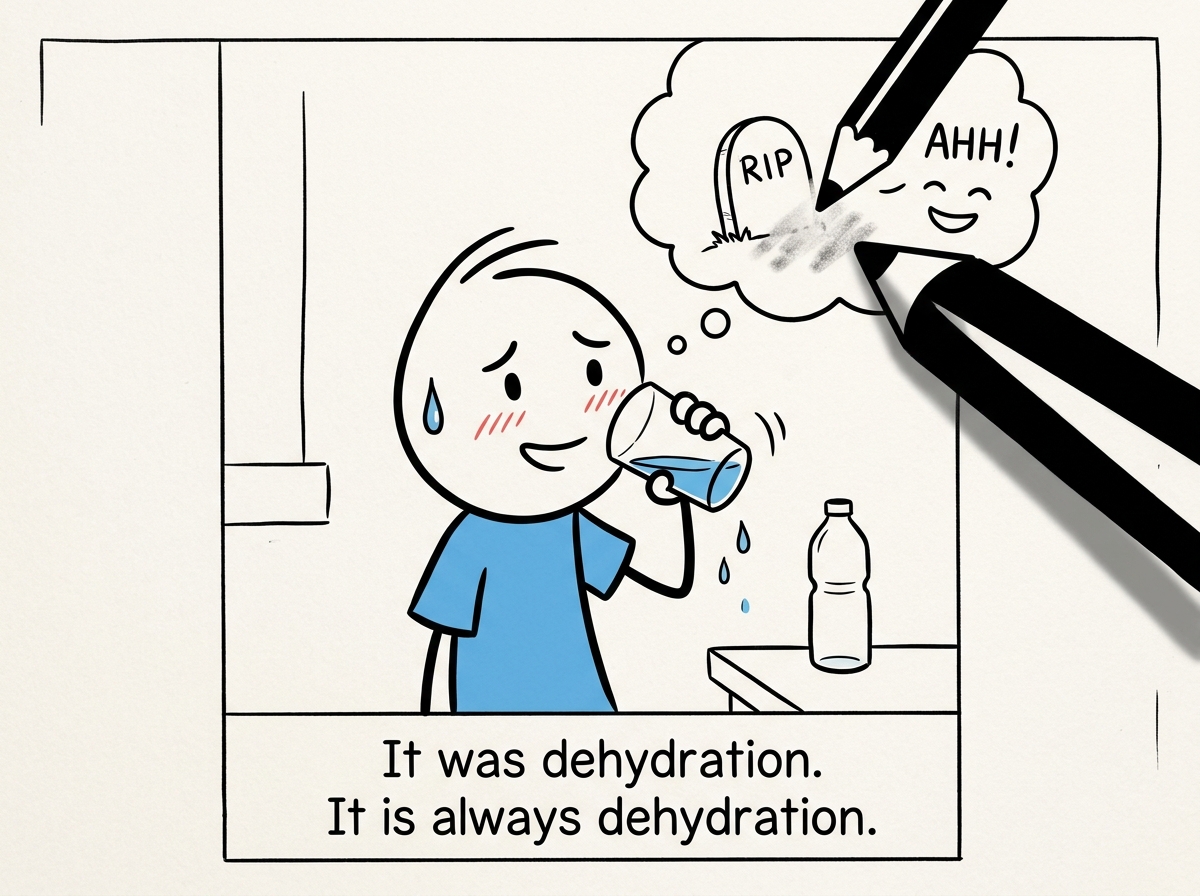
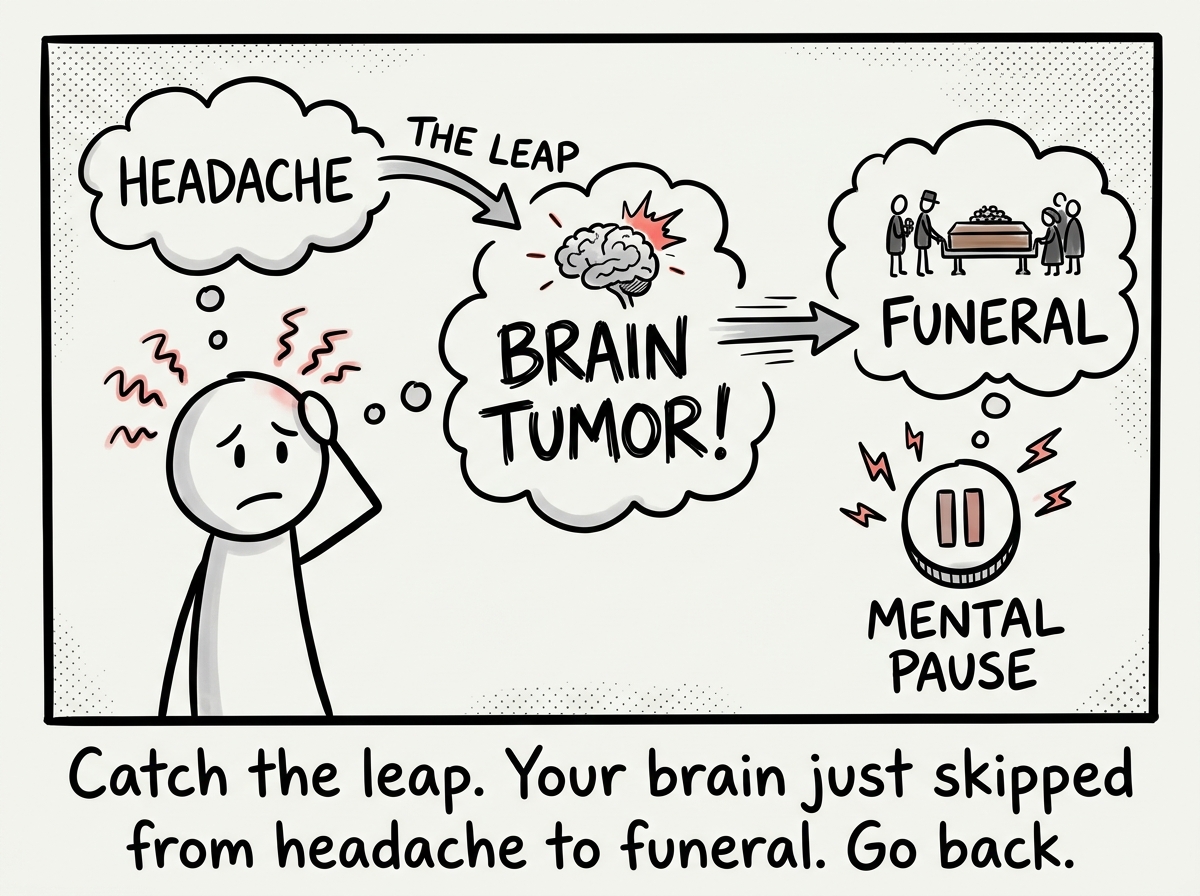
A person gets a mild headache and their brain escalates it into a terminal diagnosis within sixty seconds.
Explanation
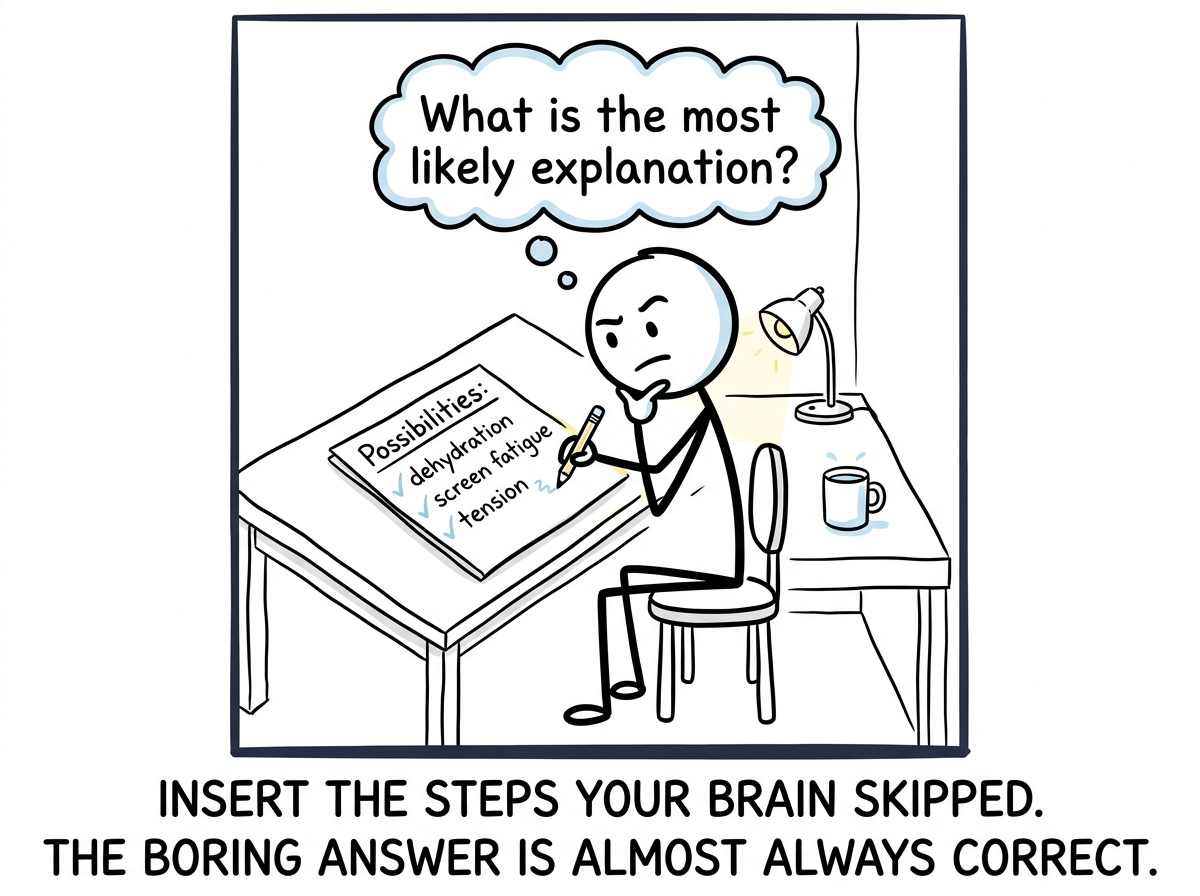
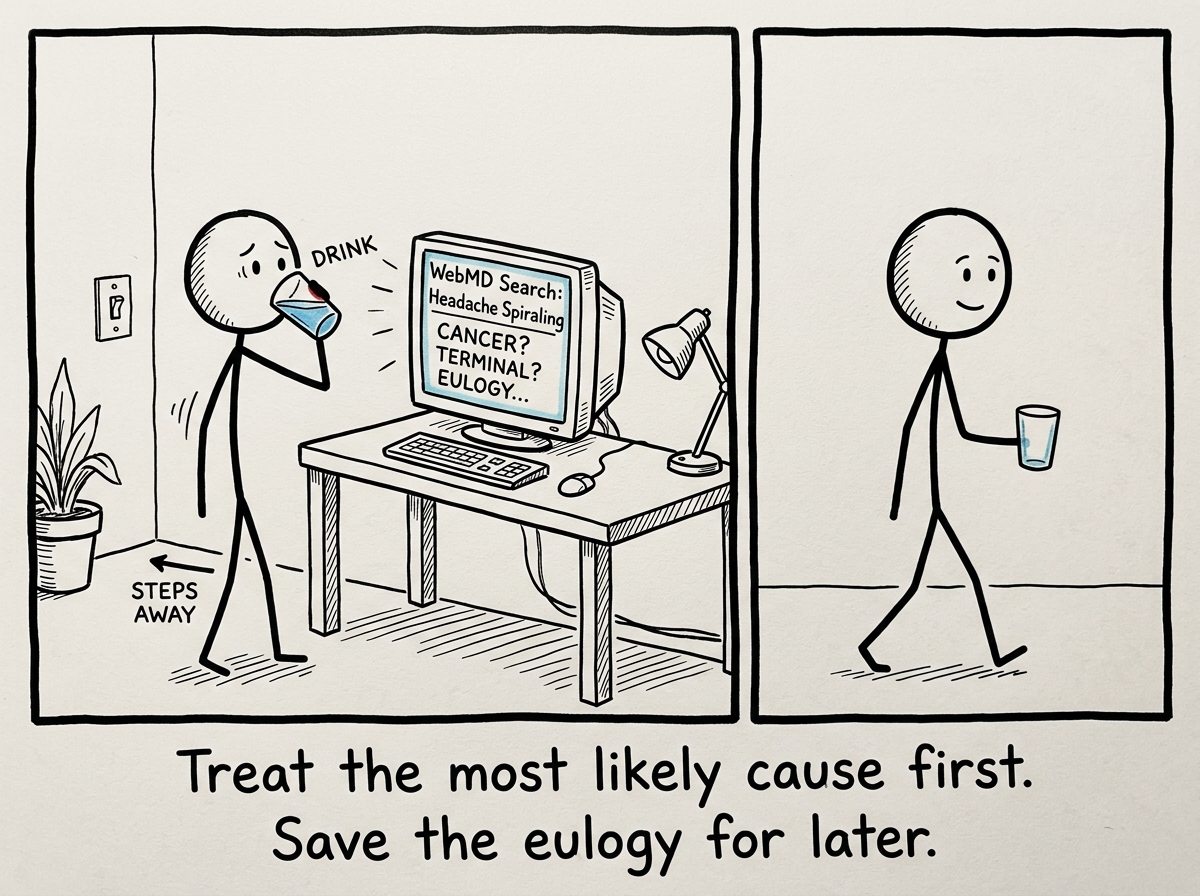
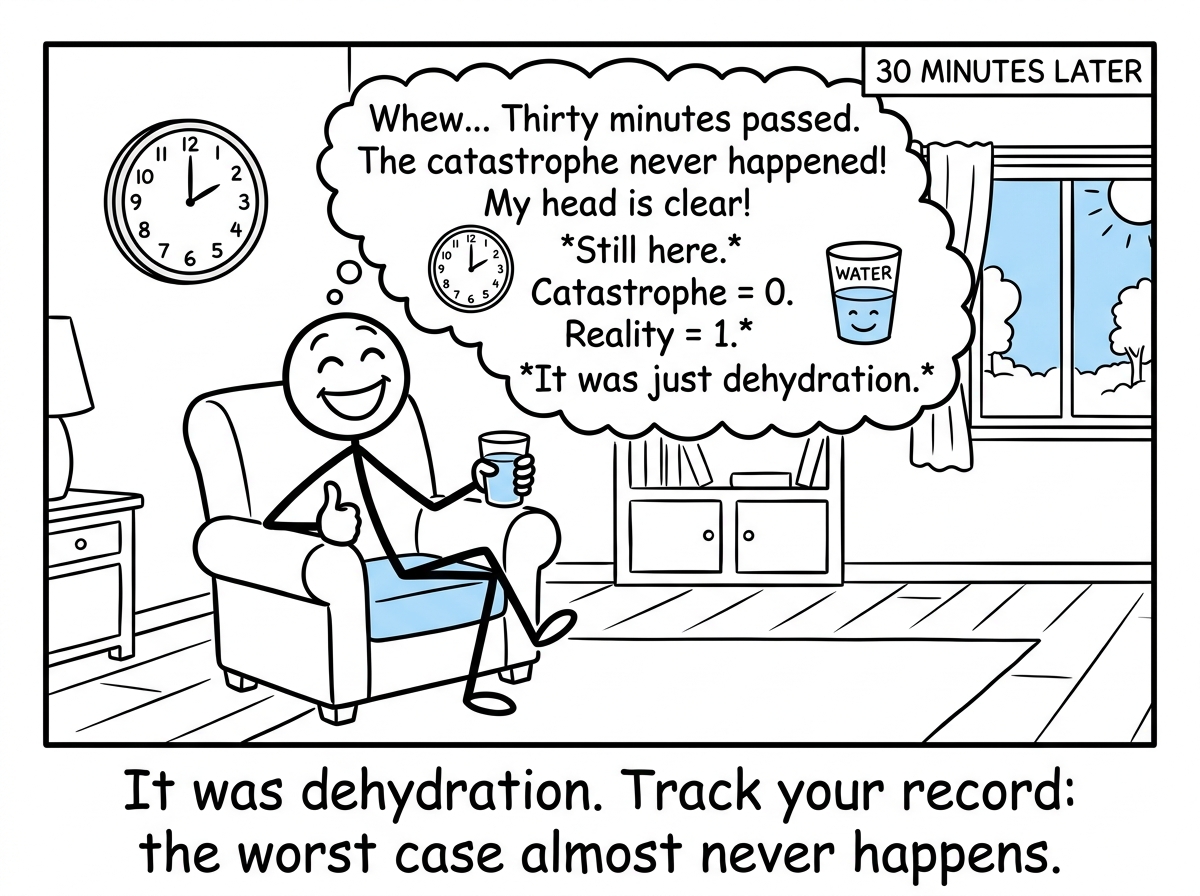
You are sitting at your desk on a normal Tuesday afternoon when you notice a dull ache behind your left eye. Most people would drink some water, maybe take an ibuprofen, and move on. But your brain is not most people. Within sixty seconds, you have gone from 'I have a headache' to 'this is probably a brain tumor' to mentally composing your own eulogy. You are not being dramatic. Your brain genuinely believes it is being helpful by preparing you for the worst. This is catastrophizing in its purest form -- the cognitive distortion where your mind treats the worst possible outcome as the most likely outcome and then responds to it as though it is already confirmed. Aaron Beck identified this pattern as a hallmark of anxiety: your brain confuses possibility with probability. Yes, a headache could theoretically be something serious. But the probability that your Tuesday headache is a brain tumor is astronomically low. Your brain skips the probability check entirely and goes straight to the emotional response, which is why you feel genuine terror about something that is almost certainly dehydration or screen fatigue. The antidote is not to dismiss the fear but to slow down the leap. When you catch yourself catastrophizing, try inserting the steps your brain skipped. What is the most likely explanation? Have you had headaches before that turned out to be nothing? What would you tell a friend who described this exact situation? Usually, the most boring explanation is the correct one. Your brain just does not find 'drink some water' as compelling as 'prepare for the worst.'
Key Takeaway
Your brain skips from minor symptom to worst-case diagnosis because it confuses possibility with probability -- the boring explanation is almost always the right one.