The Boss Wants to Talk
A person receives a vague message from their boss saying 'can we chat?' and immediately spirals into assuming they are being fired.

When your brain skips straight to the worst possible outcome and treats it as inevitable.
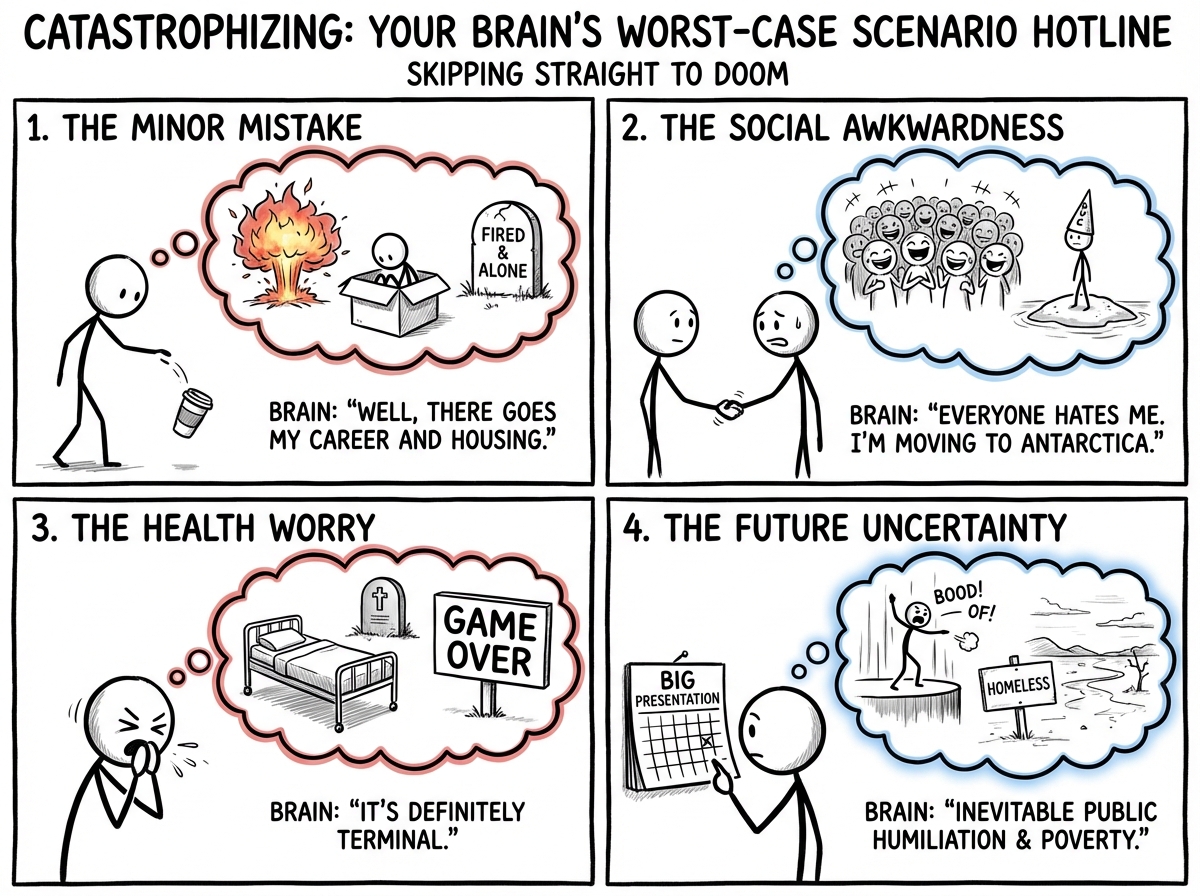
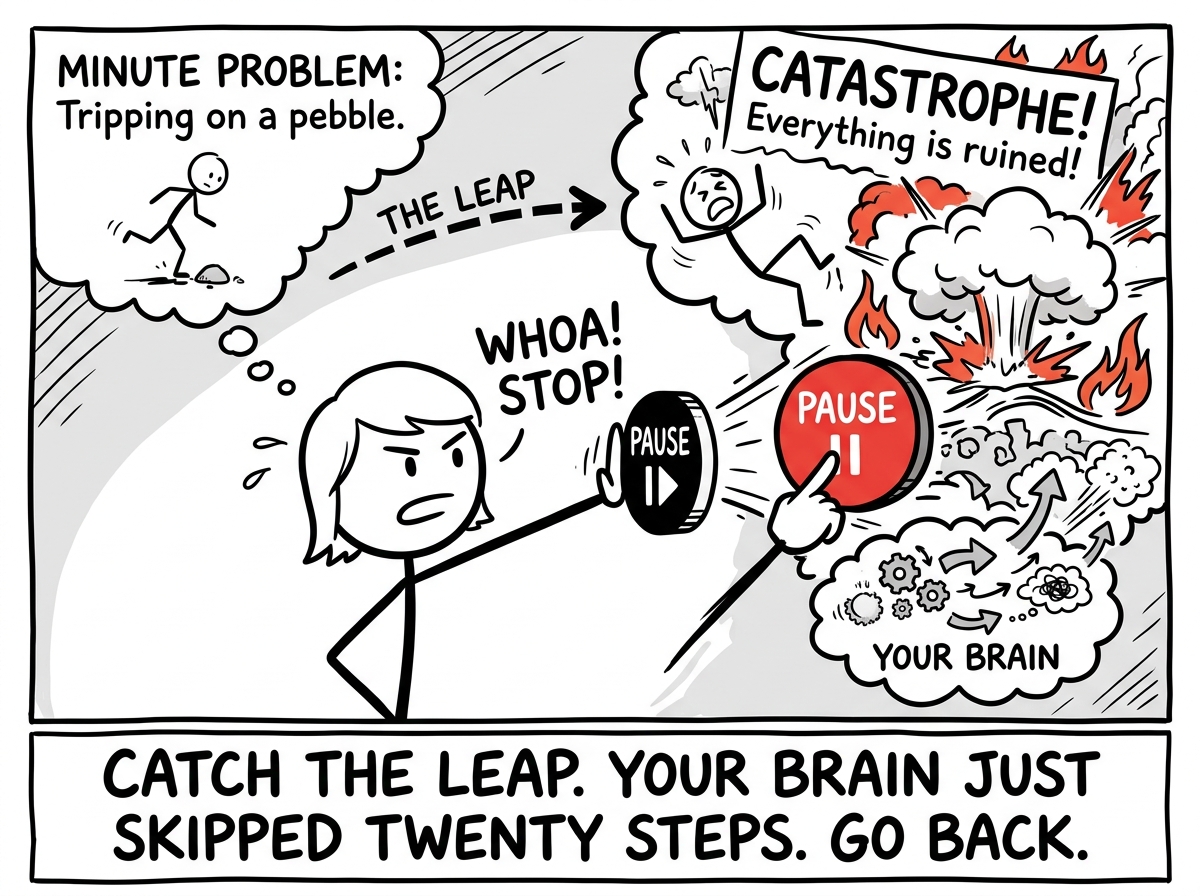
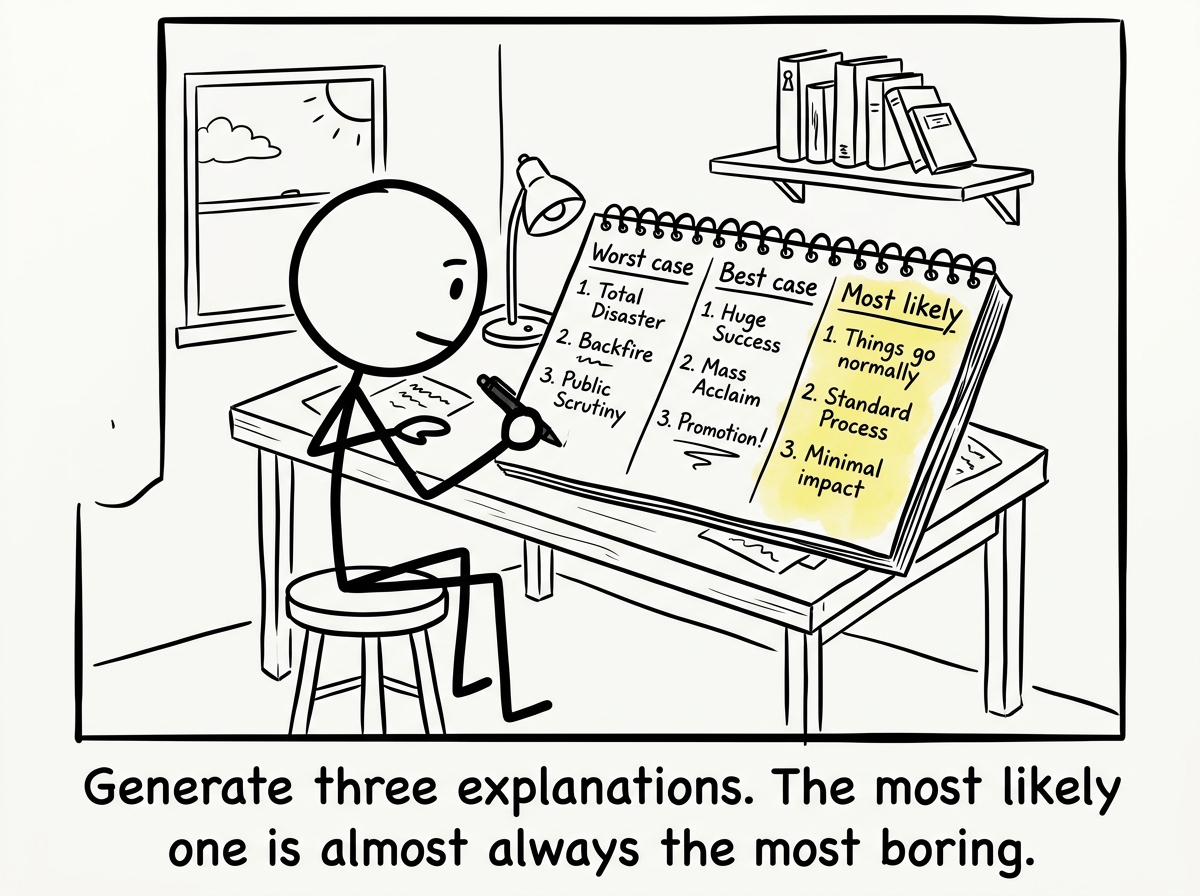
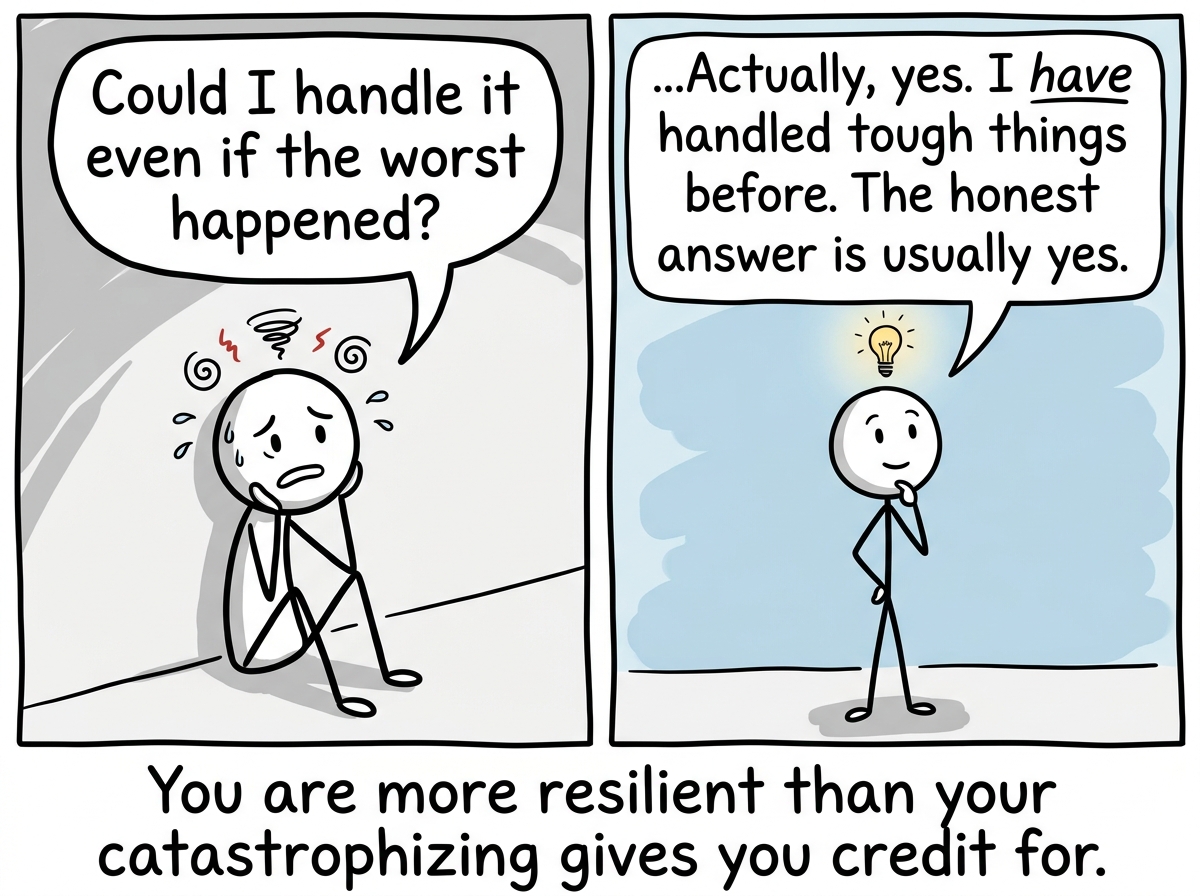
Catastrophizing is a cognitive distortion where your mind leaps from a minor problem to the absolute worst-case scenario in seconds flat -- and then treats that scenario as though it is already happening. A headache becomes a brain tumor. A typo in an email becomes getting fired. Your partner being quiet at dinner becomes the end of the relationship. First described by Albert Ellis and later refined by Aaron Beck as part of cognitive behavioral therapy, catastrophizing involves two key errors: probability overestimation (assuming the worst is likely) and awfulizing (assuming you could not handle it even if it did happen). Research shows that chronic catastrophizers experience higher levels of anxiety, depression, and even physical pain -- because your nervous system does not distinguish between a real threat and an imagined one. Your body responds to the catastrophe in your head as though it is actually unfolding. The good news is that catastrophizing is a habit, not a personality trait. Once you learn to spot the pattern -- the sudden leap from 'something is wrong' to 'everything is ruined' -- you can start questioning the jump. Not dismissing your fear, but asking: what is the most likely outcome? And could I handle it if it did happen? The answer to both is usually more reassuring than your brain wants to admit.
When your brain leaps to the worst case, slow down and ask: what is the most likely outcome, and could I handle it if it did happen?
A person receives a vague message from their boss saying 'can we chat?' and immediately spirals into assuming they are being fired.
A person gets a mild headache and their brain escalates it into a terminal diagnosis within sixty seconds.