
The Codependent Rescue Mission
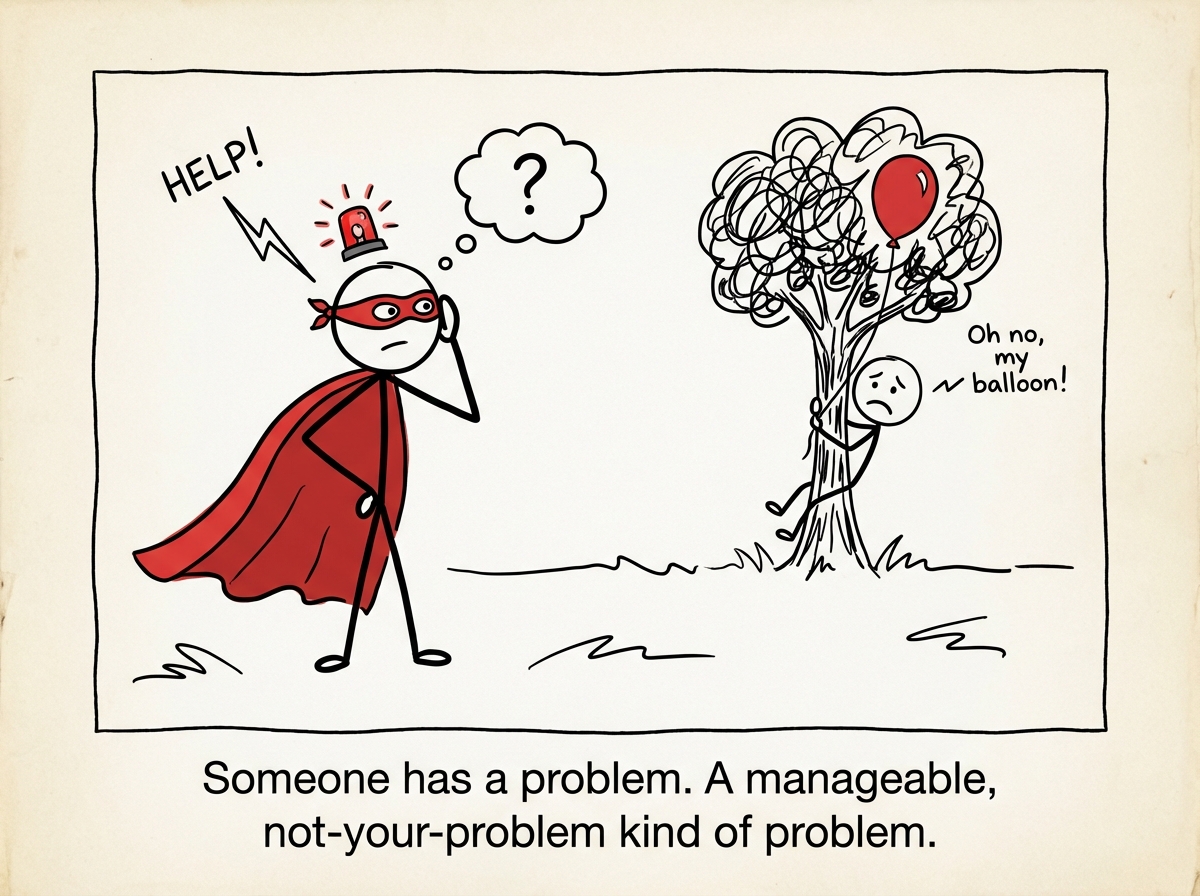
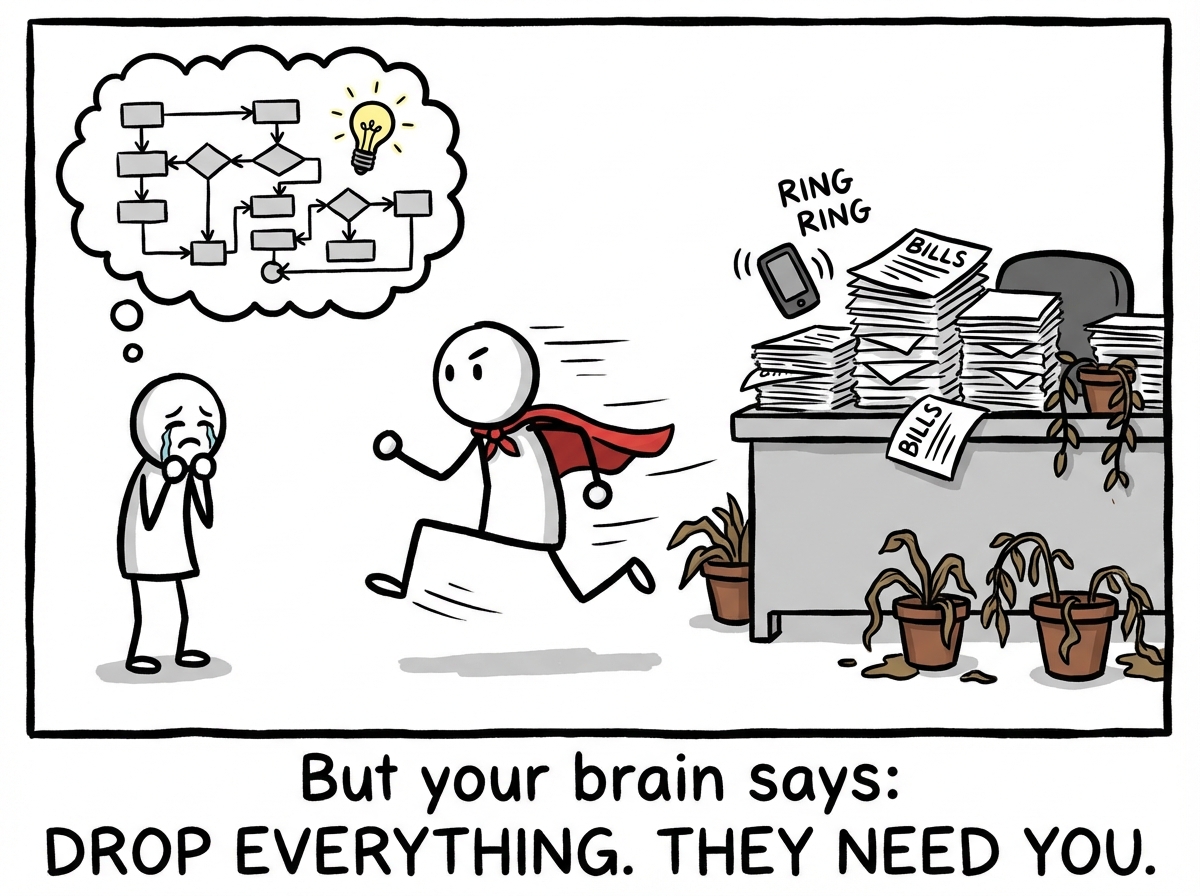
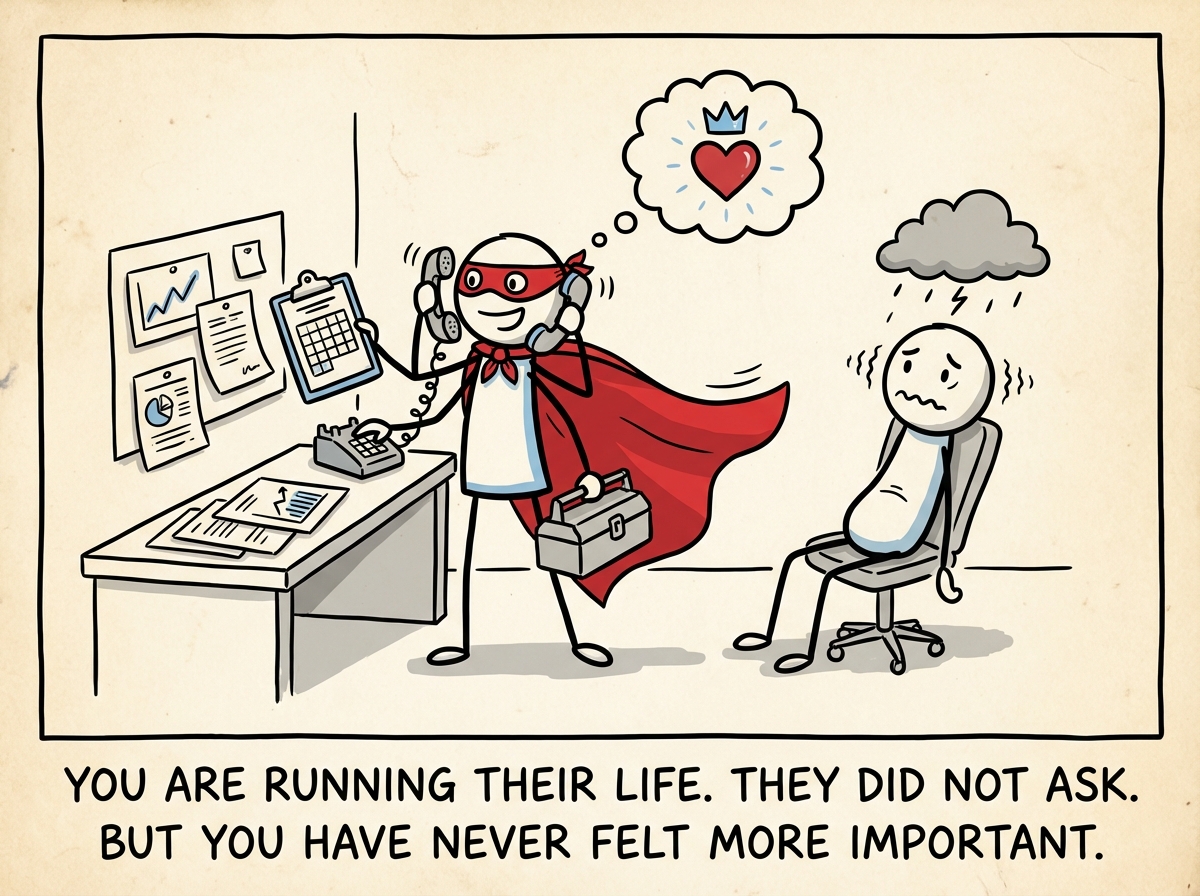
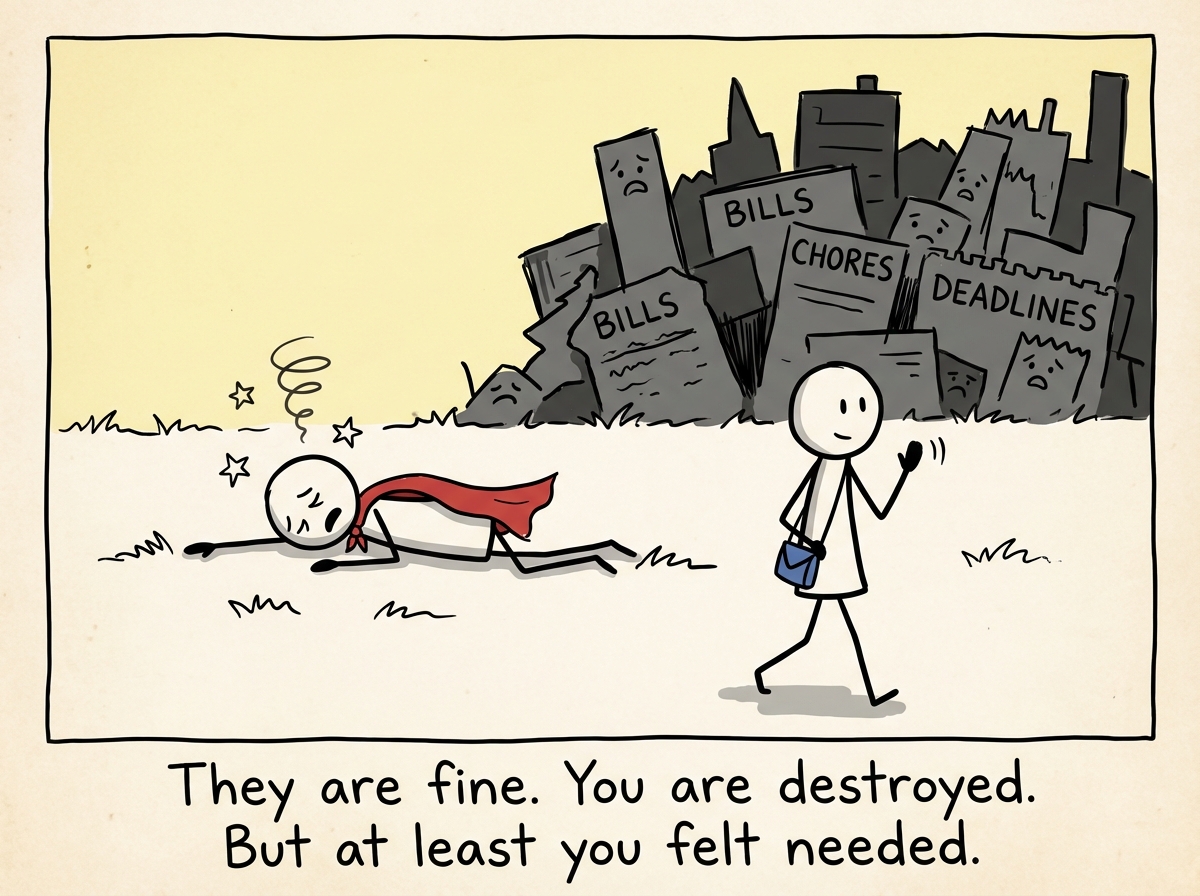
A codependent person rushes to fix someone else's problems, neglecting their own life in the process, because being needed feels safer than addressing their own issues.
Explanation
The codependent rescue mission looks like selflessness, but beneath the surface, it serves a very different purpose. A codependent person sees someone struggling and feels an irresistible pull to fix it. Not just help -- fix. They take over. They manage the other person's problems, emotions, and responsibilities. They cancel their own plans. They lose sleep. They pour energy they do not have into someone who may not have even asked for help. And through it all, they feel essential -- because being needed is how they know they matter. This is the core engine of codependency: your self-worth is outsourced to your usefulness. If you are helping, you have value. If you are not helping, you feel empty, anxious, and purposeless. This creates a painful paradox: you need the other person to have problems so you can feel good about yourself. On some unconscious level, their crisis is your comfort zone. A codependent person in a relationship with someone who has their life together often feels restless and anxious -- not because something is wrong, but because they have nothing to rescue. Recovery from the rescue pattern involves learning to sit with the discomfort of not helping. It means asking yourself, 'If I stopped being useful to everyone, would I still feel like a worthwhile person?' The answer, initially, might be no. That is the wound that codependency has been covering. Healing means building a sense of self that is not contingent on being needed -- and that requires turning the rescue energy inward, toward your own neglected needs and dreams.
Key Takeaway
If you only feel valuable when you are rescuing someone, the person who needs rescuing most is you.
A stick figure in a superhero cape hearing someone's problem, pausing to ask themselves 'Did they ask for my help?'
The figure taking off the cape and sitting with empty hands while someone else works through their own problem nearby
The figure turning the rescue energy inward, finally looking at their own neglected house -- bills, dreams, unfinished projects
The figure working on their own life, no cape, standing next to someone they care about who is standing on their own too