The Neighborhood That Never Sleeps
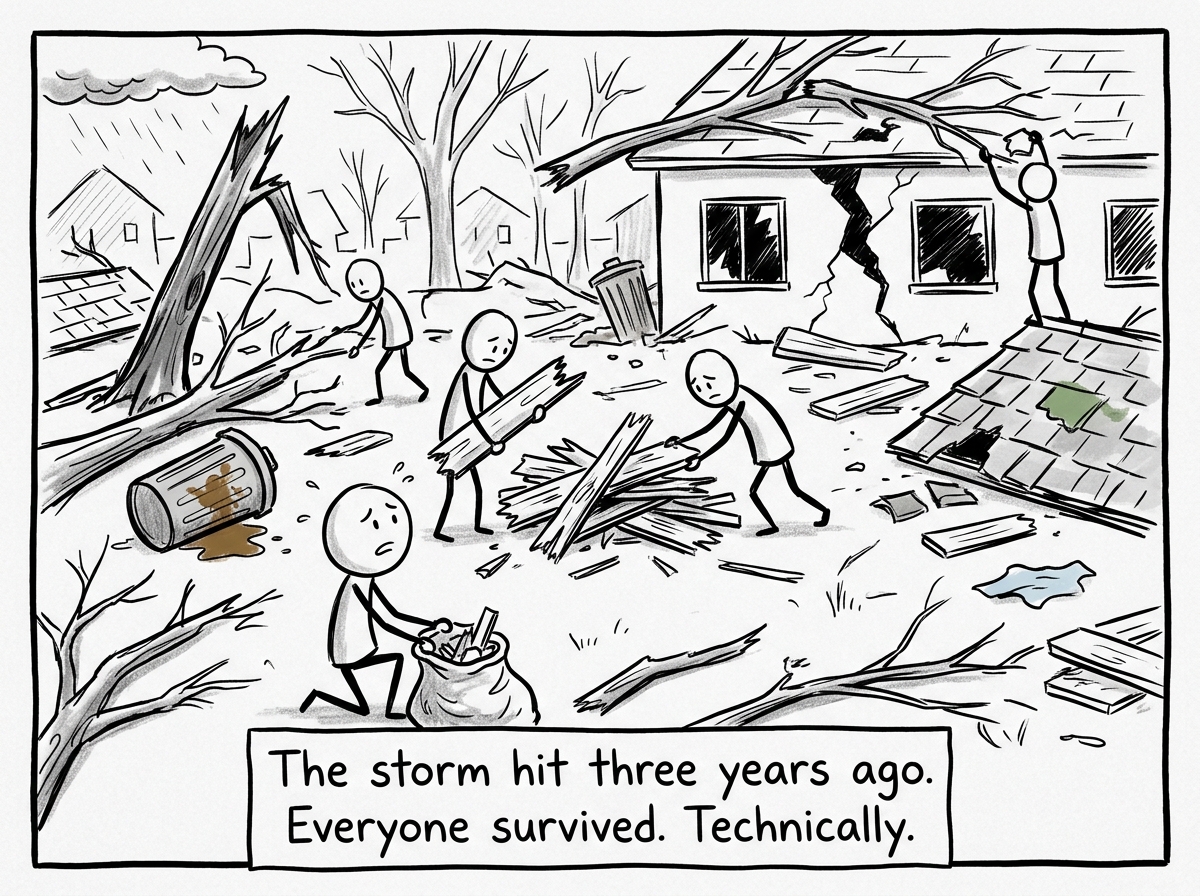
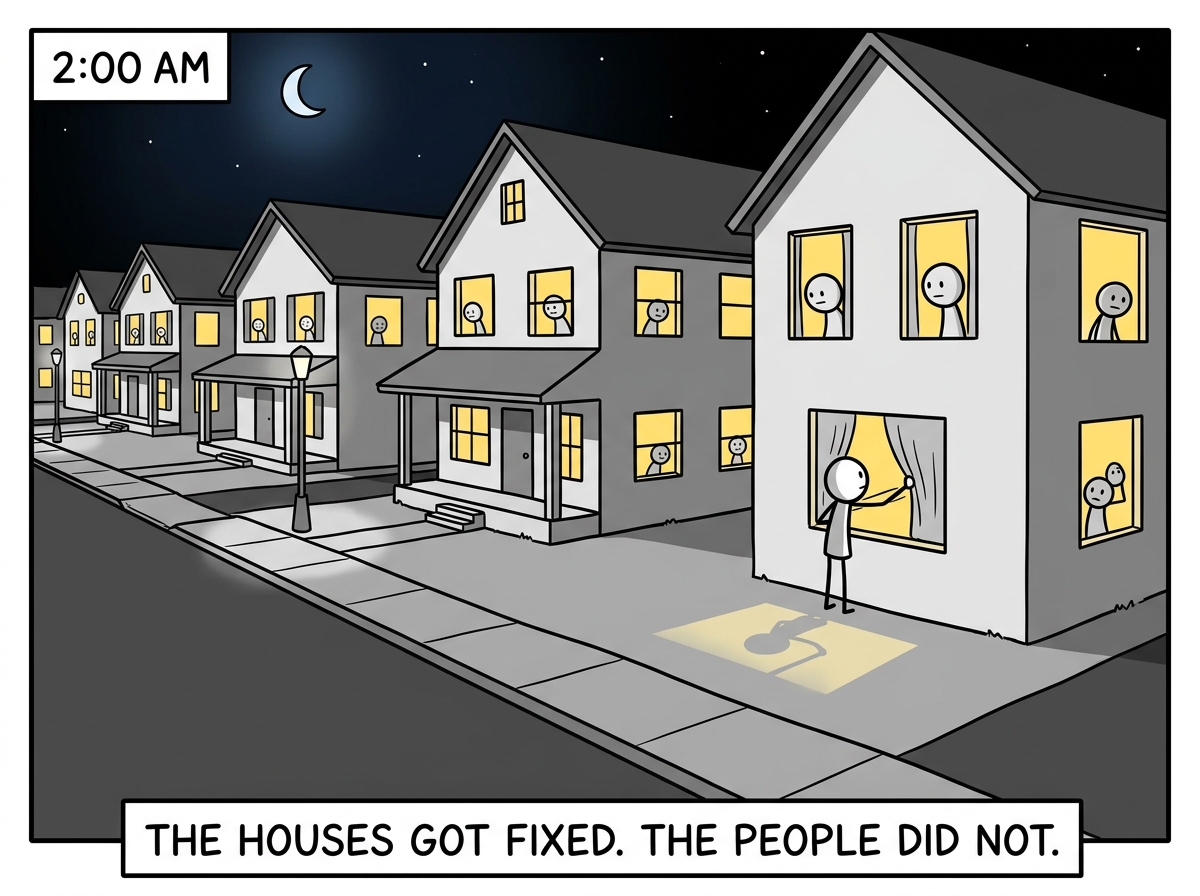
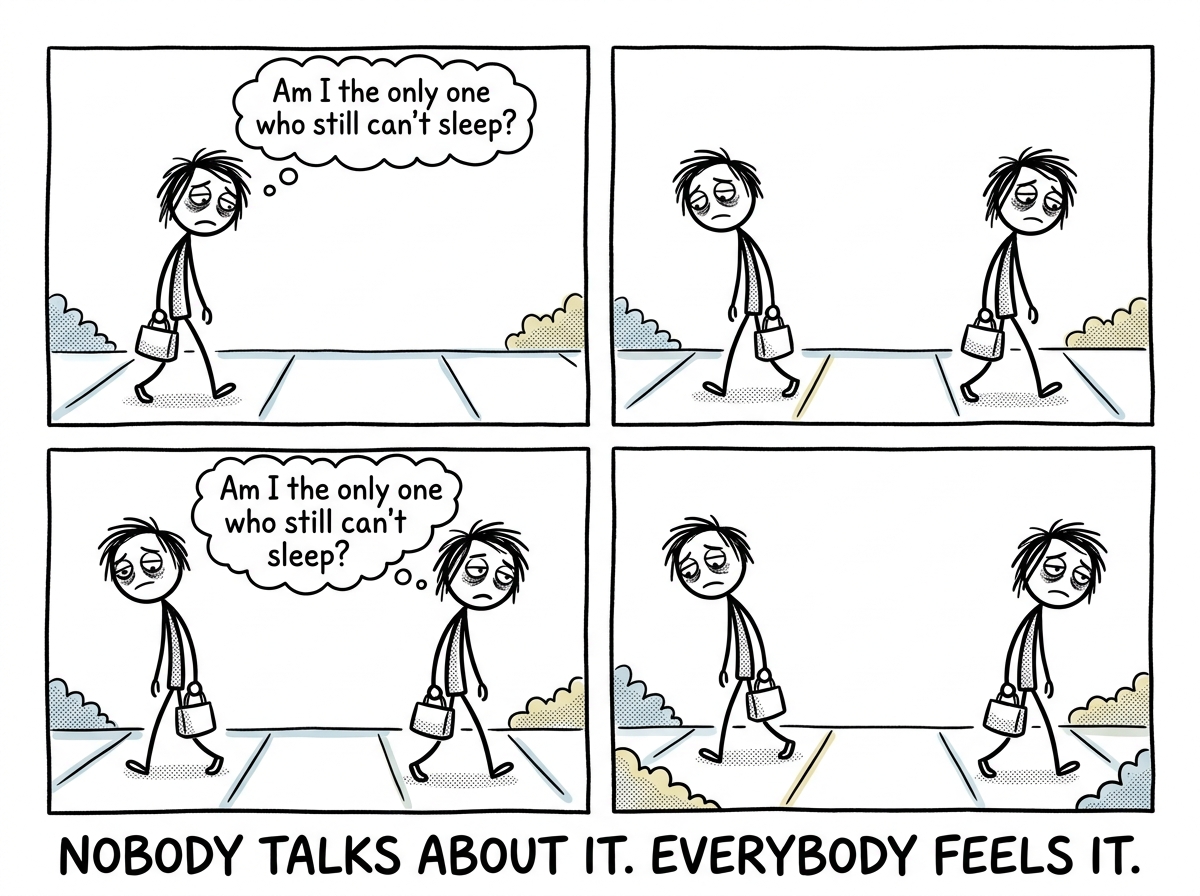
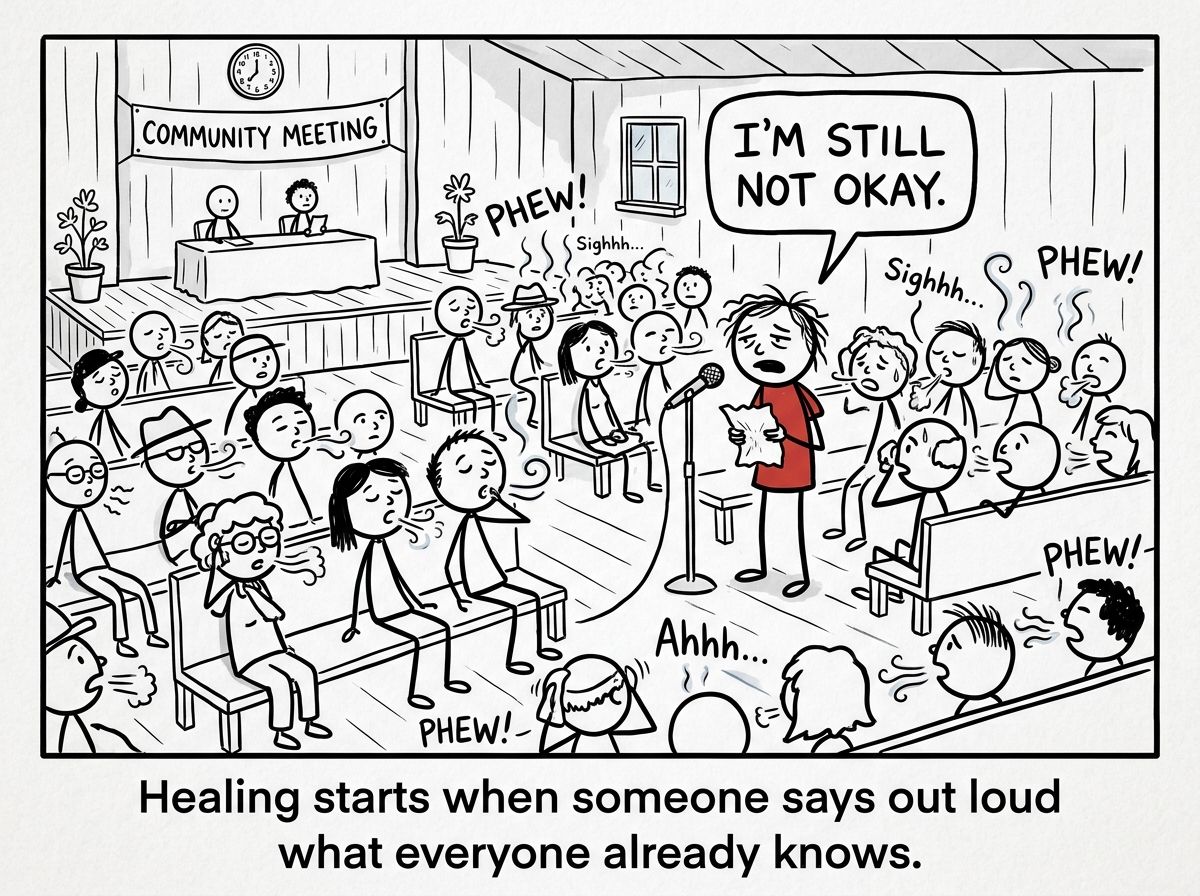
An entire neighborhood stays hypervigilant long after the danger has passed, because the community never had a chance to process what happened together.
Explanation
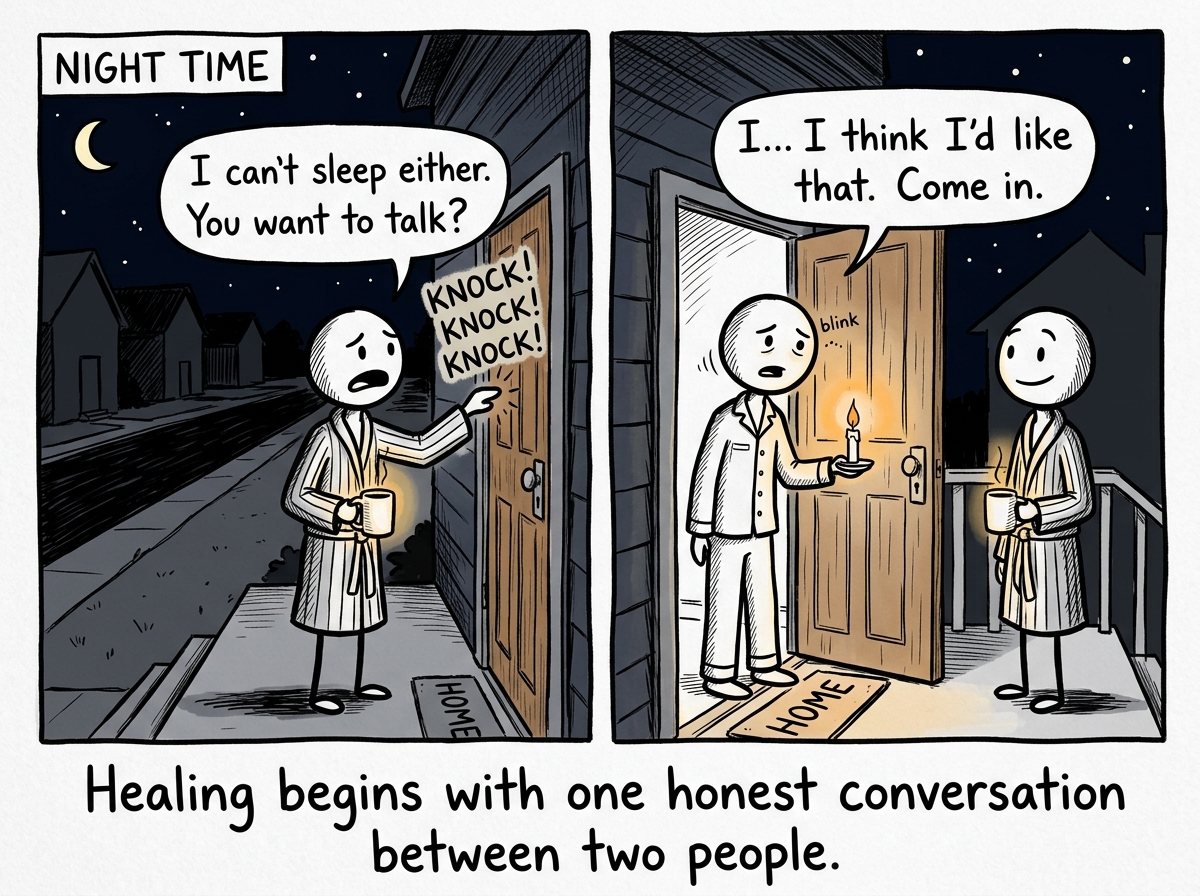
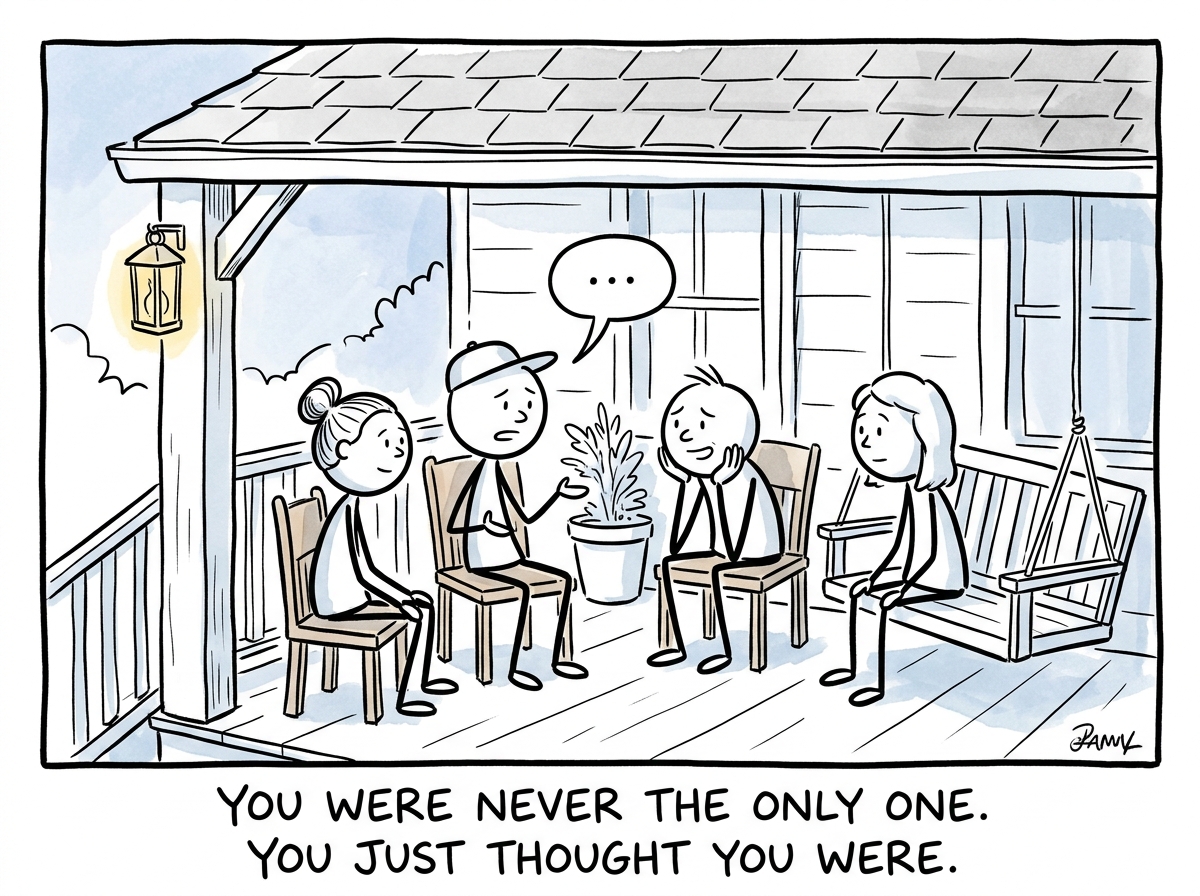
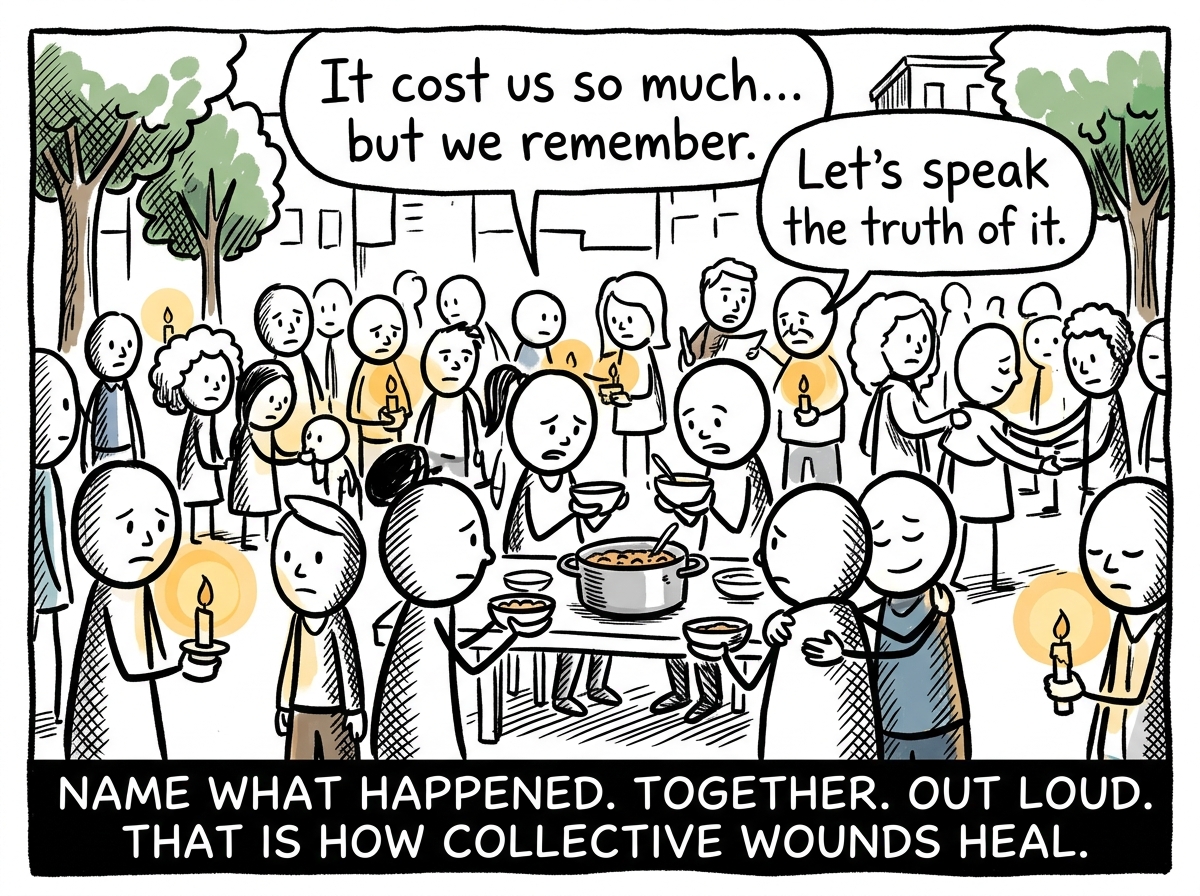
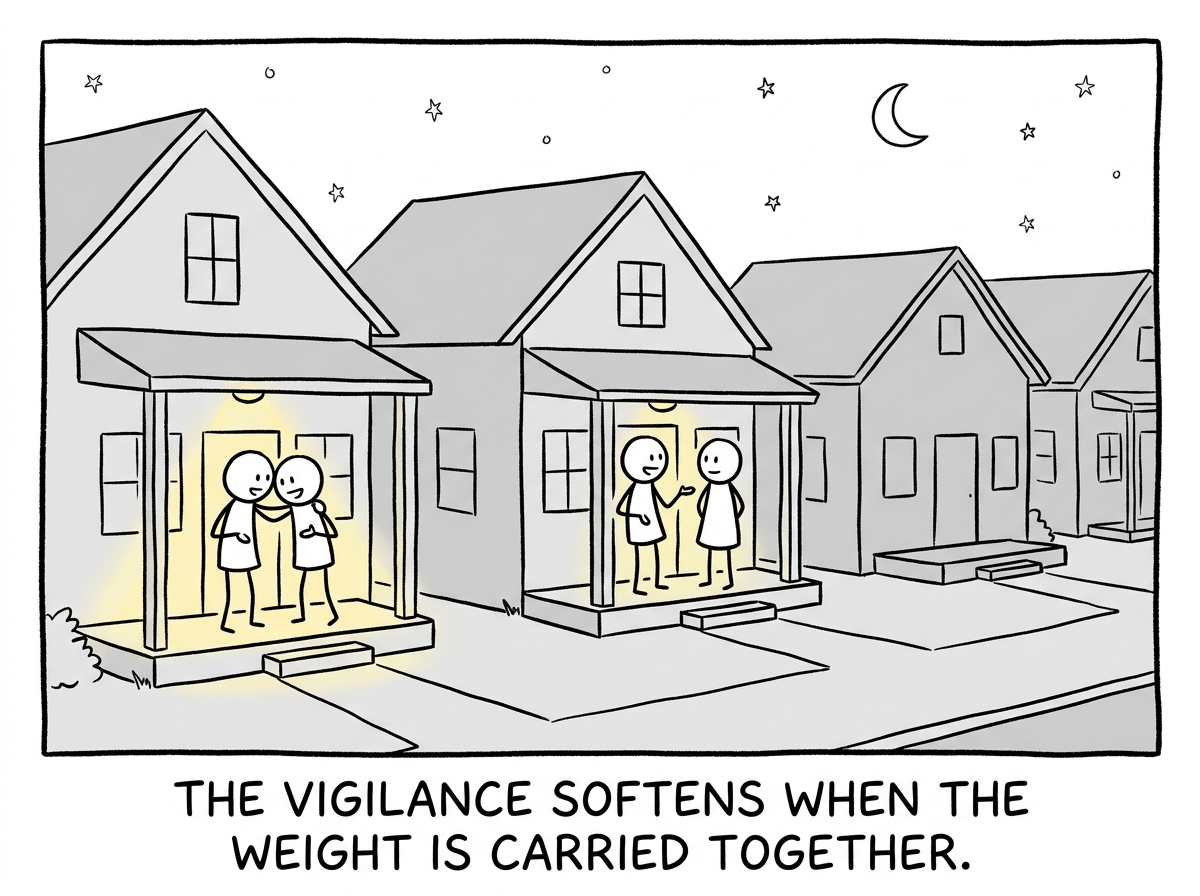
The storm ended three years ago, but the neighborhood still flinches at the sound of heavy rain. Porch lights stay on all night. Parents keep their children closer than necessary. Nobody talks about what happened, but everybody acts like it could happen again at any moment. The community looks functional -- people go to work, kids go to school -- but underneath, everyone is bracing for the next disaster that may never come. This is how collective trauma operates. Unlike individual trauma, which lives in one person's body, collective trauma embeds itself in the social fabric. Sociologist Kai Erikson, studying communities after disasters, found that the destruction of communal bonds was often more damaging than the event itself. When a whole community is traumatized, there is no one left to be the safe person -- everyone is activated, everyone is scanning for threats, and the shared hypervigilance reinforces itself. The silence compounds the wound: because no one talks about it, everyone assumes they are the only one still struggling. Healing from collective trauma requires collective processes -- shared storytelling, communal rituals of mourning, and institutional acknowledgment that something happened and it mattered. Individual therapy helps, but it is not sufficient when the wound belongs to the group. Communities begin to recover when they break the silence together and create shared meaning from shared pain, rather than leaving each person to carry the weight alone.
Key Takeaway
When a whole community is wounded and no one talks about it, everyone suffers alone in a room full of people doing the same thing.