The Story No One Tells the Same
Community members who lived through the same traumatic event each remember it differently, and the disagreement about what happened becomes its own wound.
Explanation
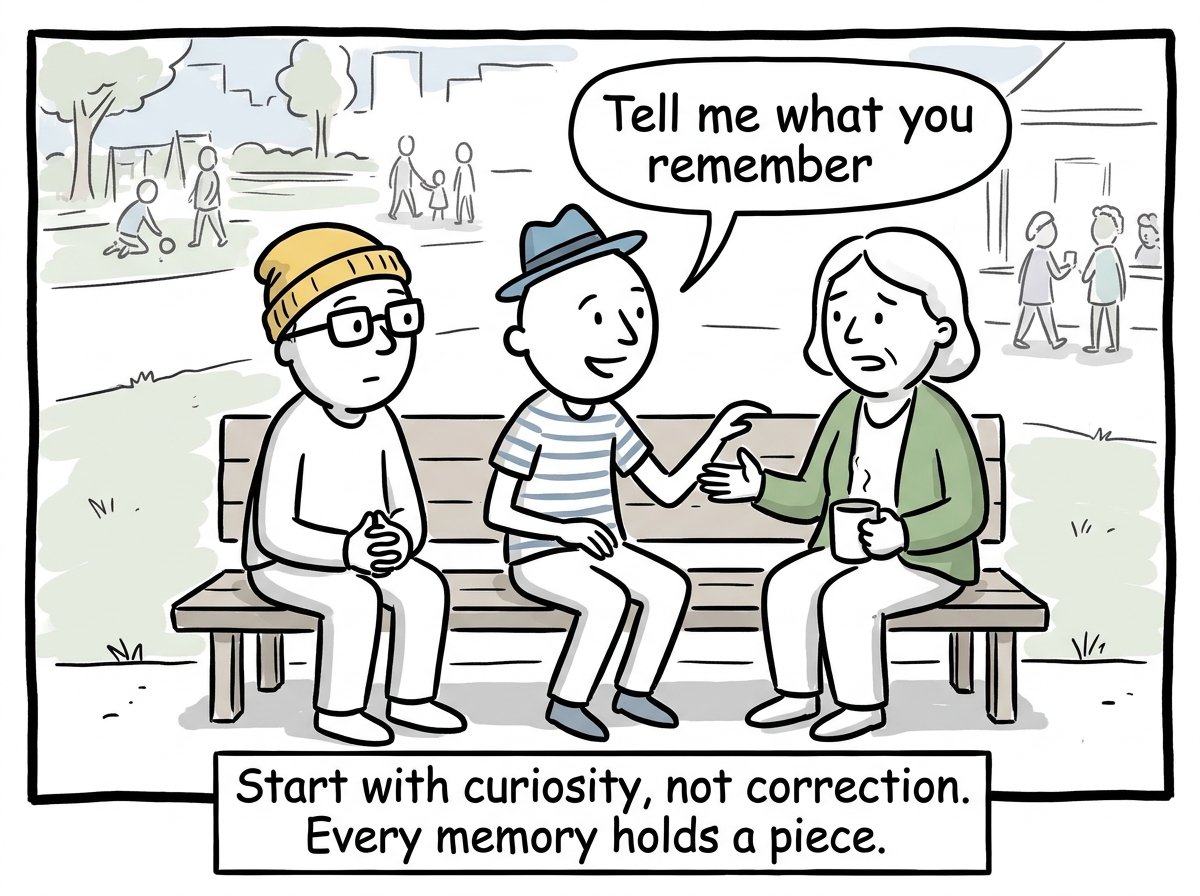
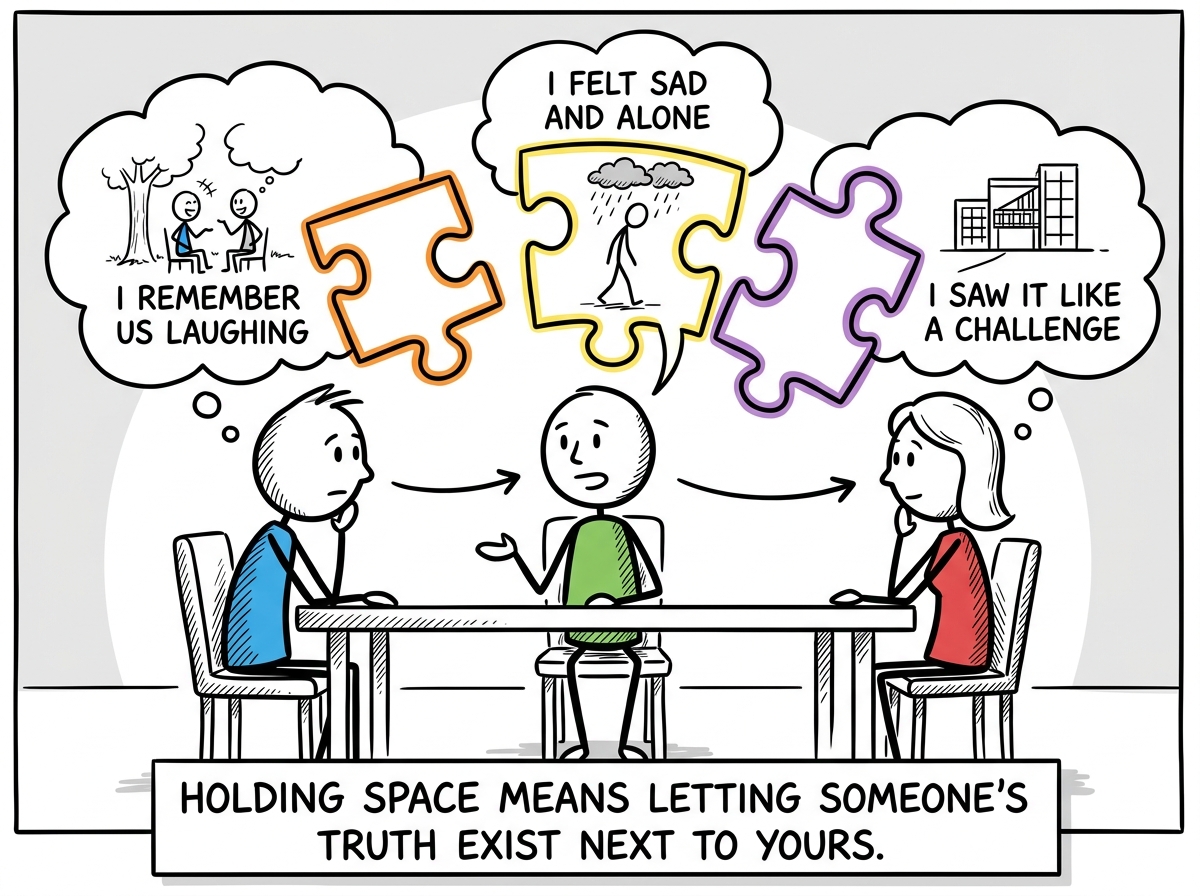
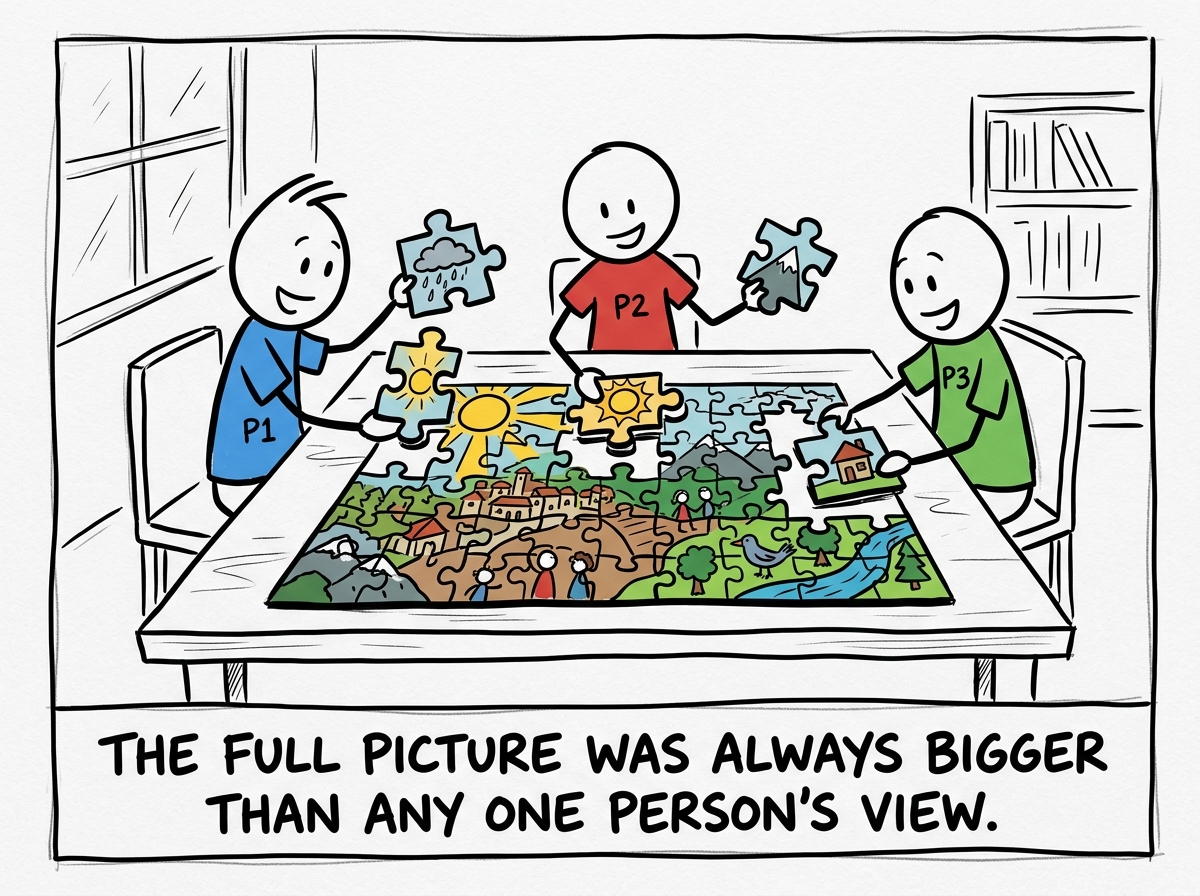
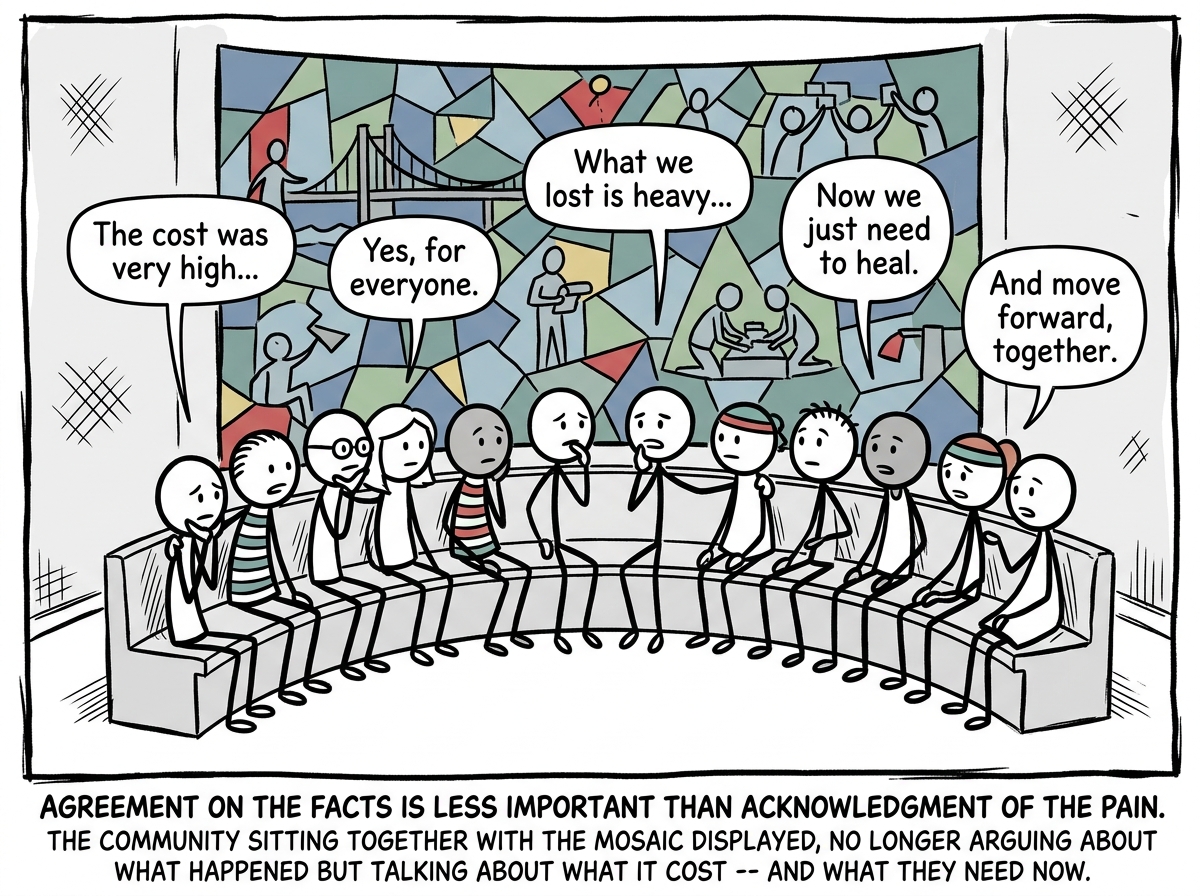
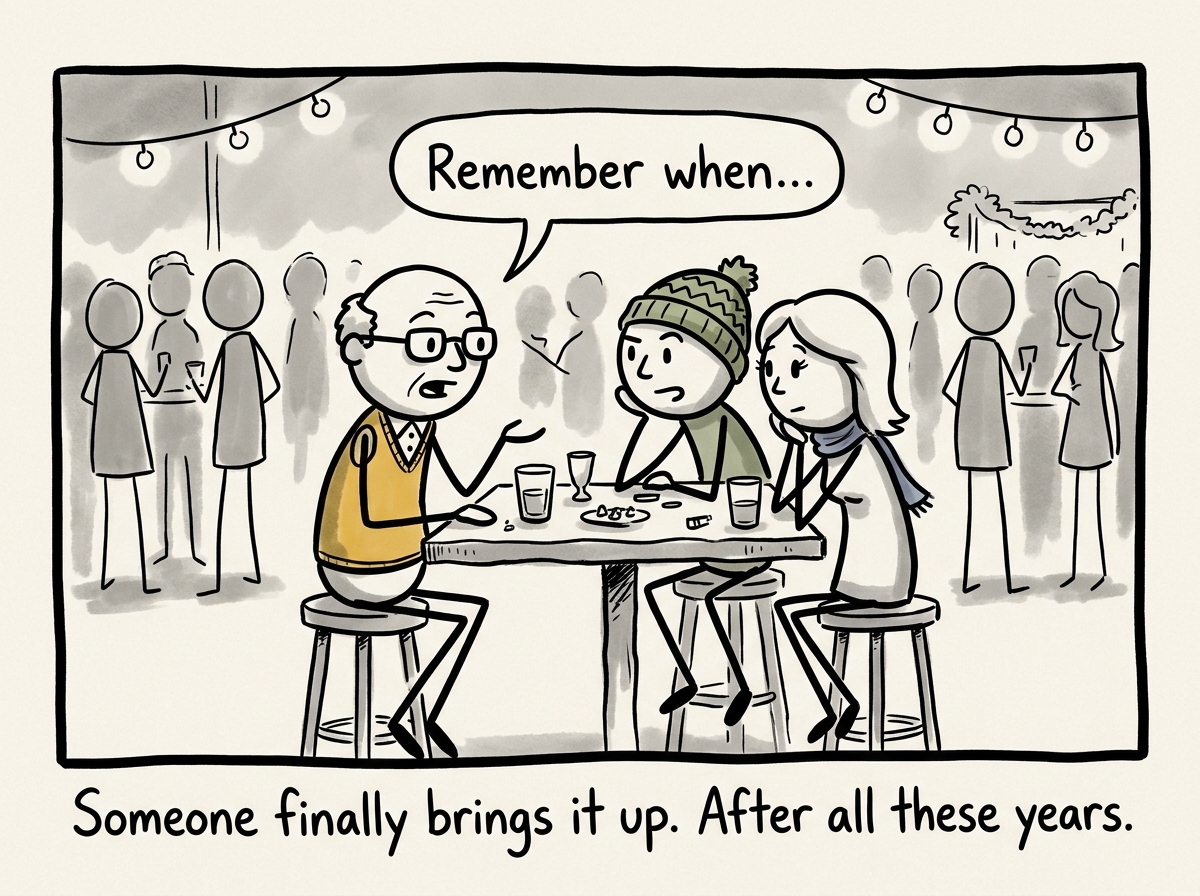
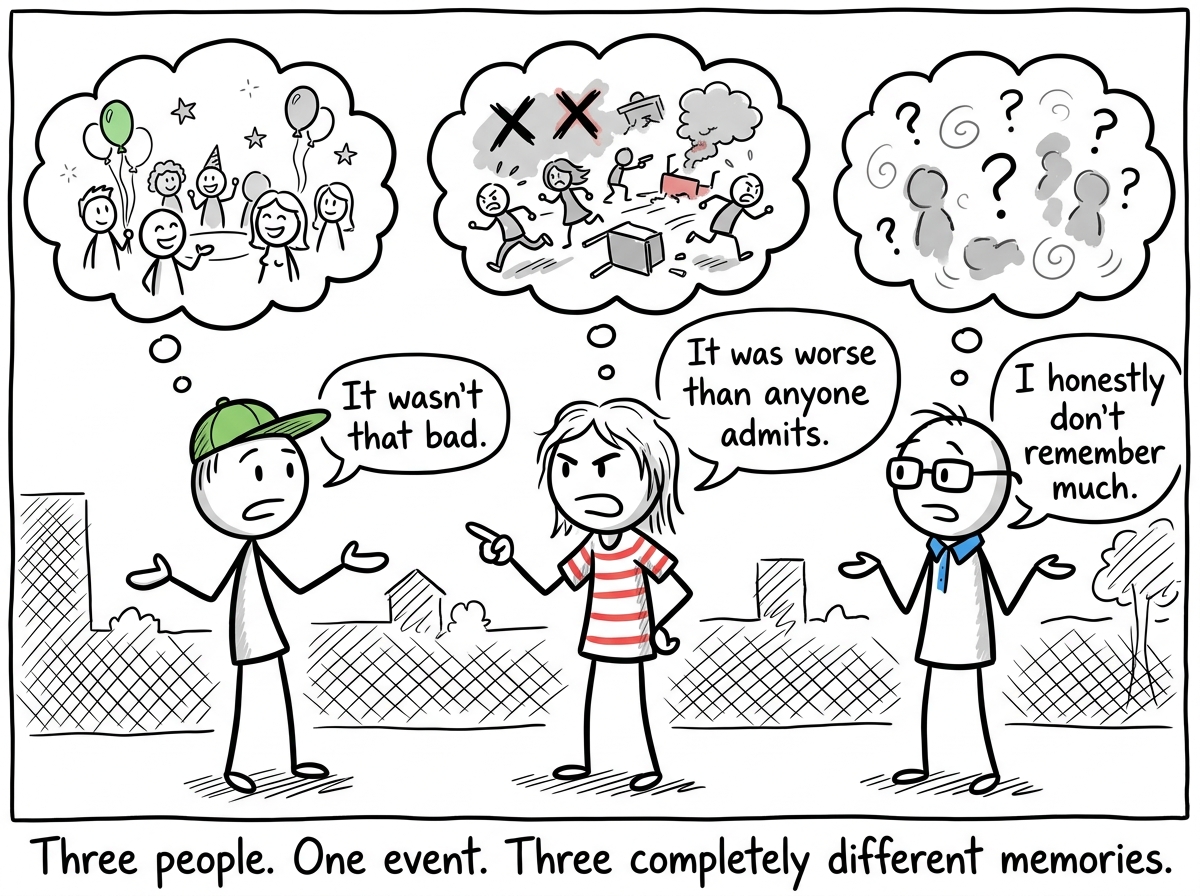
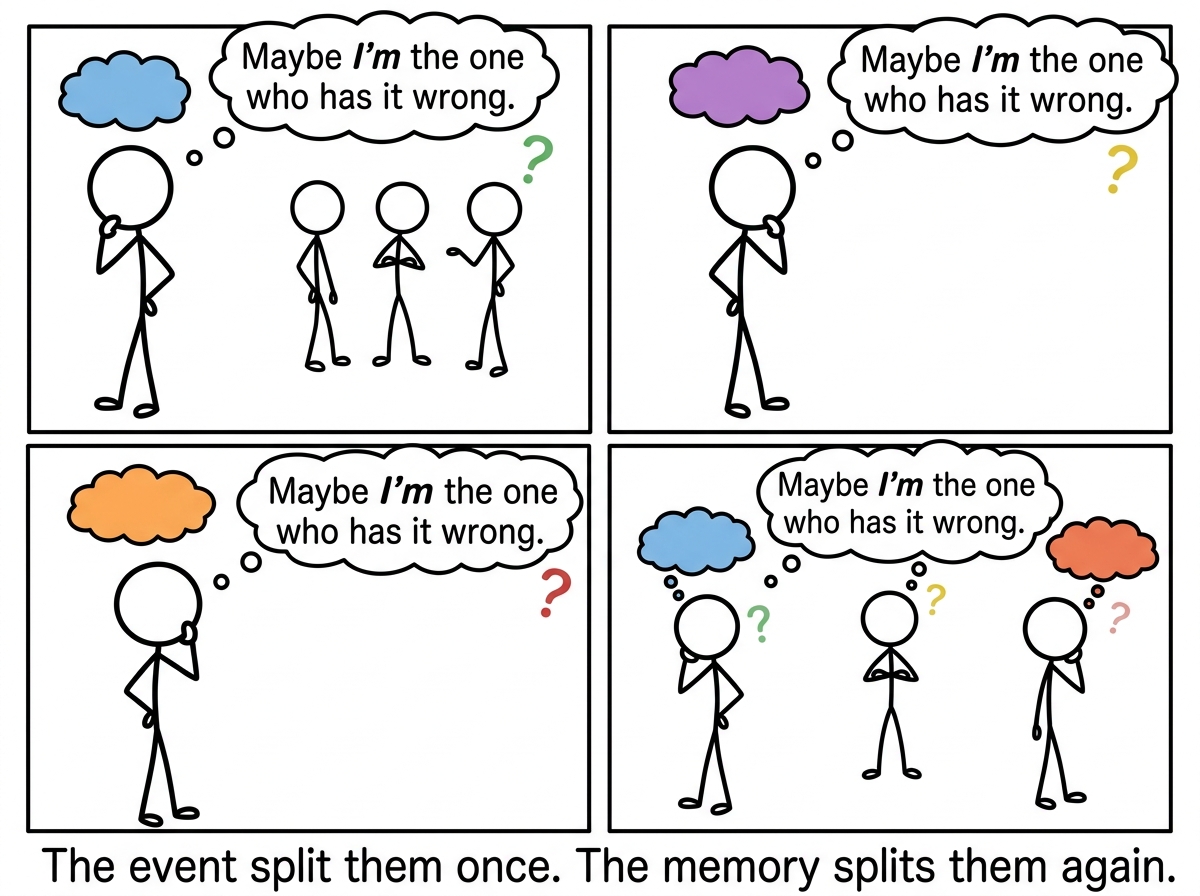
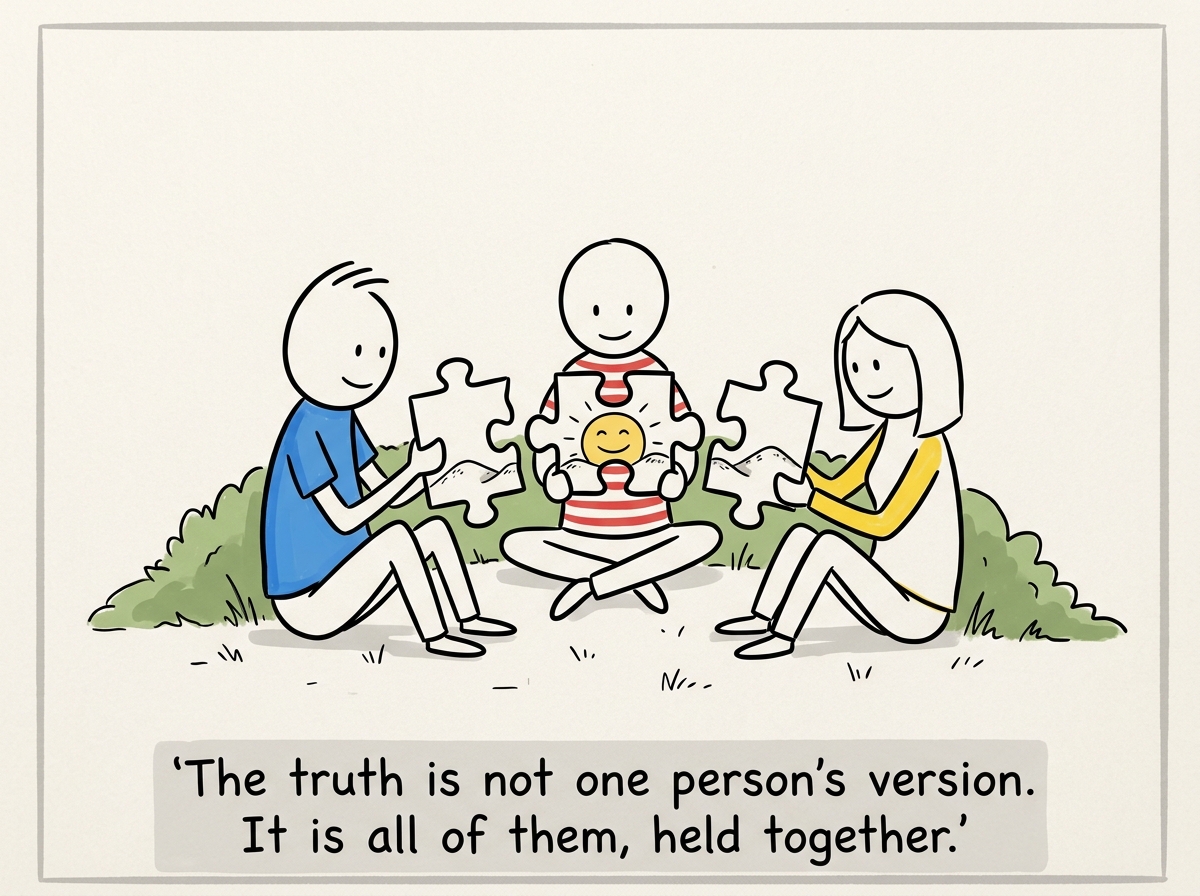
Everyone in town was there the day it happened. But when someone finally brings it up at a gathering, three different versions emerge. One person says it was not that bad. Another says it was worse than anyone admits. A third says they do not remember it at all. Instead of finding solidarity, the community finds another source of division. The event splits them once by happening, and again by being remembered differently. This is one of the lesser-discussed features of collective trauma: the fragmentation of shared narrative. Trauma researchers have documented that traumatic memory is encoded differently from ordinary memory -- it is stored in fragments, sensory impressions, and emotional snapshots rather than coherent stories. When an entire community experiences trauma, each person's nervous system records a different version. The result is that the one thing the community shares -- the event itself -- becomes the one thing they cannot agree on. This disagreement often turns into blame, minimization, or enforced silence, each of which deepens the original wound. Healing requires making space for multiple truths to exist simultaneously. It means accepting that one person's experience of the event does not invalidate another's, and that the community's story is not a single narrative but a mosaic. When communities can hold the contradictions without demanding consensus, they begin to do something powerful: they stop arguing about what happened and start acknowledging what it cost.
Key Takeaway
A community's trauma does not become less real because people remember it differently -- it becomes more lonely.