Emotional Novocaine
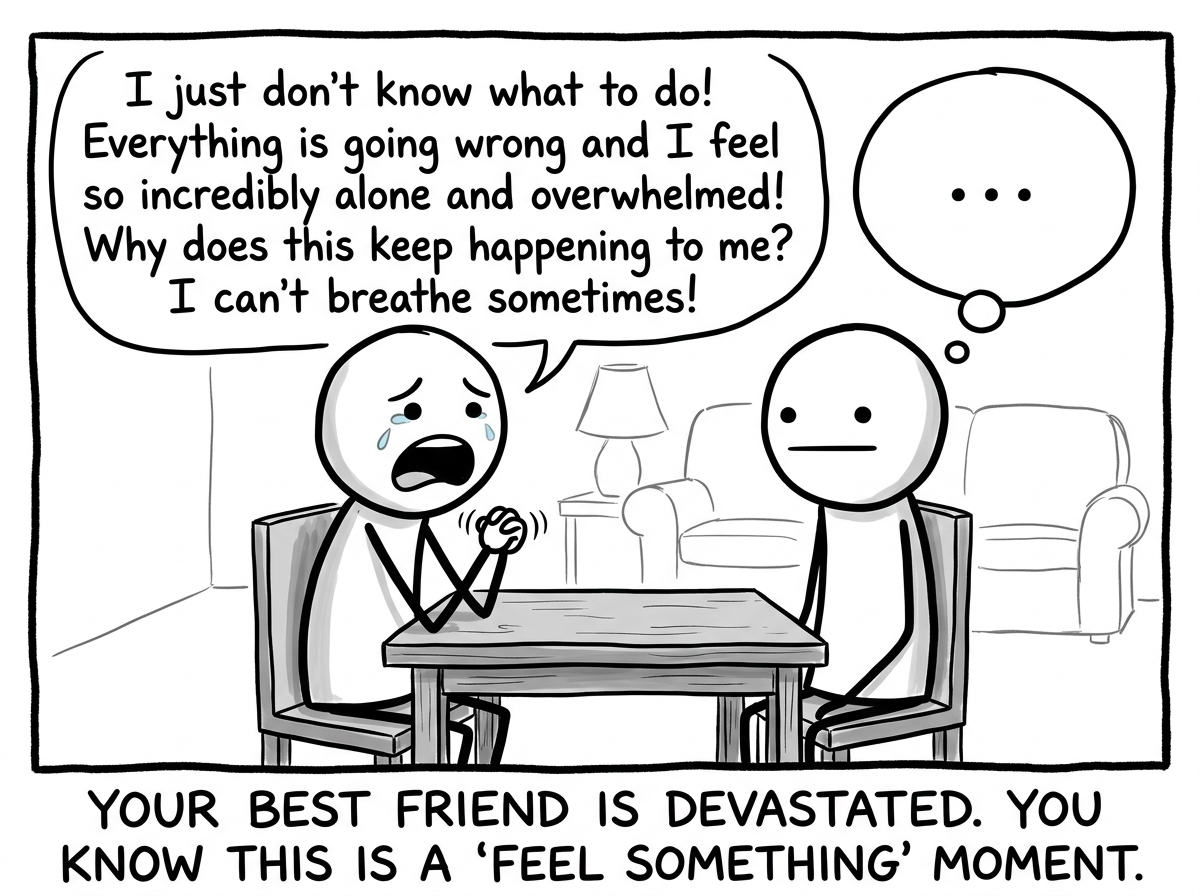
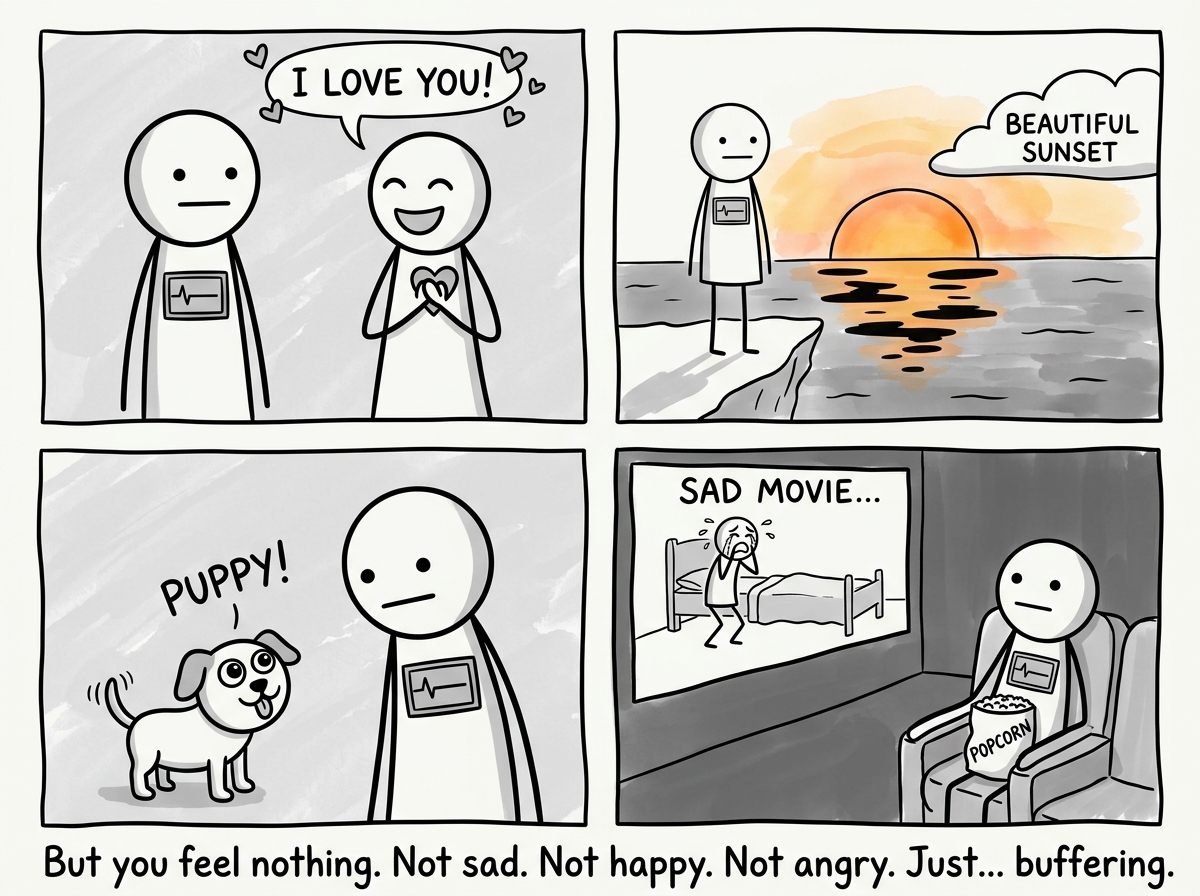
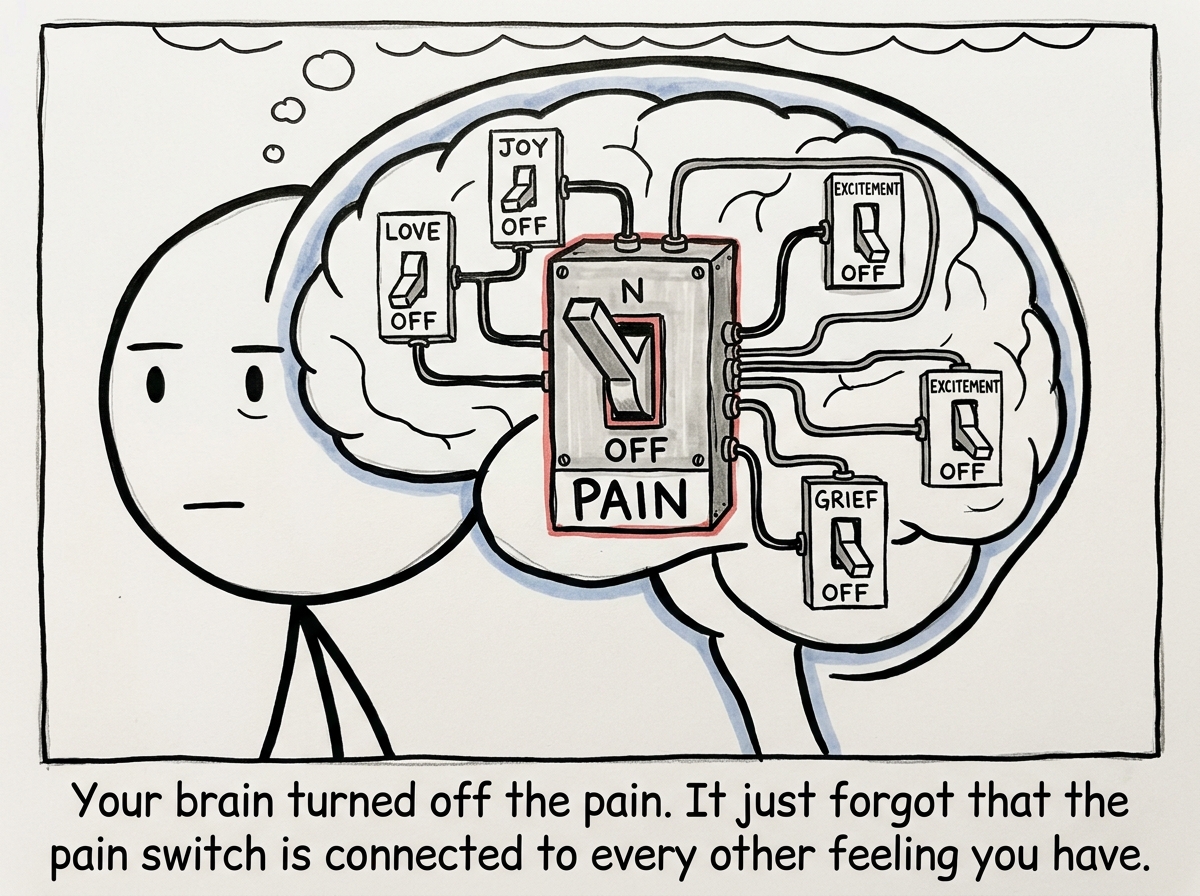
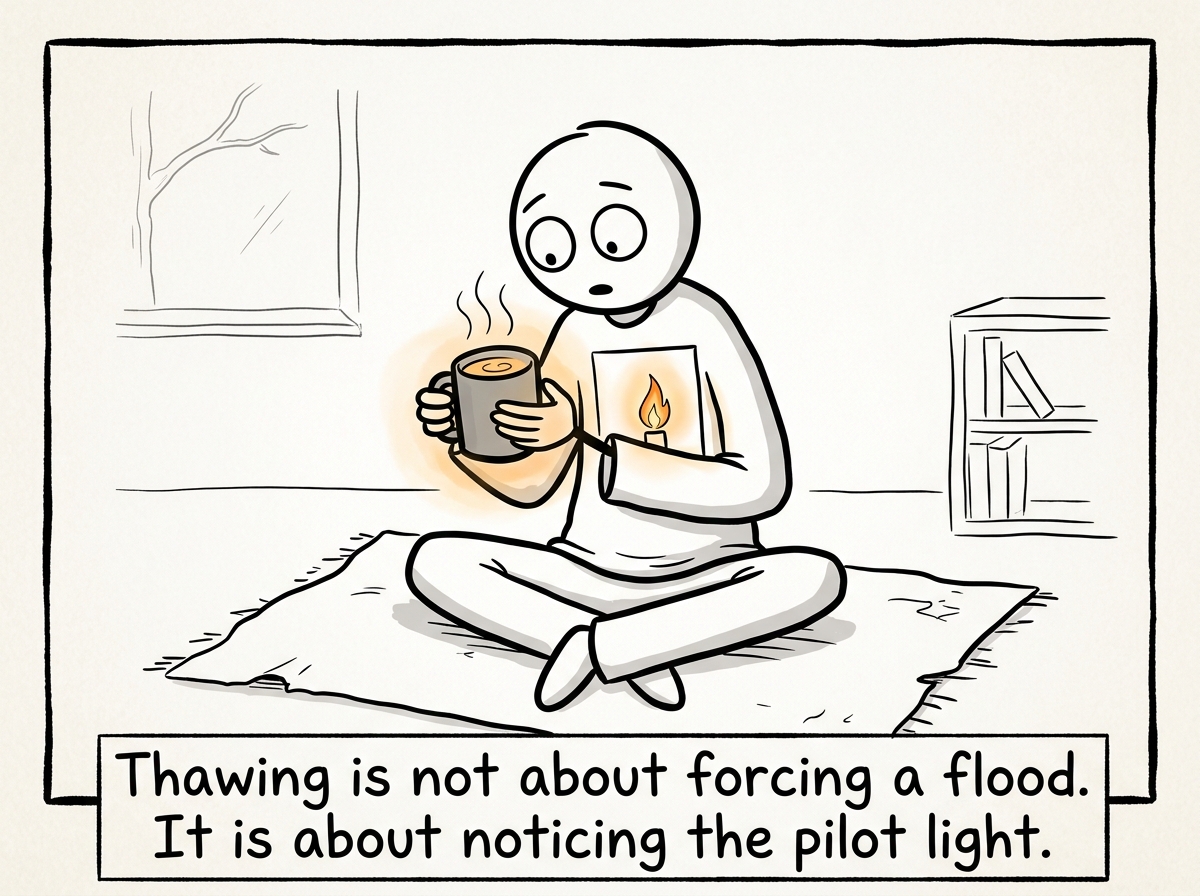
A person realizes they cannot feel anything -- not sadness, not joy, not love -- because their brain turned off the pain and accidentally turned off everything else too.
Explanation
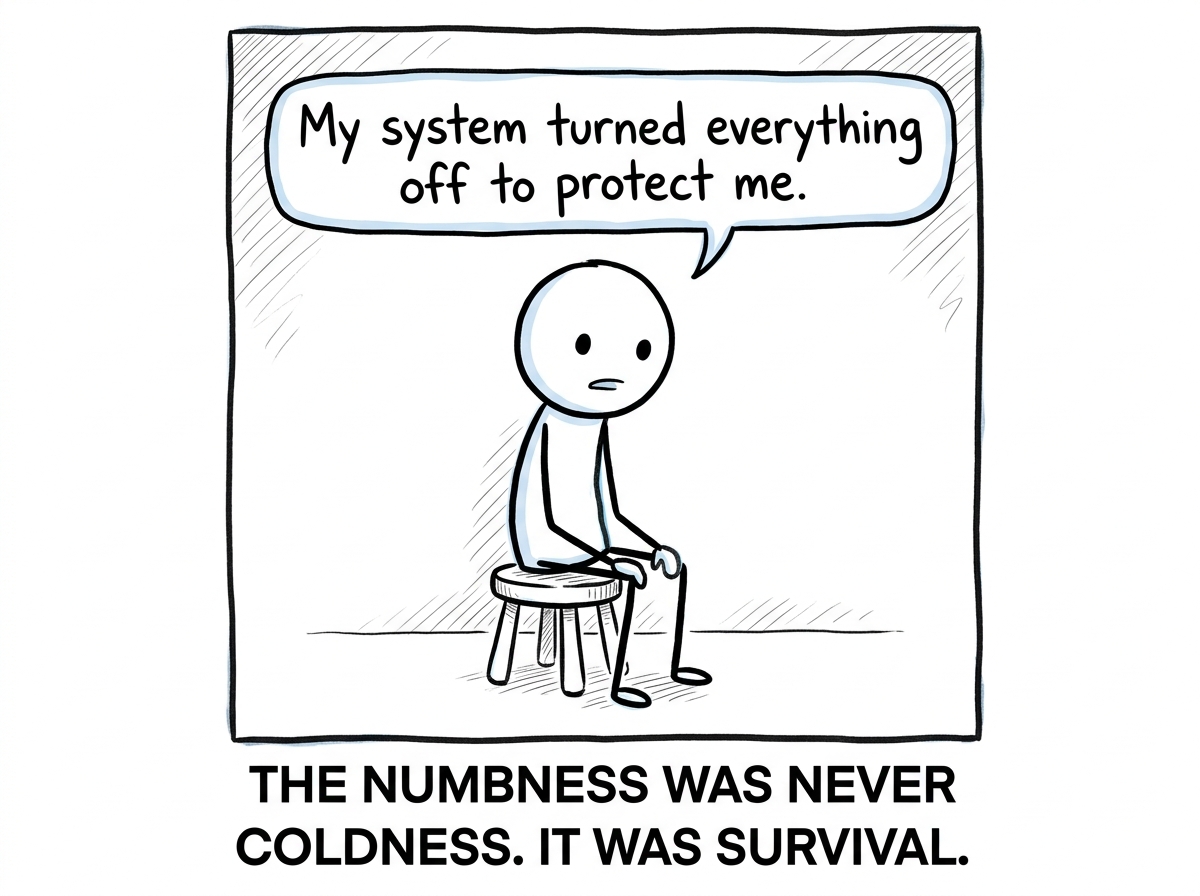
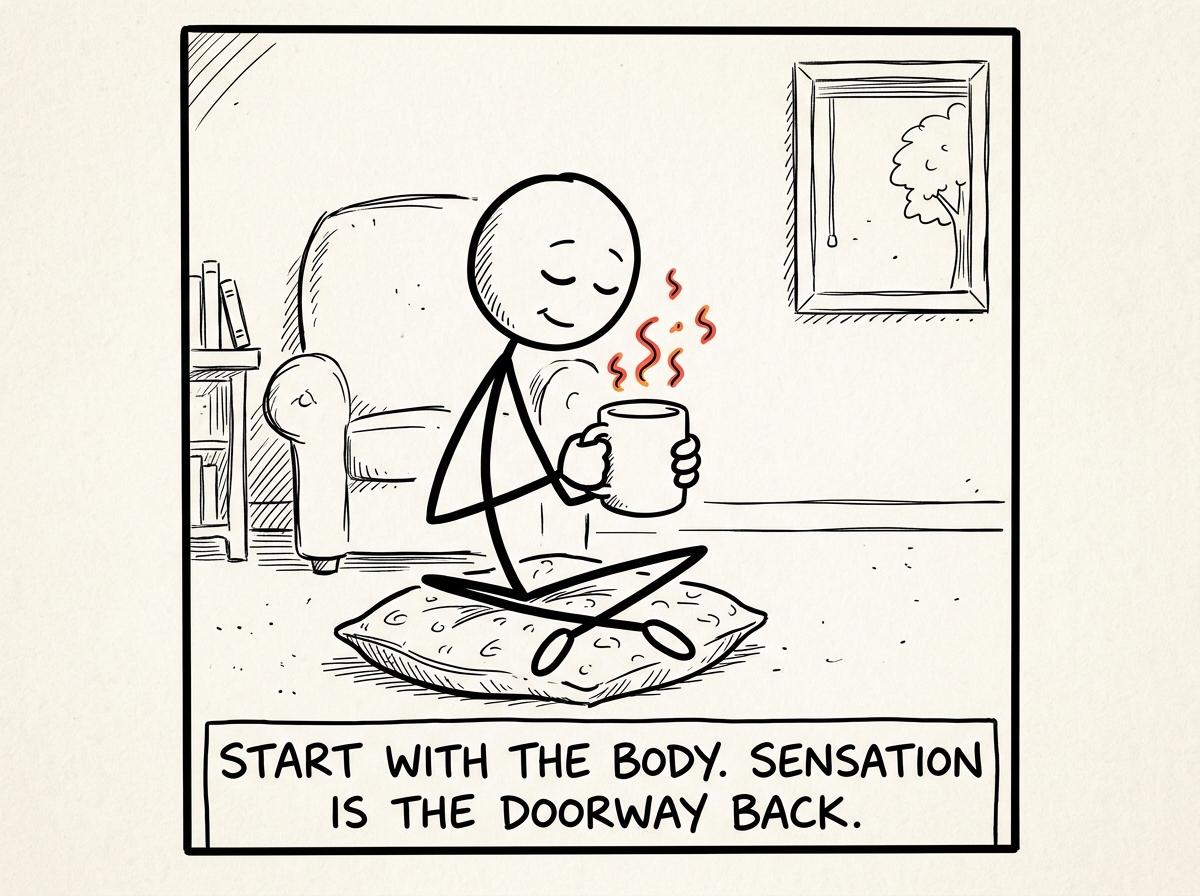
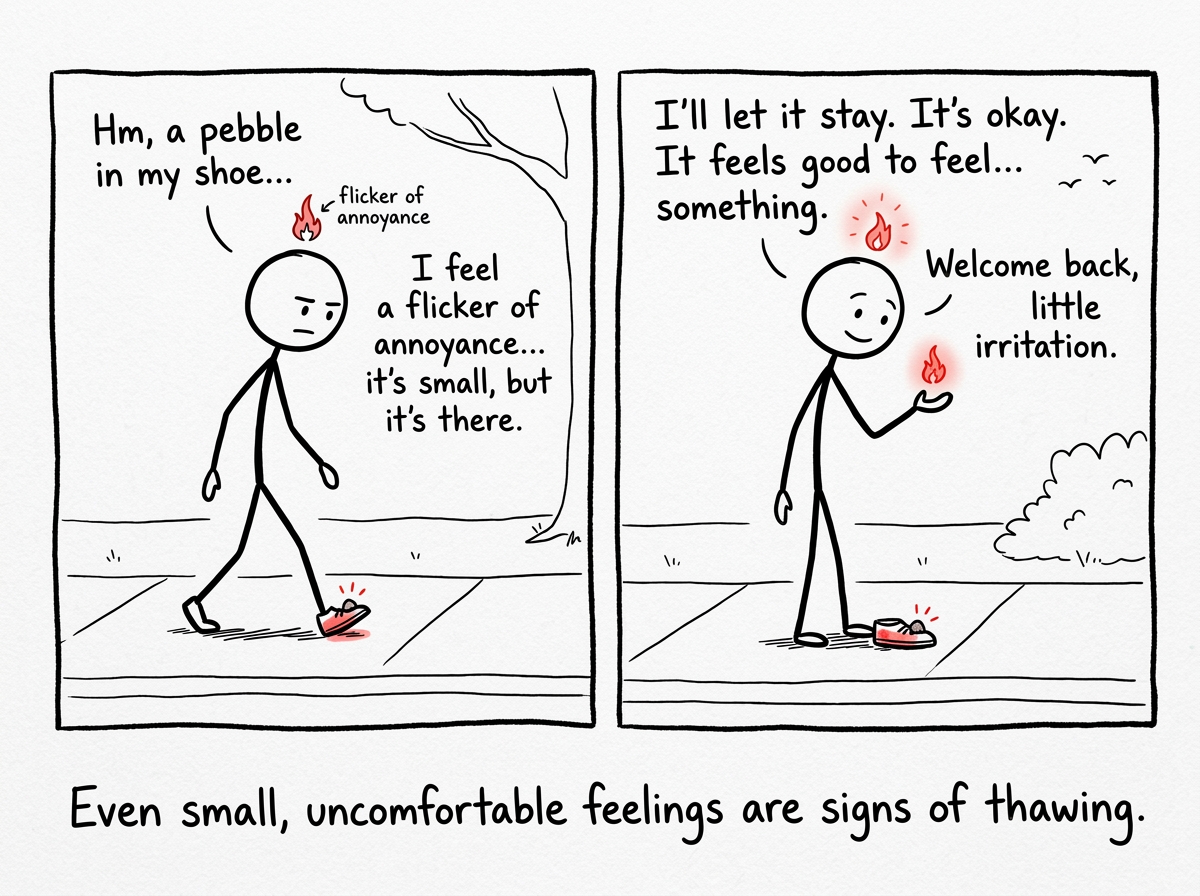
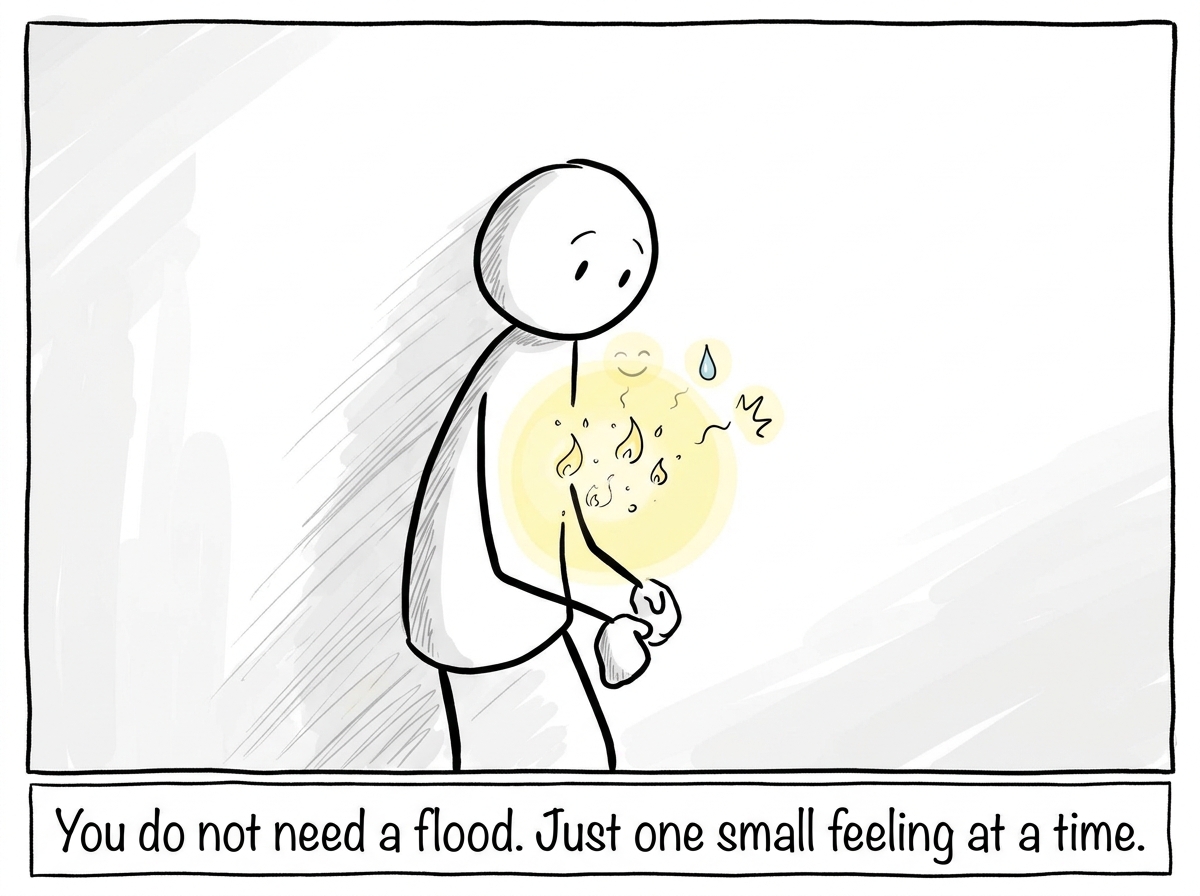
Your best friend is crying and telling you about the worst day of their life. You know you should feel something. You want to feel something. But there is nothing. Just a flat, gray blankness where empathy should be. Later, your partner says 'I love you' and you say it back, but the words feel like they are coming from a script. You watch a movie that used to make you sob and feel absolutely nothing. You start to wonder if something is deeply wrong with you. If maybe you are broken in a way that cannot be fixed. This is dissociative numbing -- your brain's version of emotional anesthesia. When your nervous system has been overwhelmed by trauma, it does not just turn off the pain. It turns off everything. The mechanism that dampens unbearable grief also dampens joy. The wall that blocks terror also blocks love. You asked your brain to protect you from feeling too much, and it delivered -- by making you feel nothing at all. This is not coldness or sociopathy. It is a survival system that overcorrected. Recovery from emotional numbing is not about forcing feelings. It is about slowly, safely thawing. This might look like body-based practices -- yoga, somatic therapy, breathwork -- that help you reconnect with physical sensation as a gateway back to emotion. It might mean allowing yourself to feel micro-emotions: the slight warmth of holding a cup of tea, the tiny flicker of annoyance at a minor inconvenience. These small feelings are the pilot lights that can eventually reignite the full range. It takes time, patience, and often the safety of a therapeutic relationship where feeling is not punished.
Key Takeaway
When your brain turns off the pain, it does not just numb the bad feelings -- it numbs all of them.