Leaving the Meeting Without Leaving the Room
A person dissociates during a stressful work meeting, appearing to listen while their consciousness has floated somewhere near the ceiling.
Explanation
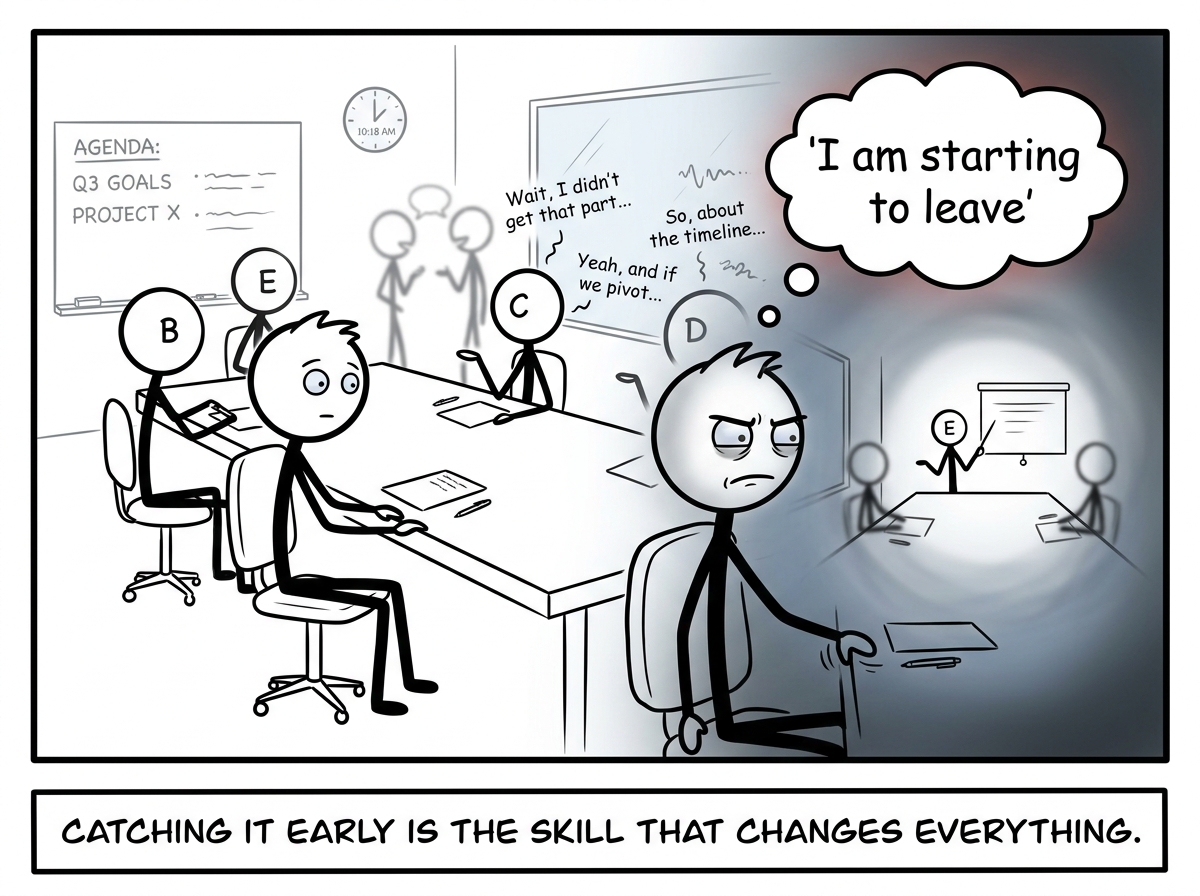
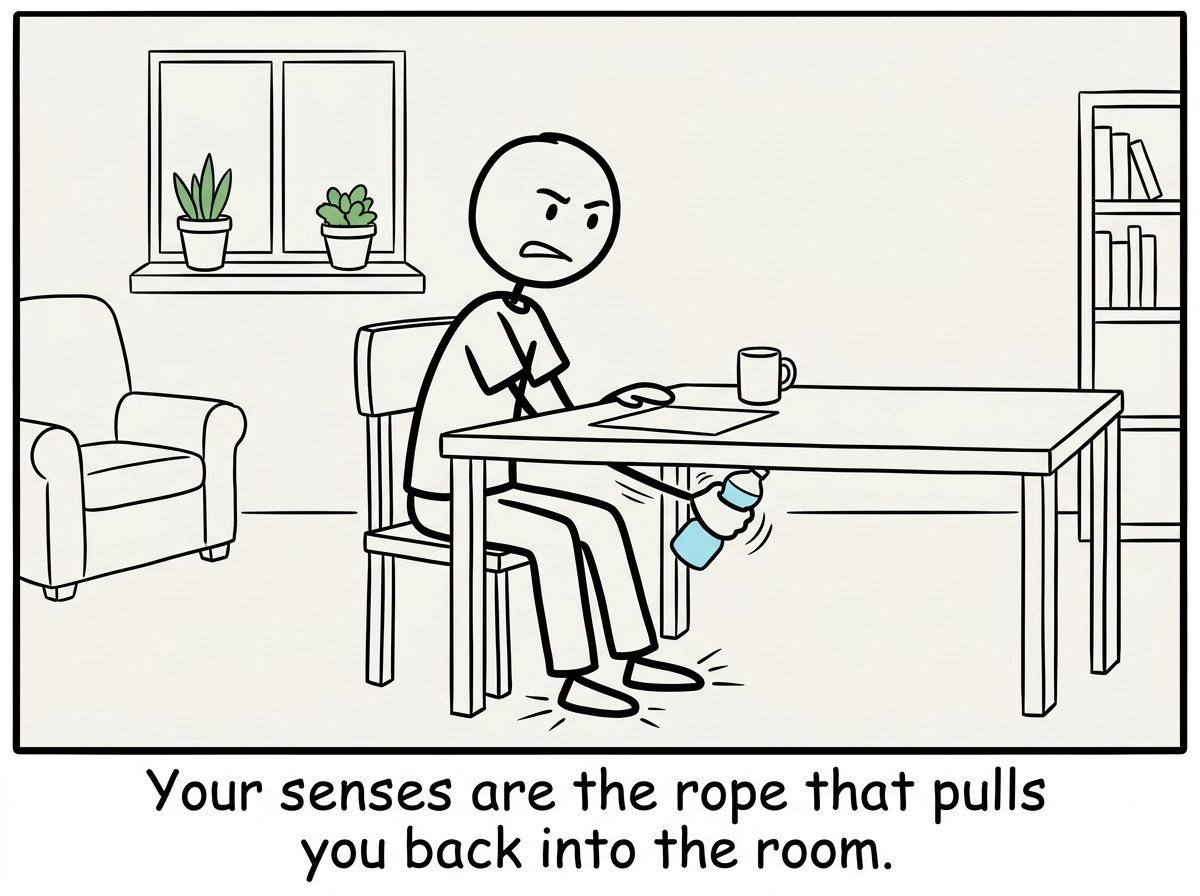
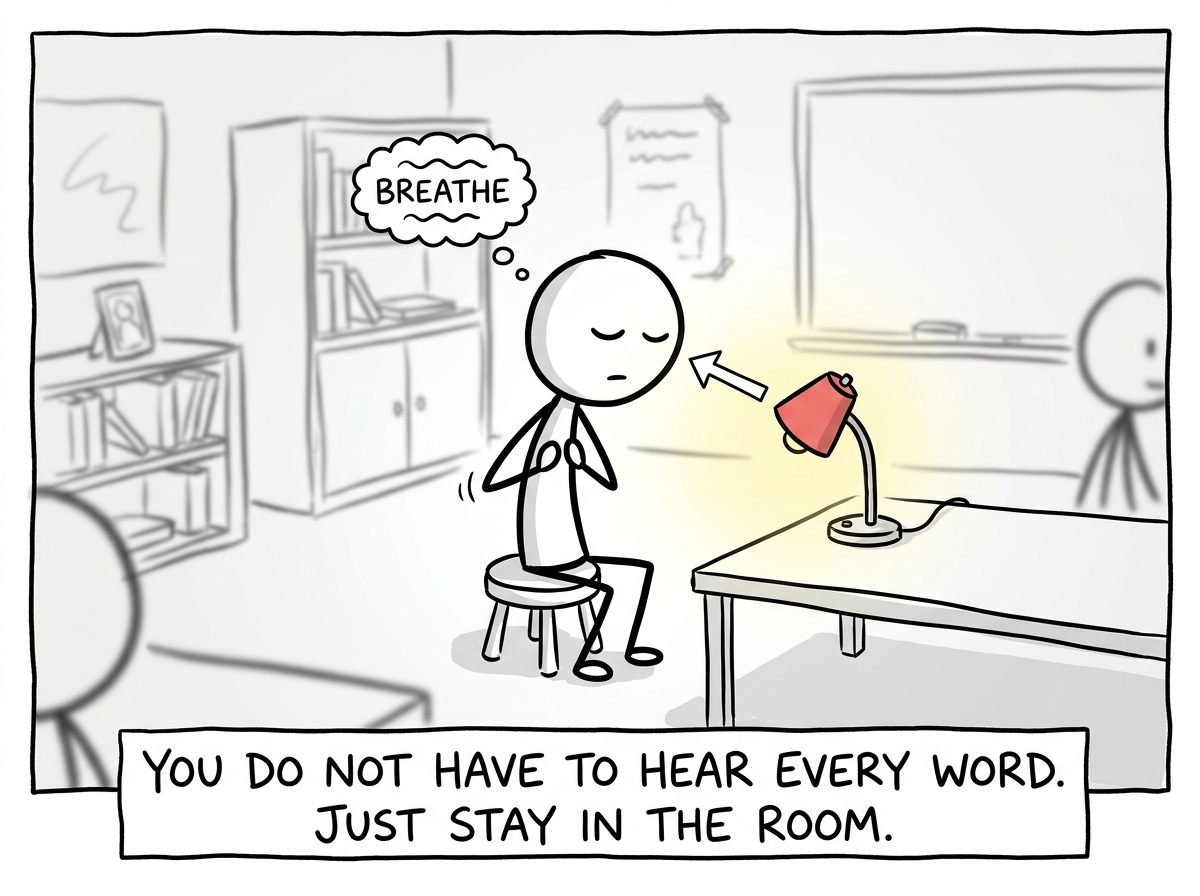
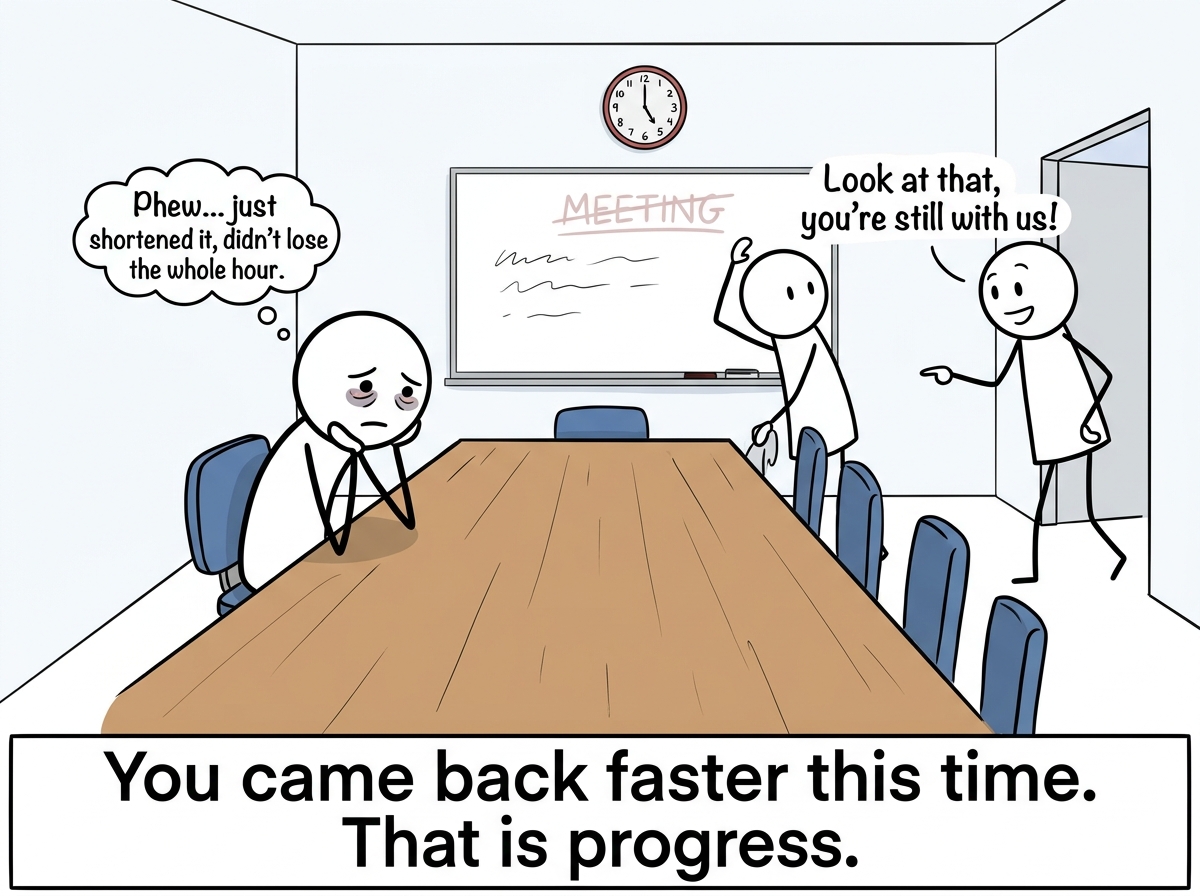
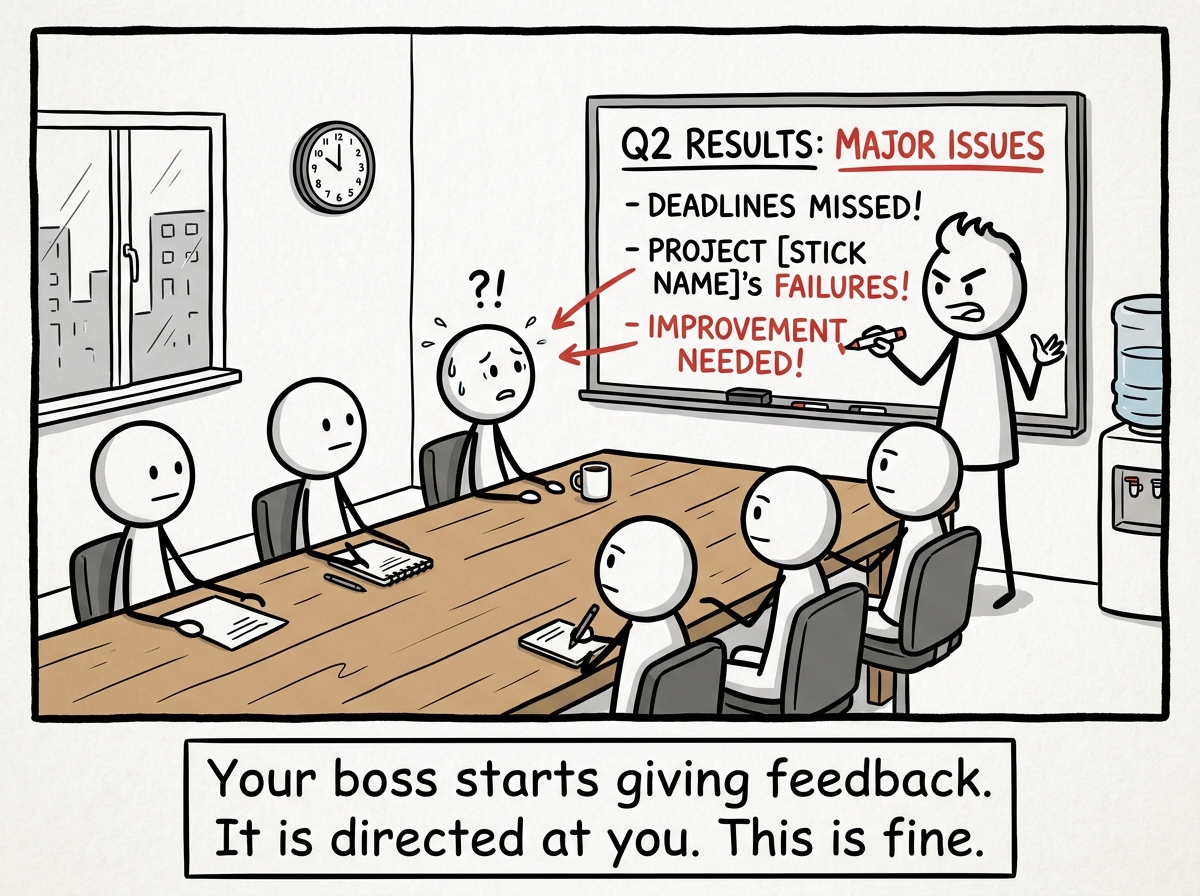
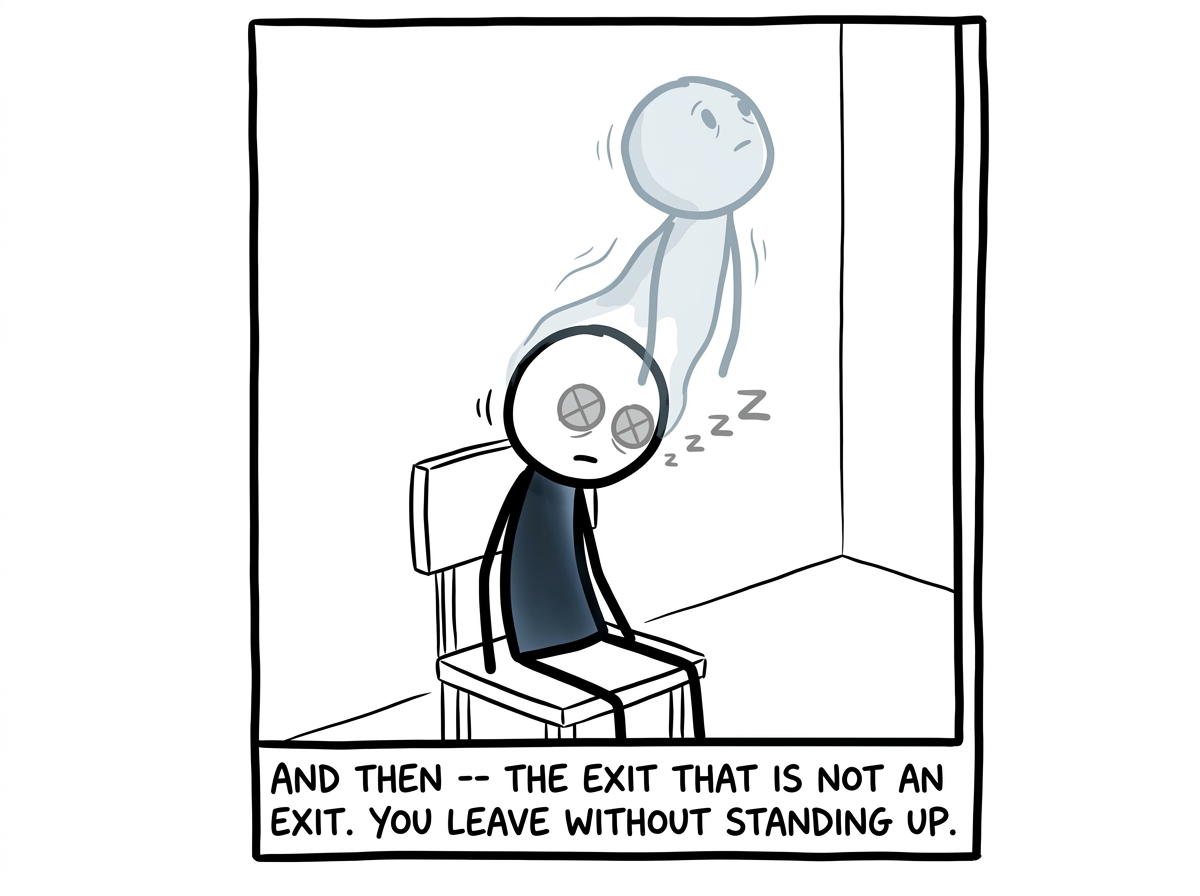
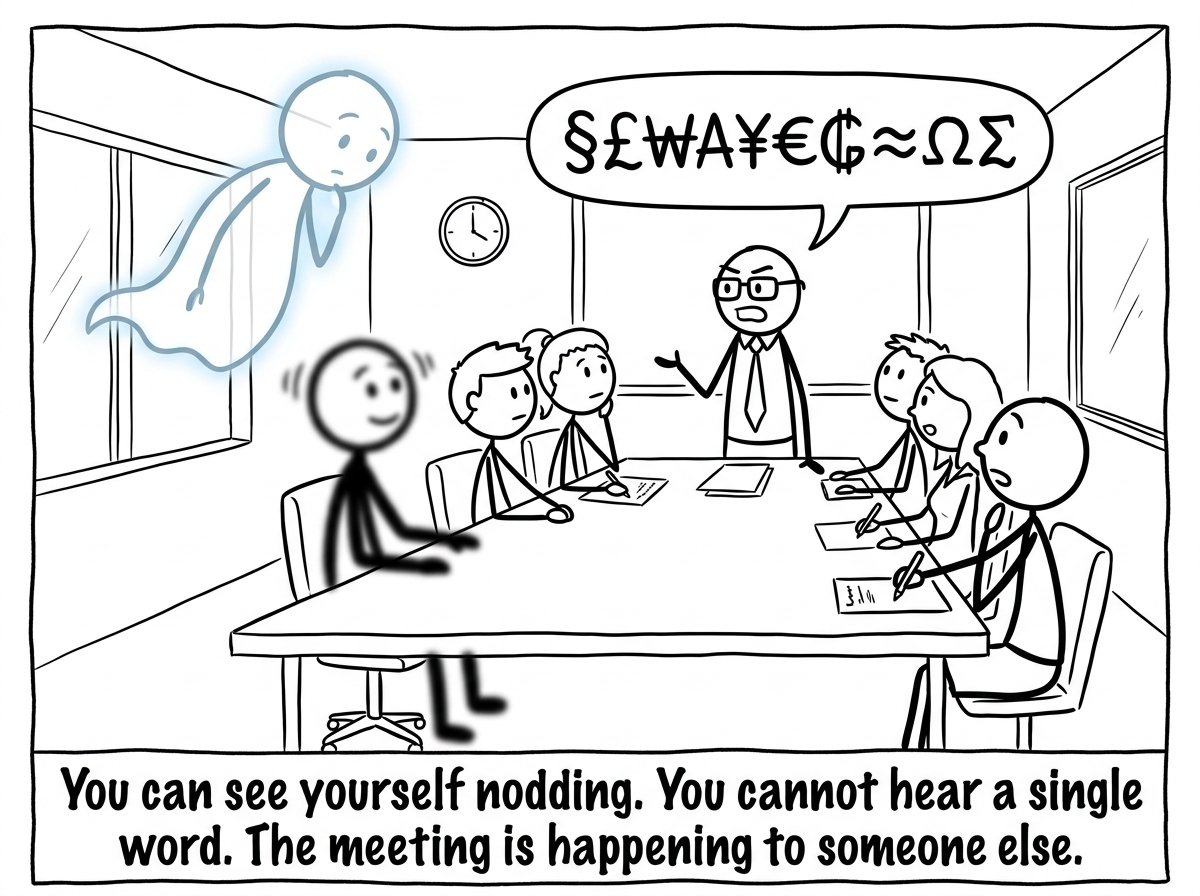
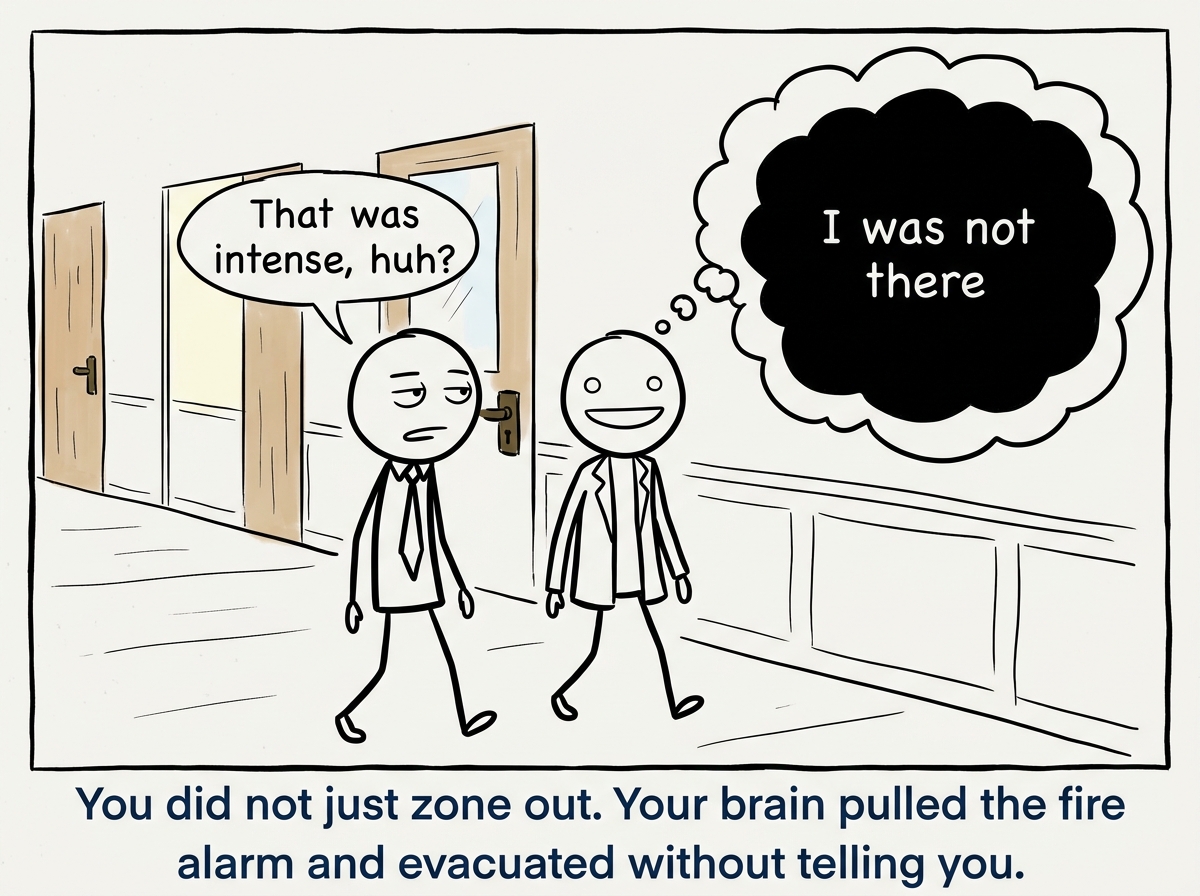
You are in a meeting. Your boss is giving critical feedback. Everyone is looking at you. And then -- you are gone. Not physically. Physically you are still sitting there, nodding at appropriate intervals, maybe even saying 'mm-hmm.' But inside, the lights went out. You are watching yourself from somewhere near the ceiling. The words being spoken sound like they are underwater. You could not repeat a single sentence if your life depended on it. When it is over, a coworker says 'that was intense' and you smile and agree, having absorbed exactly nothing. This is dissociation in everyday life -- your brain's emergency protocol for situations that feel overwhelmingly threatening. The critical feedback from your boss activated something older and deeper than this moment: a childhood experience of being criticized, punished, or shamed that your nervous system filed under 'danger.' When the current situation matches that old pattern, dissociation kicks in automatically. It is not a choice. It is your psyche pulling the emergency brake. Coming back from dissociation -- what clinicians call 'grounding' -- is a learnable skill. Techniques include engaging your senses (feeling your feet on the floor, noticing five things you can see), holding something cold, or gently pressing your fingertips together. The goal is not to prevent dissociation through willpower but to shorten the episodes and build a path back to the present. Over time, as your nervous system learns that the current situation is not the old danger, the need to leave without leaving diminishes.
Key Takeaway
Dissociation is not zoning out -- it is your mind evacuating a building it thinks is on fire.