The Mirror and the Stranger
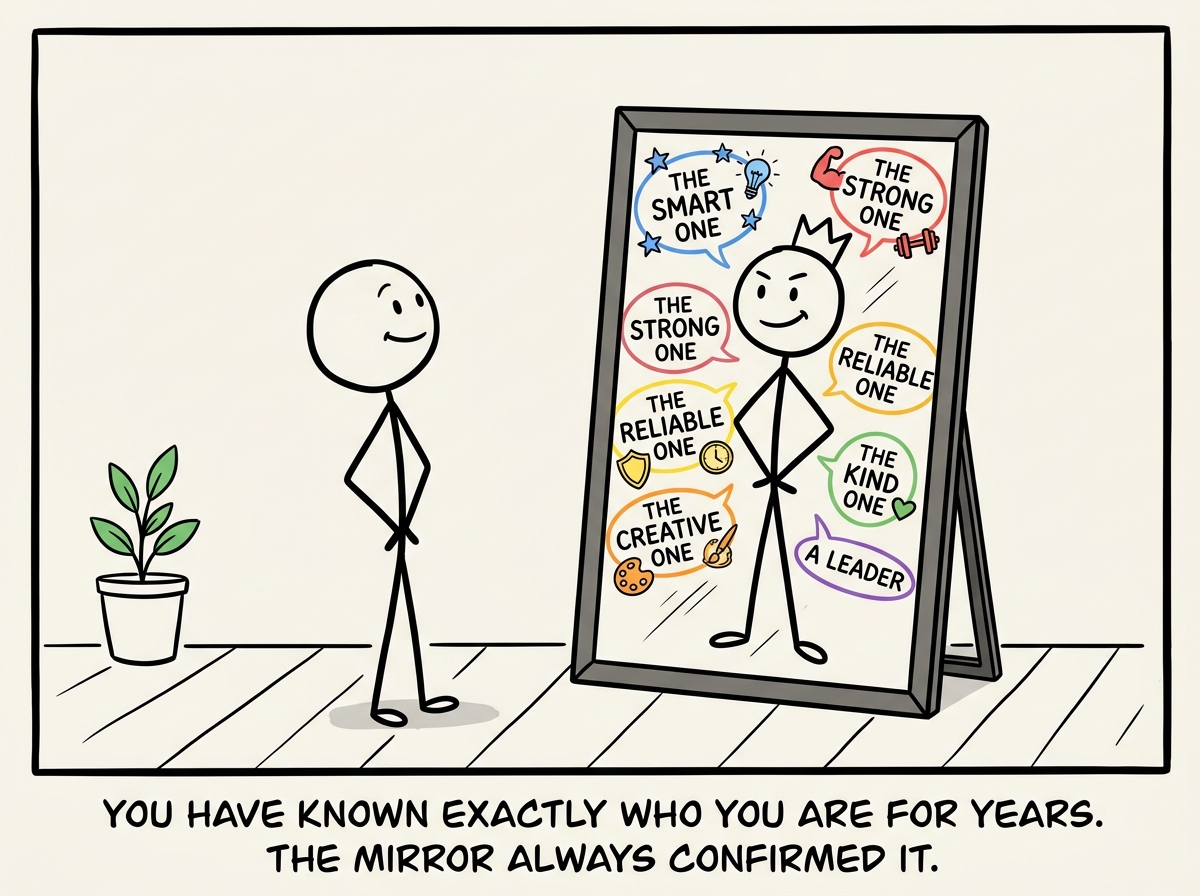
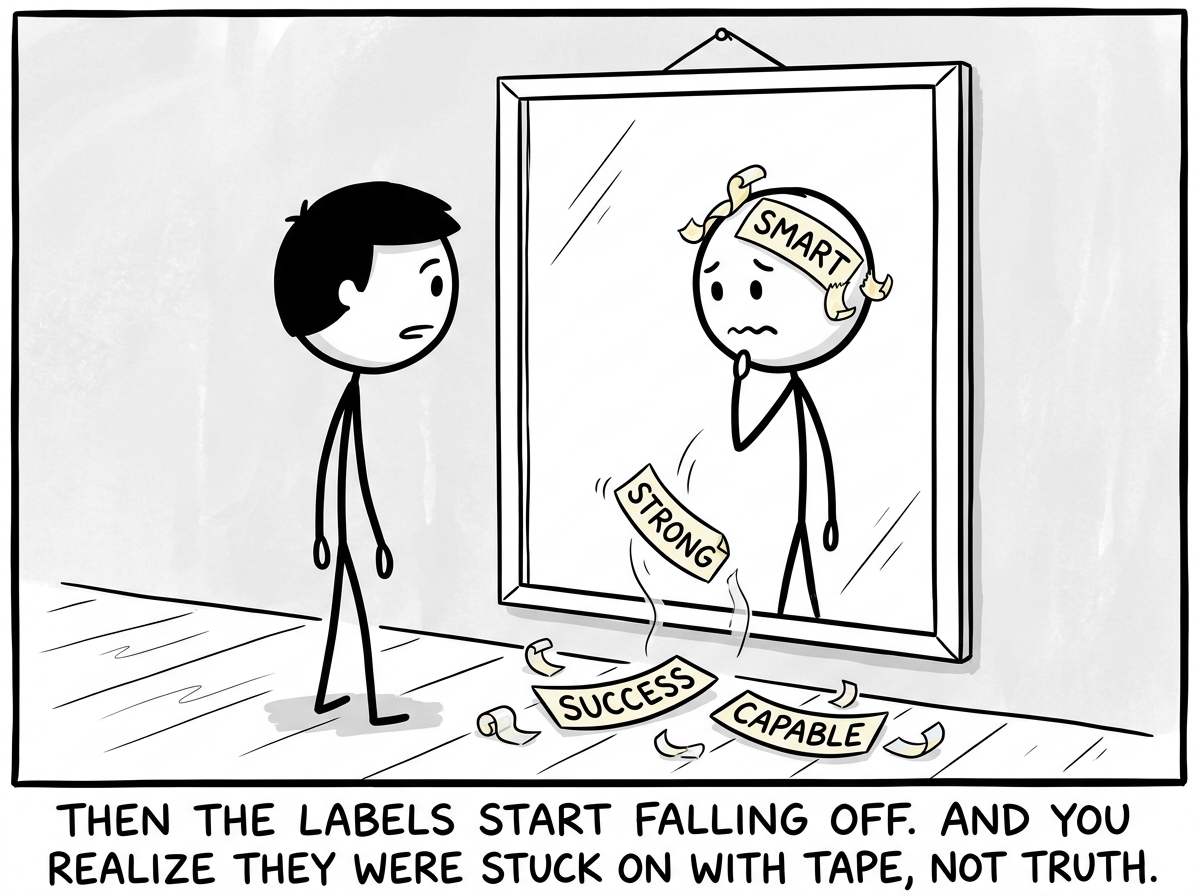
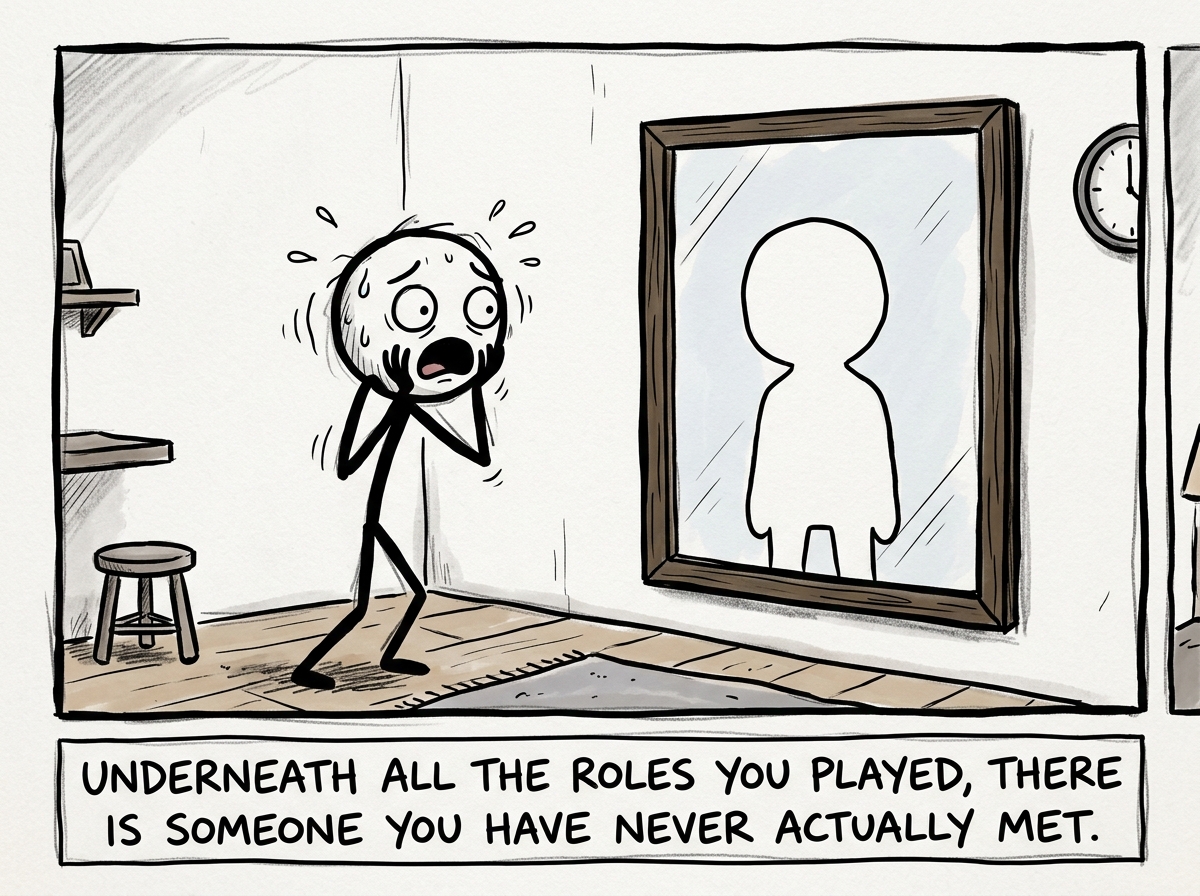
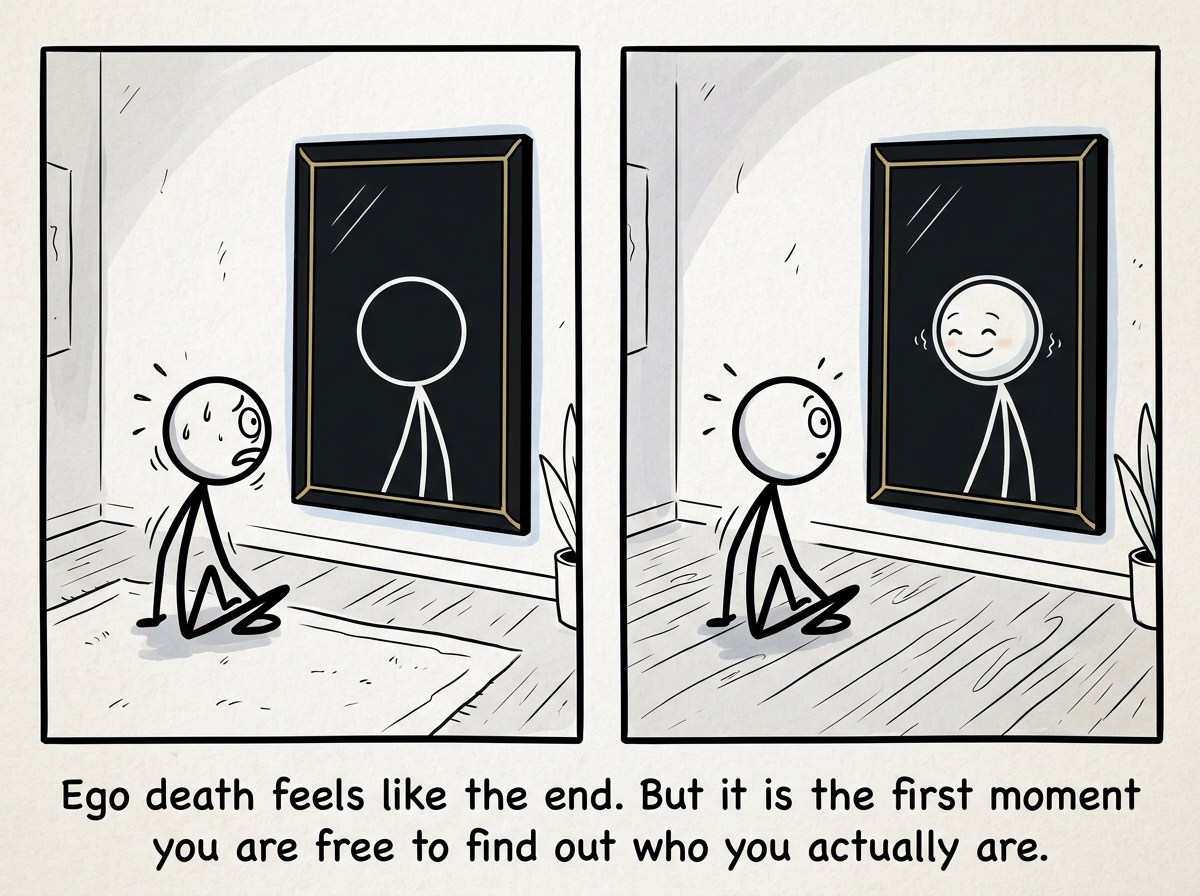
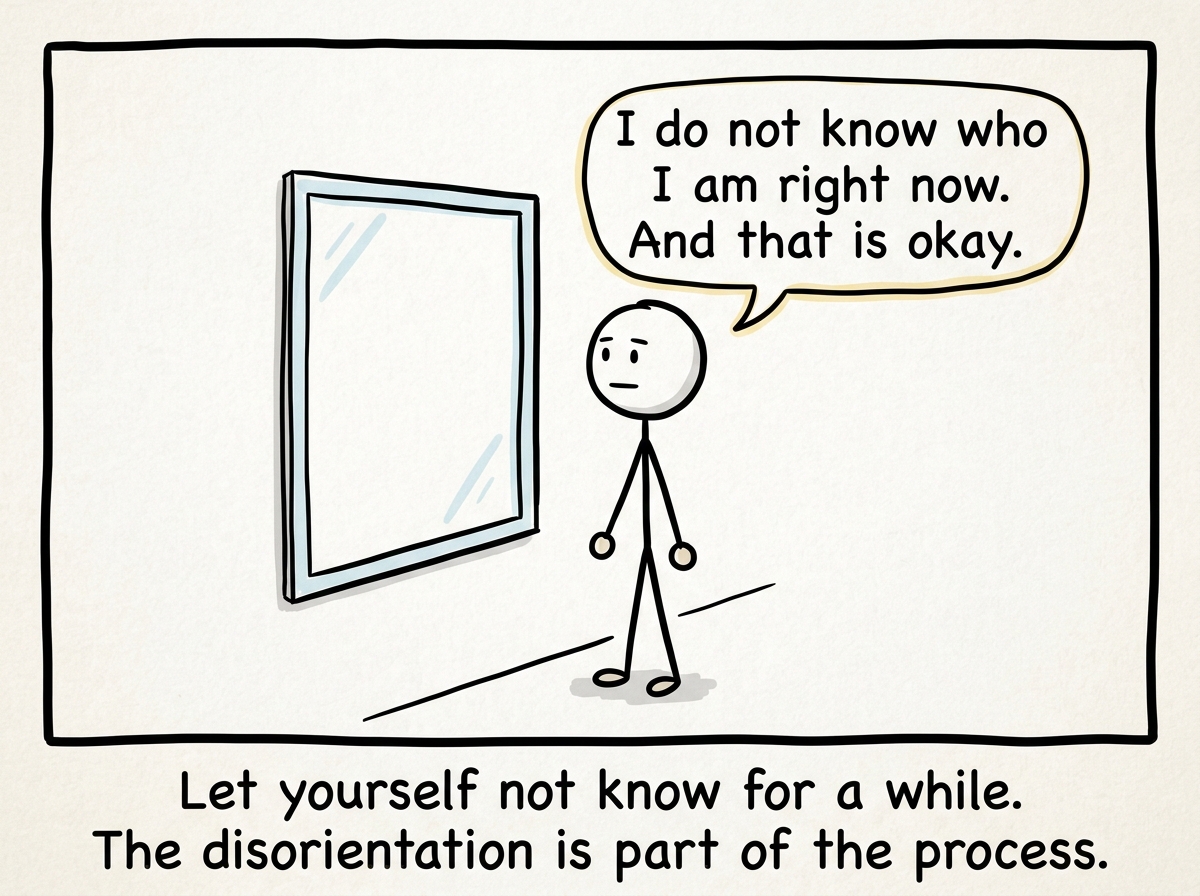
A person looks in the mirror and the reflection slowly stops matching who they thought they were, until the mirror shows someone they do not recognize at all.
Explanation
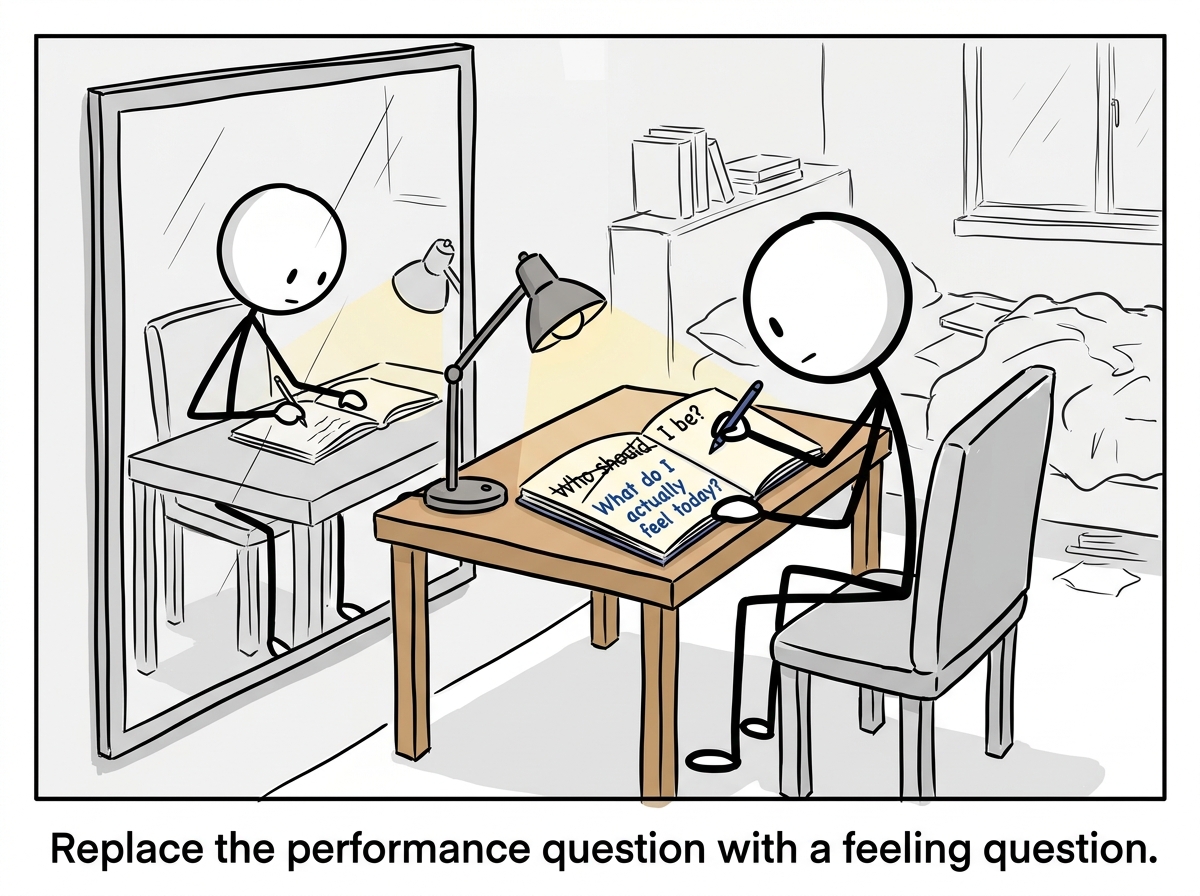
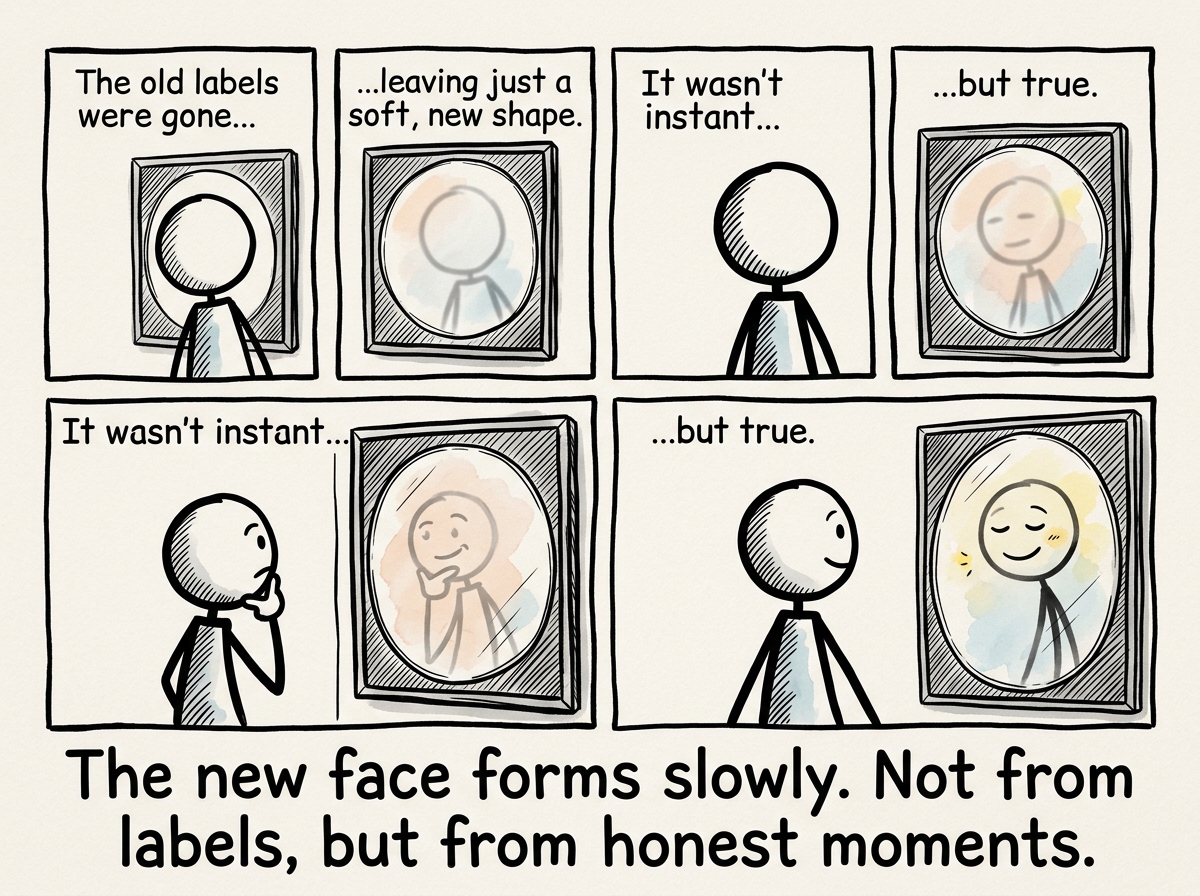
You have spent years knowing exactly who you are. You are the reliable one, the smart one, the one who has it together. Then one day -- maybe after a loss, a breakdown, or a conversation that cracked something open -- you look in the mirror and the person staring back does not match the story you have been telling. The labels you wore like armor start peeling off, and underneath them is someone you have never met. It is not that you became someone new. It is that the someone you were was never quite real. Ego death, as Carl Jung described it, is not the destruction of the self but the collapse of the false construction of the self. The ego -- that narrating voice that insists 'I am this kind of person' -- is a survival tool, not a truth. When it dissolves, it feels catastrophic because your brain interprets the loss of identity the same way it interprets a physical threat. The disorientation, the panic, the grief -- these are your nervous system mourning a story, not a person. Research in terror management theory confirms that threats to self-concept activate the same neural circuits as existential dread, which is why ego death can feel quite literally like dying. The stranger in the mirror is not your enemy. It is the version of you that existed before the story was written -- before you decided who you had to be to earn love, respect, or safety. Meeting that stranger requires sitting with the discomfort of not knowing who you are for a while. Not rushing to build a new identity on top of the rubble. The rebuilding will come, but only after you let yourself stand in the clearing long enough to hear what actually wants to grow there.
Key Takeaway
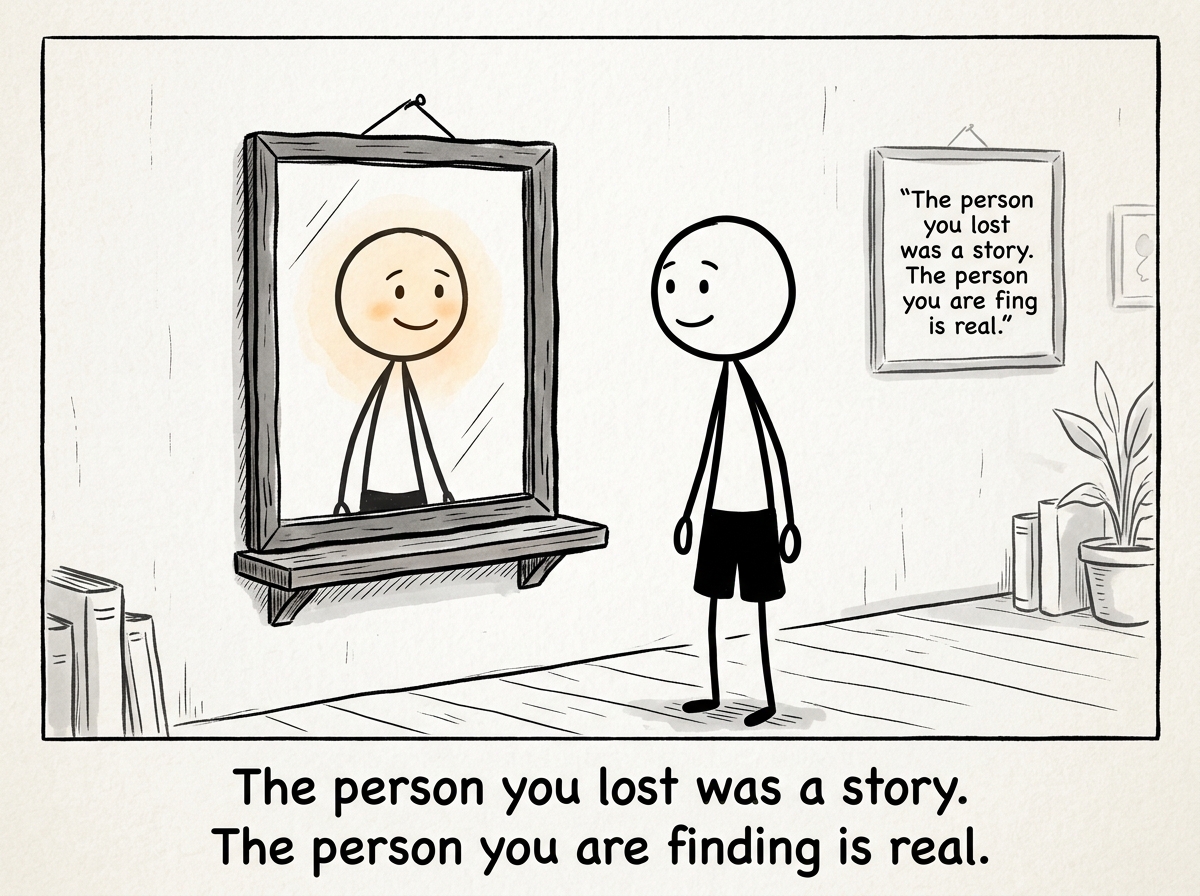
The person you lose during ego death was never the real you -- it was the story you told to survive.