The Character You Created
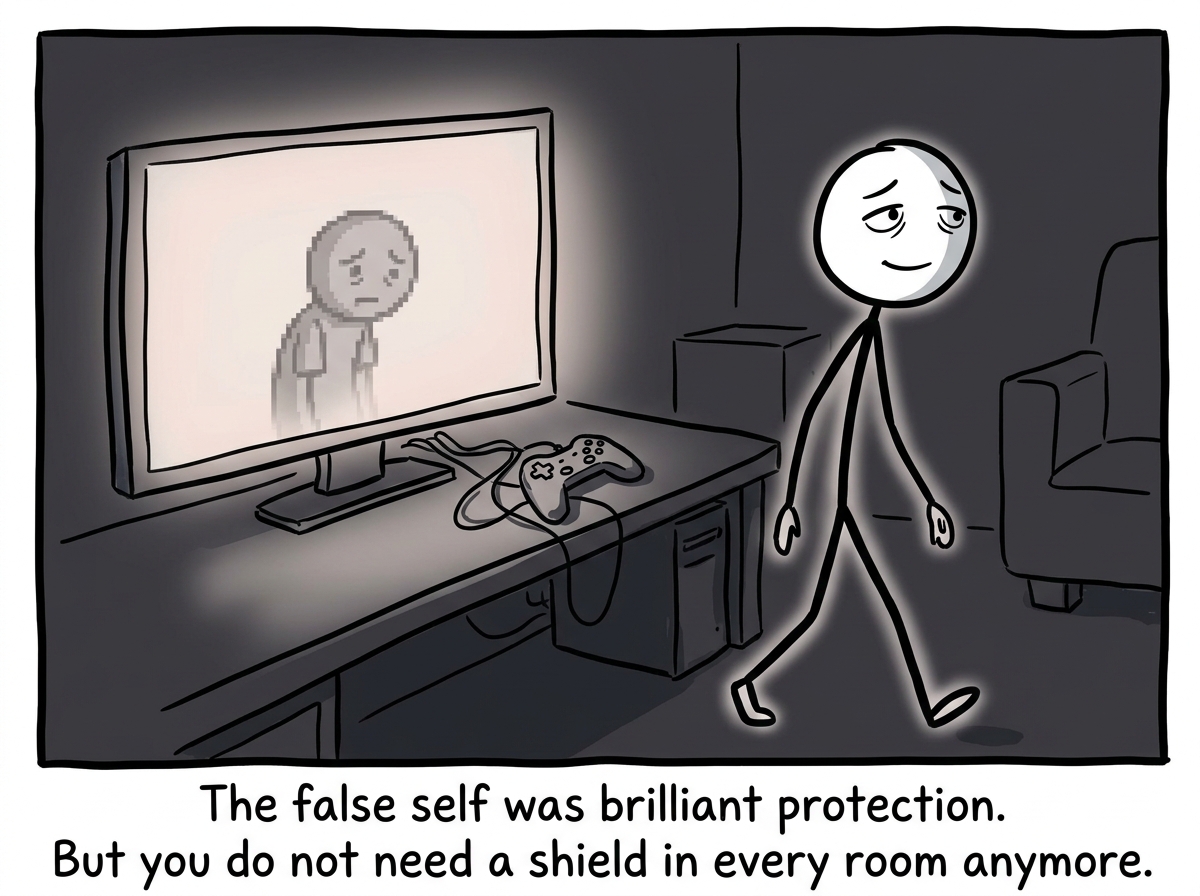
A person controls a polished avatar version of themselves like a video game character, while the real them sits behind the controller, exhausted and disconnected.

The personality you built to survive that now feels like a prison.
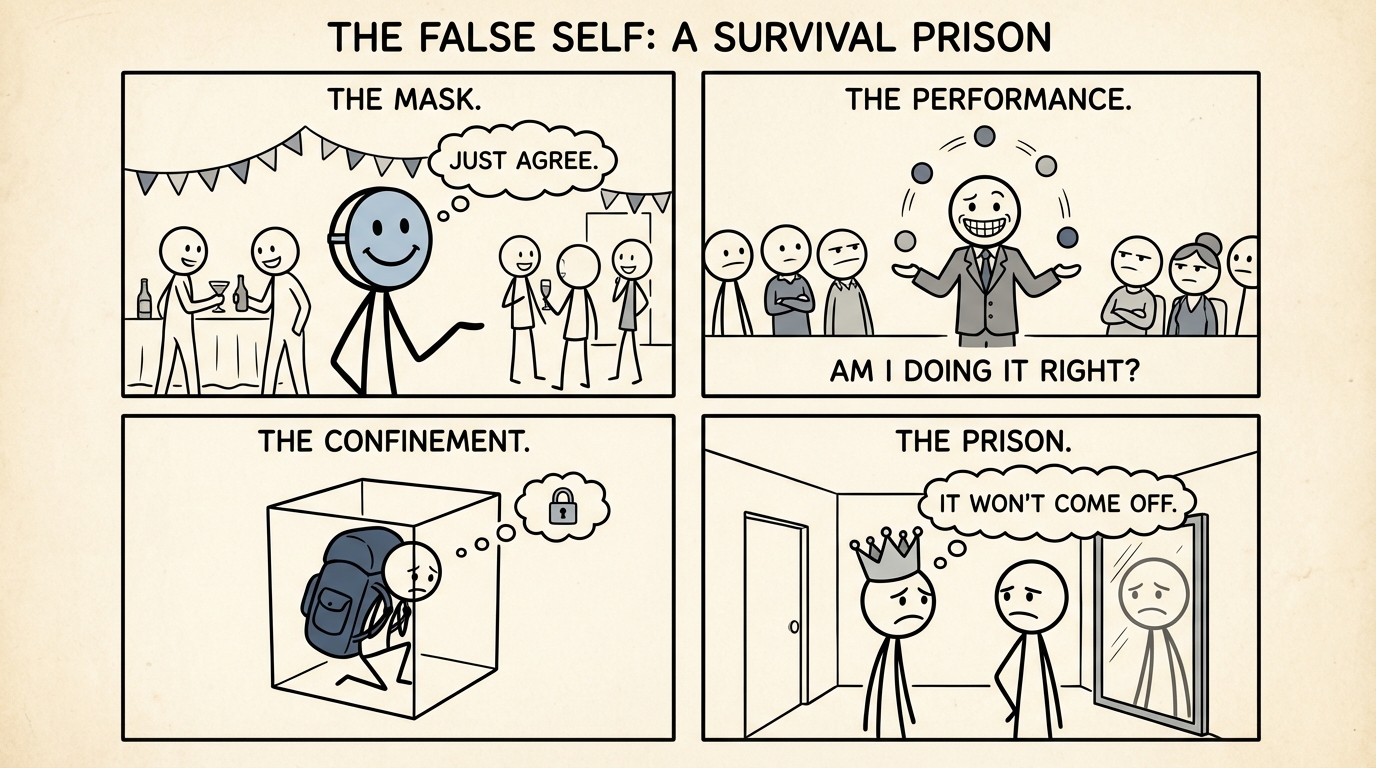
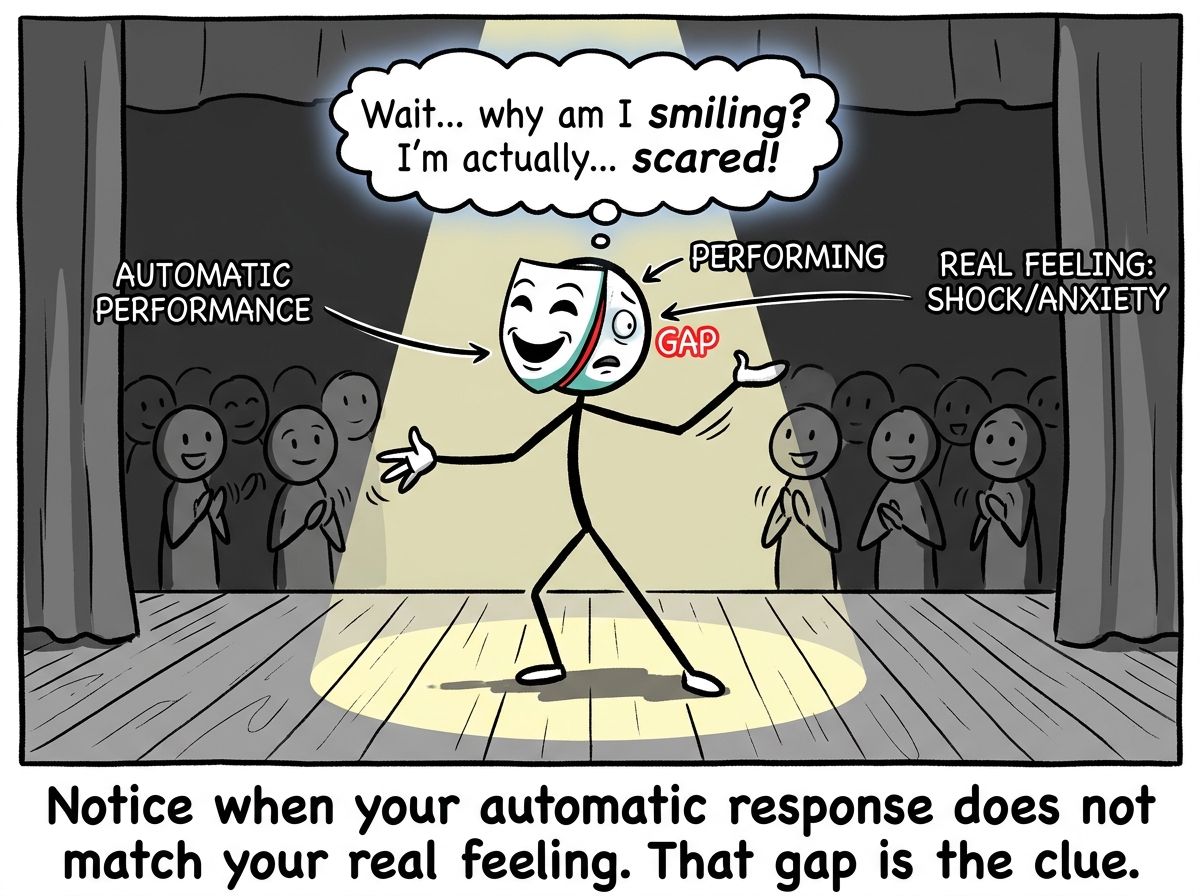
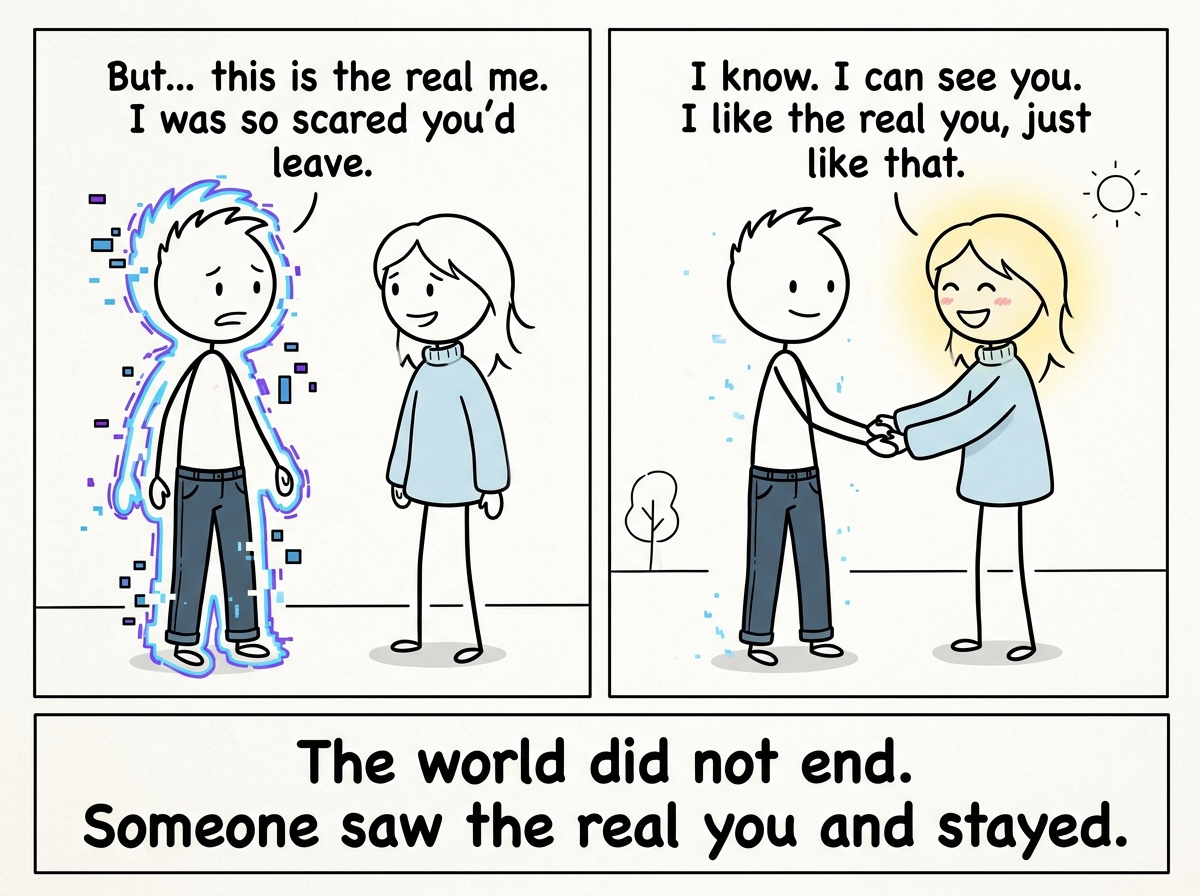
The false self is the adaptive personality you constructed -- often in childhood -- to meet the expectations of your environment when your authentic self was not welcomed. Psychoanalyst Donald Winnicott introduced this concept, describing how a child who senses that their true emotions or needs will be rejected learns to create a compliant, acceptable version of themselves. This false self becomes the interface between you and the world. It might look like the high achiever, the easygoing one, the caretaker, or the person who never makes waves. The problem is not that you created it -- the problem is that it worked. It worked so well that it became your default operating system, and over time, you lost access to the person underneath. You might find yourself feeling hollow despite external success, or sensing that something fundamental is missing even when everything looks fine on paper. The false self is not who you are -- it is who you had to become. It is a survival strategy that deserves your compassion, not your contempt. But it was never meant to be permanent. Reconnecting with your true self is not about destroying the false self -- it is about recognizing that you no longer need its protection the way you once did, and slowly giving yourself permission to be the person you were before the world told you that person was not enough.
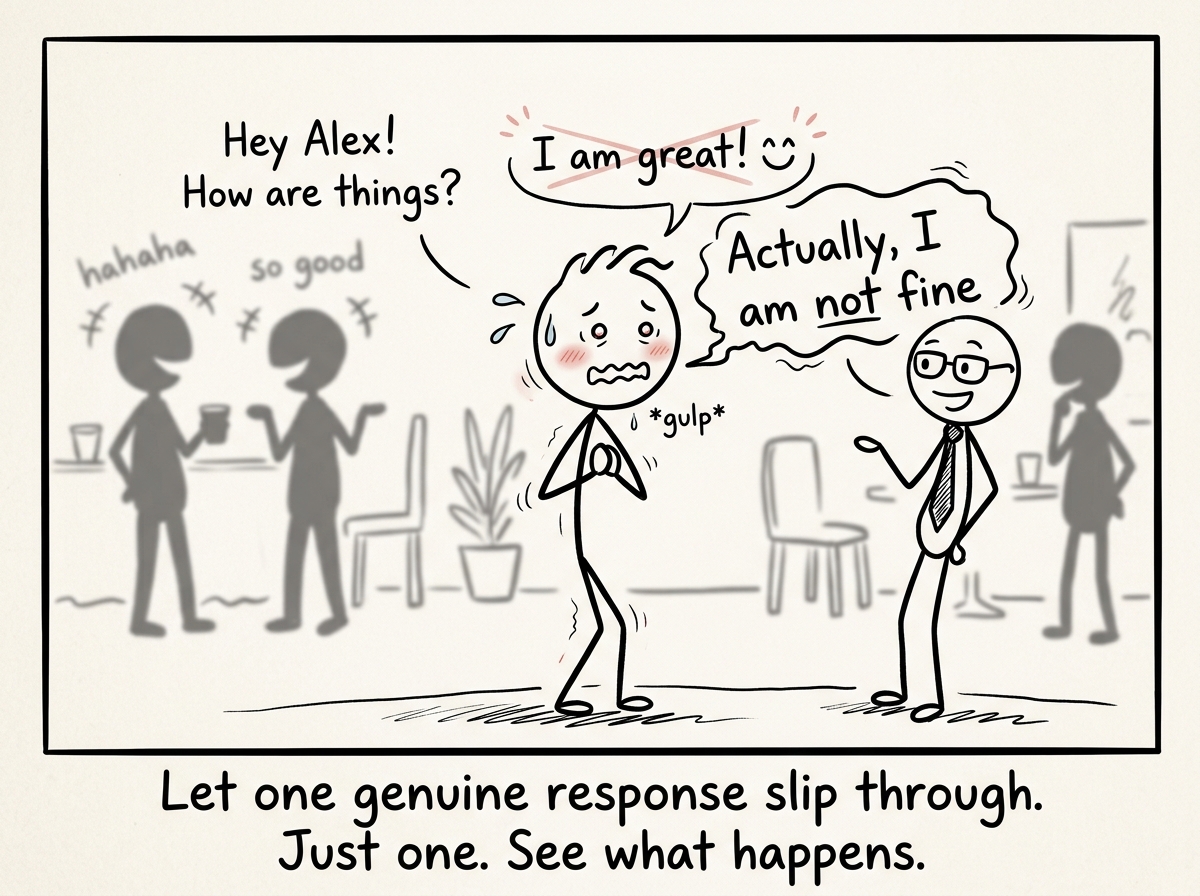
Reconnecting with your true self starts with noticing the gap between what you perform and what you actually feel -- and honoring the feeling.