The Unnoticed Acts of Service
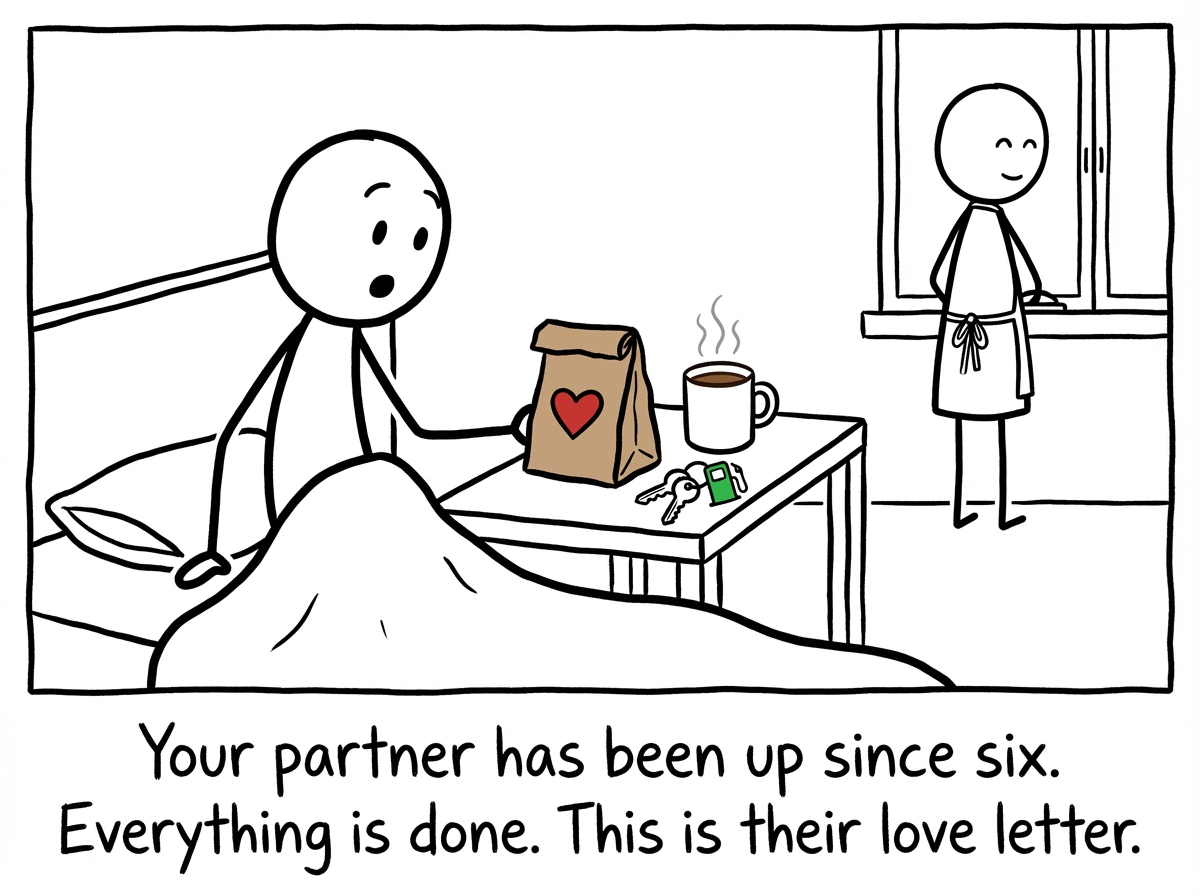

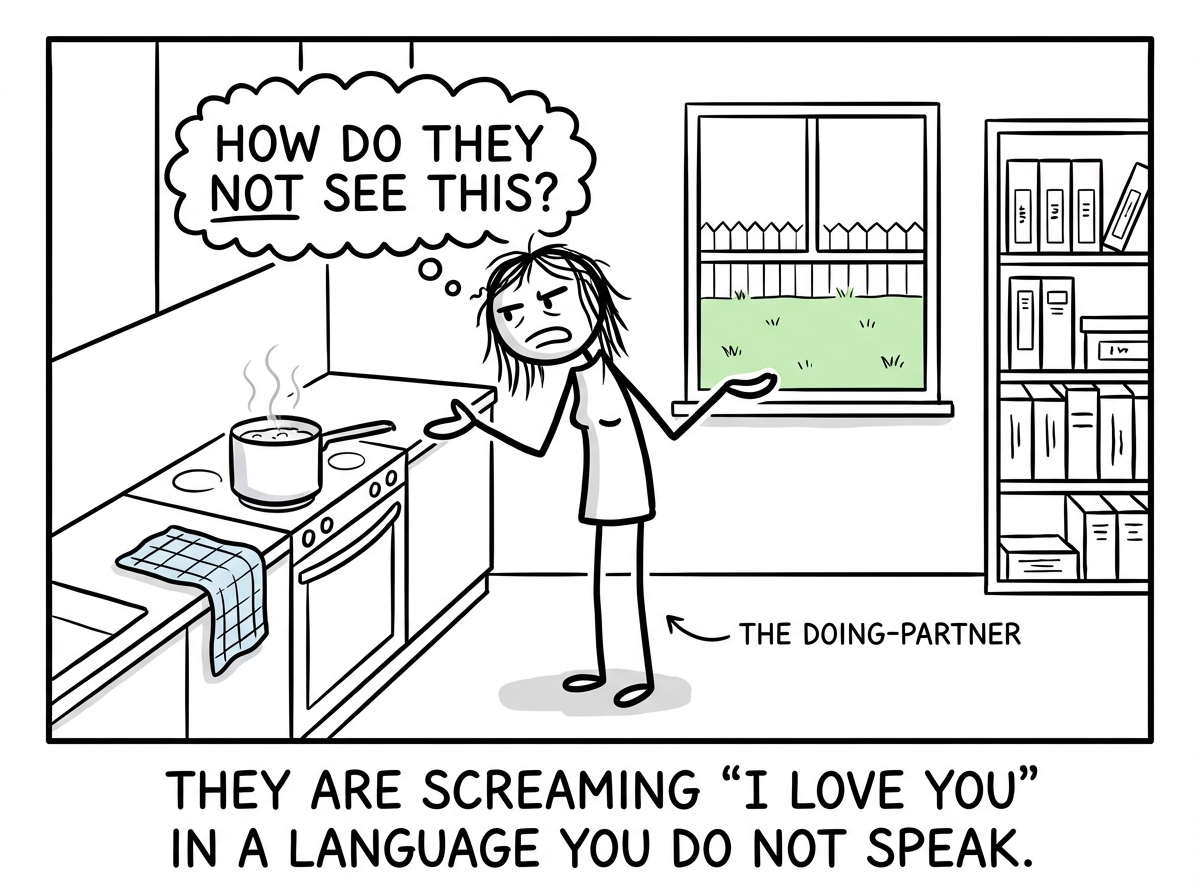

One partner silently does everything around the house as their way of saying I love you, but the other partner never notices because they are waiting to hear the actual words.
Explanation
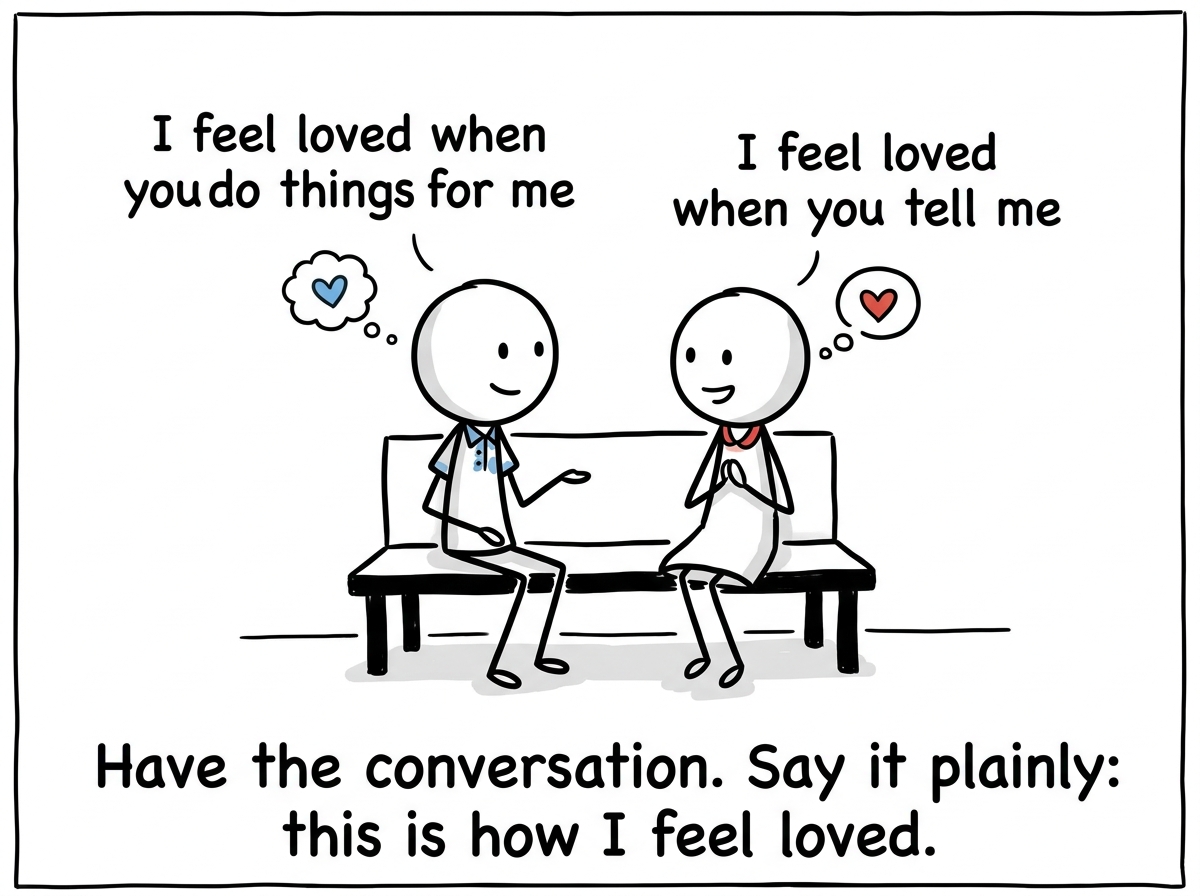
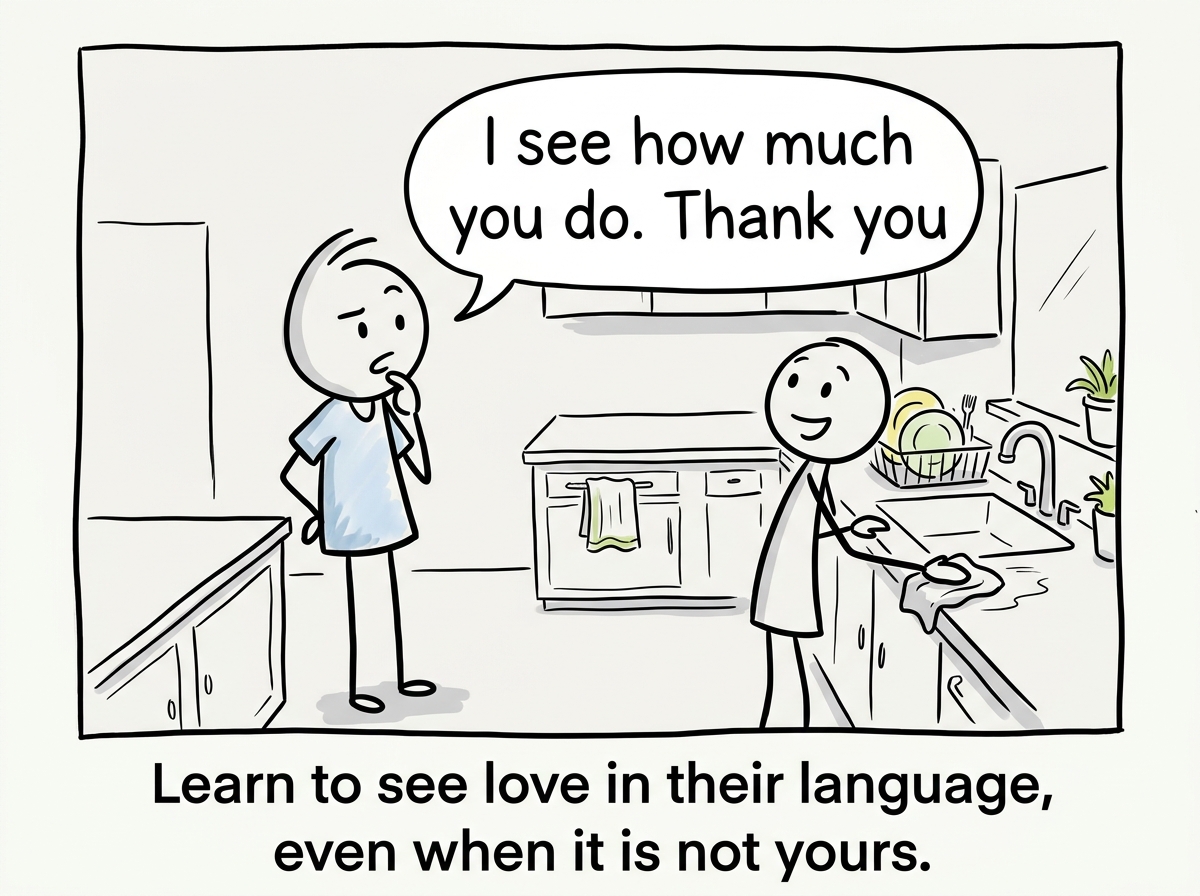
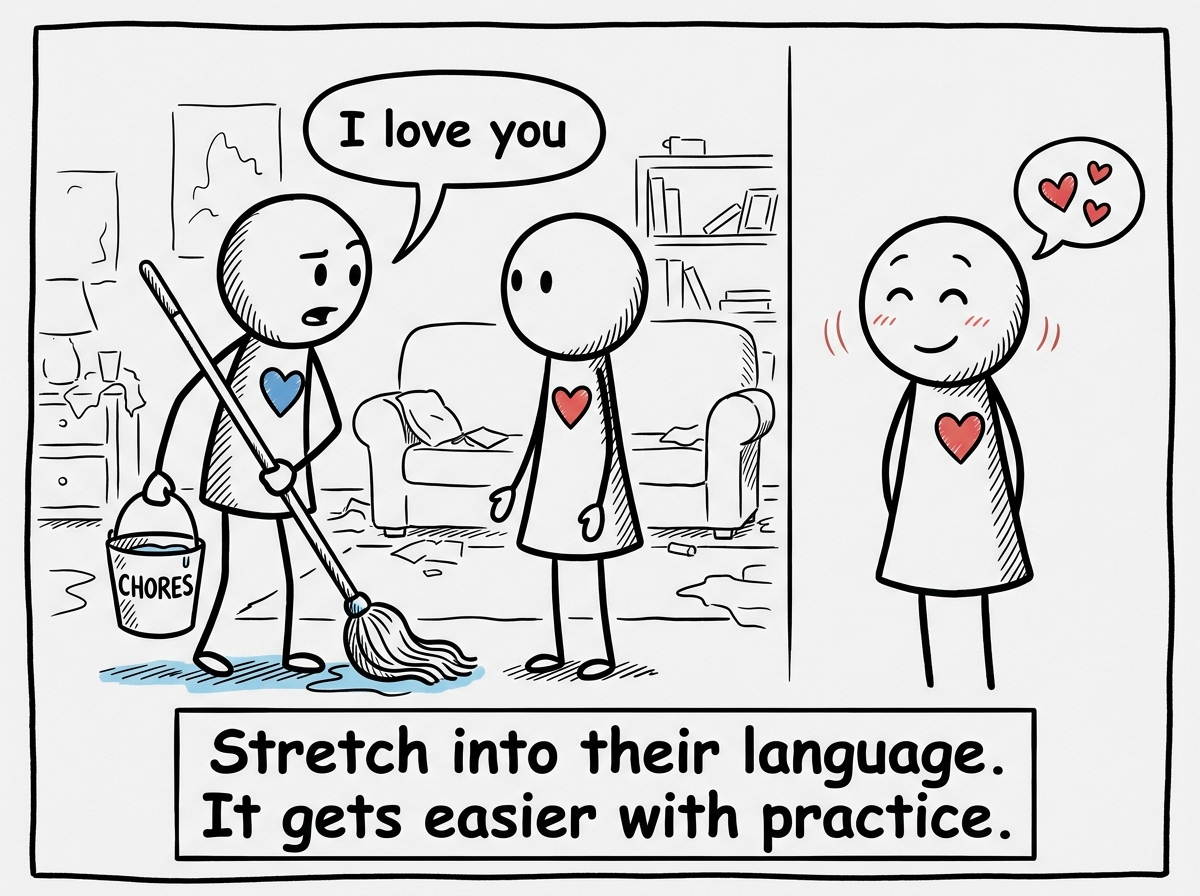
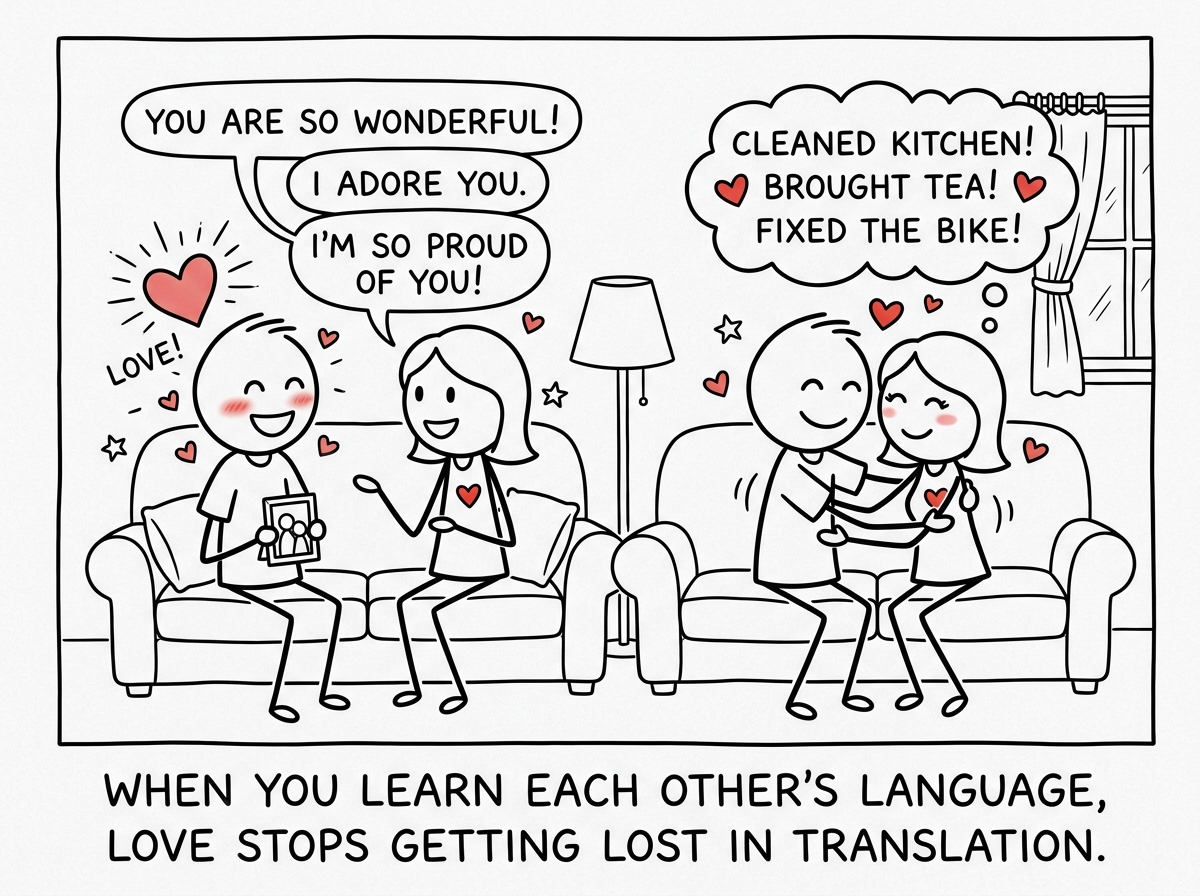
Every morning you wake up to a made bed, a packed lunch, and a full tank of gas. Your partner does the grocery shopping, takes the car in for oil changes, and always remembers to refill the water filter. They never say 'I love you' in so many words, and honestly, you are starting to wonder if they even feel it. Meanwhile, your partner cannot understand why you seem so dissatisfied when they have been pouring love into every chore and errand for months. This is what happens when acts of service meet words of affirmation. One partner's love language is doing -- they show care through action, and they assume that a clean kitchen speaks louder than any sentence. The other partner's love language is hearing -- they need the actual words, the verbal reassurance, the spoken appreciation. Without it, all those acts of service just look like someone who is good at housework. The emotional meaning gets completely lost. The breakthrough comes when both partners can articulate what makes them feel loved without framing the other person's language as inferior. If your partner does the dishes every night, that is not just tidiness -- that is devotion in their native tongue. And if you need to hear 'I love you' and 'I appreciate you' regularly, that is not neediness -- that is how your emotional system registers safety. The goal is bilingual love, where both people stretch to speak the other's language even when it does not come naturally.
Key Takeaway
Some people say I love you with a mop. Others need to hear the actual words. Both are valid.