6 steps
How to Align Love Languages with Your Partner
Identify your love languages, understand your partner's, and create daily practices that make both of you feel genuinely loved.

The five ways people give and receive love -- and what happens when yours does not match.
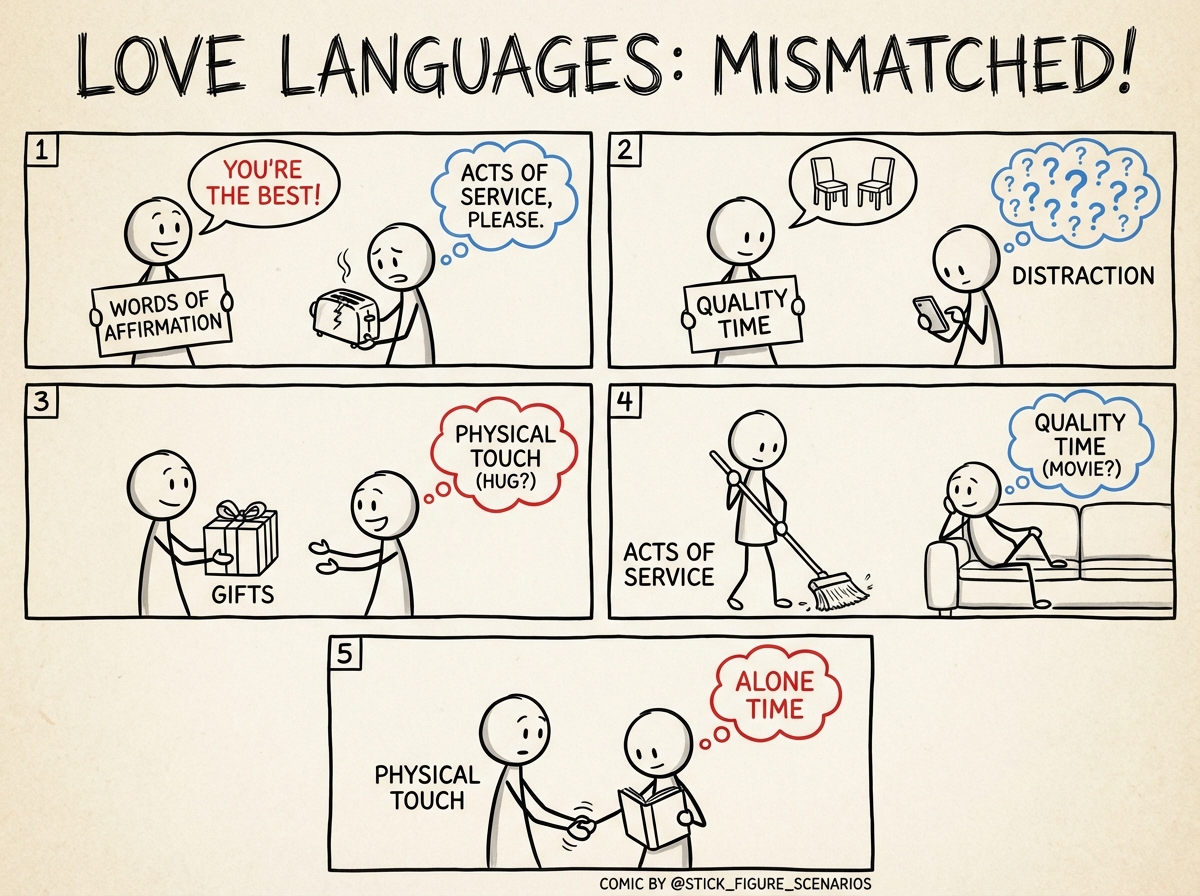
In 1992, Gary Chapman introduced the concept of five love languages: words of affirmation, acts of service, receiving gifts, quality time, and physical touch. The idea is simple but powerful -- people express and experience love differently, and most of us default to showing love in the way we want to receive it, not the way our partner actually feels it. When love languages are mismatched, both people can be genuinely trying and still feel unloved. You might be doing the dishes every night (acts of service) while your partner is silently starving for a compliment (words of affirmation). Neither of you is wrong -- you are just speaking different emotional dialects. While the love languages framework has its critics and is not a substitute for deeper therapeutic work, it remains one of the most accessible entry points for understanding why your best efforts in a relationship can still miss the mark. Learning your own language and your partner's is less about perfection and more about paying attention.
Love is not about giving the way you want to receive -- it is about learning what actually makes the other person feel loved.
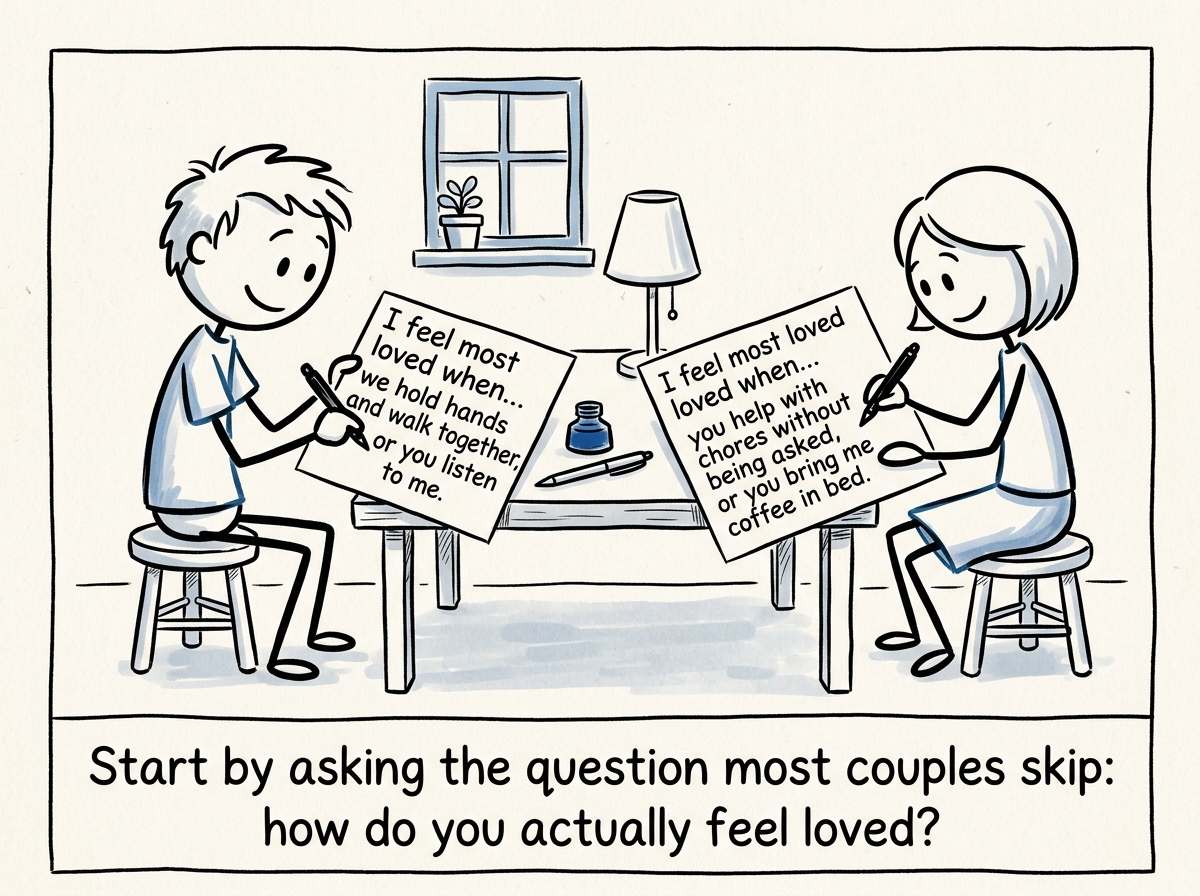
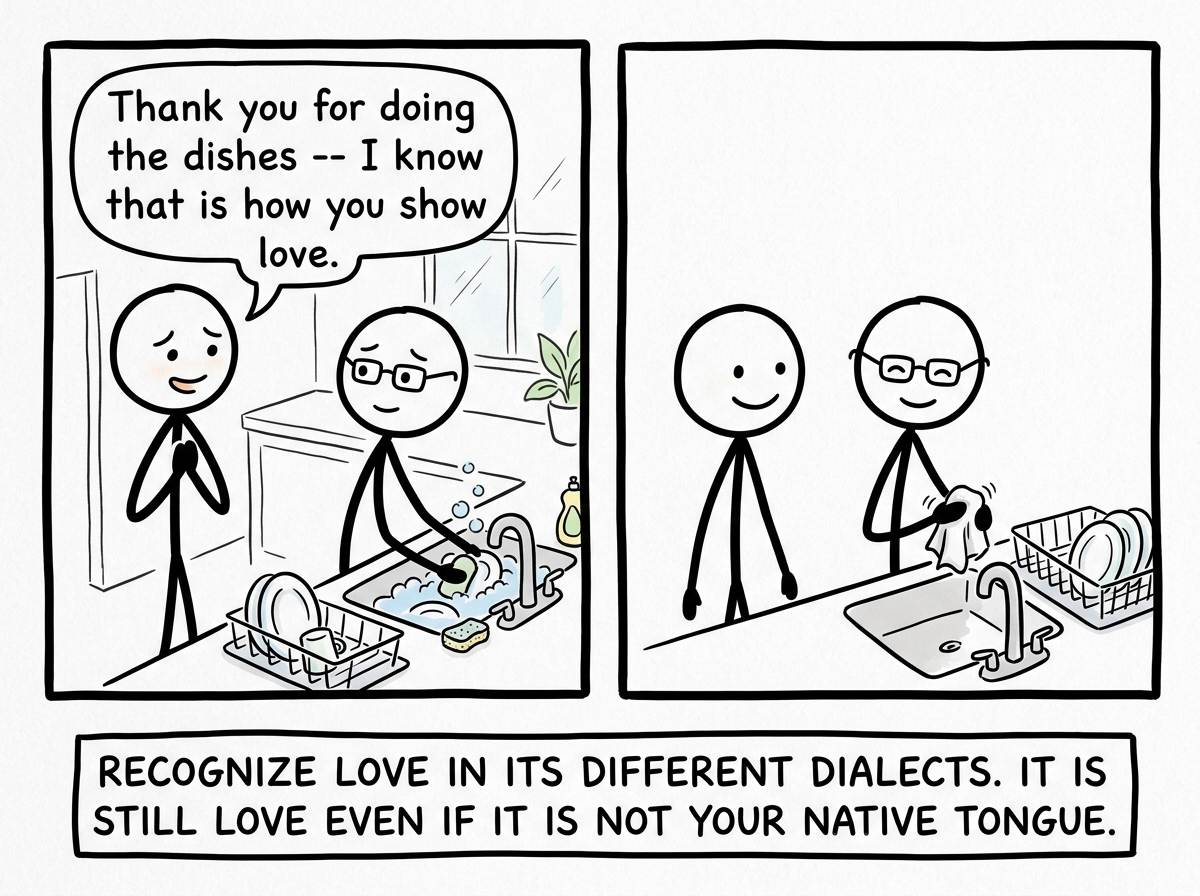
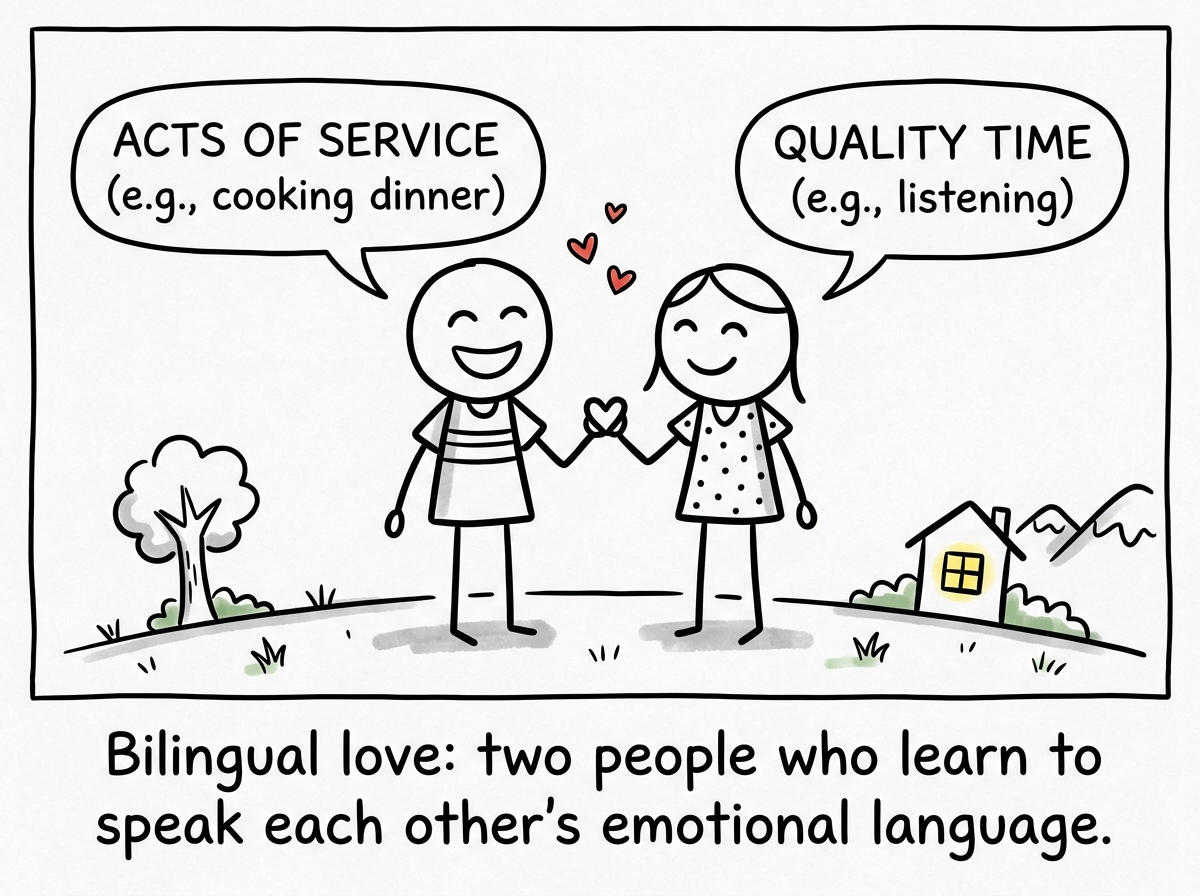
One partner silently does everything around the house as their way of saying I love you, but the other partner never notices because they are waiting to hear the actual words.
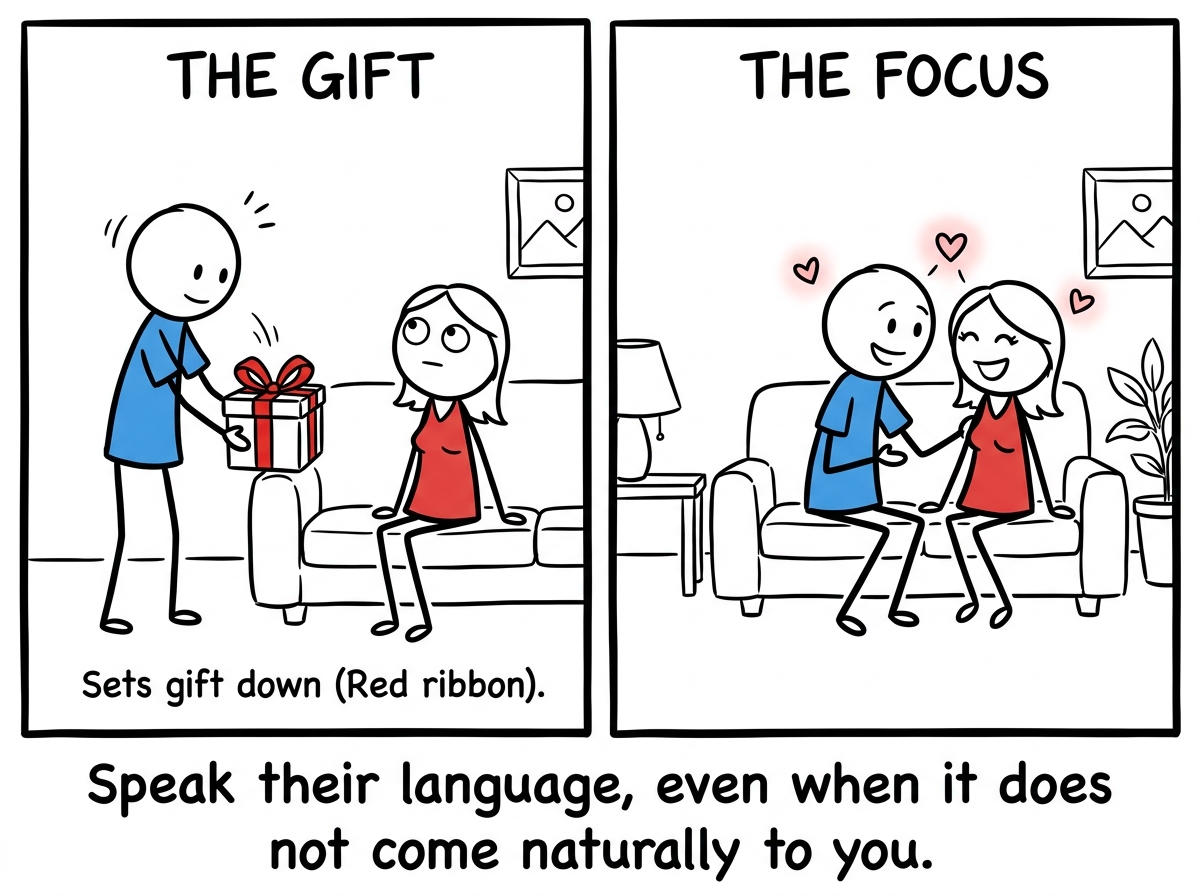
A partner keeps buying elaborate gifts while the other just wants them to sit down and be present.