How to Align Love Languages with Your Partner
Identify your love languages, understand your partner's, and create daily practices that make both of you feel genuinely loved.
Before You Begin
Most relationship frustration isn't about a lack of love — it's about a translation problem. You might be pouring effort into showing your partner you care, but if you're speaking in acts of service while they're listening for words of affirmation, your love lands like a foreign language they can't quite parse. The five love languages framework — words of affirmation, quality time, receiving gifts, acts of service, and physical touch — isn't a personality test. It's a practical tool for understanding how you and your partner give and receive love differently. This guide will help you close the gap between how you're expressing love and how your partner actually feels it.
-
Identify Your Primary Love Language
Your love language is usually hiding in your complaints and your longings. Start by paying attention to what hurts most when it's missing and what fills you up most when it's present.
- If you feel most wounded when your partner doesn't notice your efforts or say something appreciative, words of affirmation might be your language.
- If you feel most disconnected when you're together but not really together — phones out, distracted, multitasking — quality time is likely yours.
- If a thoughtful, unexpected gift makes your whole week, even something small, you may speak receiving gifts.
- If you feel most loved when your partner handles something you were dreading without being asked, acts of service is your language.
- If you physically ache for a hug, a hand on your back, or sitting close on the couch, physical touch is speaking to you.
Most people have a primary and a secondary language. Knowing yours gives your partner a map instead of asking them to guess.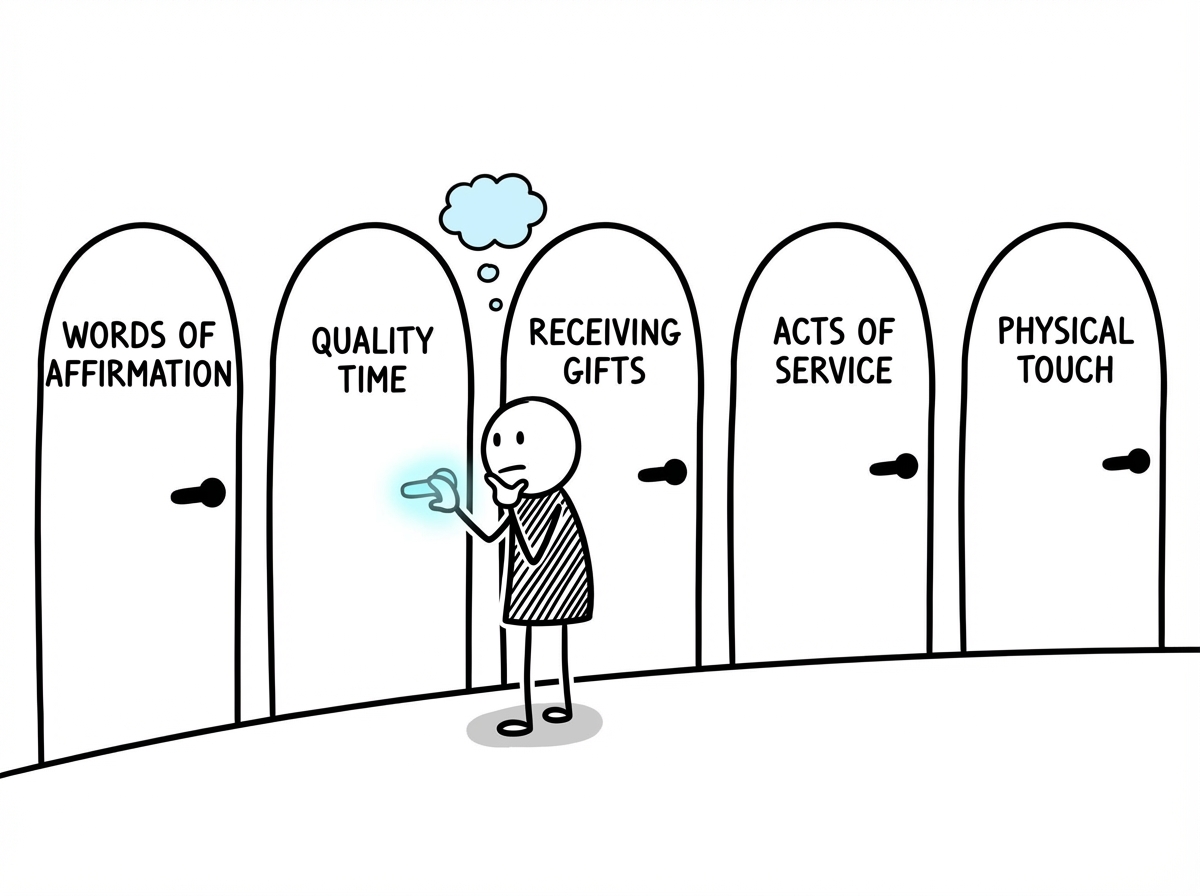
-
Learn Your Partner's Language
Now turn the lens toward your partner. The goal isn't to assume you already know — it's to get curious. Ask them directly: "What makes you feel most loved by me?" and "When do you feel most disconnected from me?" Their answers will point you toward their language. You can also observe: How does your partner naturally express love to you? People tend to give love in the language they most want to receive it. If your partner is always doing things for you — making coffee, handling errands, fixing things — there's a good chance acts of service is how they feel loved too. If they're constantly reaching for physical contact, that's a signal. Listen to what they complain about most, because complaints are often unmet love language needs in disguise. "You never say anything nice" is a words of affirmation request. "We never just hang out anymore" is a quality time plea.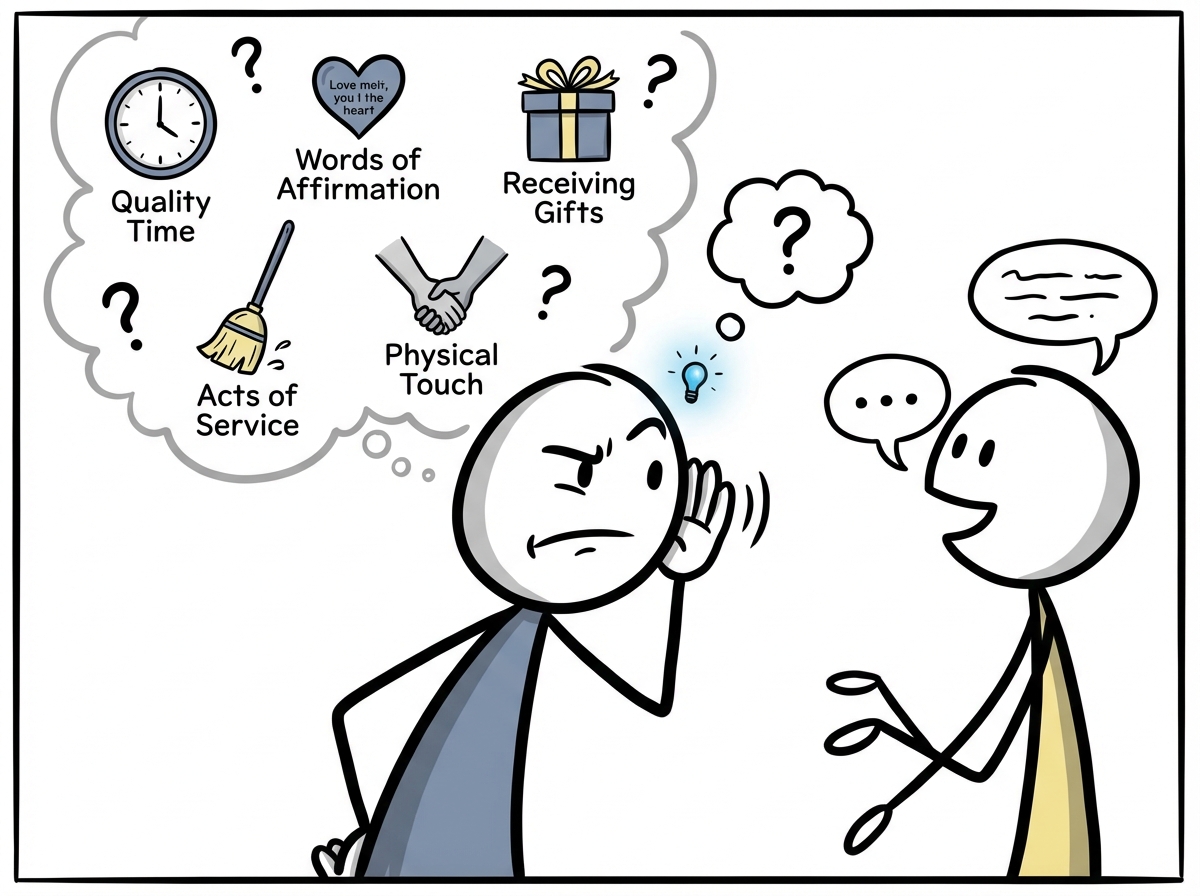
-
Notice the Mismatch Moments
Once you know both languages, start watching for the moments where you're expressing love in your language but your partner needs it in theirs. These mismatch moments are where most everyday relationship friction lives. Maybe you spent Saturday cleaning the entire house — an act of service — and your partner seemed unimpressed because what they really needed was thirty minutes of your undivided attention. Maybe your partner bought you a thoughtful gift, but you would have rather they just sat with you and talked. Neither person is wrong. Both are loving. The love is just getting lost in translation. Start naming these moments without blame: "I think I was showing love my way, not yours." This awareness alone can dissolve a surprising amount of resentment, because it reframes the problem from "they don't care" to "we speak different languages."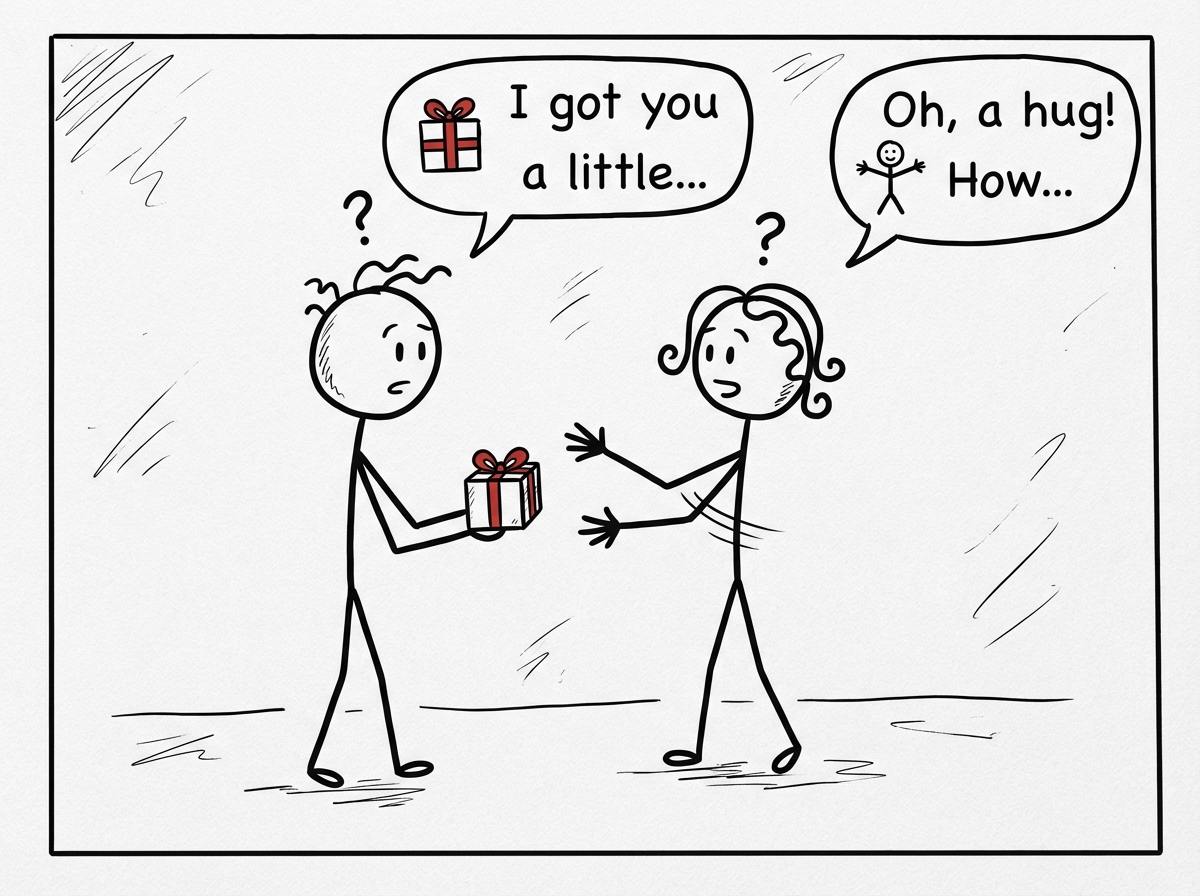
-
Create a Love Language Ritual
Knowledge without practice is just trivia. Turn what you've learned into a daily or weekly ritual that deliberately speaks your partner's language. If their language is words of affirmation, commit to one genuine compliment or expression of gratitude each day — not generic, but specific to something you actually noticed. If it's quality time, protect thirty minutes of phone-free, undistracted time together each evening. If it's acts of service, pick one task your partner dreads and quietly handle it. If it's physical touch, build in moments of non-sexual affection throughout the day. If it's gifts, leave small thoughtful tokens where they'll find them. The ritual doesn't need to be elaborate. Consistency matters more than grandness. Put it in your calendar if you need to. What feels mechanical at first will become natural once you see how your partner lights up in response.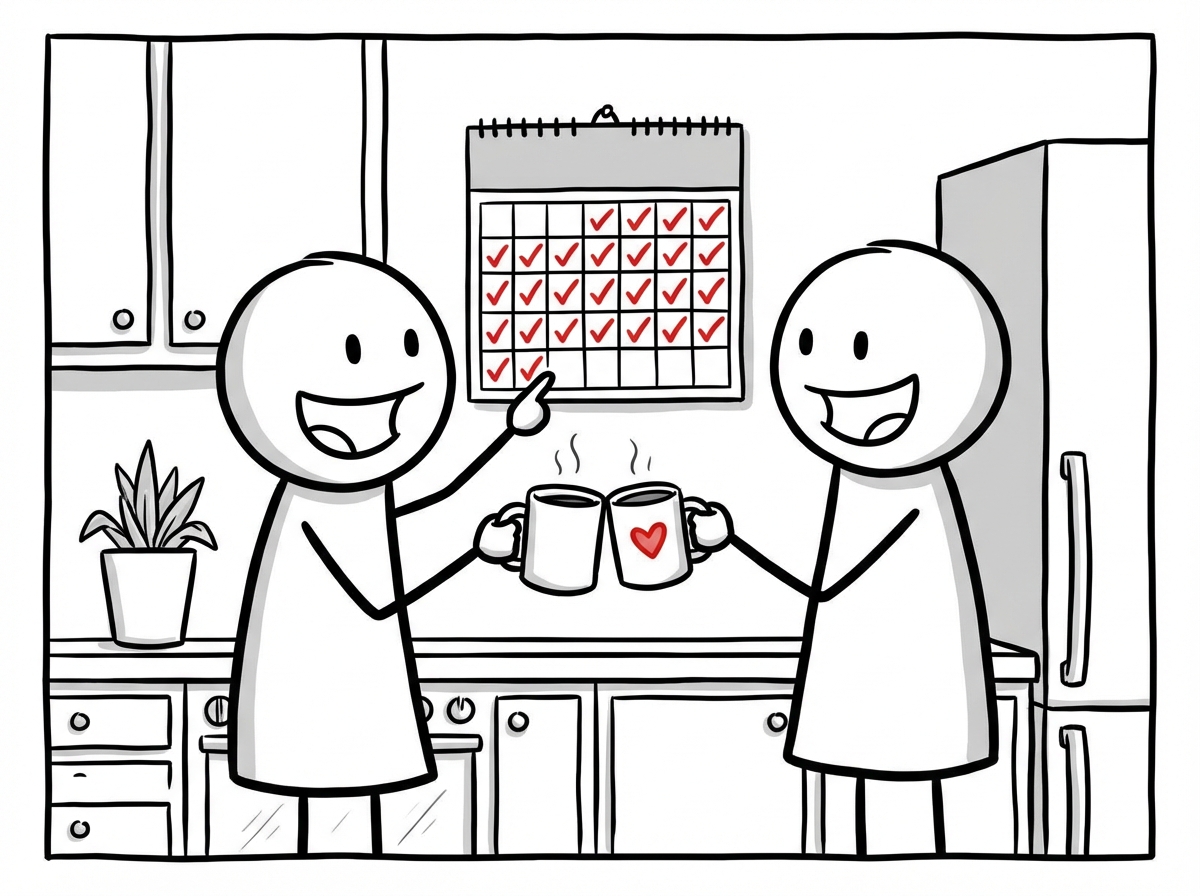
-
Speak Their Language Even When It Feels Unnatural
Here's where most people get stuck: your partner's love language often doesn't come naturally to you, precisely because it's not your language. If you express love through physical touch and your partner needs words of affirmation, it might feel awkward or forced to say "I'm proud of you" or "you mean the world to me." That awkwardness is normal and it doesn't mean you're being inauthentic. You're learning a new language, and early fluency always feels clunky. The effort itself communicates love — your partner will recognize that you're stretching beyond your comfort zone for them. Don't wait until it feels natural to start. Start now, and let the naturalness develop through repetition. Think of it this way: you're not changing who you are. You're expanding your capacity to love someone the way they need to be loved, not just the way that's easy for you.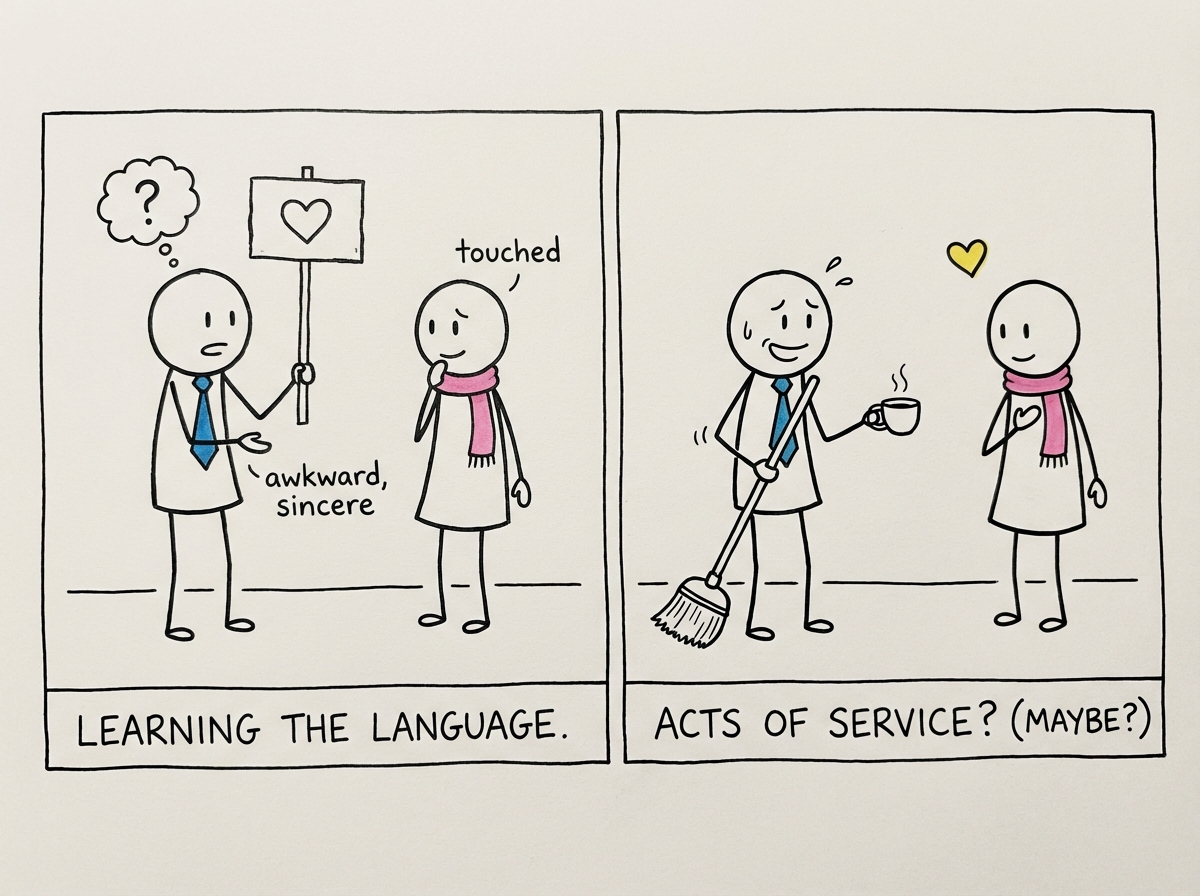
-
Check In Regularly
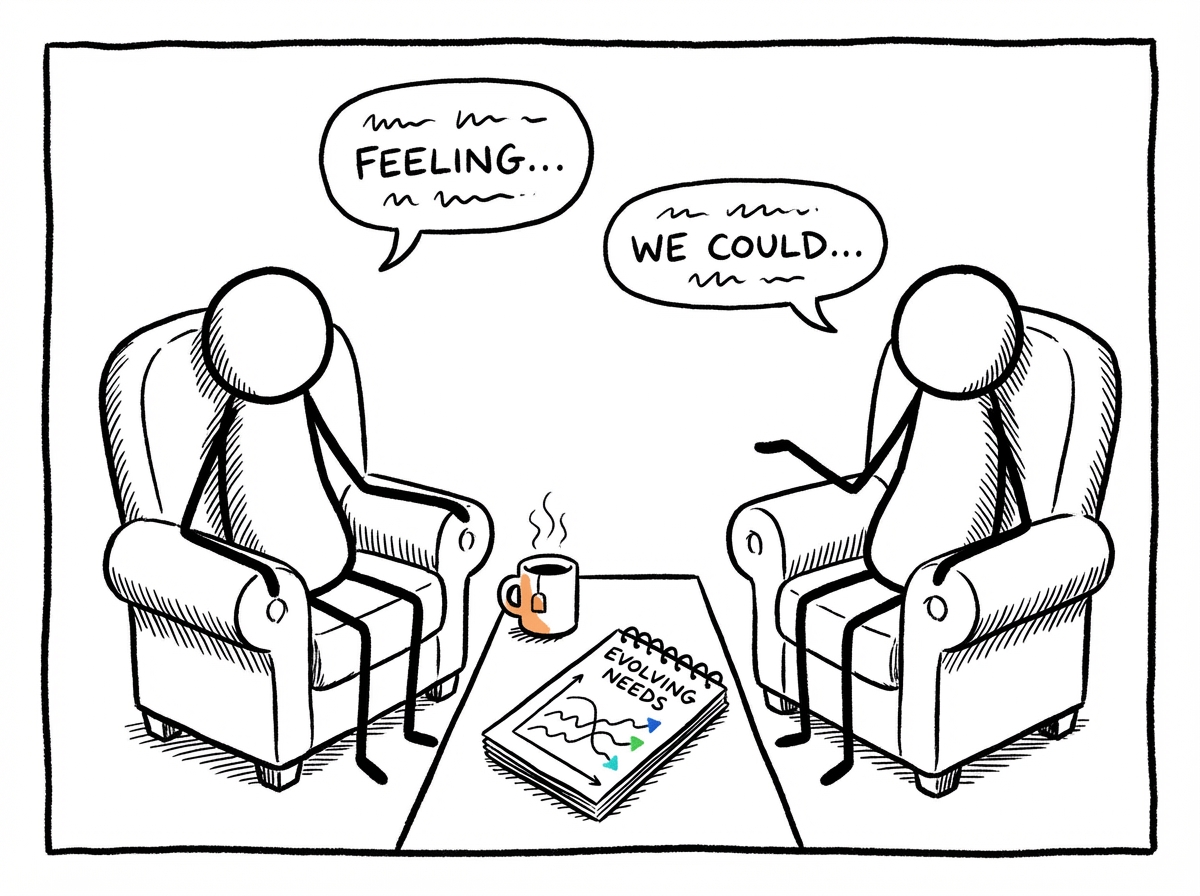
Love languages aren't static. Life transitions, stress, aging, and personal growth can all shift what a person needs most. A quarterly check-in keeps you from running on outdated assumptions.
- Set aside time every few months to ask each other: "Are you feeling loved lately? What would help you feel more loved?"
- Share what's been working for you and what you've been missing.
- Adjust your rituals based on what you learn — flexibility is more important than perfection.
- Notice if stress or a major life change has shifted your partner's primary need. During illness, physical touch might matter more. During a career crisis, words of affirmation might take priority.
- Celebrate the progress you've made rather than focusing only on the gaps.
The goal isn't to get love languages right once and forever. It's to build a relationship where both people stay curious about what the other needs and keep choosing to show up for it.