The Script Rewrite
A person at midlife realizes they have been following a script they did not write, and stands at a blank page with no idea what comes next.
Explanation
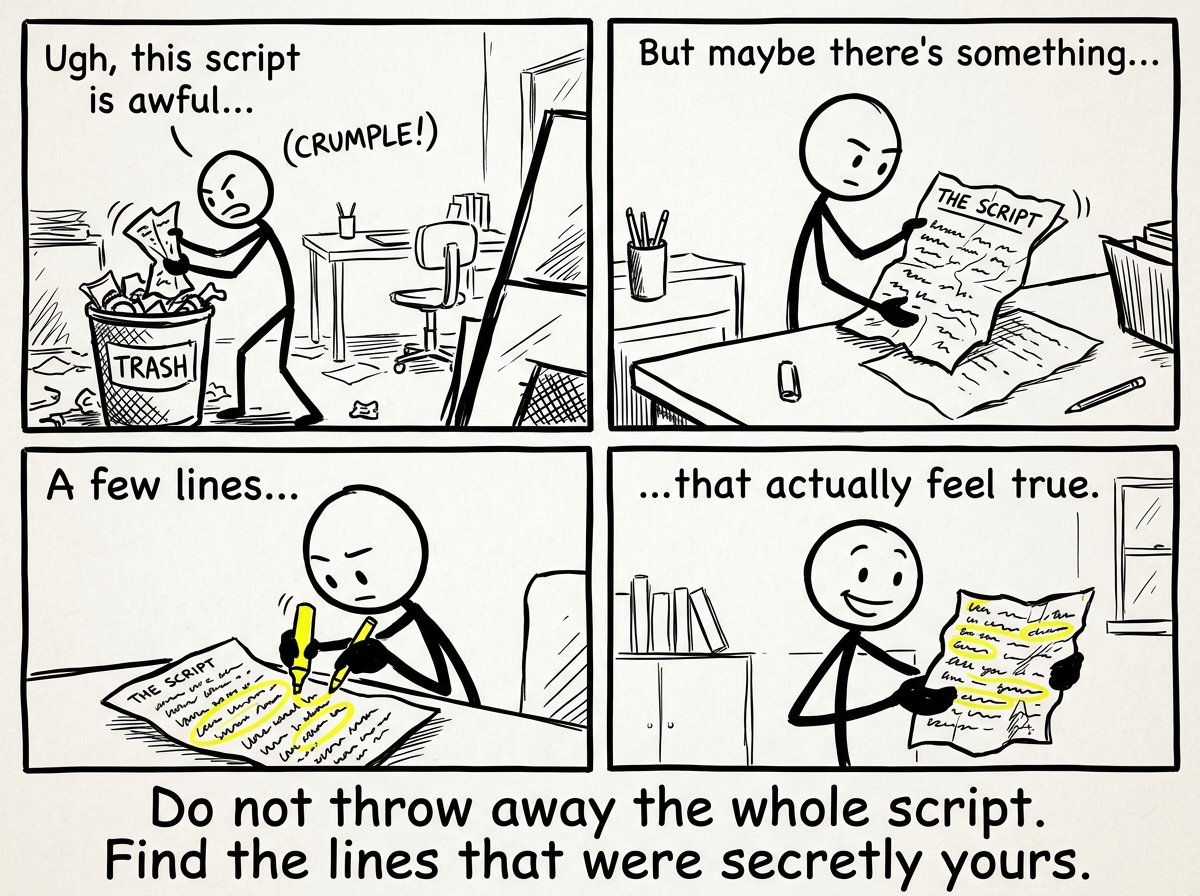
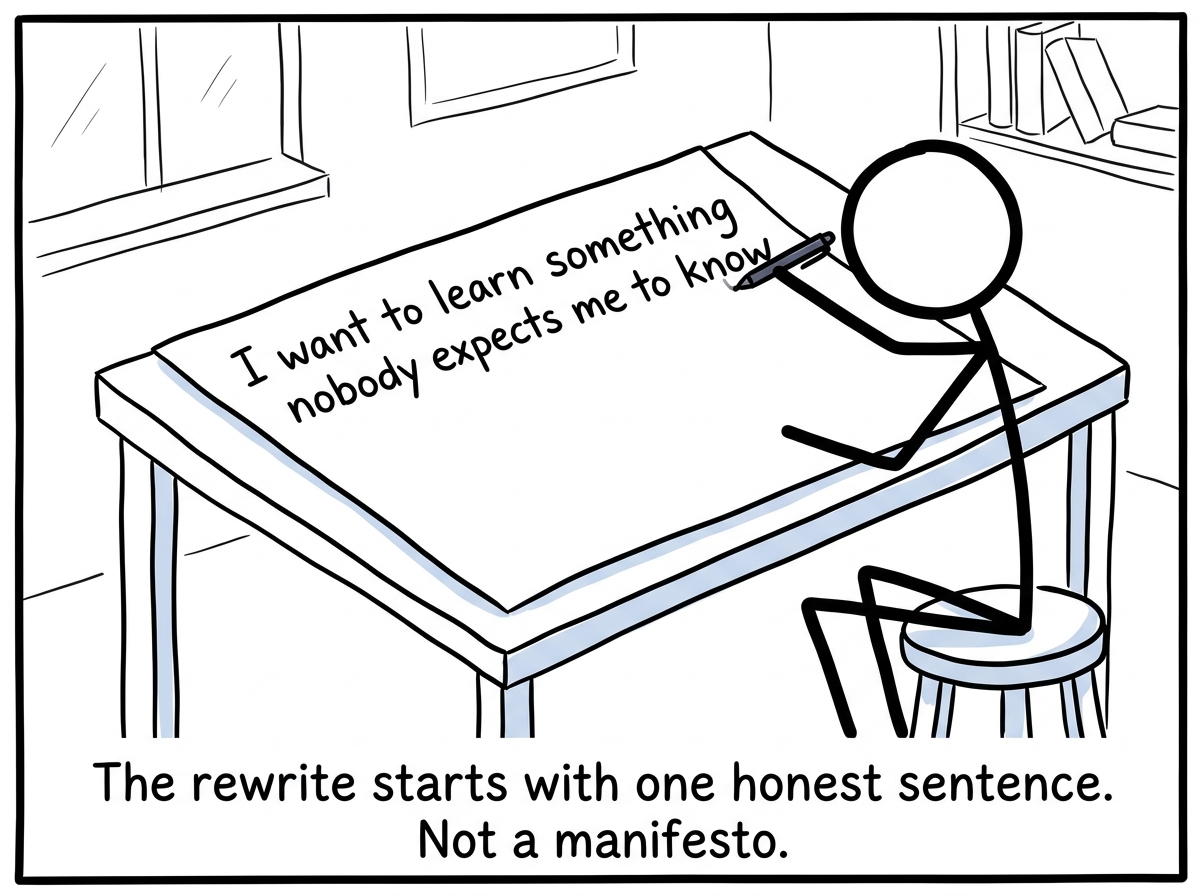
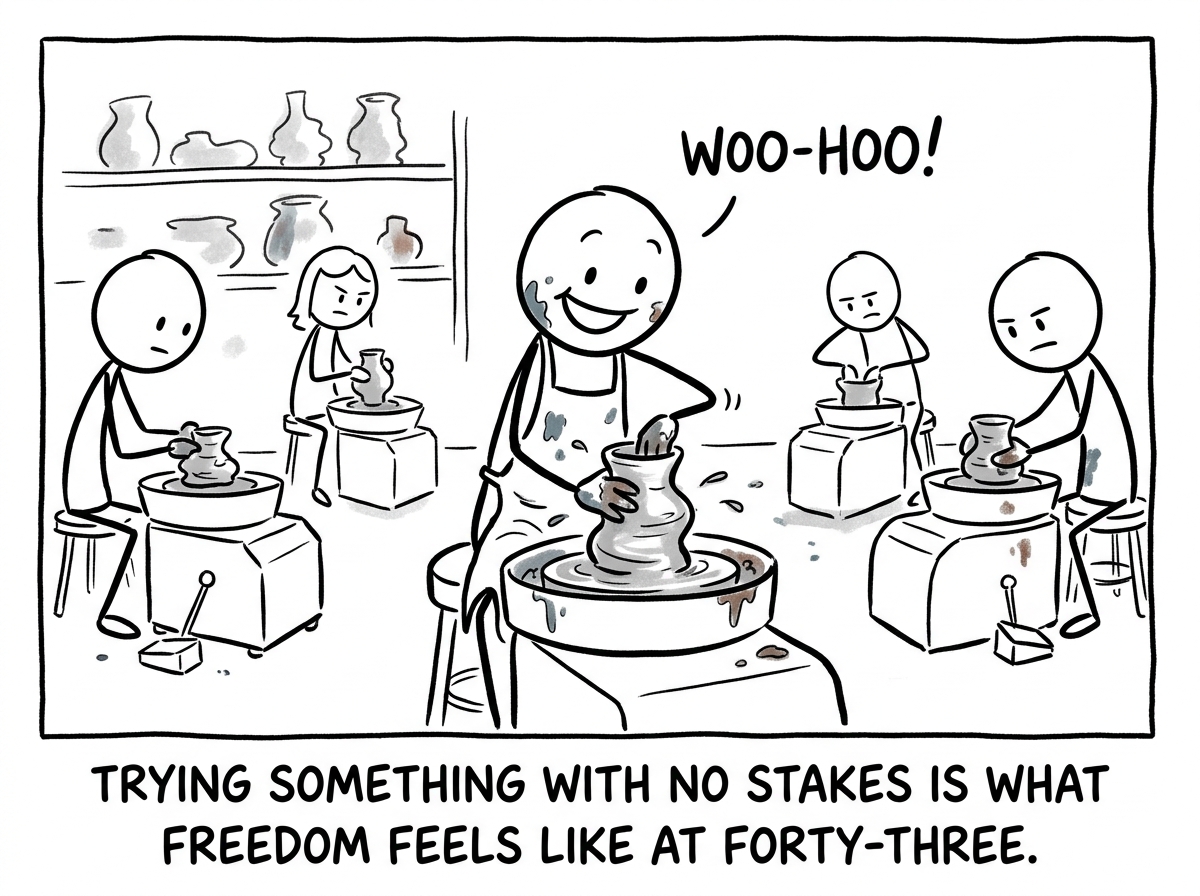
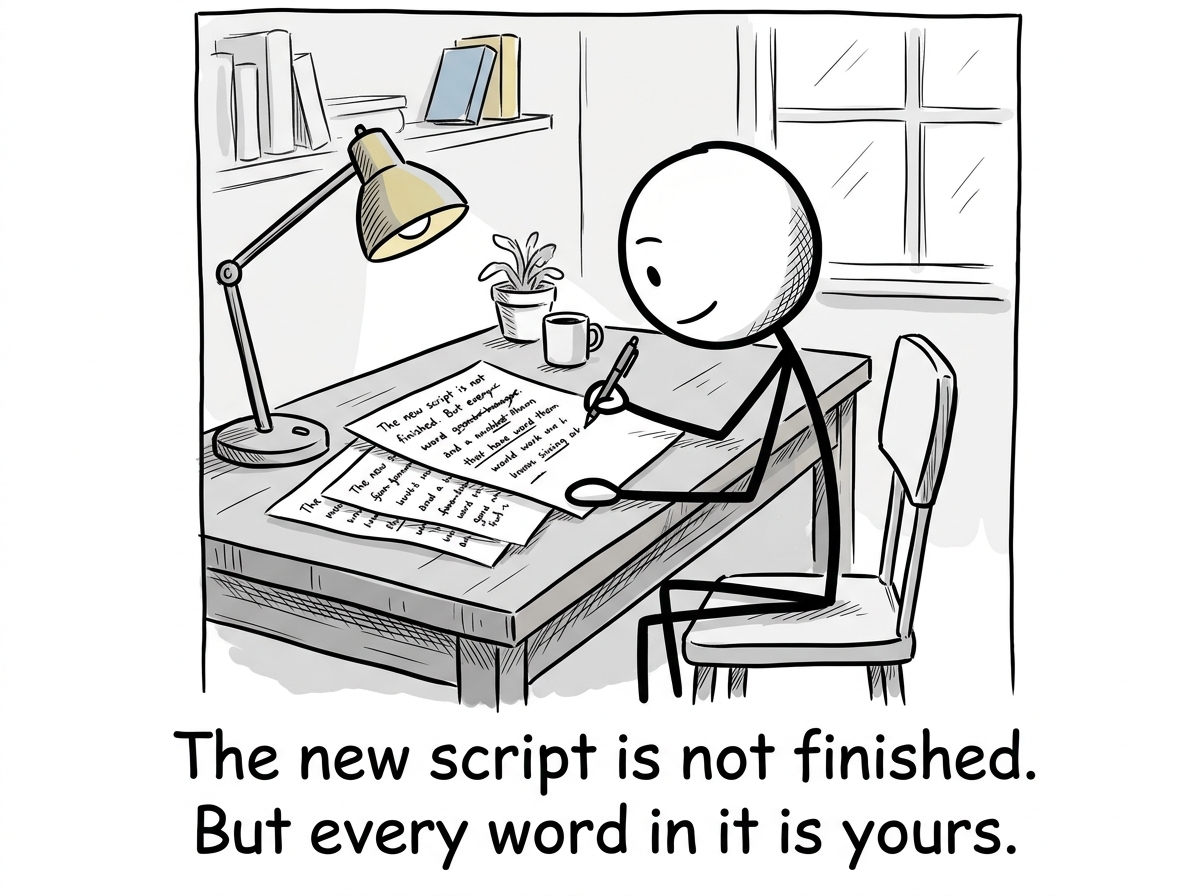
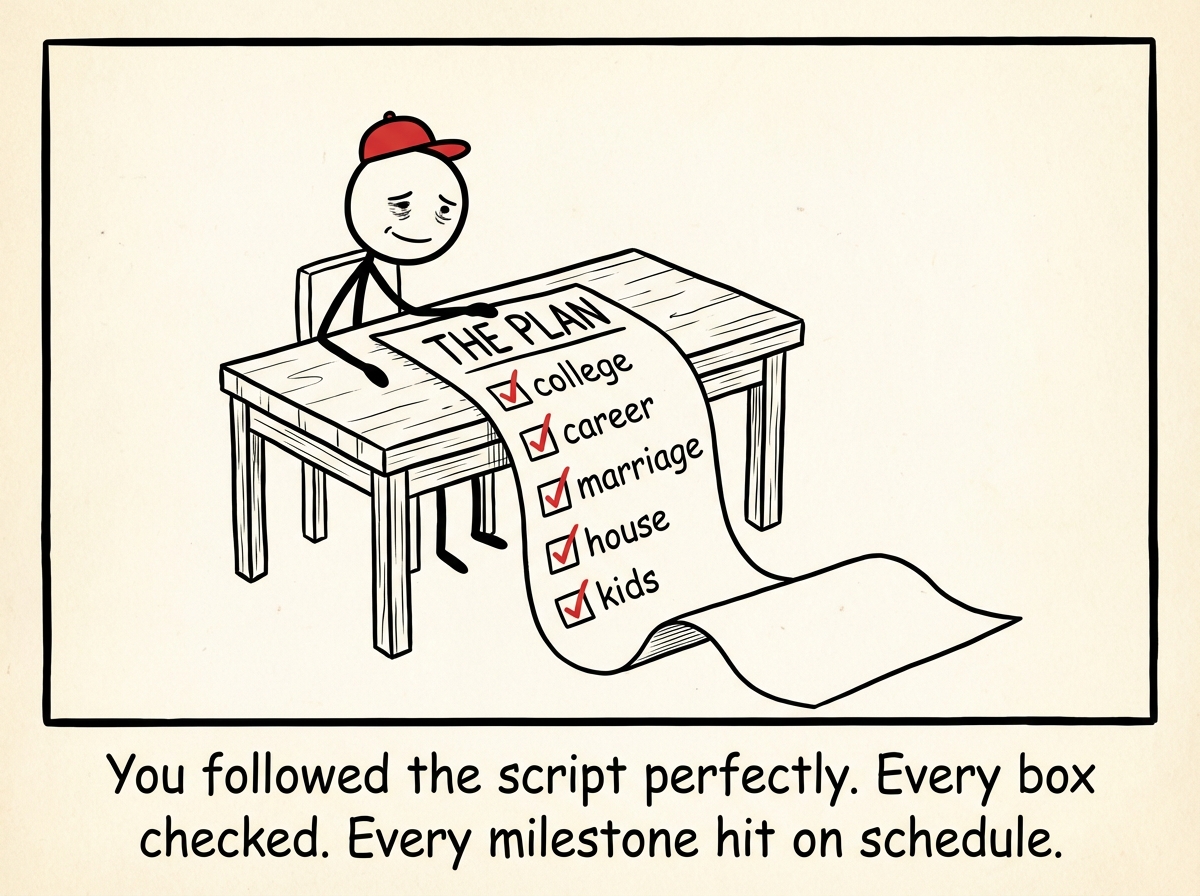
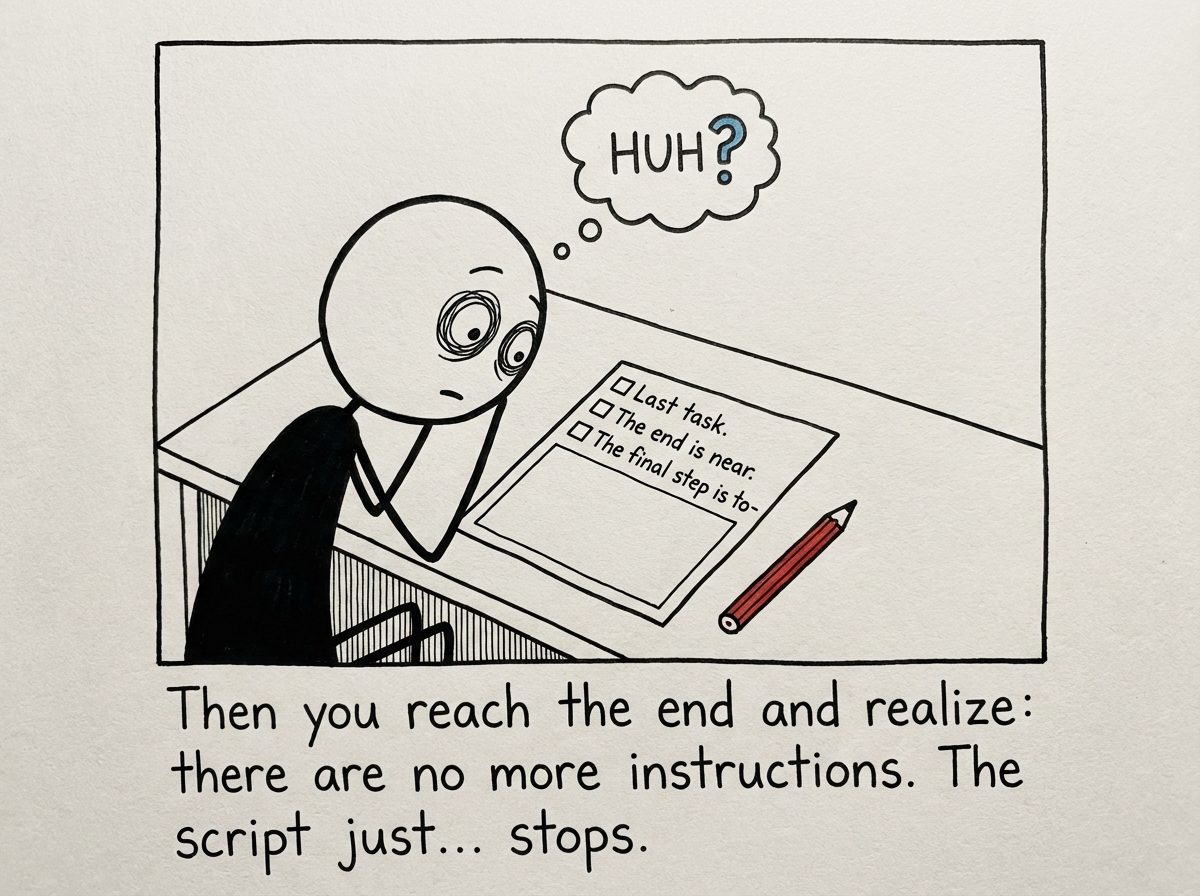
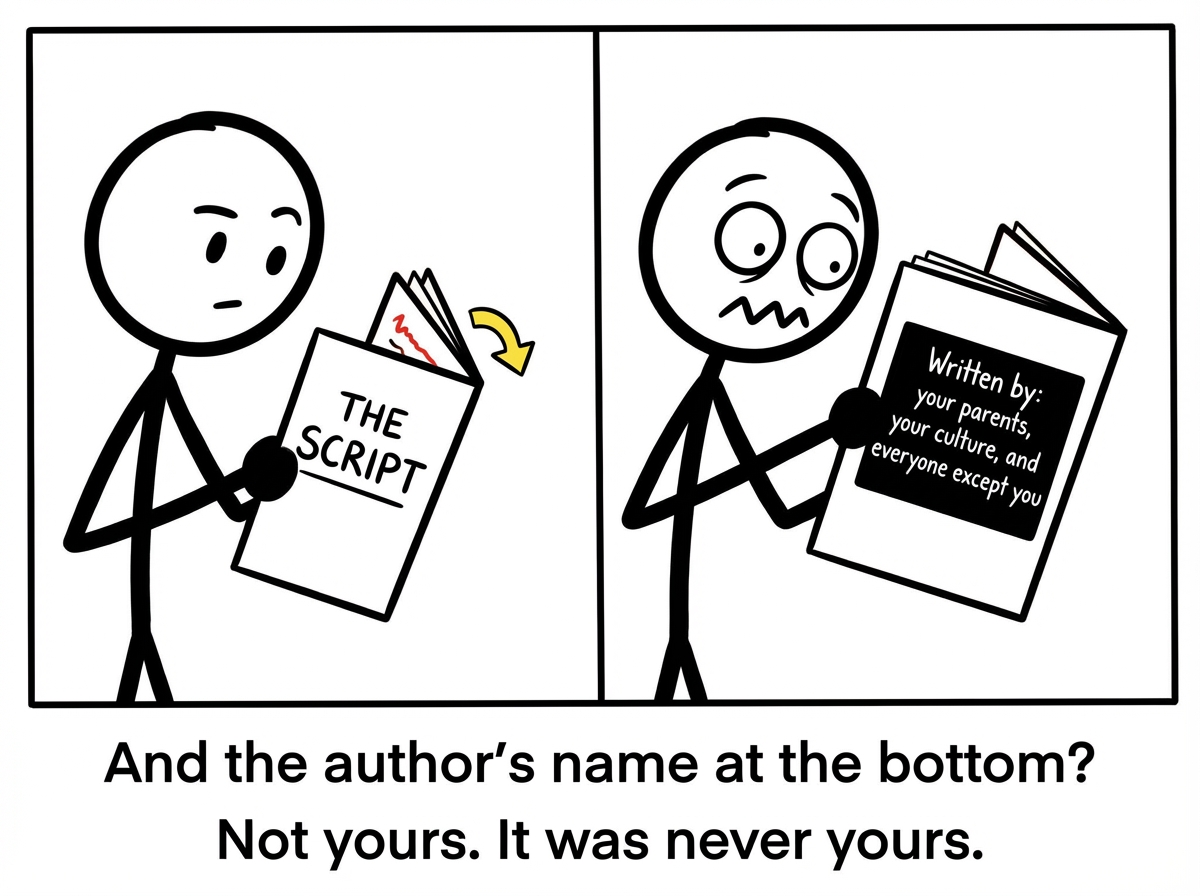
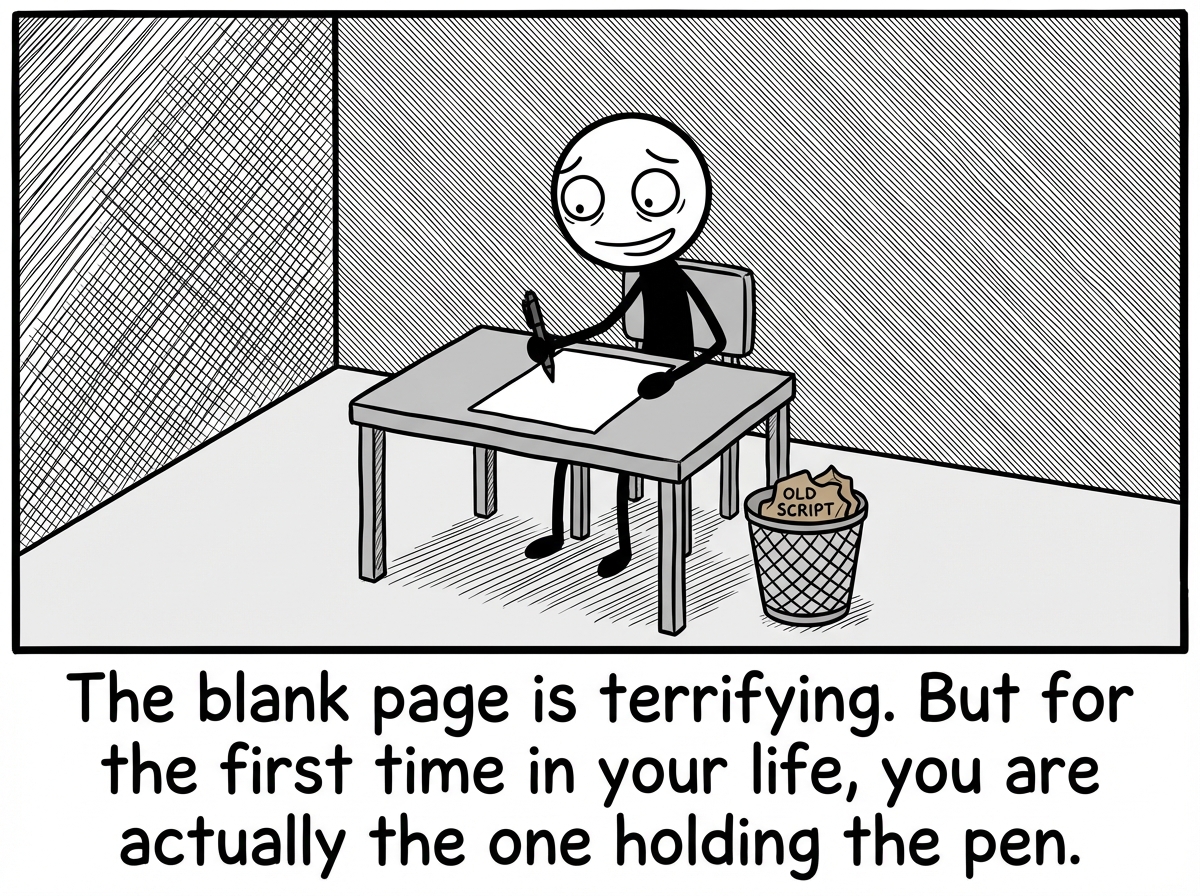
You followed the script perfectly. School, career, marriage, house, kids, promotions -- every milestone checked off in the correct order, on the expected timeline. Then somewhere around forty, you look at the script and realize two things simultaneously: you did not write it, and there are no more pages. The story everyone told you about how life was supposed to go has ended, and you are standing in front of a blank page with a pen you have never actually used. Erik Erikson's psychosocial development theory places this crisis squarely in the stage of generativity versus stagnation. The question shifts from 'am I achieving enough?' to 'does any of this mean anything?' Carl Jung argued even more provocatively that the values and strategies that drive the first half of life become actively harmful in the second half -- that the ego structures necessary for building a life become prisons once the life is built. The midlife crisis is not a breakdown. It is an invitation to outgrow the container you built, even when that container looks perfect from the outside. The blank page is terrifying precisely because you have spent decades being told what to write. Rewriting the script does not mean burning your life down. It means being honest about which parts of it are yours and which parts you inherited, accepted, or performed. Sometimes the rewrite is dramatic. Sometimes it is a quiet internal shift that changes nothing visible but transforms everything felt. The important thing is that this time, you are the one holding the pen.
Key Takeaway
The midlife crisis is not your life falling apart -- it is the moment you realize someone else wrote the first half.