The Adult Secure Base
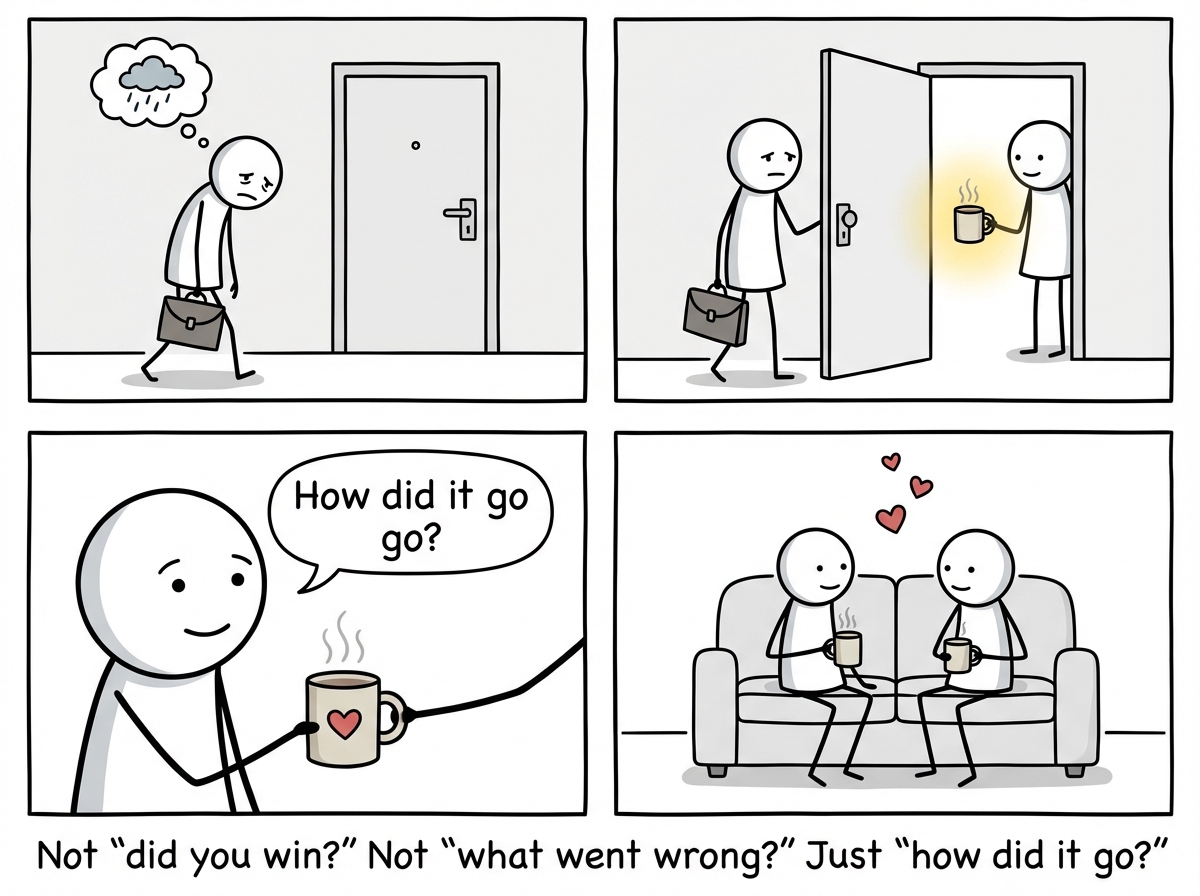
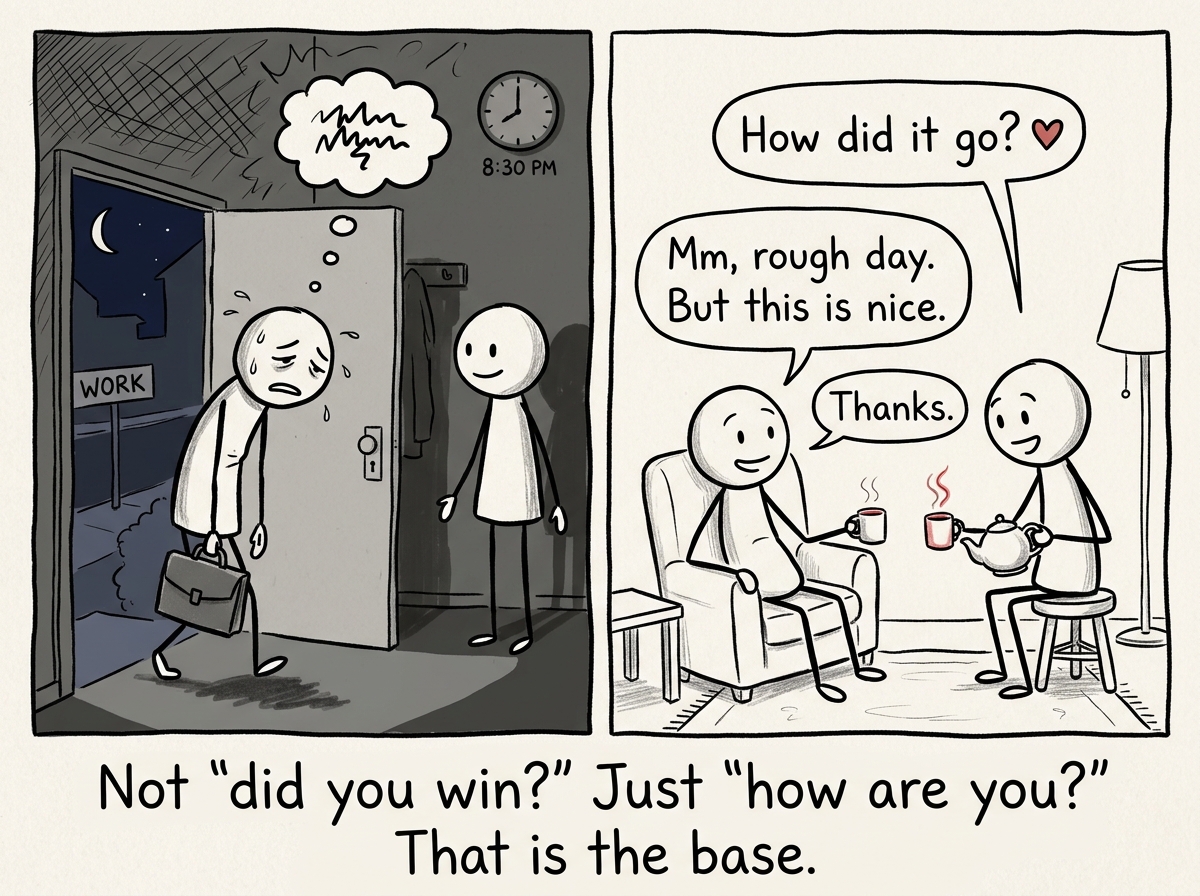
An adult realizes that their partner's consistent presence -- the texts back, the door always open, the 'how was your day' that never stops -- is the secure base they never had as a child.
Explanation
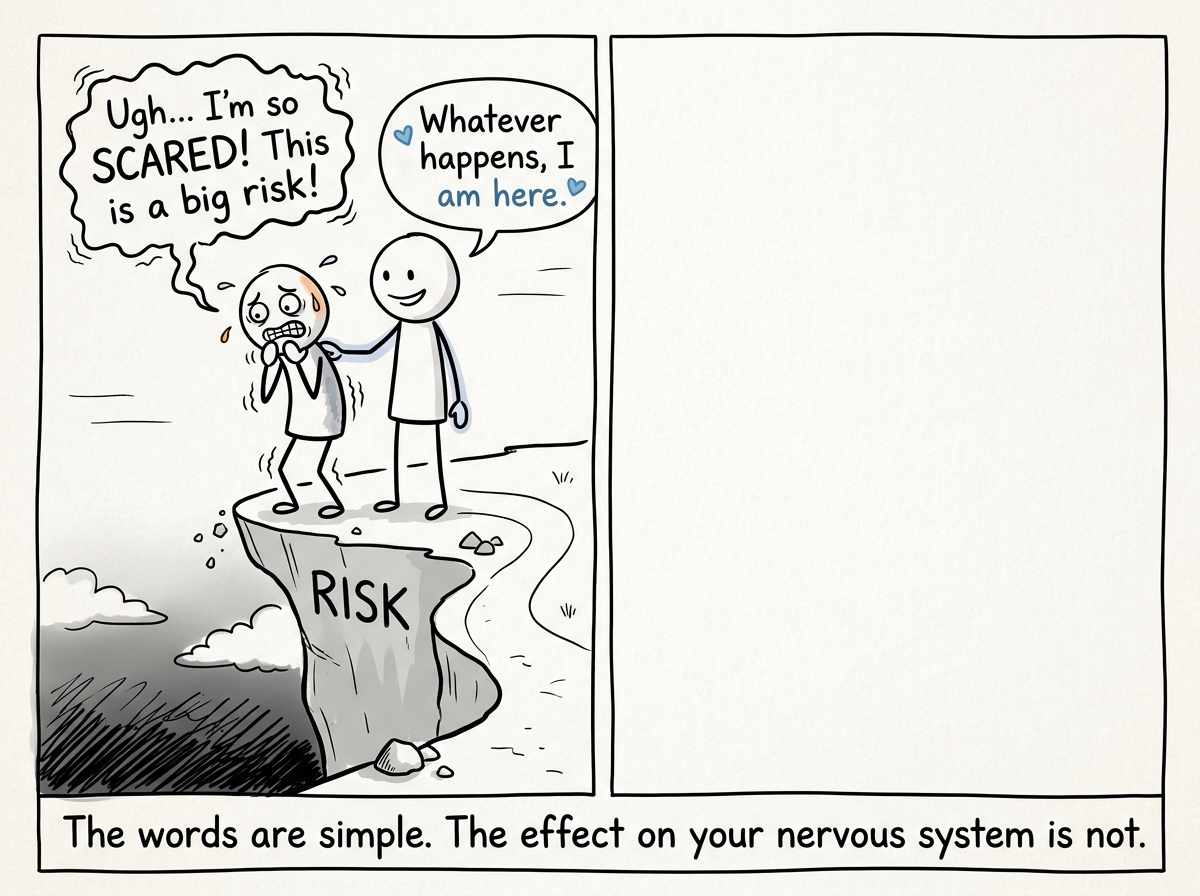
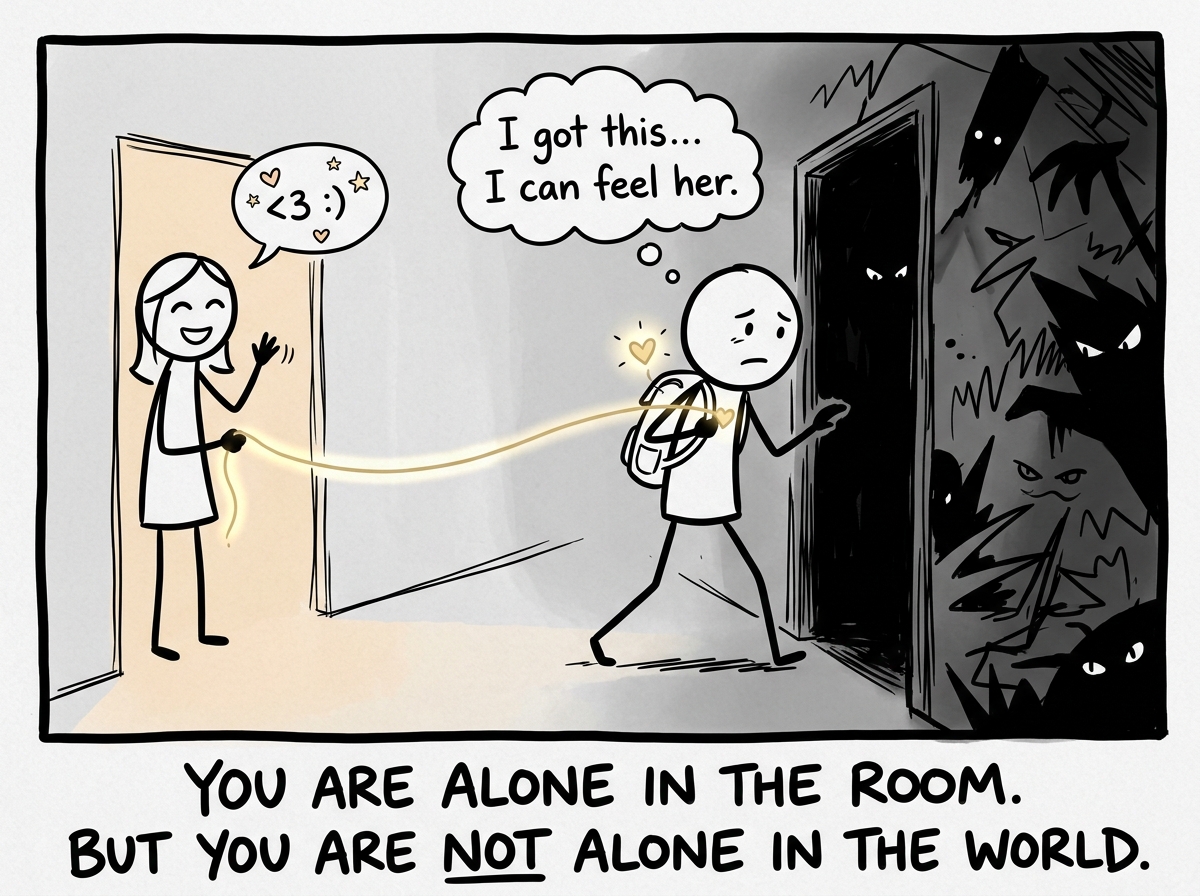
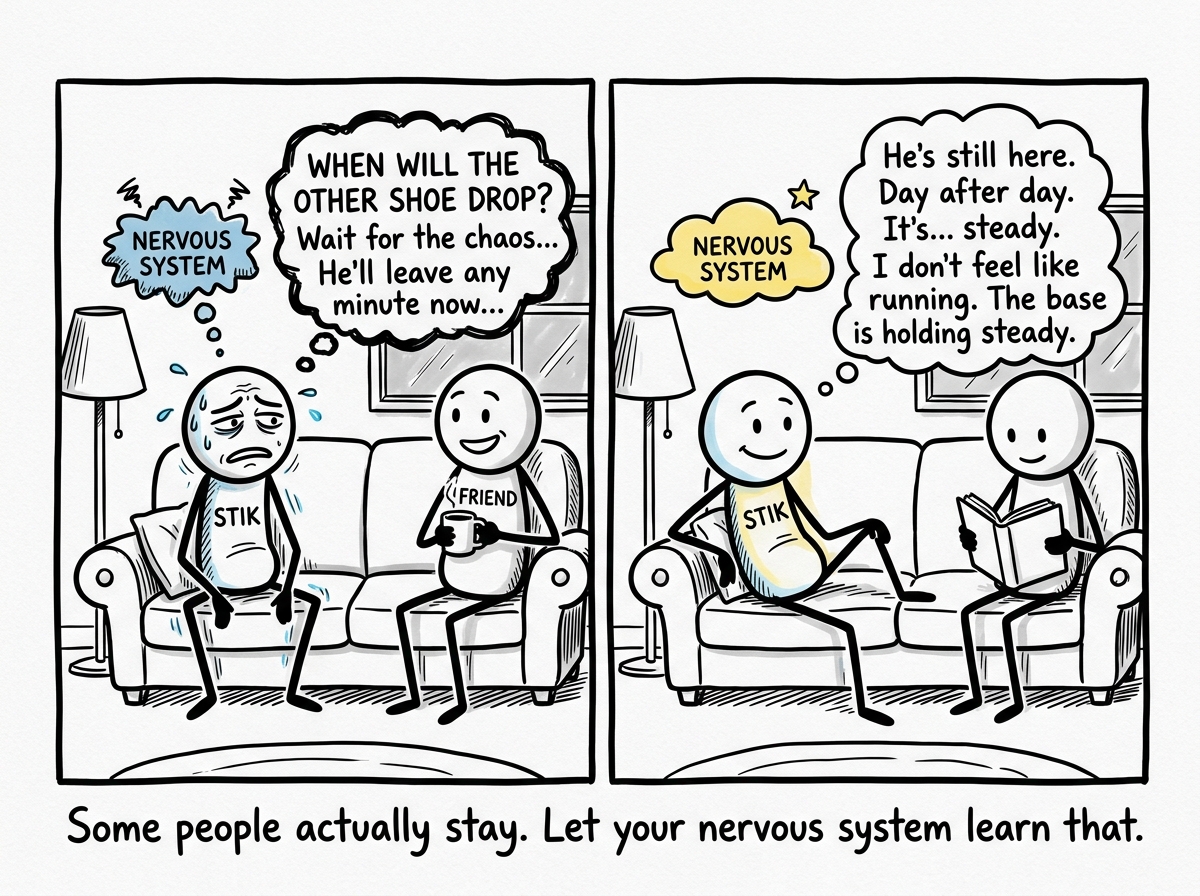
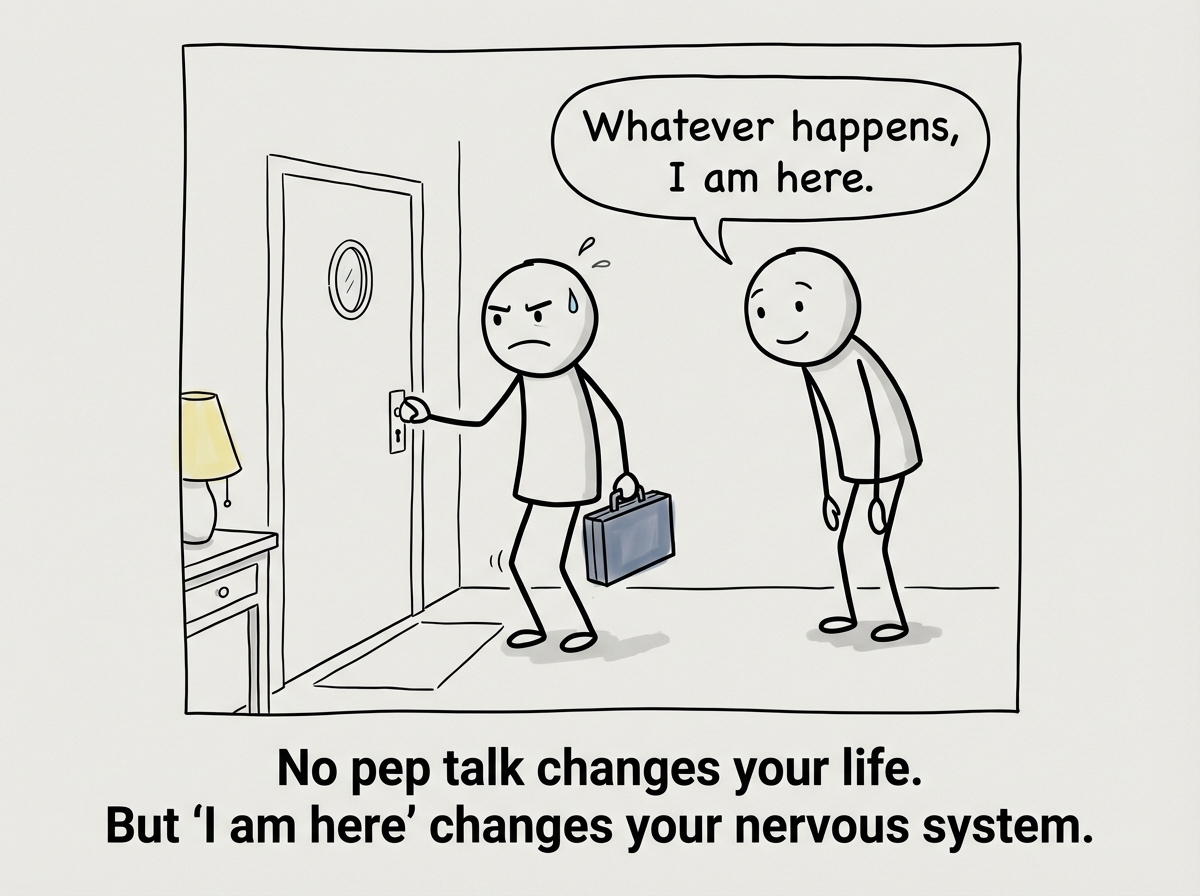
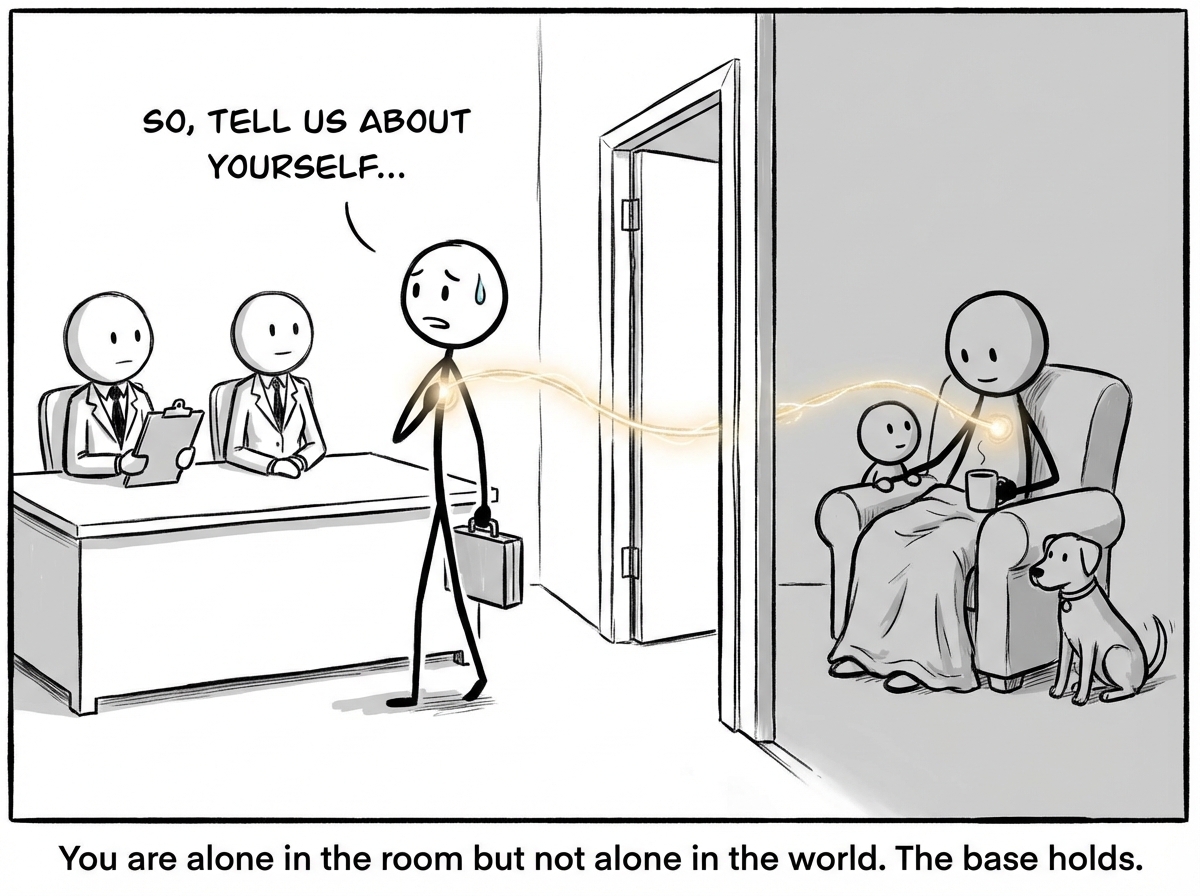
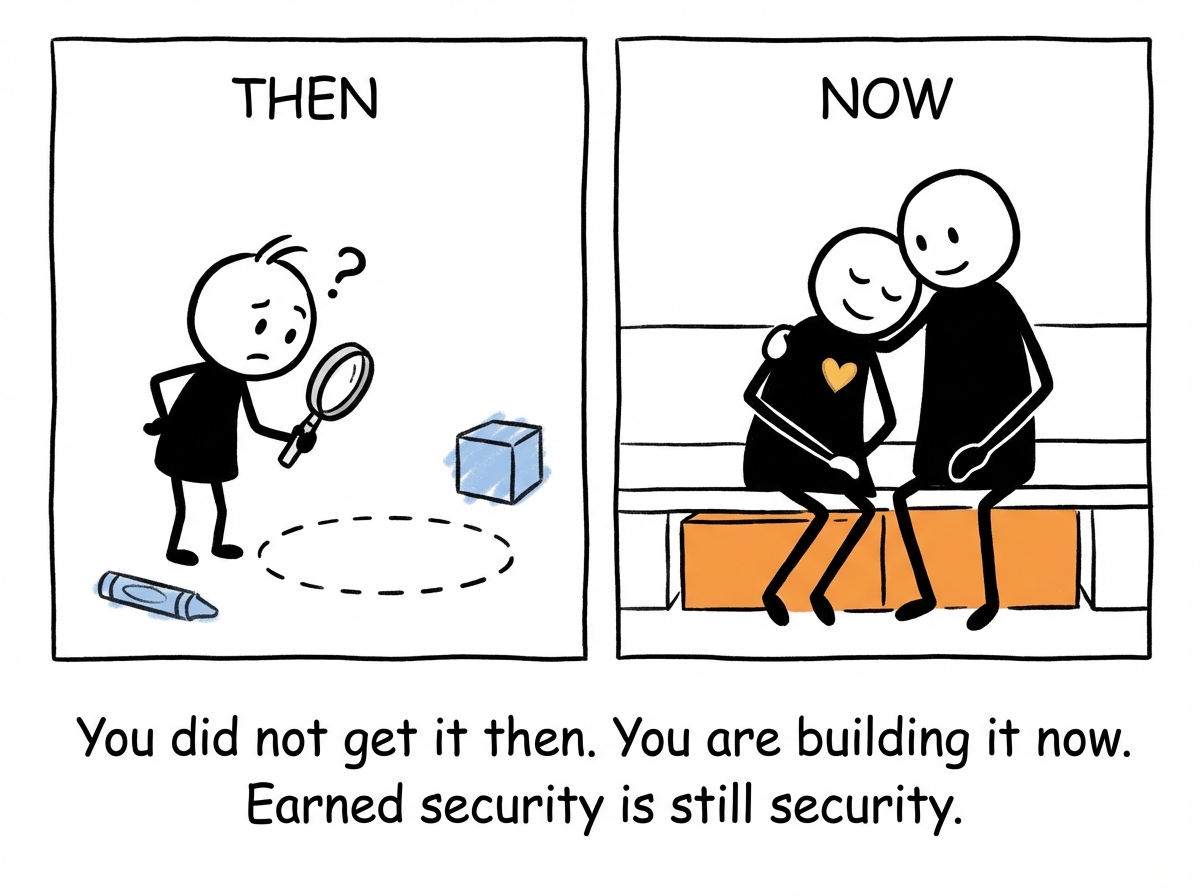
You are about to do something terrifying. A job interview, a difficult conversation, a creative risk that might fail publicly. And before you leave, your partner says: 'You have got this. And whatever happens, I am here.' It is not dramatic. There is no movie music. But something in your nervous system settles. You walk out the door a little taller. This is the secure base operating in adulthood -- and if you never had one growing up, its power can be startling. Bowlby observed that the secure base dynamic extends across the lifespan. In adult relationships, the secure base is not about dependency or clinginess. It is about having someone whose consistent presence gives you the emotional foundation to take risks. Research by Brooke Feeney and others shows that adults with a reliable secure base -- a partner, close friend, or therapist who is consistently available and responsive -- take more career risks, pursue more personal goals, and recover from setbacks faster. Not because the base solves their problems, but because knowing they have somewhere safe to land makes the leap less terrifying. For people who grew up without a secure base -- with caregivers who were unpredictable, absent, or conditional -- this kind of consistency can feel foreign and even suspicious at first. 'Why are they being so nice? When is the other shoe going to drop?' That skepticism is your nervous system running old software. The work is learning to let the consistency in, one interaction at a time, until your body starts to believe what your mind already knows: some people actually stay.
Key Takeaway
A secure base in adulthood is not about someone who fixes your problems -- it is about someone whose consistent presence makes you brave enough to face them.