
Self-Sabotage: Right Before Something Good
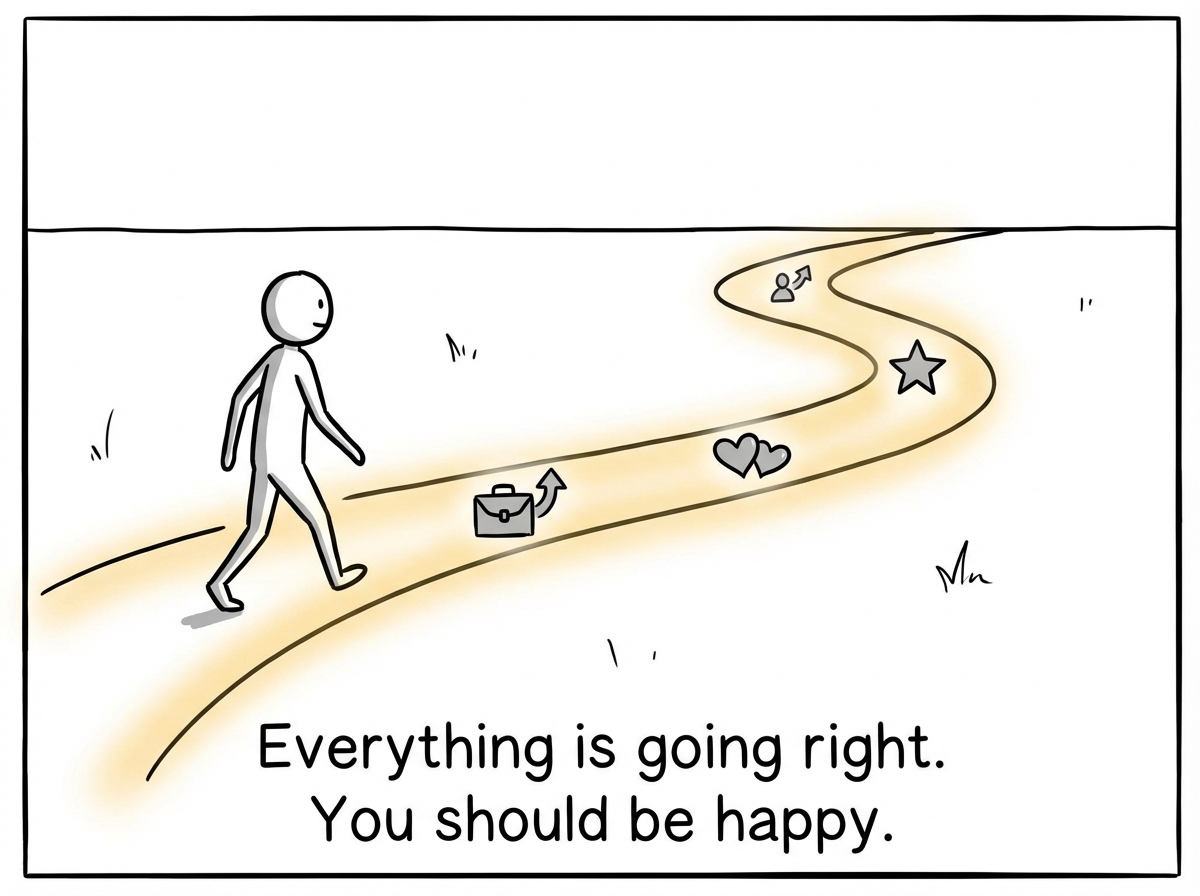
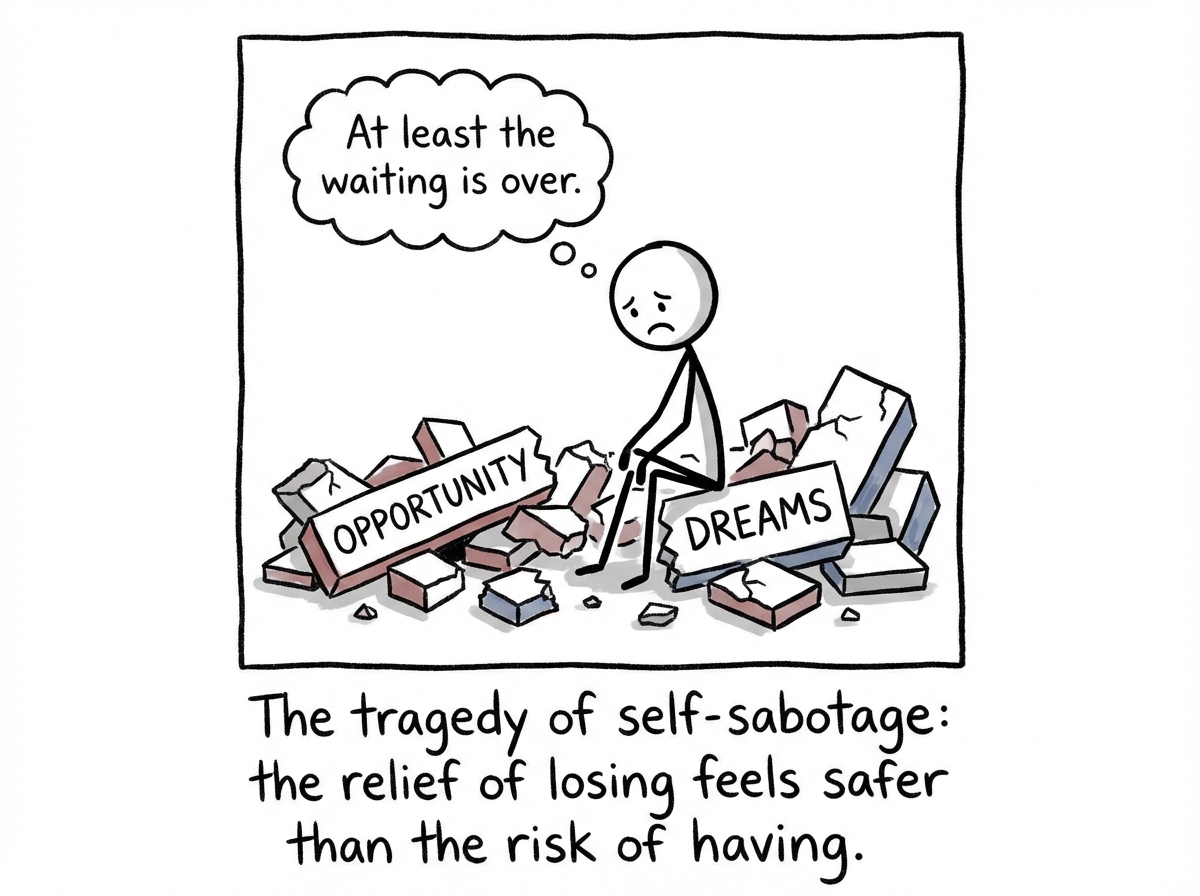
A person unconsciously destroys an opportunity or relationship right when things are about to go well, because success feels more threatening than failure.
Explanation
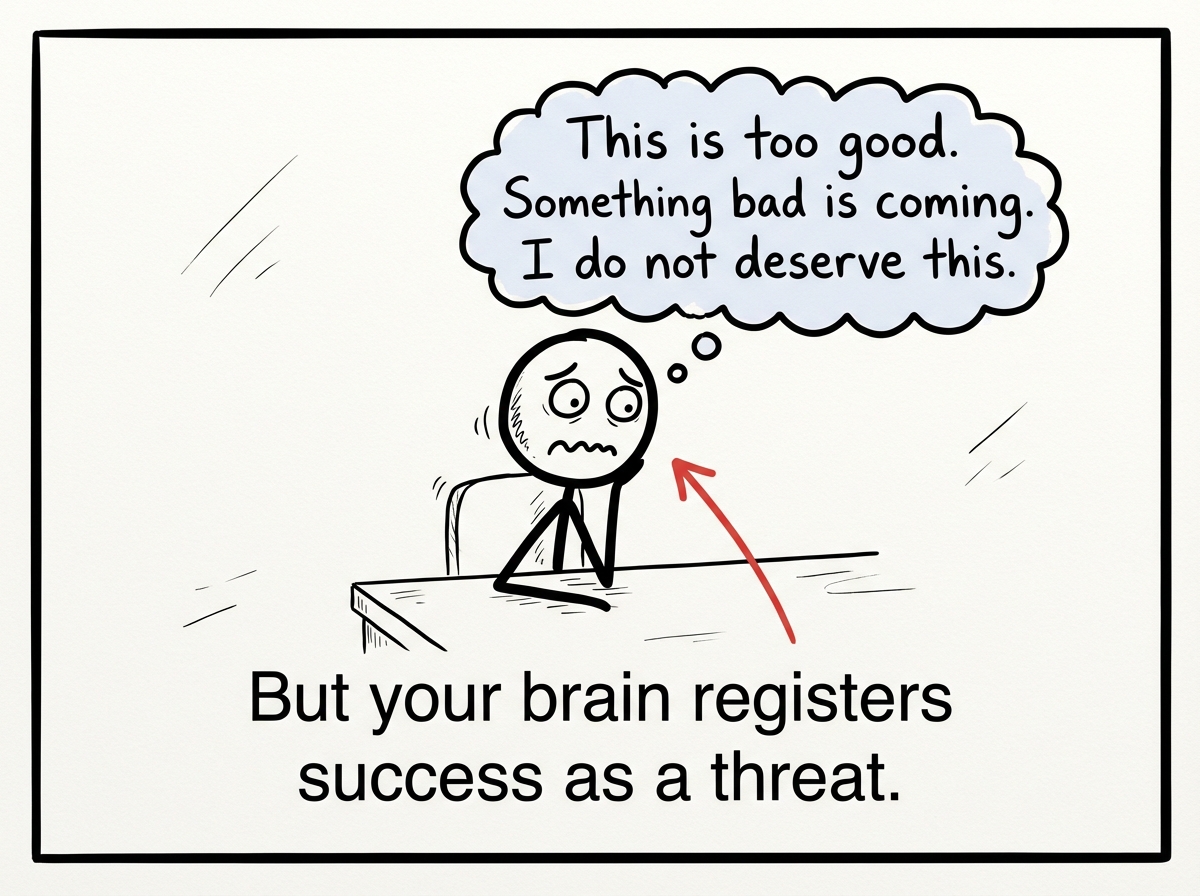
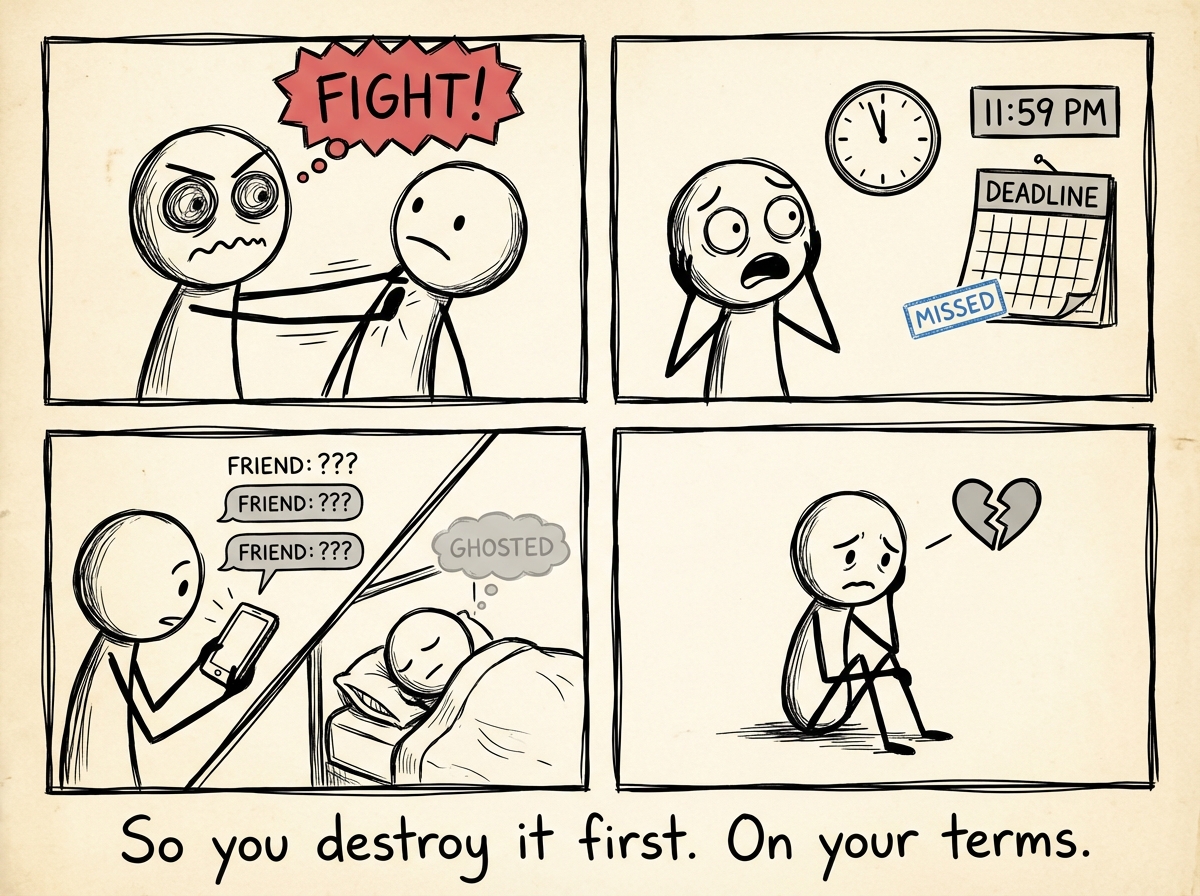
Things are going well. Really well. You got the promotion. The relationship is deepening. The creative project is coming together. And then, almost on cue, you do something to blow it up. You pick a fight. You miss the deadline. You ghost the person who was treating you well. You make a choice so clearly self-destructive that even you can not explain it afterward. Welcome to self-sabotage at the threshold of success -- one of the most painful and confusing psychological patterns. This happens because, for many people, success triggers a deep unconscious alarm. If you grew up in an environment where good things were temporary, where happiness was always followed by loss, or where success made you a target for criticism or envy, your nervous system learned that good things are dangerous. Destroying the good thing before it can be taken from you gives you a twisted sense of control. 'I would rather lose it on my terms than be blindsided.' It is the emotional equivalent of burning down your own house because you are afraid of fire. The key to breaking this pattern is recognizing the moment of discomfort that precedes the sabotage. Right before you blow something up, there is usually a feeling -- anxiety, unworthiness, a voice that says 'this is too good to be true' or 'I do not deserve this.' That feeling is the signal. When you can name it and sit with it instead of reacting to it, you create space for a different choice. You do not have to earn the right to have good things. You just have to learn to tolerate the vulnerability of having them.
Key Takeaway
Self-sabotage is not about wanting to fail -- it is about being more afraid of having something good than losing it.
A stick figure feeling the familiar urge to destroy something good, pausing to label the feeling: 'This is the sabotage impulse. I know this feeling.'
The stick figure sitting with clenched fists, choosing not to pick the fight or miss the deadline, tolerating the discomfort
The stick figure watching the good thing survive -- the relationship deepening, the project succeeding -- looking surprised and uneasy but still there
The stick figure holding something good with open hands, thought bubble reading 'I am allowed to have this without earning it or losing it'