
The Armor Paradox
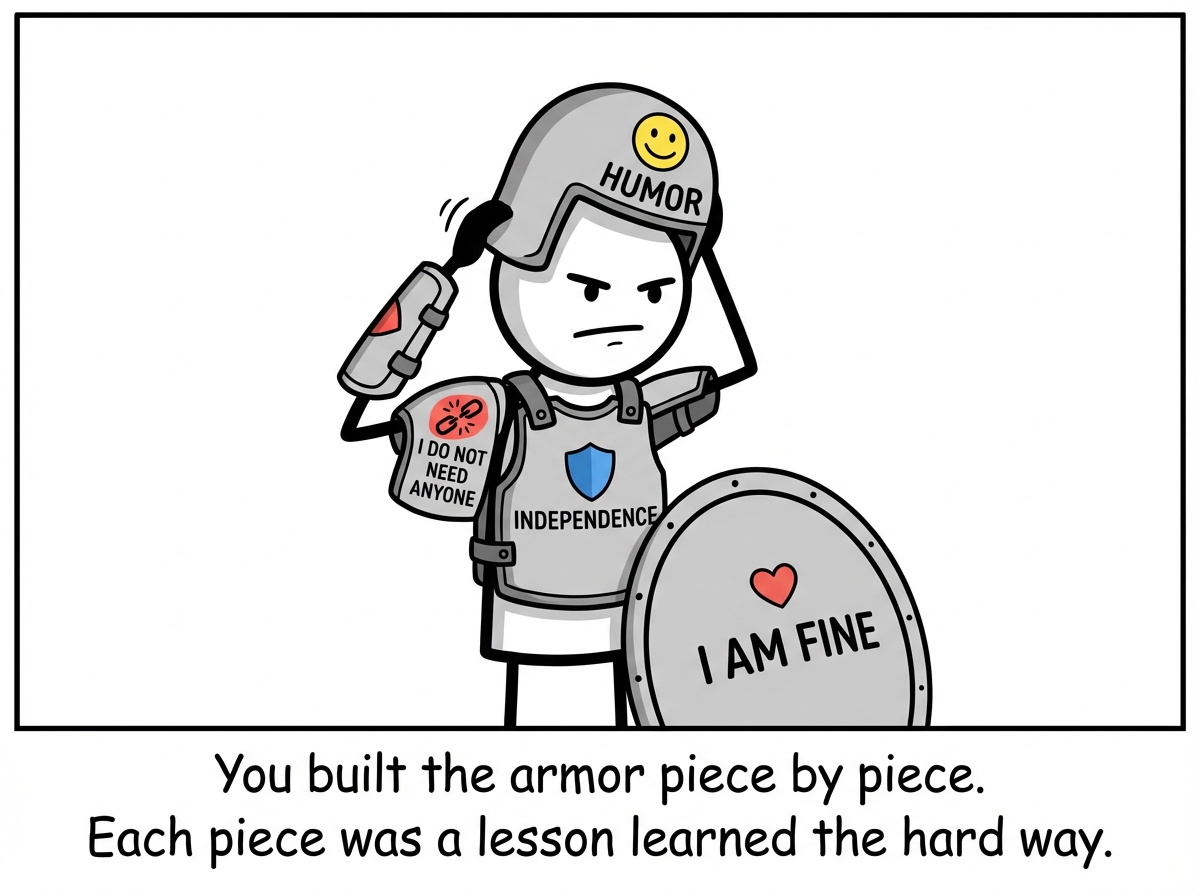
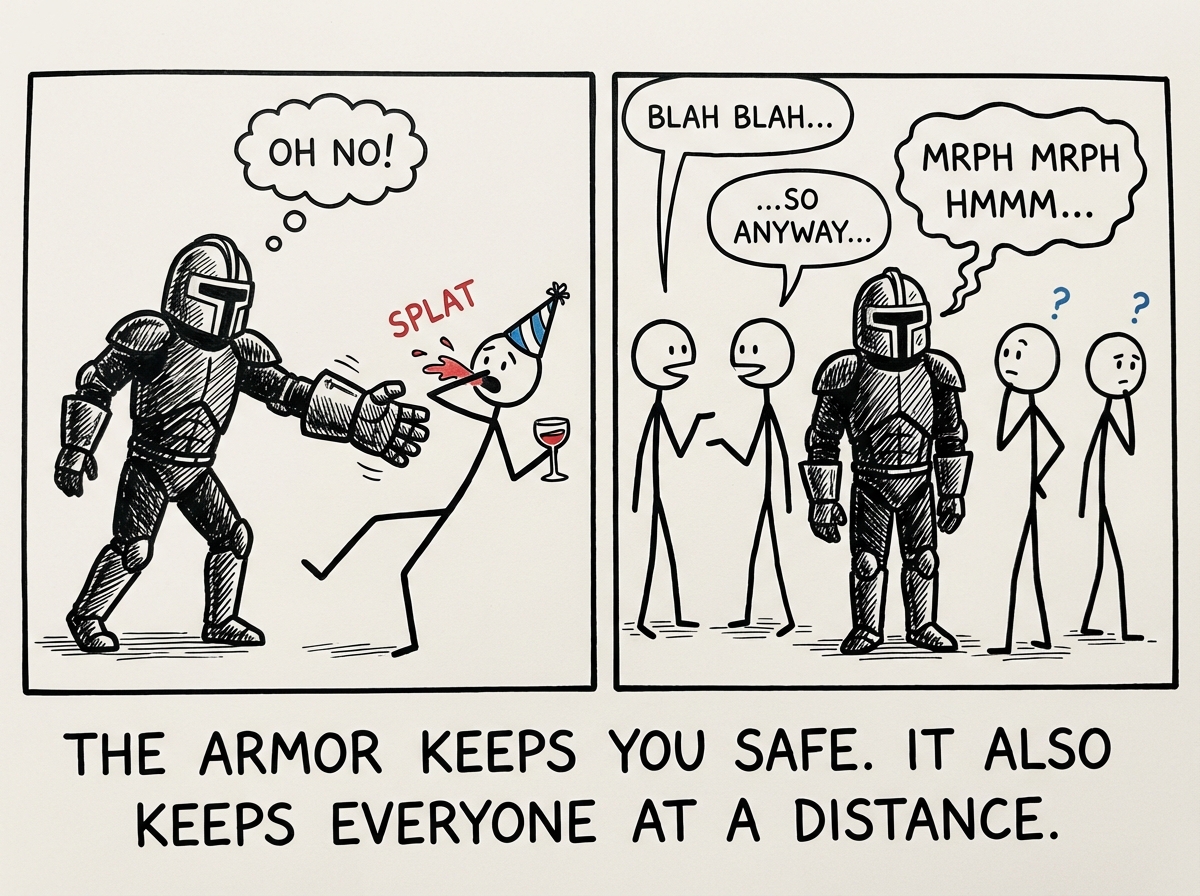
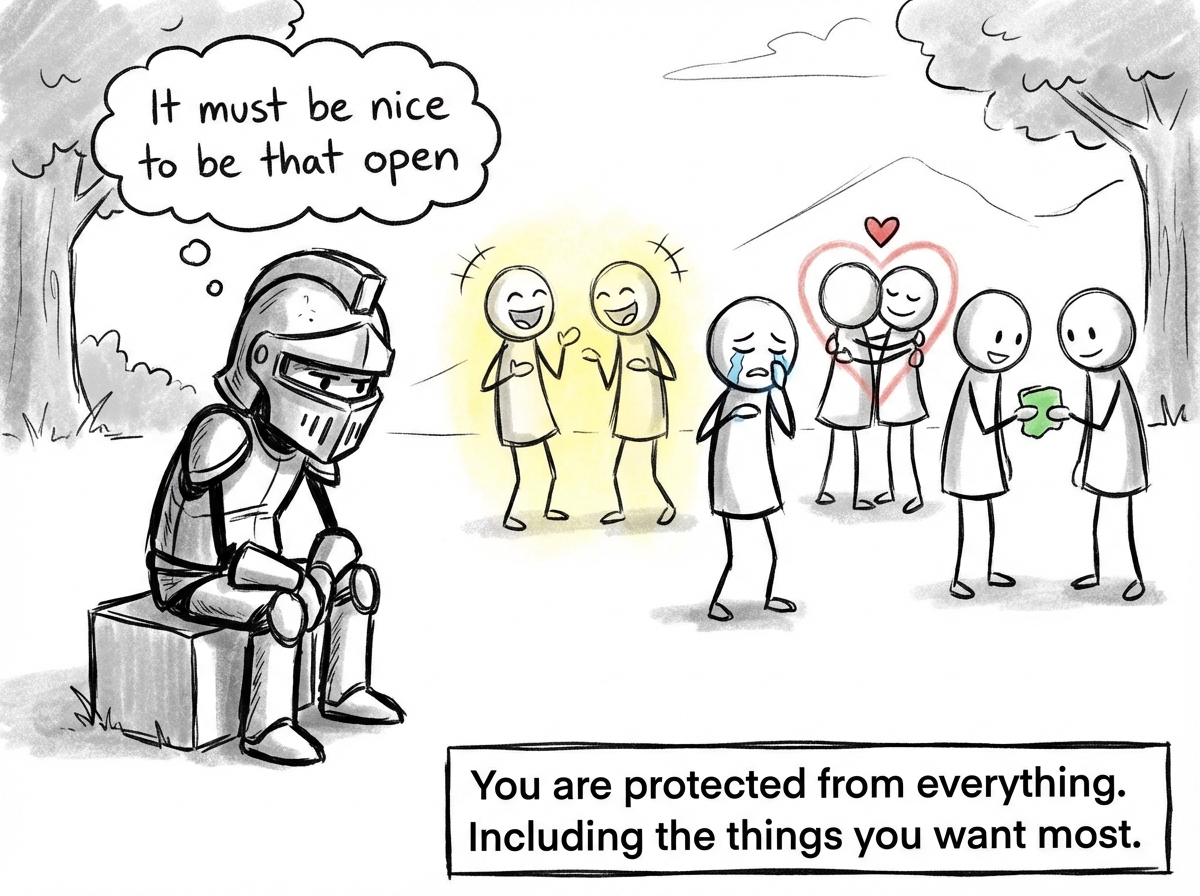
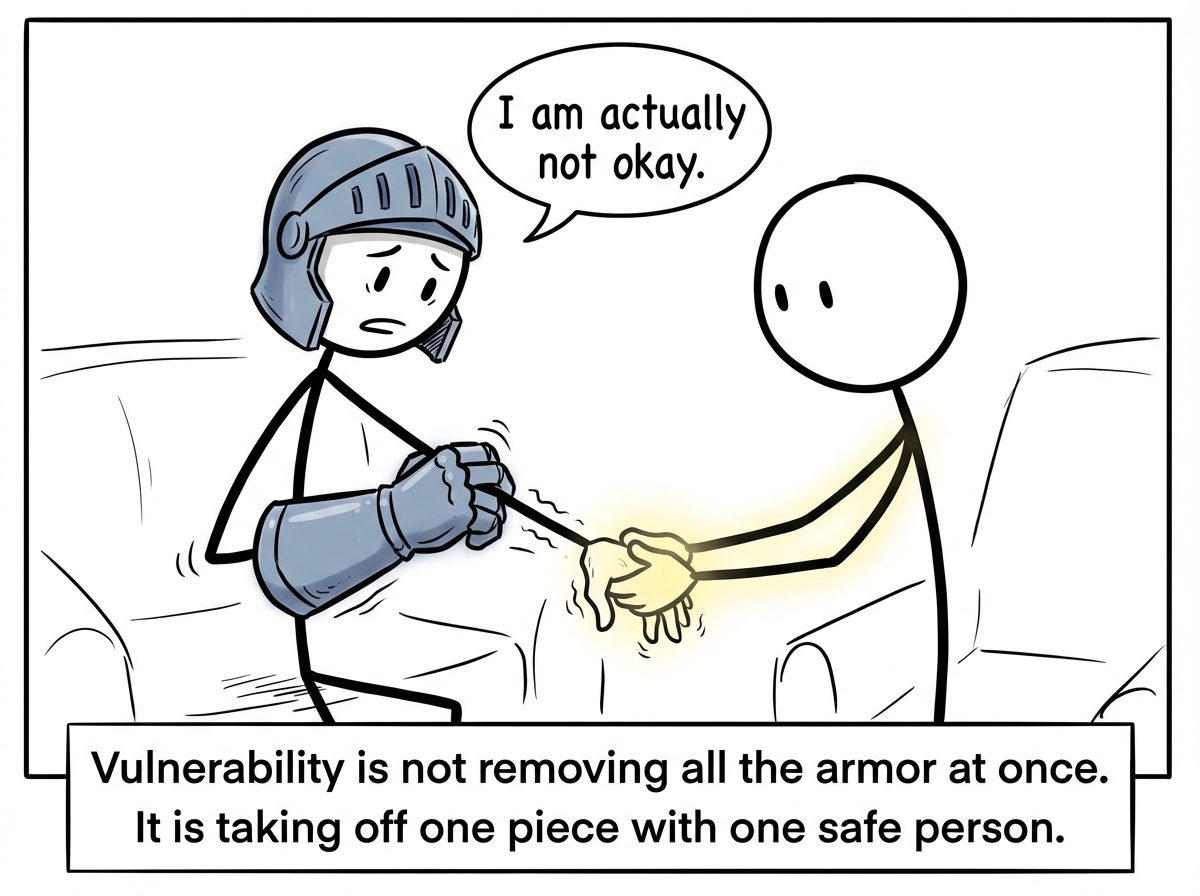
A person in emotional armor tries desperately to connect with others, but the very armor that protects them from pain also blocks intimacy -- showing that vulnerability is not weakness but the price of admission to real connection.
Explanation
You built the armor for good reason. Someone hurt you -- maybe many someones, over many years -- and you decided, consciously or not, that you would never let that happen again. So you developed protection: humor that deflects before conversations get real, independence that never asks for help, emotional distance that keeps everyone at arm's length, or a tough exterior that says 'I do not need anyone.' The armor works. Pain cannot get in. But here is the part no one told you: neither can anything else. This is the vulnerability paradox. The same walls that protect you from hurt also protect you from love, belonging, and genuine connection. You cannot selectively numb emotions. If you shut the door on pain, you shut it on joy too. If you refuse to be seen, you cannot be known. If you will not risk rejection, you cannot experience acceptance. You end up safe and utterly alone -- not because no one is trying to reach you, but because your armor keeps turning them away. Brene Brown's research shows that vulnerability -- the willingness to show up without knowing how it will go -- is not weakness. It is the prerequisite for every meaningful human experience: love, creativity, belonging, and trust. Practicing vulnerability does not mean taking off all your armor at once and standing naked in a crowd. It means finding one safe person, one honest moment, and taking one piece of armor off at a time. It means saying 'I am scared' instead of 'I am fine.' It means asking for help instead of proving you do not need it. Each small act of vulnerability is a test: can I be seen and still be safe? And gradually, the answer becomes yes.
Key Takeaway
The armor that protects you from pain is the same armor that blocks love -- vulnerability is the price of admission to real connection.
A stick figure in full armor, looking at the lonely space around them and thinking 'The armor is working. So is the isolation'
The figure identifying one safe person and slowly removing one gauntlet, revealing a bare trembling hand
The figure saying 'I am actually not doing great' to the safe person, who responds with 'I am glad you told me'
The figure standing with less armor, a little exposed but connected, holding someone's hand with their bare one