
The Beliefs You Didn't Choose
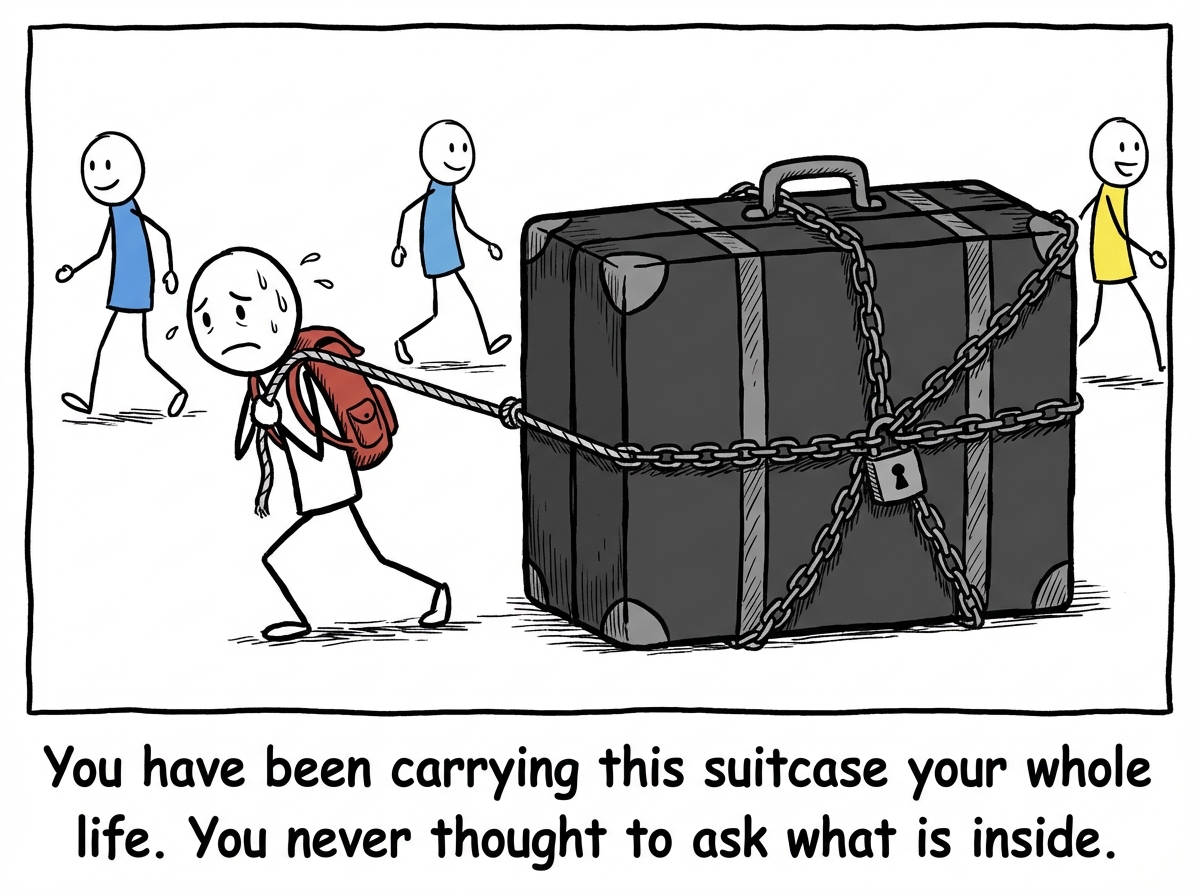
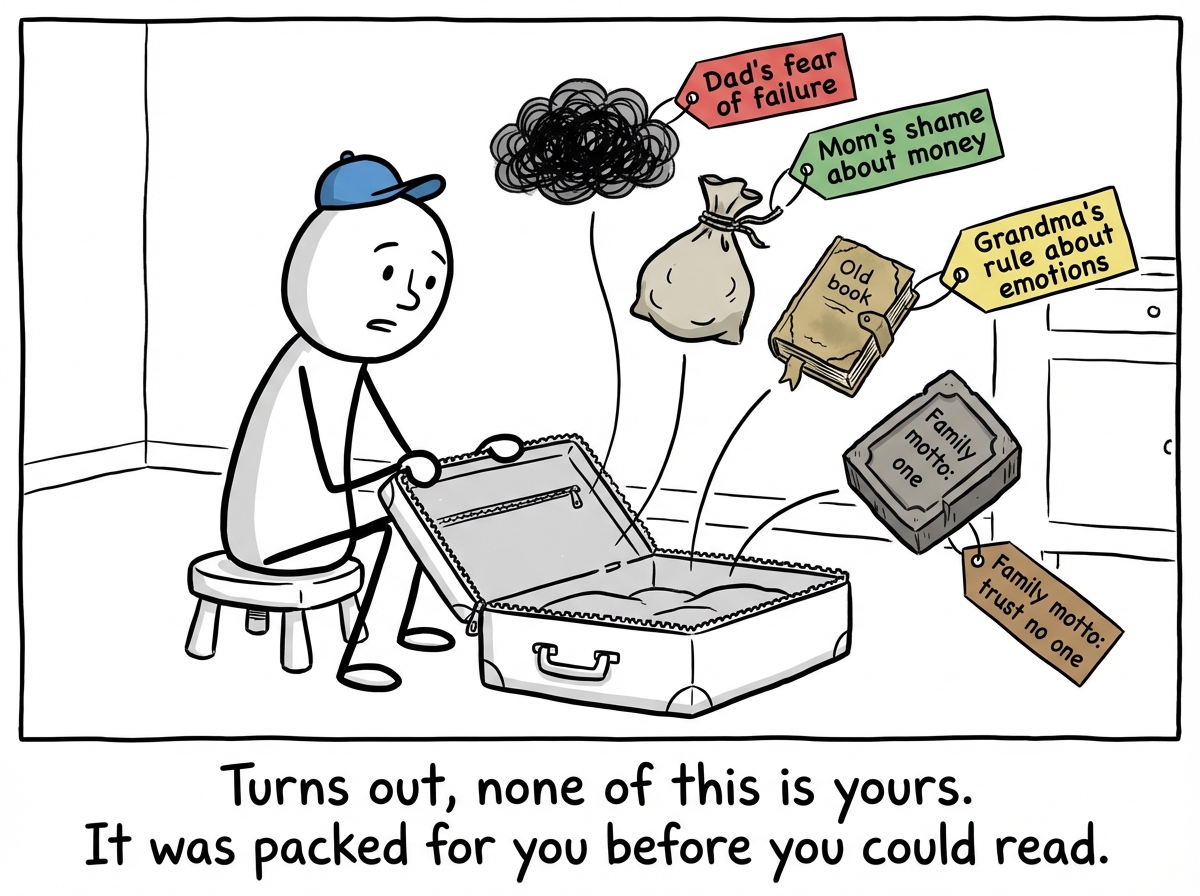
A person unpacks a suitcase they have carried their whole life, discovering beliefs inside labeled 'Dad's fear,' 'Mom's shame,' and 'Grandma's rule' -- none of which are actually theirs.
Explanation
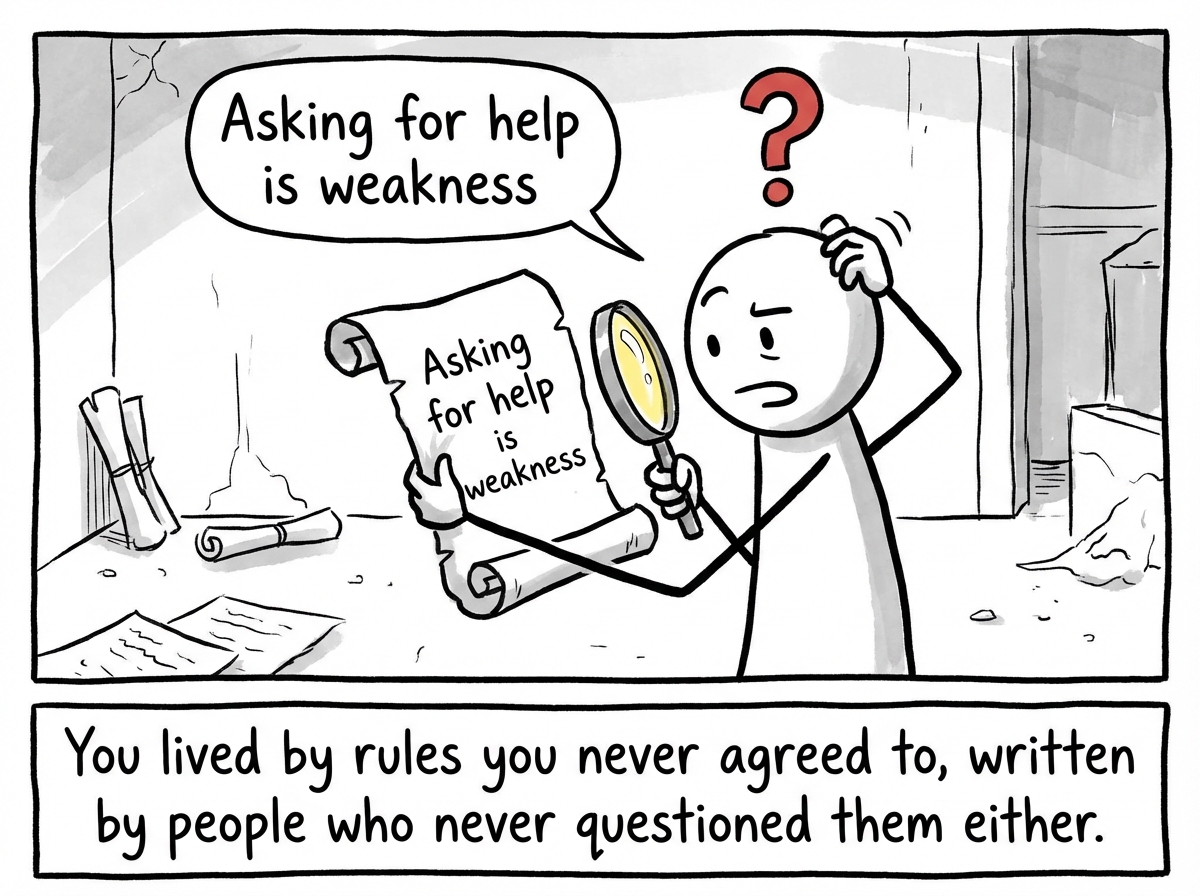
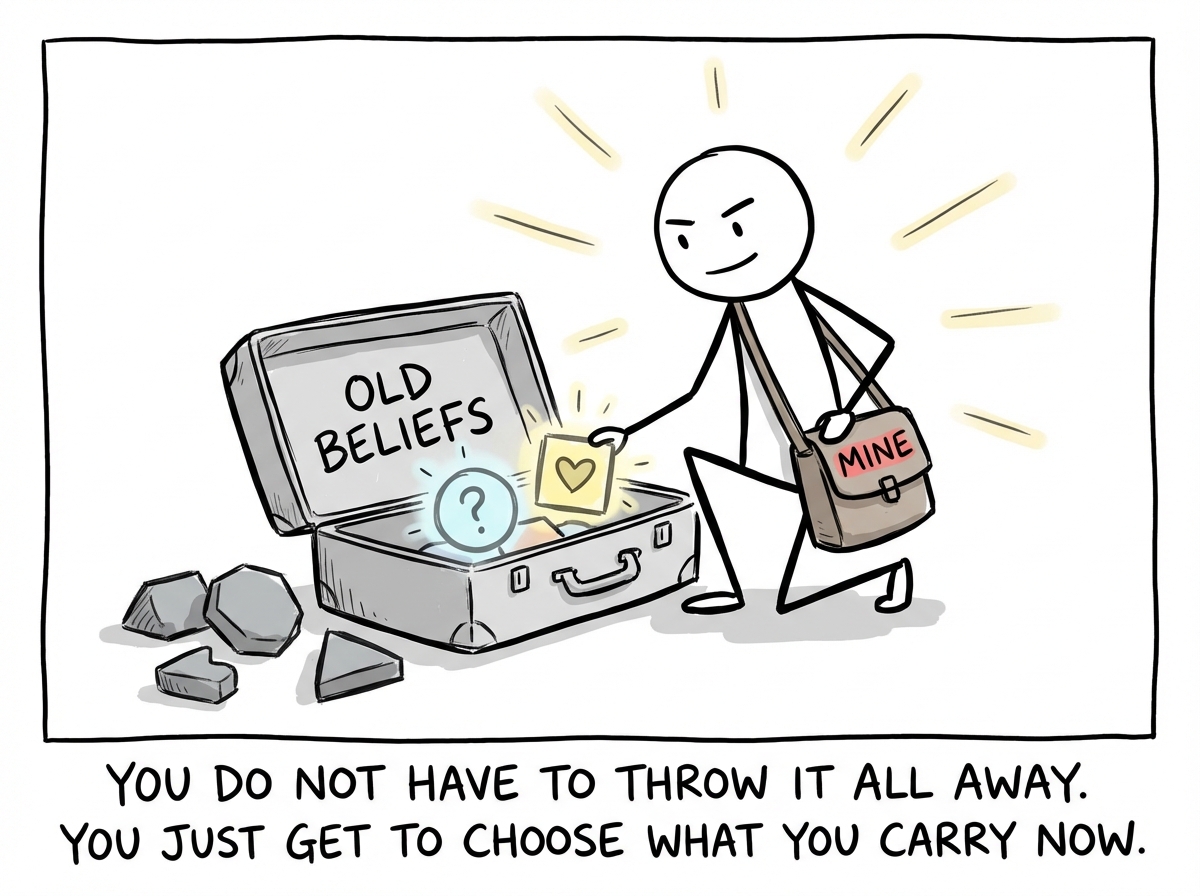
You have been carrying this suitcase for as long as you can remember. It is heavy, but you never thought to question it because everyone in your family carries one. Then one day -- maybe in therapy, maybe during a crisis, maybe in a quiet moment of self-reflection -- you finally open it. Inside, you find beliefs you have been living by your entire life: 'Vulnerability is weakness.' 'Money is evil.' 'You can not trust people outside the family.' 'Good people do not get angry.' You assumed these were yours. They are not. They are hand-me-downs, packed for you before you were old enough to read the labels. Murray Bowen's multigenerational transmission process describes how emotional patterns, anxieties, and belief systems pass from one generation to the next, often outside of conscious awareness. You did not sit down and decide to be afraid of conflict -- you watched your father avoid it for eighteen years and absorbed the lesson that conflict is dangerous. You did not choose to believe that rest is laziness -- your grandmother worked herself to the bone and wore her exhaustion like a badge of honor. These beliefs get transmitted not through lectures but through modeling, emotional tone, and the unspoken rules of the household. They feel like absolute truths because they were installed before your critical thinking skills came online. The work is not about blaming your family for packing the suitcase -- they were carrying their own. The work is about opening yours, examining each belief, and asking: 'Is this mine? Do I agree with this? Does this serve the life I want to build?' Some beliefs you will keep. Some you will modify. Some you will set down with gratitude for the protection they once provided. The suitcase gets lighter every time you make a conscious choice about what stays and what goes.
Key Takeaway
Not every belief in your head is yours. Some were packed for you before you could speak.
A stick figure sitting quietly with the open suitcase, holding up a belief labeled 'Vulnerability is weakness' and asking out loud 'Wait -- is this actually mine?'
The stick figure sorting beliefs into two piles: one labeled 'Keeping' and one labeled 'Returning with love.' They hold a belief labeled 'Rest is laziness' over the return pile
The stick figure trying on a new belief like a piece of clothing -- it reads 'Asking for help is strength.' It fits awkwardly but they are smiling
The stick figure walking forward with a much lighter bag labeled 'Chosen,' leaving the oversized suitcase behind with a small thank-you note on top