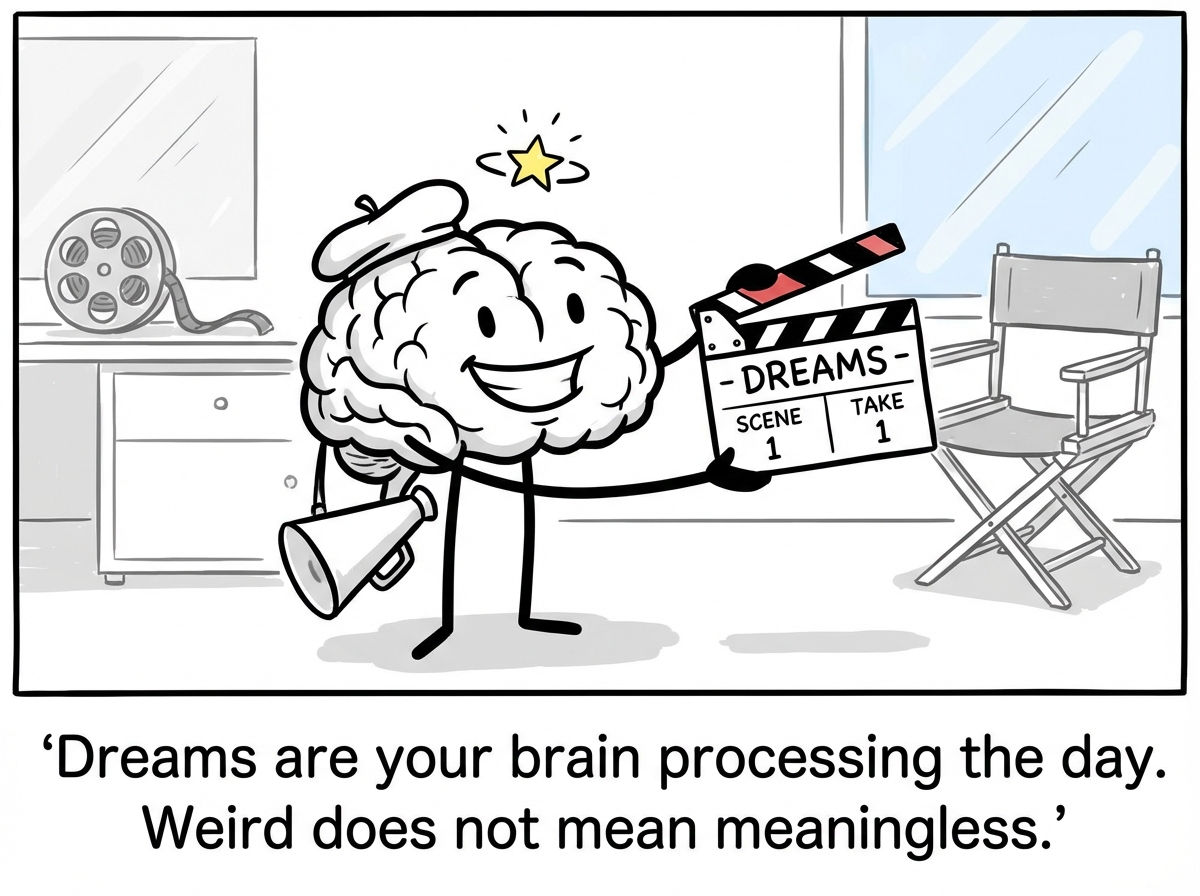
The Brain's Late-Night Movie
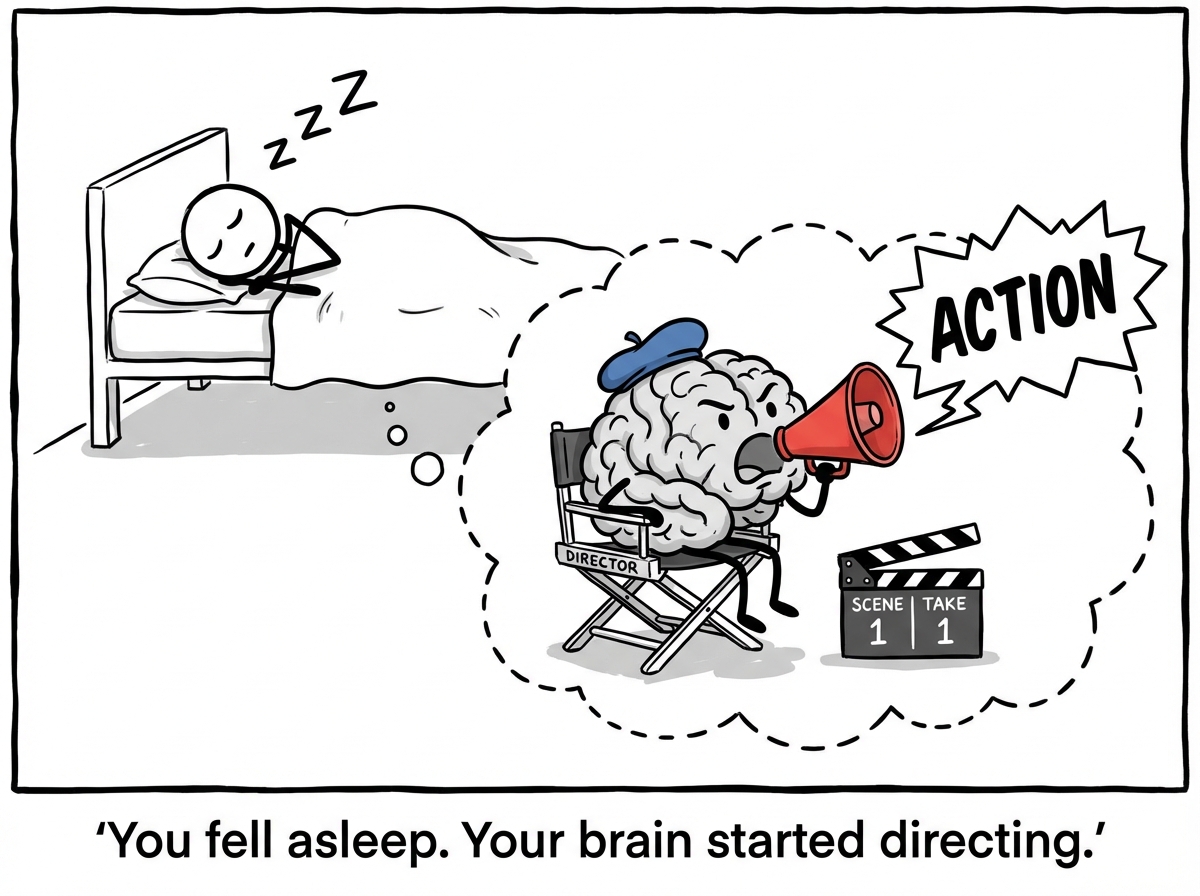

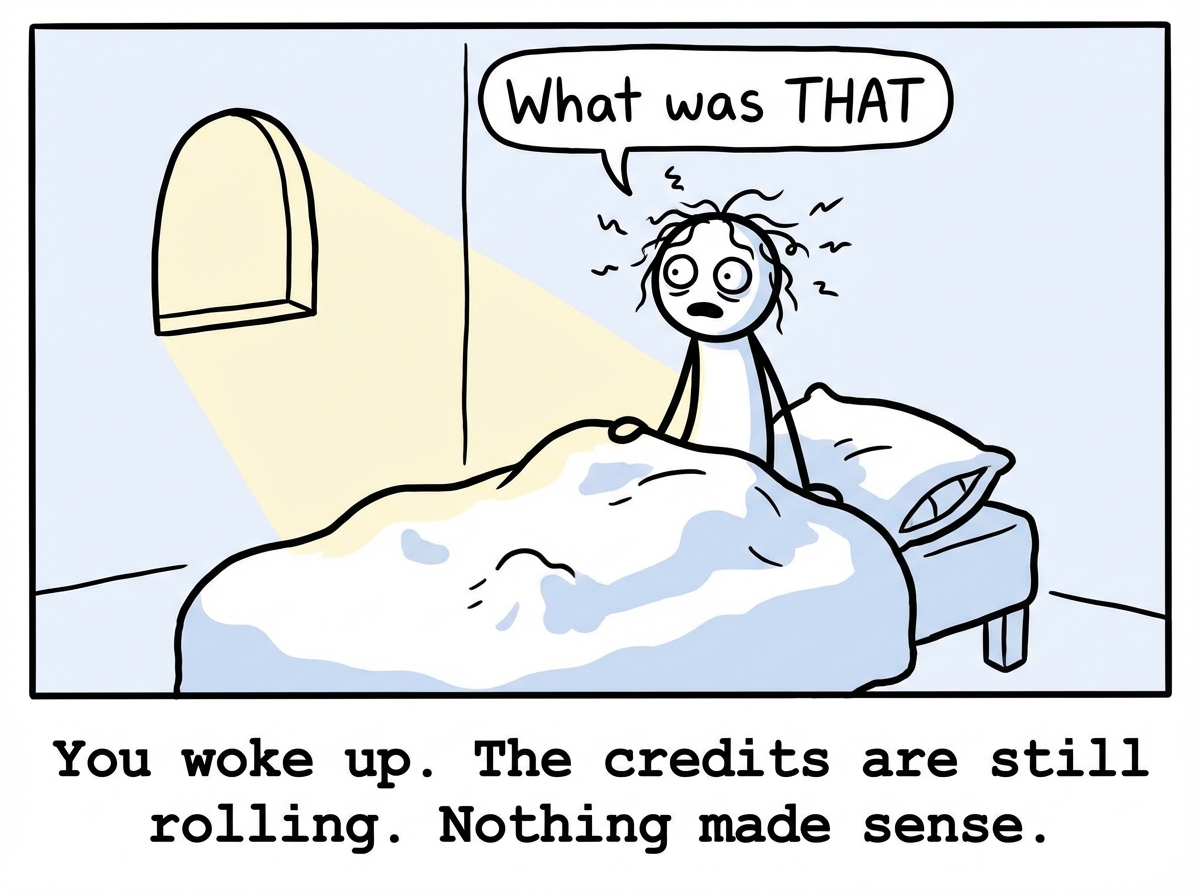
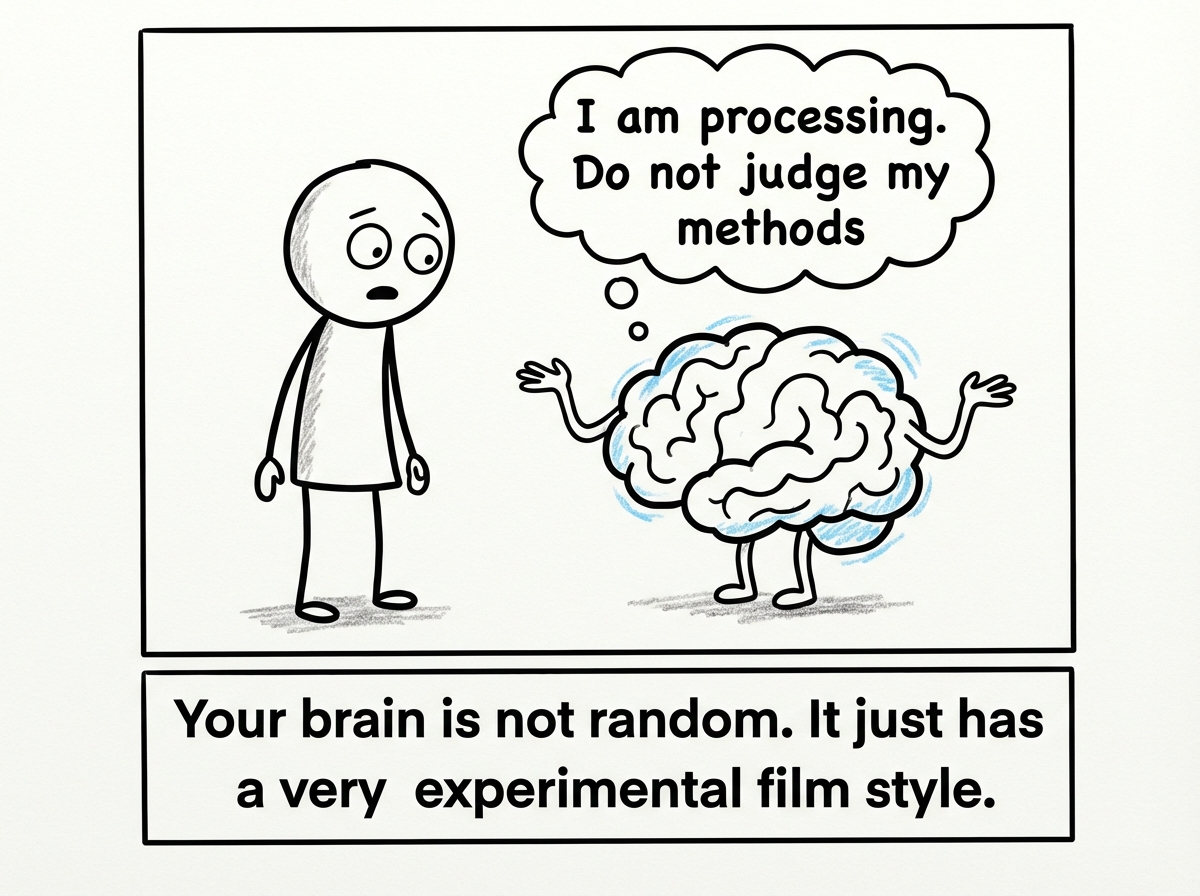
A person's sleeping brain operates as a chaotic film director producing bizarre movies with zero budget and no coherent plot, then refuses to explain itself in the morning.
Explanation
During REM sleep, your prefrontal cortex -- the brain region responsible for logic, planning, and the ability to say 'that makes no sense' -- goes largely offline. Meanwhile, the amygdala and other emotional centers remain highly active, and the brain pulls fragments from recent memories, old experiences, and emotional associations to weave together narratives with no regard for continuity or realism. This is not a malfunction. Research suggests dreaming serves critical functions including memory consolidation, emotional regulation, and creative problem-solving. The bizarre combinations your brain produces are actually a feature of associative thinking unfiltered by rational constraints. Your brain is not making bad movies -- it is doing important work using the only language it has access to while your logical mind is asleep.
Key Takeaway
Your dreams are not nonsense -- they are your brain processing the day's emotional residue using the only tools available when logic goes offline.