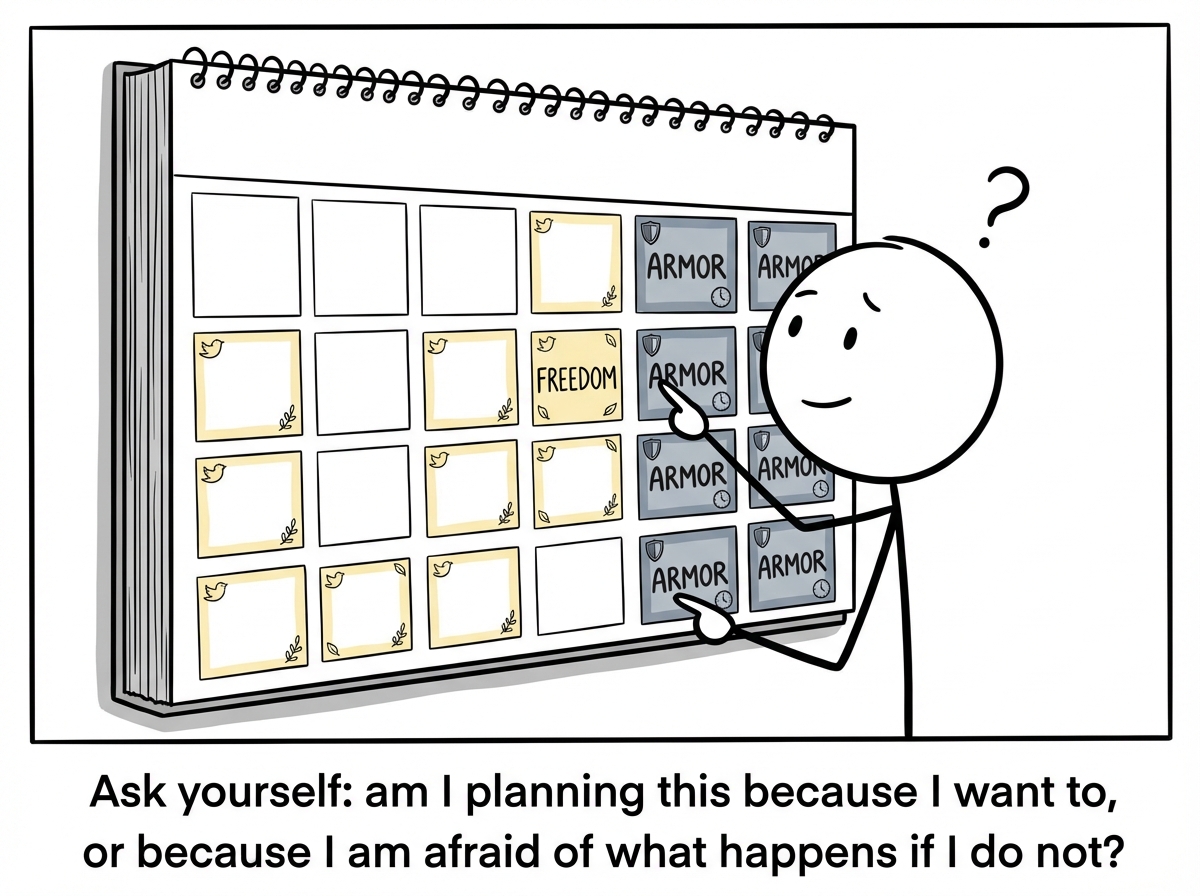
The Color-Coded Calendar
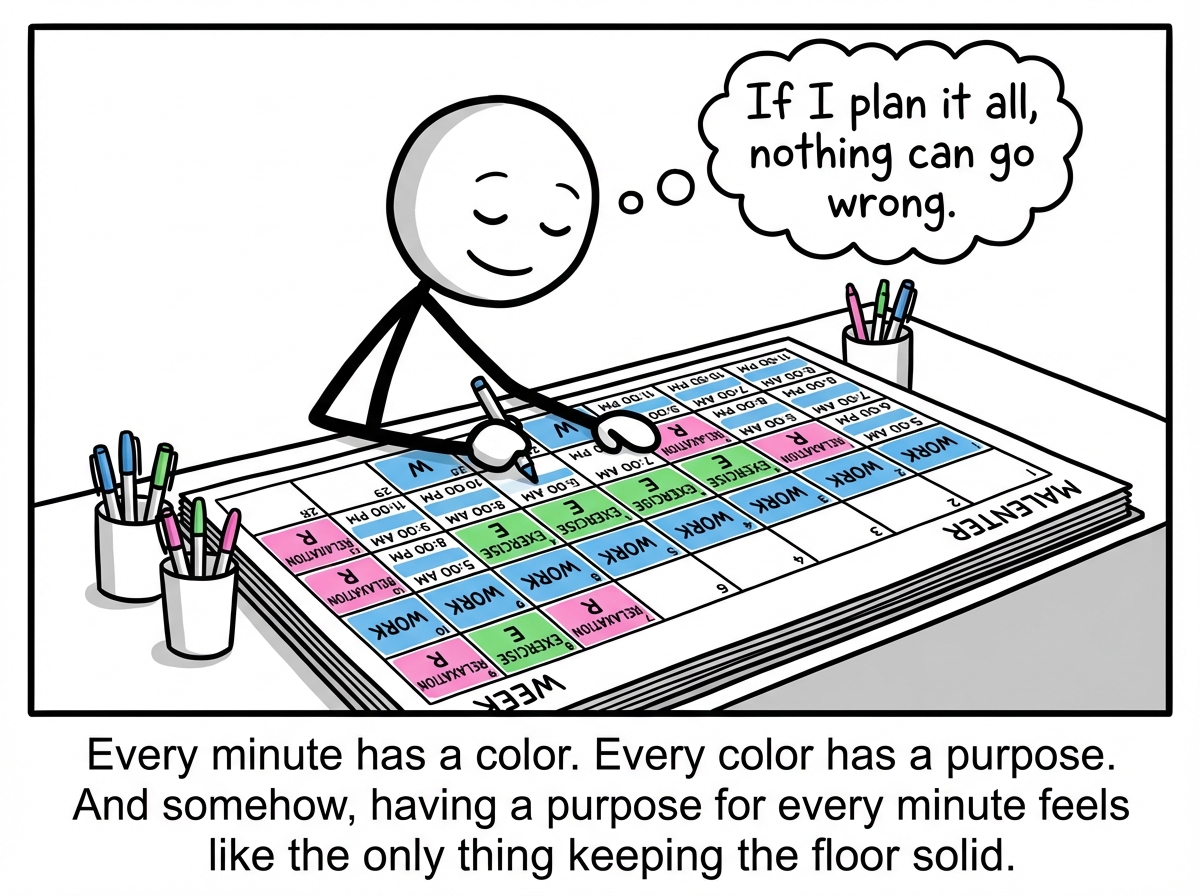
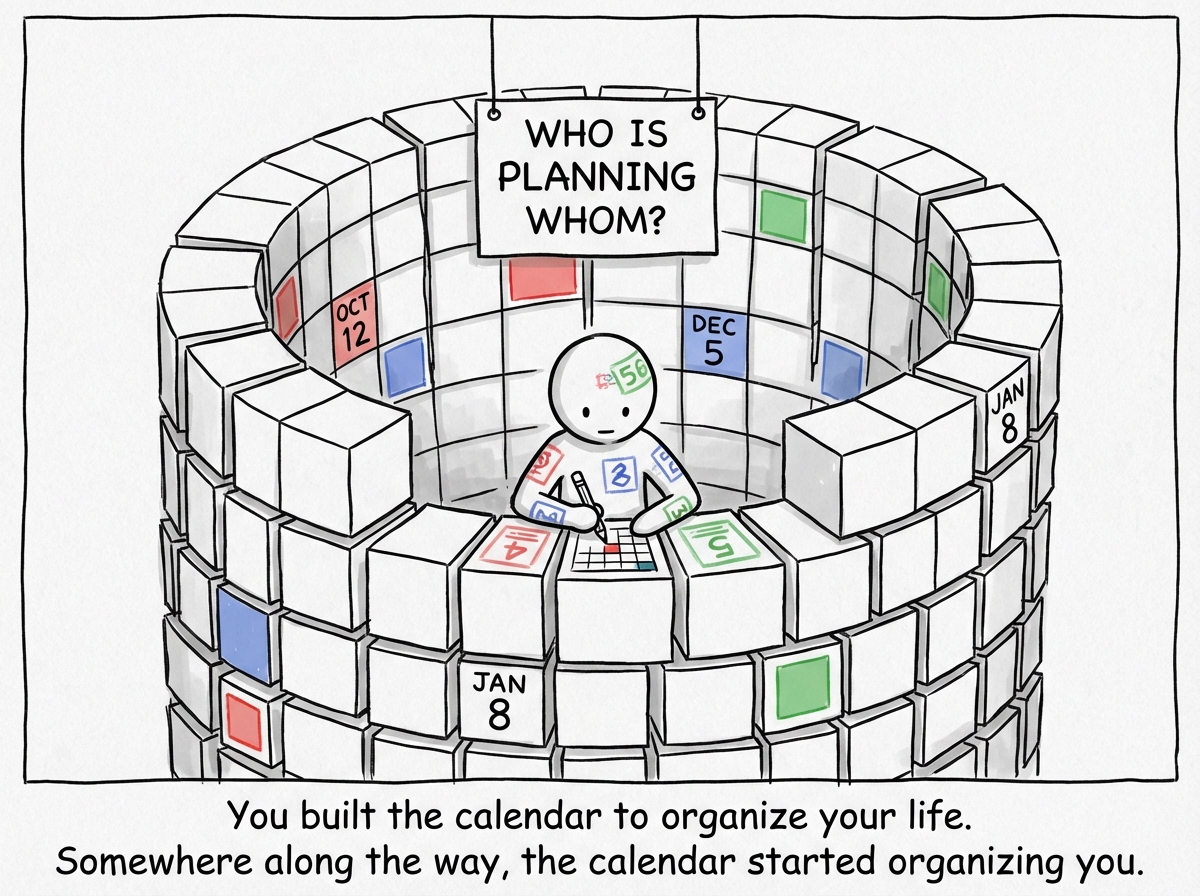
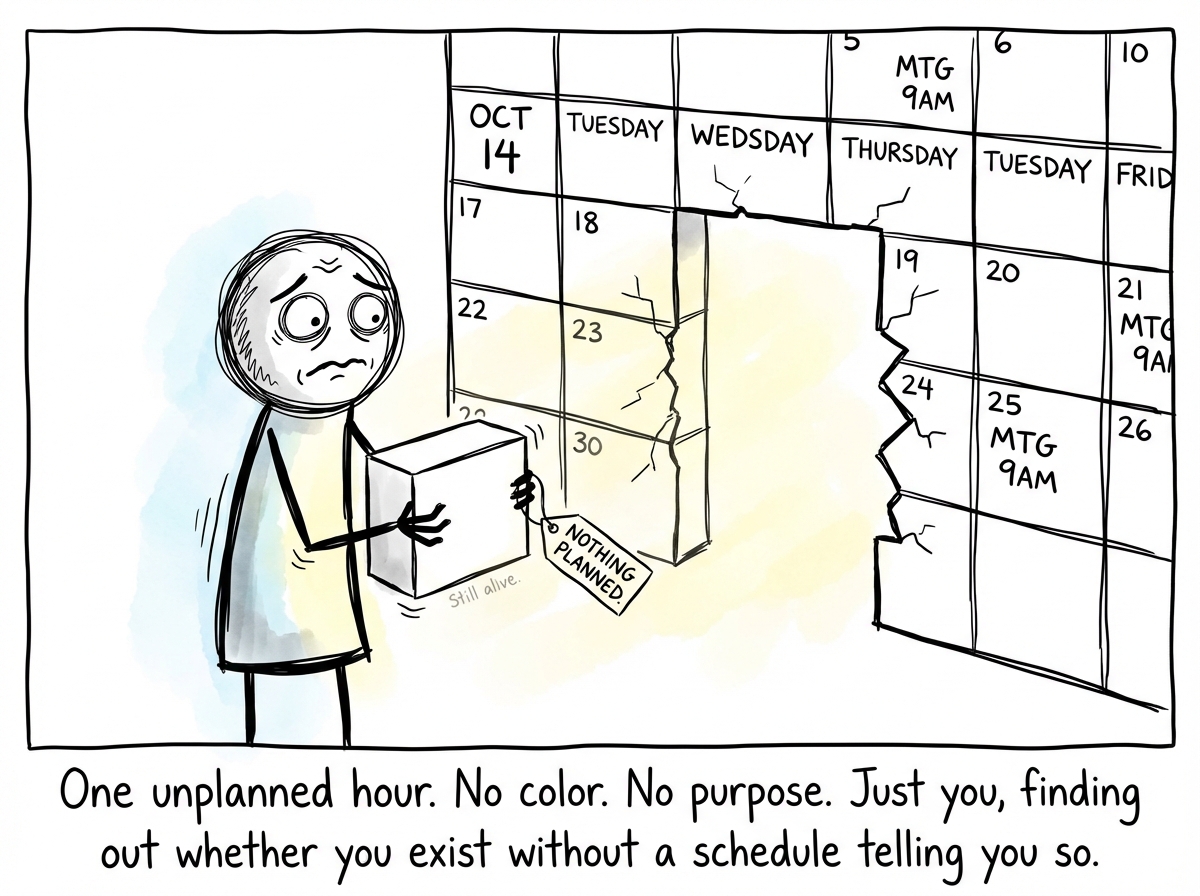
A person obsessively color-codes every minute of their life until the calendar itself starts controlling them, revealing that the planning was never about productivity -- it was about not feeling afraid.
Explanation
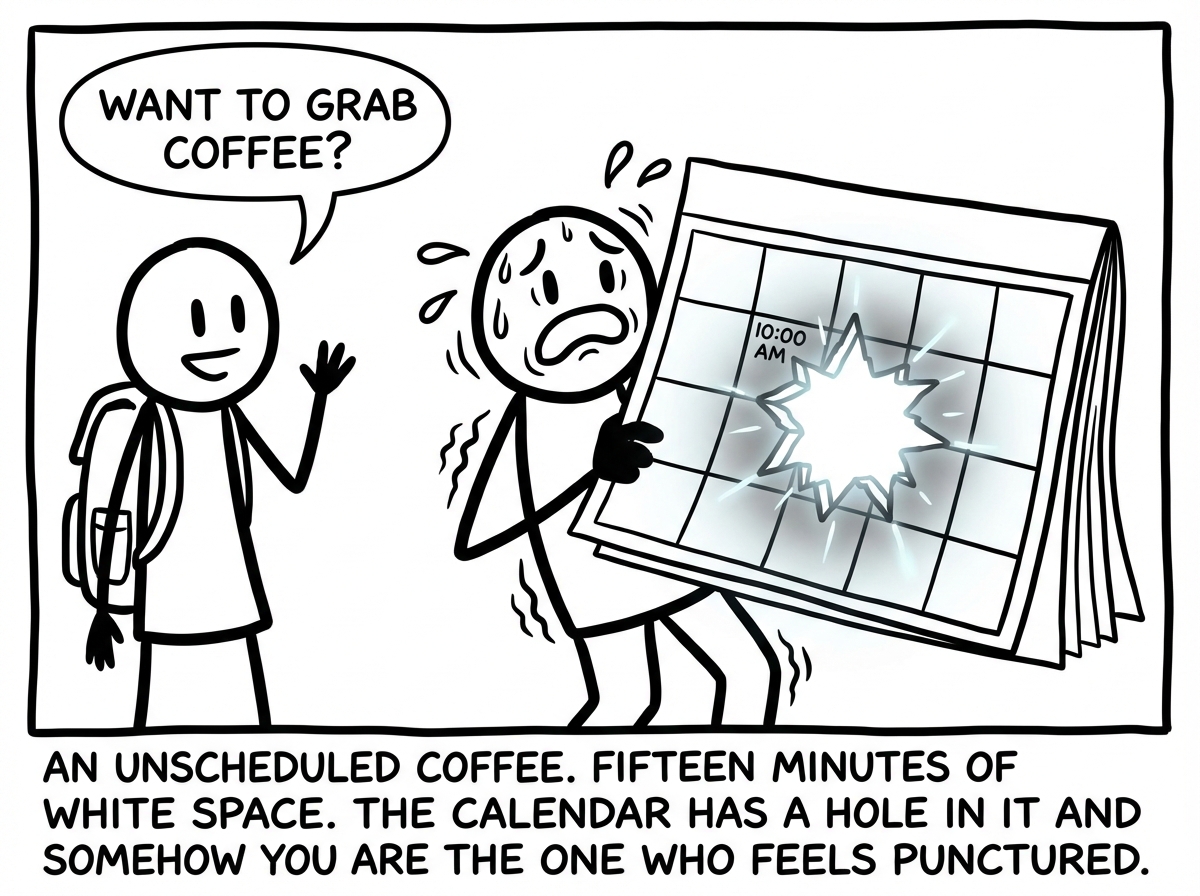
The color-coded calendar is the perfect metaphor for control as coping because it looks so reasonable from the outside. Who could criticize someone for being organized? But there is a difference between planning your day and needing to plan your day in order to breathe. When every fifteen-minute block must be accounted for, when a canceled appointment triggers disproportionate panic, when spontaneity feels physically threatening -- that is not organization, it is a containment strategy for anxiety that has nowhere else to go. Ellen Langer's research on the illusion of control suggests that the more uncertain we feel internally, the more compulsively we arrange our external world. The calendar becomes a ritual, not a tool. Each color represents not a task but a promise: if I can just get this right, nothing bad will happen. But the promise is a lie, because life does not honor color codes. And the moment the system fails -- a schedule disrupted, a block unaccounted for -- the anxiety the system was built to contain comes flooding back, often worse than before, because now you have lost your only defense. Letting go of the calendar does not mean embracing chaos. It means learning to tolerate small doses of unstructured time without interpreting them as danger.
Key Takeaway
A perfectly organized life is sometimes just a perfectly decorated cage -- the colors are beautiful, but you still cannot leave.