The Color-Coded Calendar
A person obsessively color-codes every minute of their life until the calendar itself starts controlling them, revealing that the planning was never about productivity -- it was about not feeling afraid.

When managing every detail is not about efficiency -- it is about outrunning the terror of uncertainty.
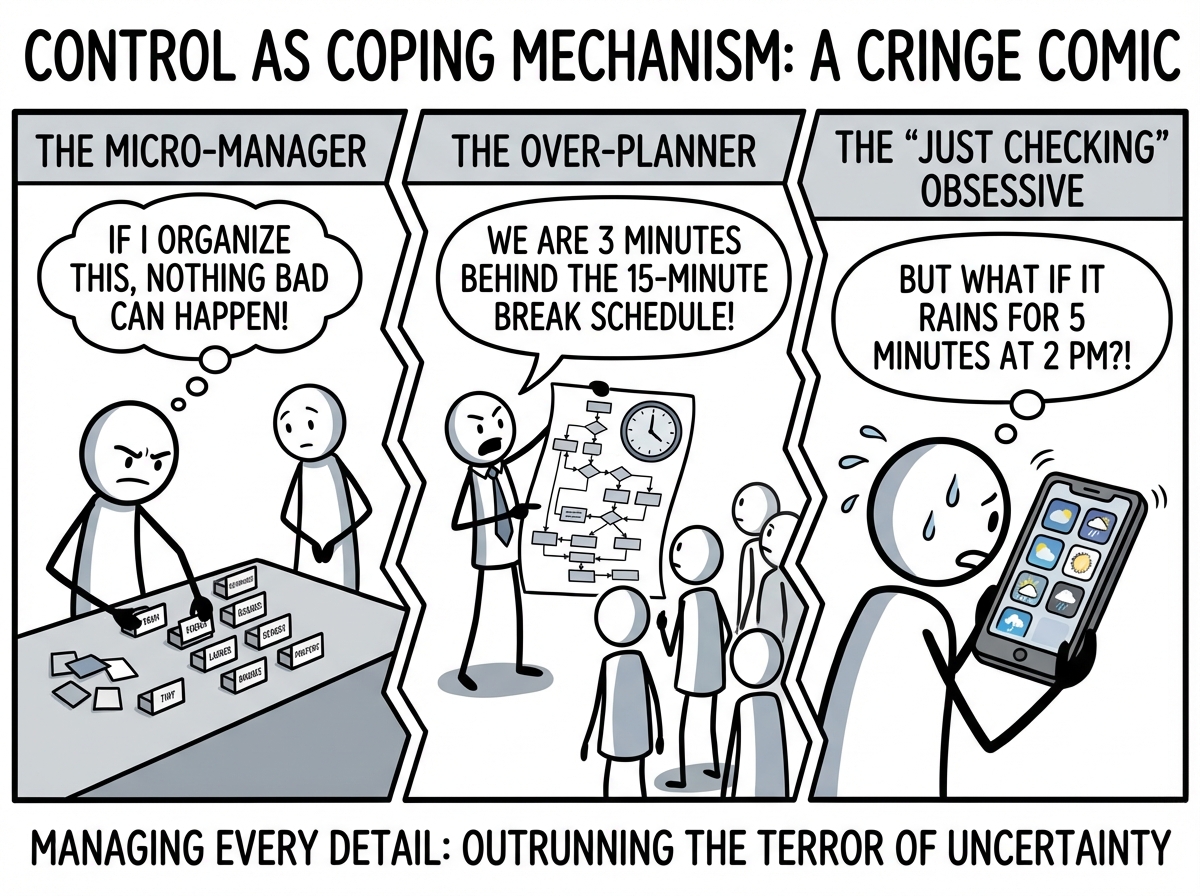
Control as a coping mechanism is the unconscious use of rigid planning, micro-organization, and environmental management to regulate anxiety that feels otherwise uncontainable. It is not the same as being organized. Organized people enjoy structure; control-driven people require it to function. The distinction matters because one serves life and the other replaces it. Psychologist Ellen Langer's research on the 'illusion of control' showed that people routinely overestimate their influence over random events, and this overestimation intensifies under stress -- the more helpless we feel internally, the more desperately we arrange externals. Attachment theory adds another layer: children raised in unpredictable or chaotic environments often develop hypervigilant organizational strategies as a way to manufacture the safety their caregivers could not provide. In adulthood, this looks like color-coded calendars, obsessive list-making, and an inability to rest without a plan. The cruel irony is that the coping mechanism eventually generates its own anxiety -- now you are not just afraid of the original uncertainty, you are terrified of losing your system for managing it. The planning becomes a prison that looks like productivity, and the person inside it cannot tell the difference between being in charge and being trapped.
The tighter you grip the plan, the more it proves the plan was never about the plan -- it was about the fear underneath.