
The Costume Closet
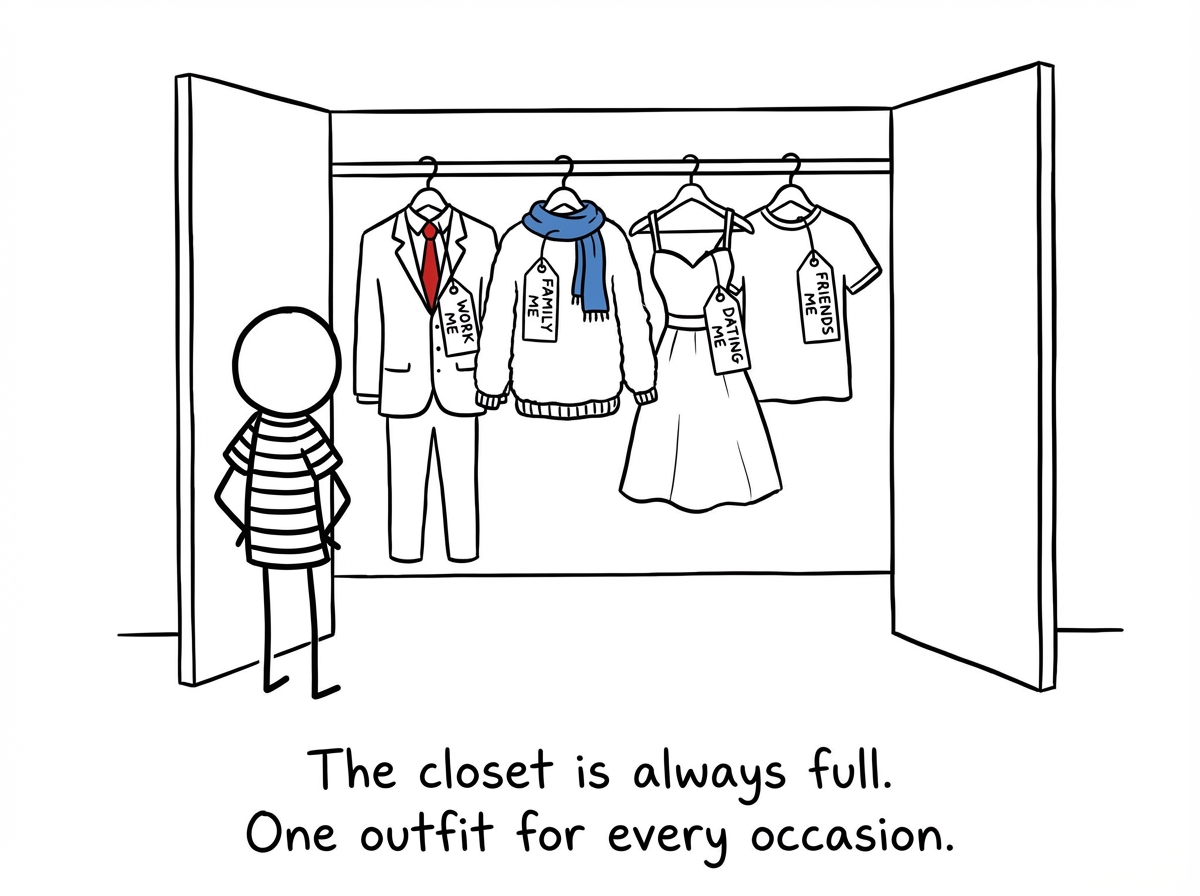
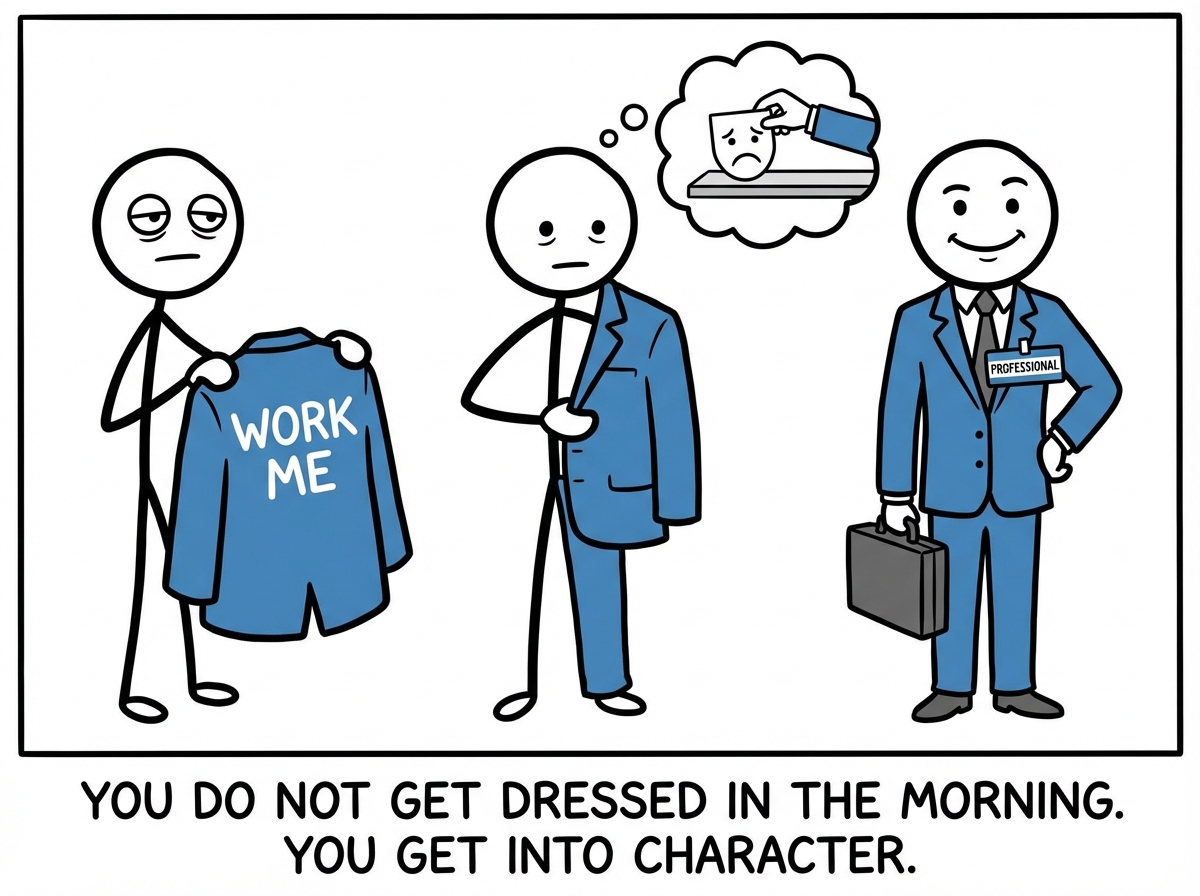
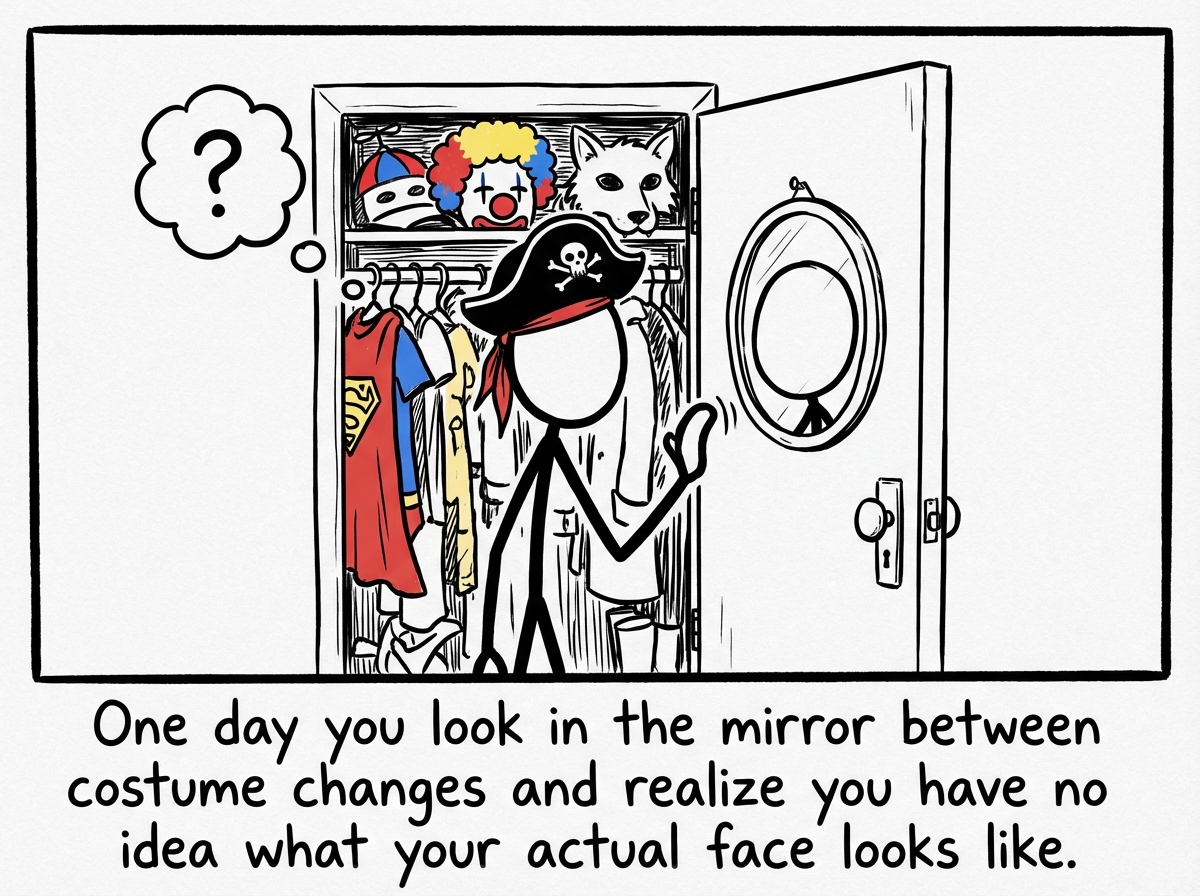
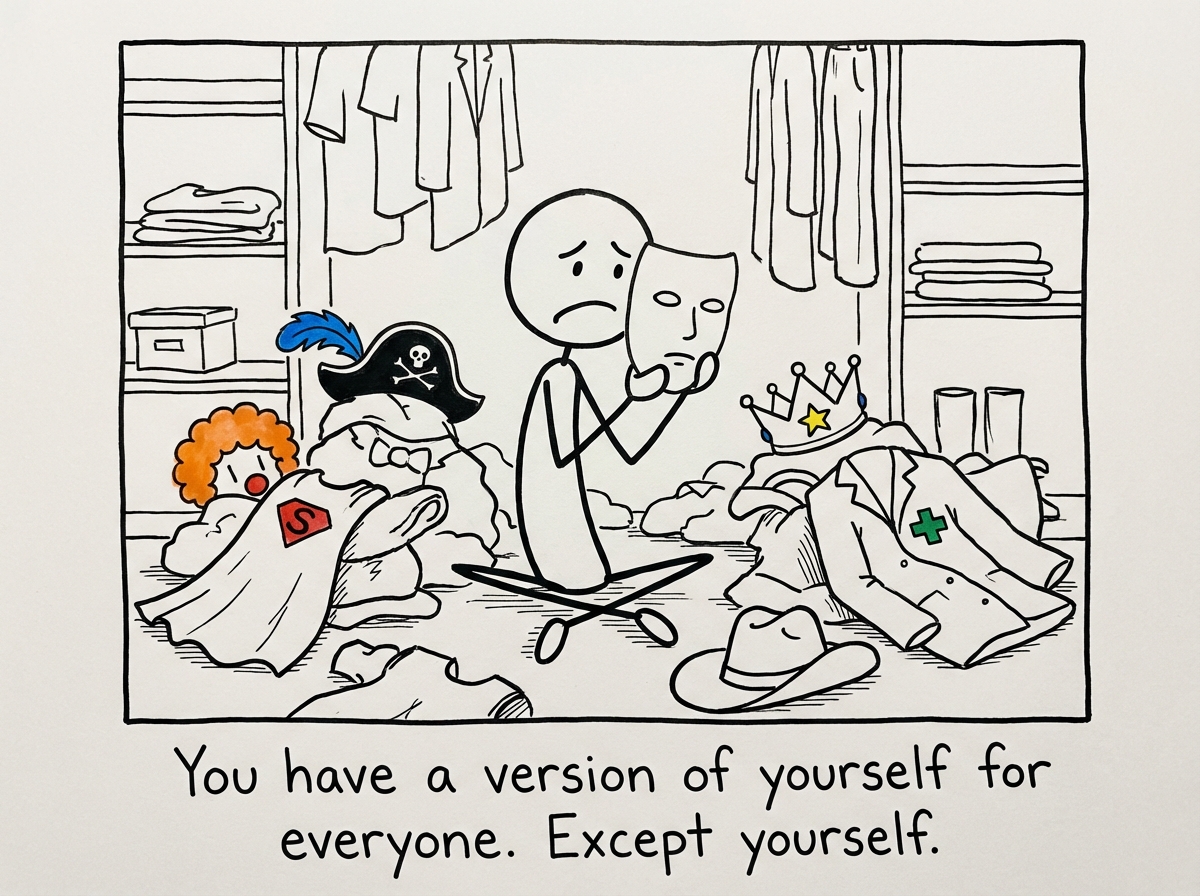
A person stands in front of a closet full of different masks and costumes for every situation -- work, family, dating -- while their real face is blank because they forgot what it looks like.
Explanation
You have one personality for work, another for your family, a third for your friends, and a completely different one for dating. Each version of you knows exactly what to say, how to act, and what to suppress. You switch between them so seamlessly that nobody notices the transitions -- except you, in those quiet moments when you are alone and realize you have no idea which version is the real one. The closet is always full, but the person standing in front of it feels completely empty. Erving Goffman described social interaction as a kind of theater where people manage impressions through 'front stage' and 'back stage' behavior. For most people, this is a natural part of social life -- small adjustments based on context. But for chronic maskers, there is no backstage. Every interaction is a performance, and the costume changes happen so automatically that the original face underneath starts to atrophy from disuse. Research on social camouflaging shows that sustained masking is associated with increased anxiety, depression, and a pervasive sense of loneliness -- because even when you are surrounded by people who seem to like you, some part of you knows they are liking a character, not a person. The path forward starts with one honest moment. Not a dramatic unmasking -- just a single interaction where you let a genuine reaction slip through instead of the curated one. Maybe you admit you did not like the movie everyone loved. Maybe you say 'I am not okay' when someone asks how you are. These tiny moments of authenticity are how you start to remember what your real face looks like. The closet does not have to disappear overnight -- you just have to stop reaching for a costume every single time.
Key Takeaway
If you have a different personality for every person in your life, none of those personalities are actually you.
A stick figure standing in front of the costume closet reaching for the 'Work Me' outfit, then stopping. They look at their blank face in the mirror and whisper 'Not today'
The stick figure sitting with a friend and saying 'Actually, I did not like that movie' instead of agreeing. The friend looks surprised but not upset. The stick figure looks terrified but alive
The stick figure showing up to different situations wearing the same face -- slightly awkward, slightly imperfect, but recognizably theirs. Some people look confused, most do not notice
The stick figure looking in the closet mirror and seeing a faint but real outline of their own face forming for the first time. The costumes hang untouched behind them