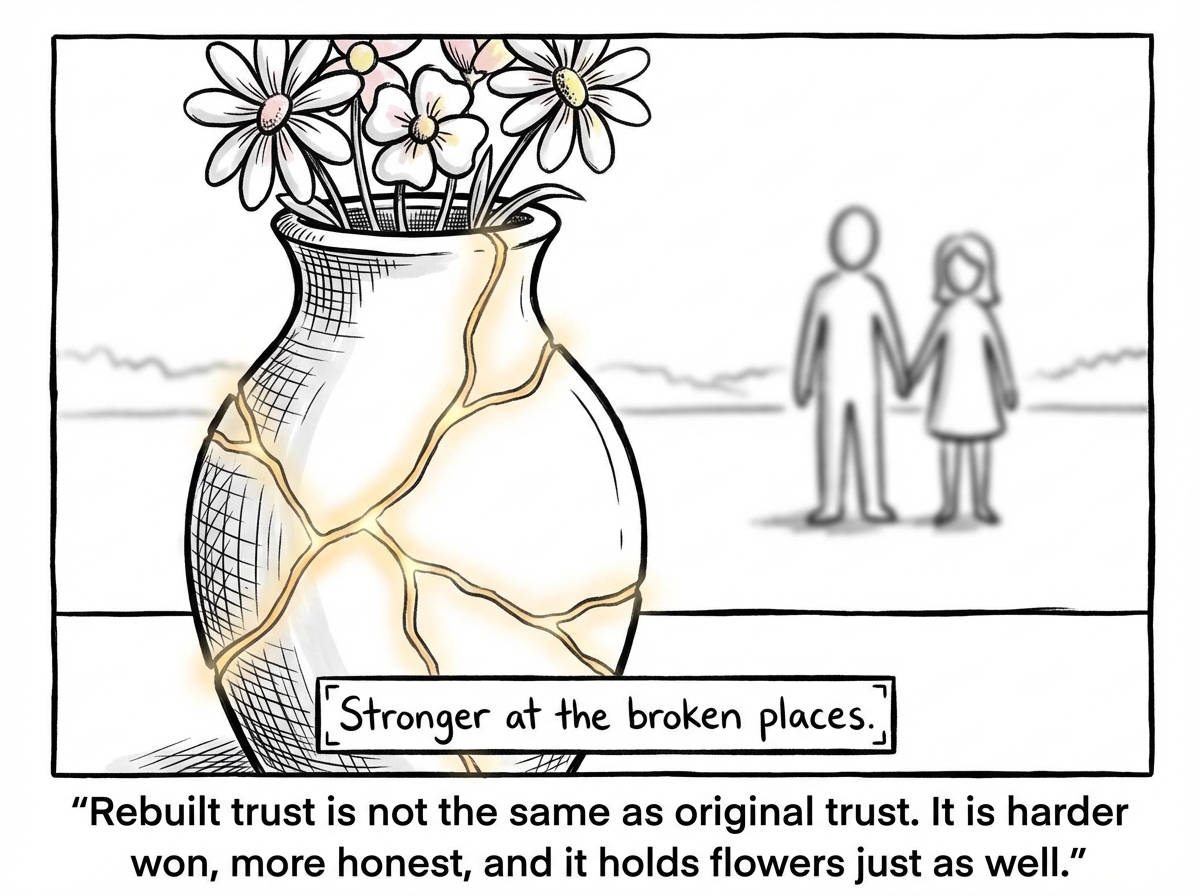
The Cracked Vase
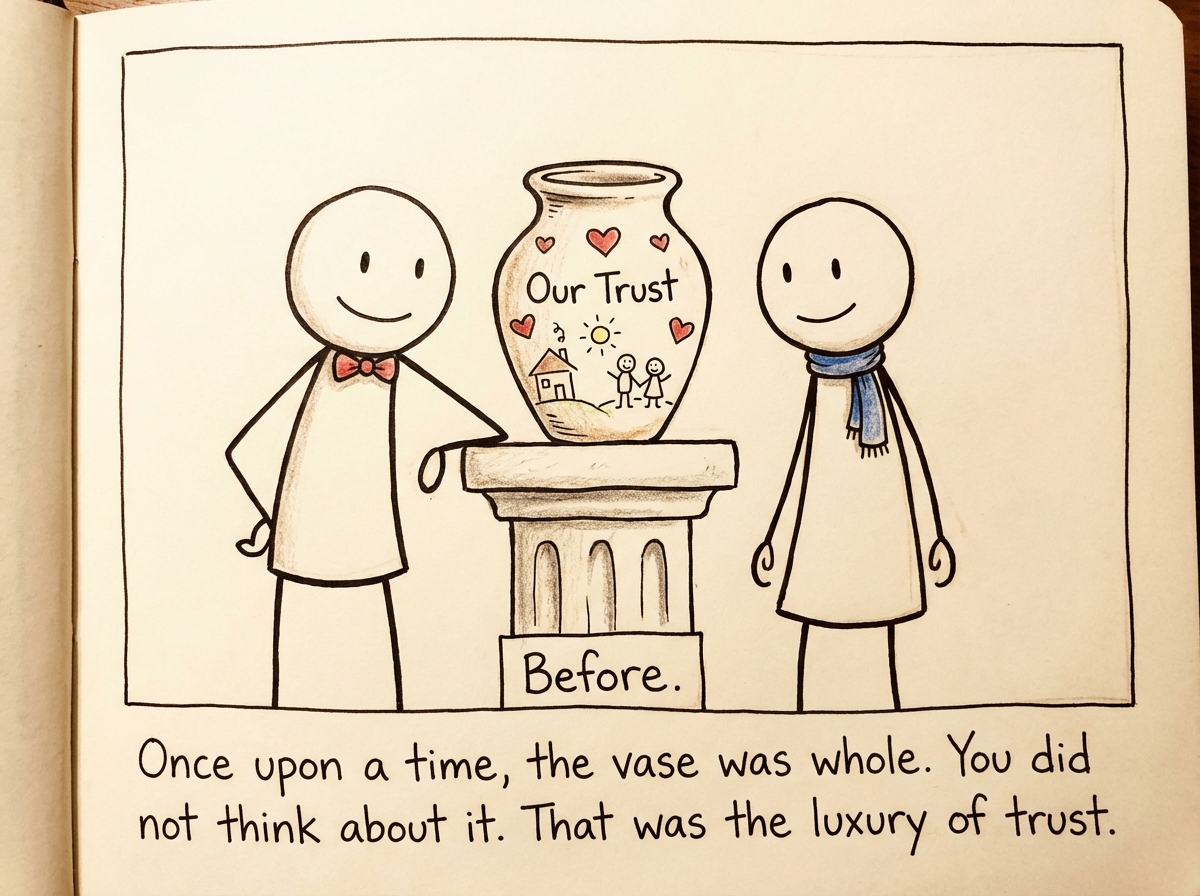
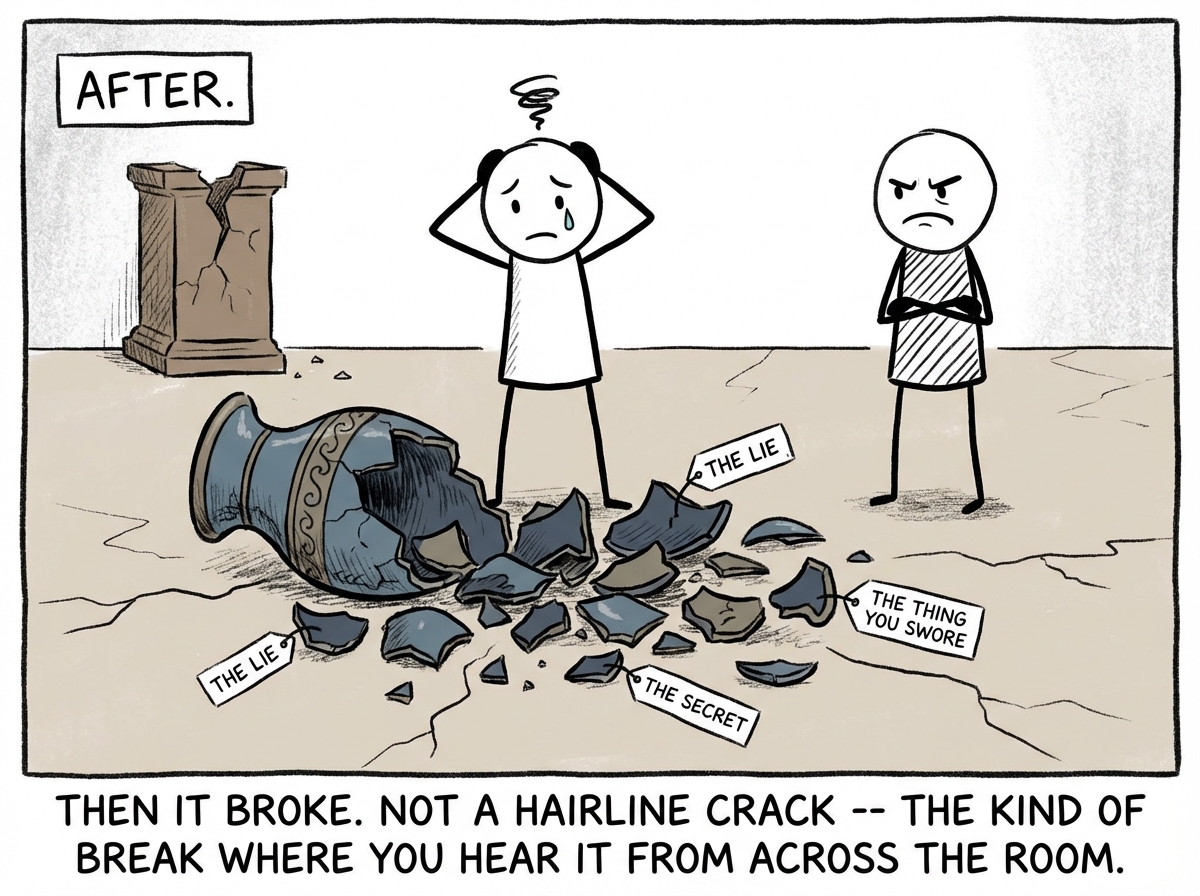
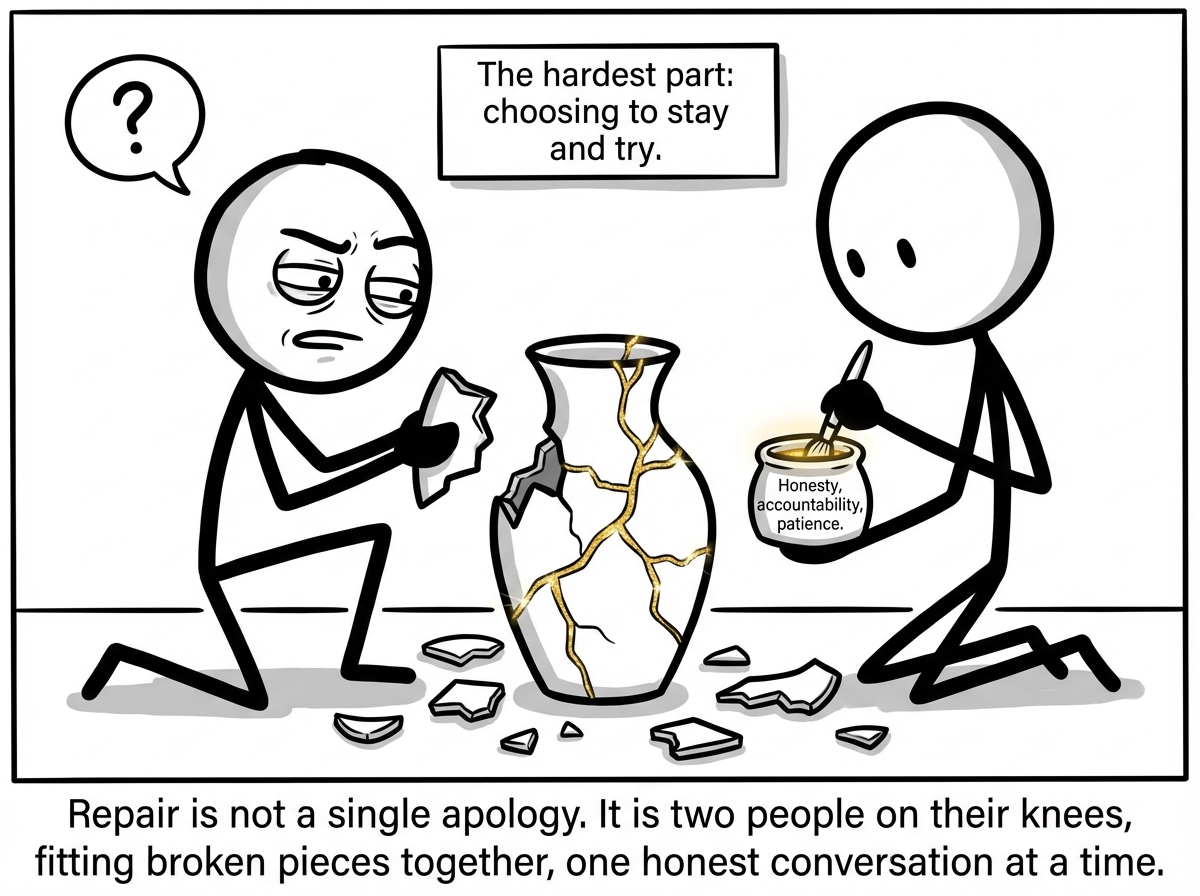
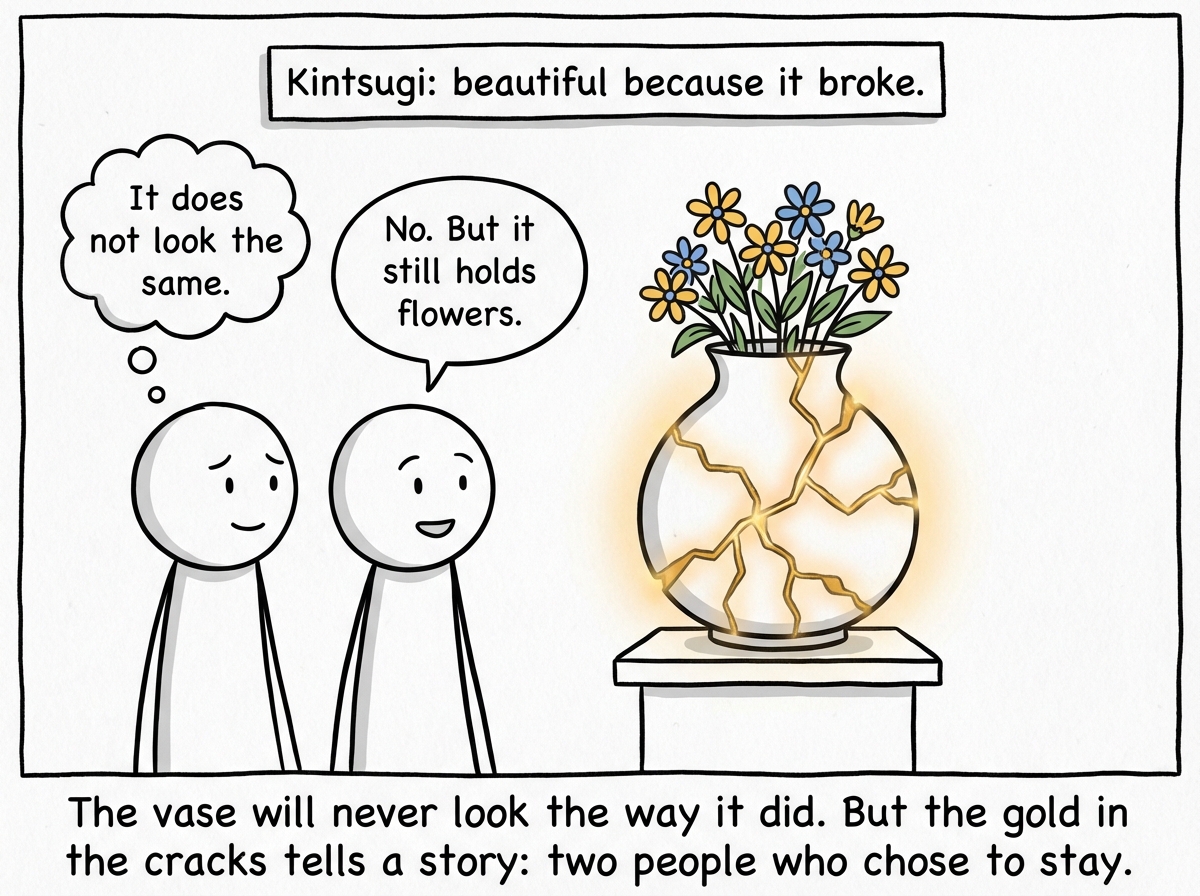
Two people try to glue a cracked vase back together, discovering it will never look the same but can still hold flowers -- the Japanese art of kintsugi applied to relationships.
Explanation
Rebuilding trust after betrayal is not about restoring what existed before -- it is about building something new from the broken pieces. John Gottman's research on couples who survive betrayal found that recovery is not about forgetting the breach but about creating a new relationship that acknowledges what happened. The old relationship, the one built on innocence and assumption, is gone. It shattered. What remains is a choice: walk away from the pieces or pick them up and build something different. The Japanese art of kintsugi offers a powerful metaphor. Broken pottery is repaired with gold lacquer, making the cracks visible rather than hiding them. The repaired object is considered more beautiful for having been broken. In relationships, this means the repair itself -- the difficult conversations, the accountability, the patience -- becomes part of the story. The cracks are not a secret. They are evidence that two people chose to stay and do the hardest work there is. The vase will never be what it was. But it can still hold flowers.
Key Takeaway
Rebuilt trust does not erase the cracks -- it fills them with something stronger, and the willingness to repair is itself the proof that the relationship still matters.