The Thermostat War
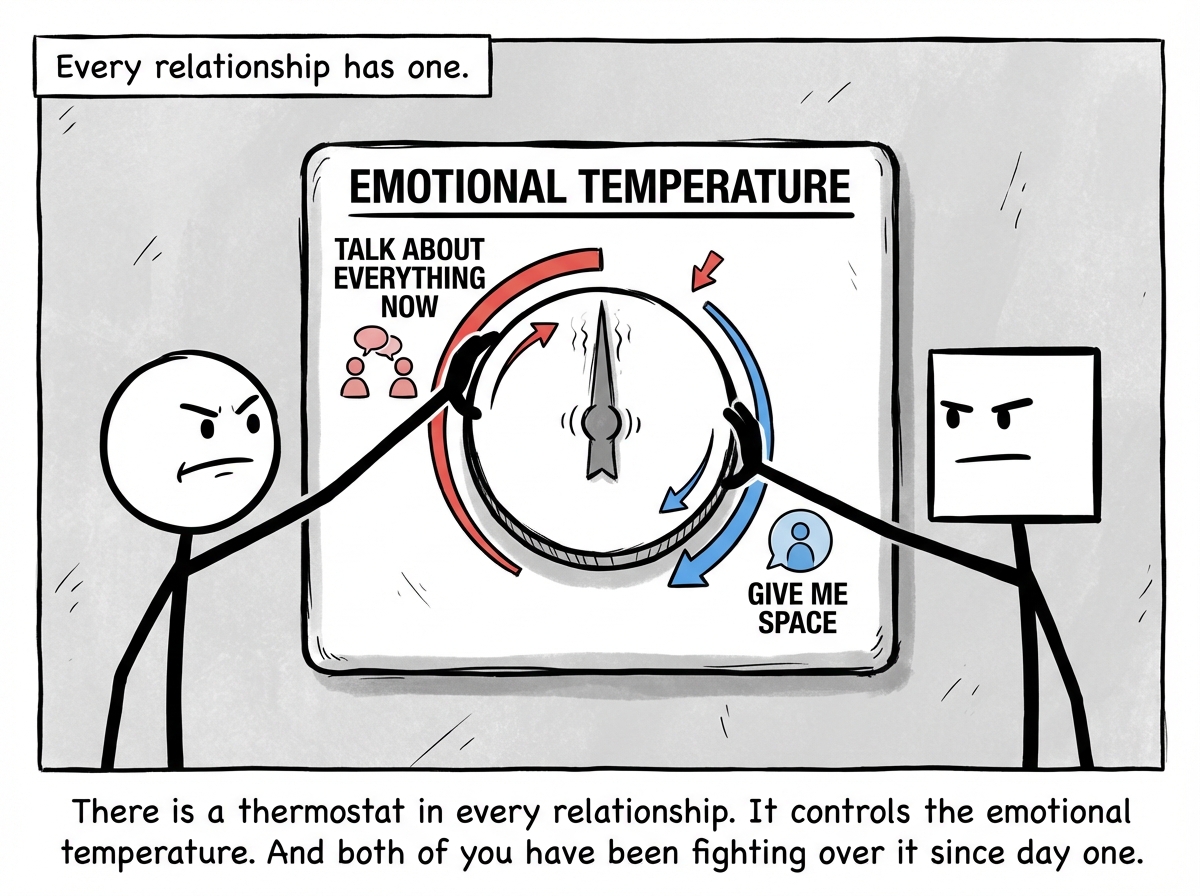
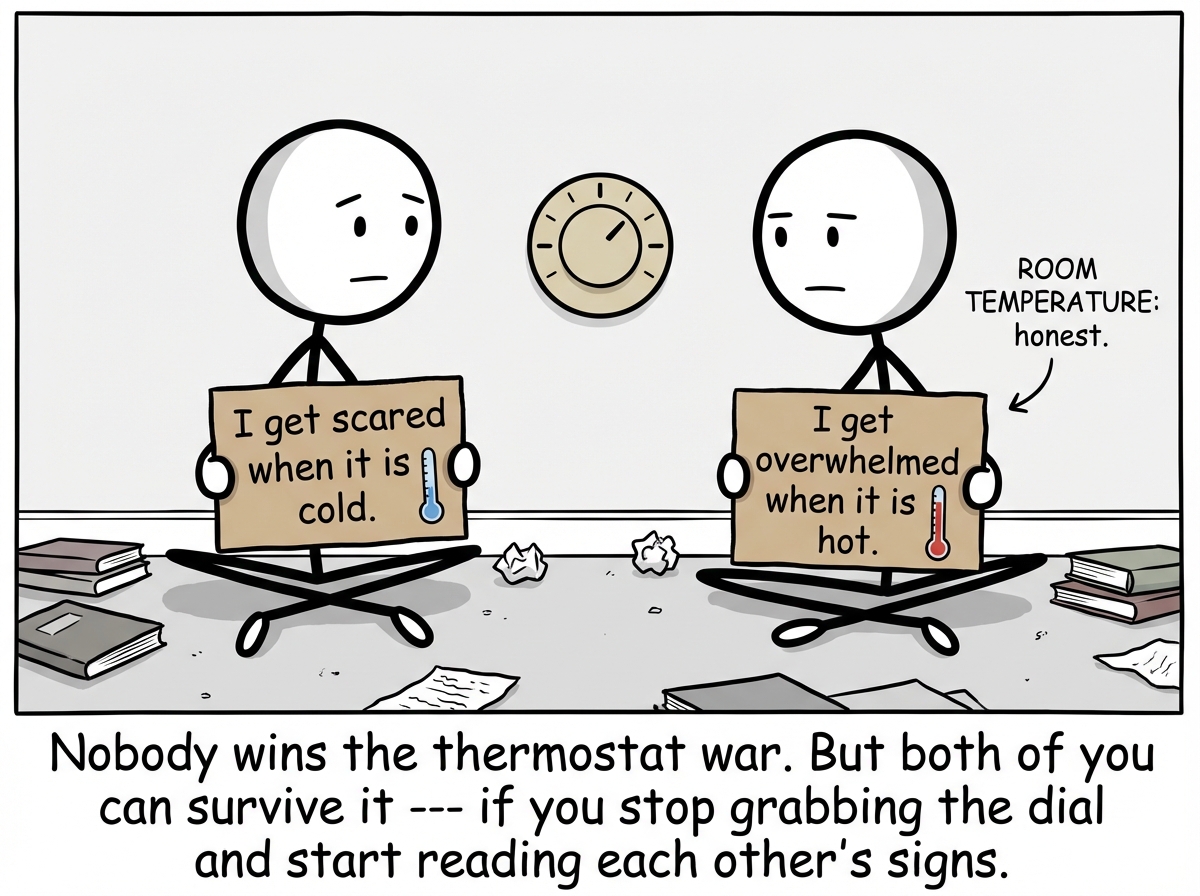
Two people fight over a thermostat labeled 'Emotional Temperature,' each trying to set the relationship's mood, until they realize neither has been listening to what the other actually needs.
Explanation
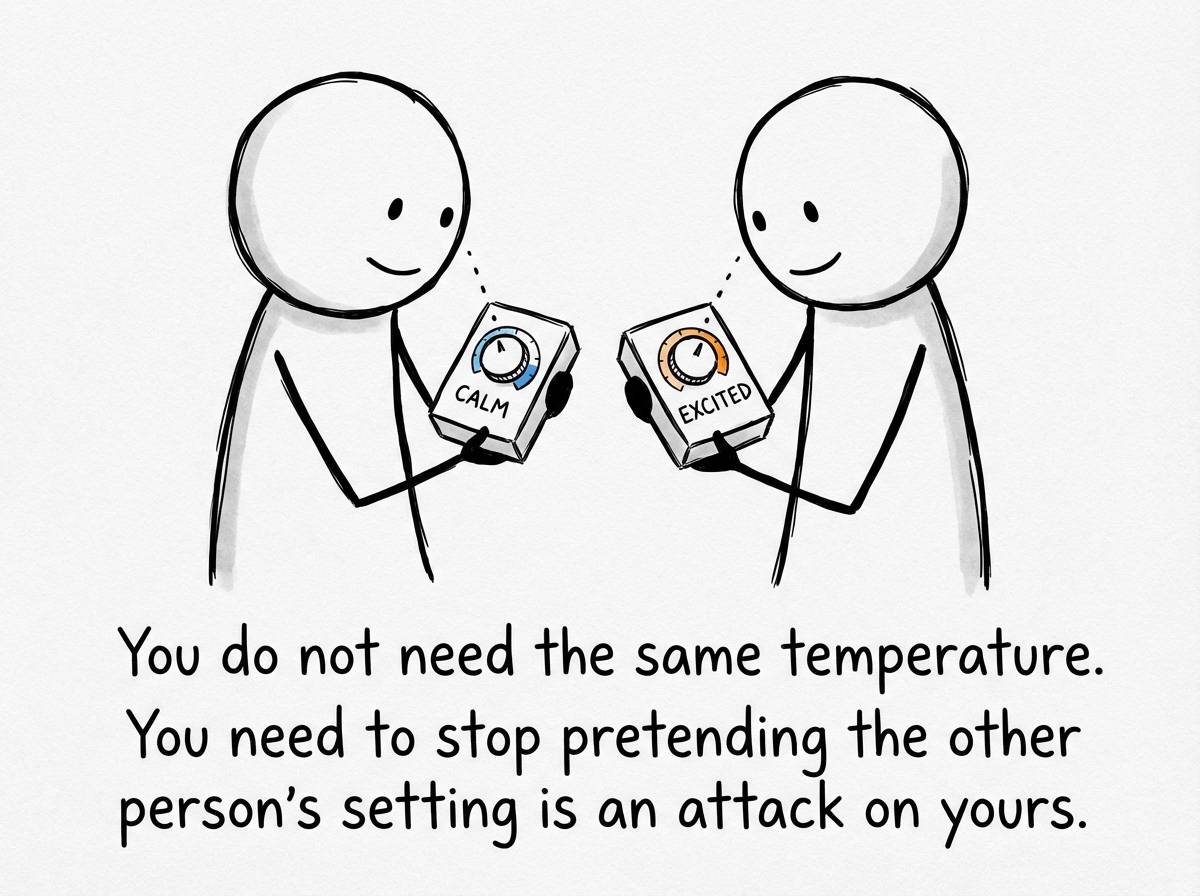
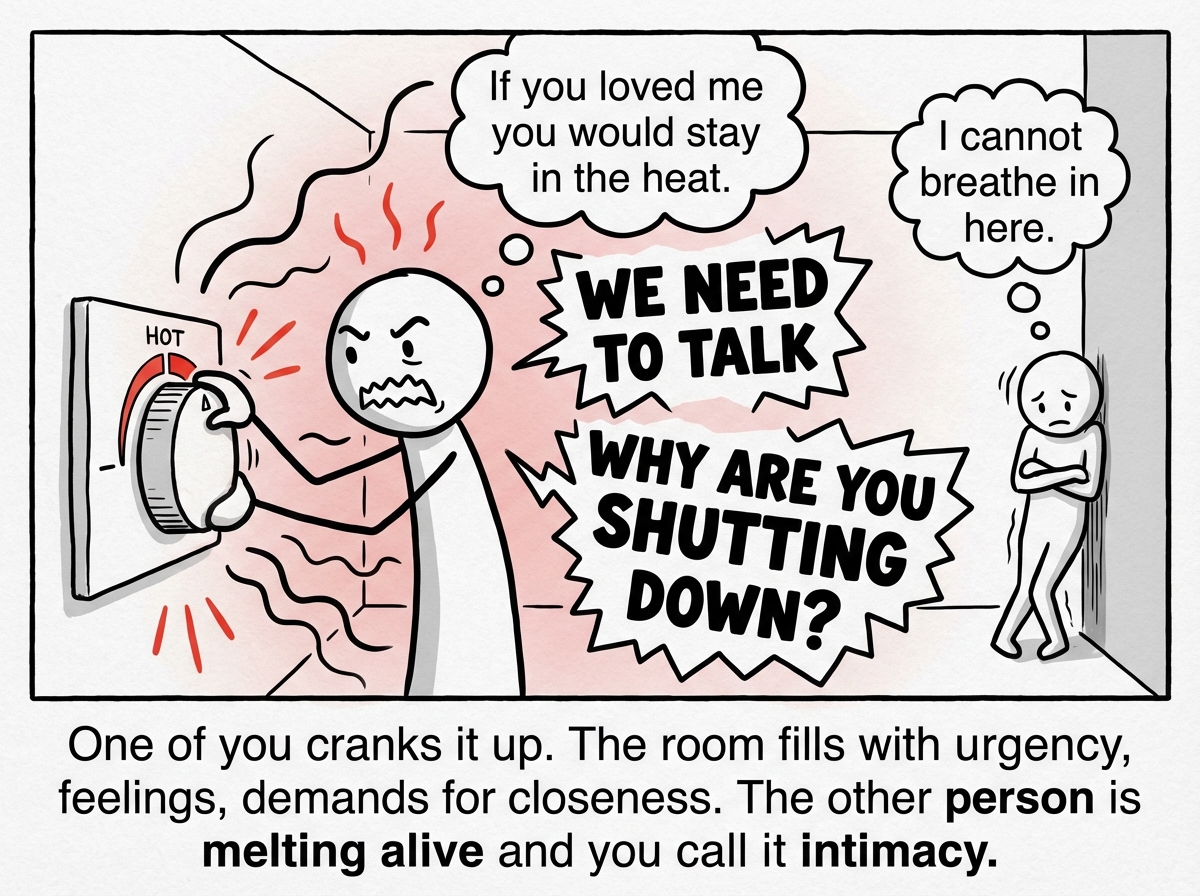
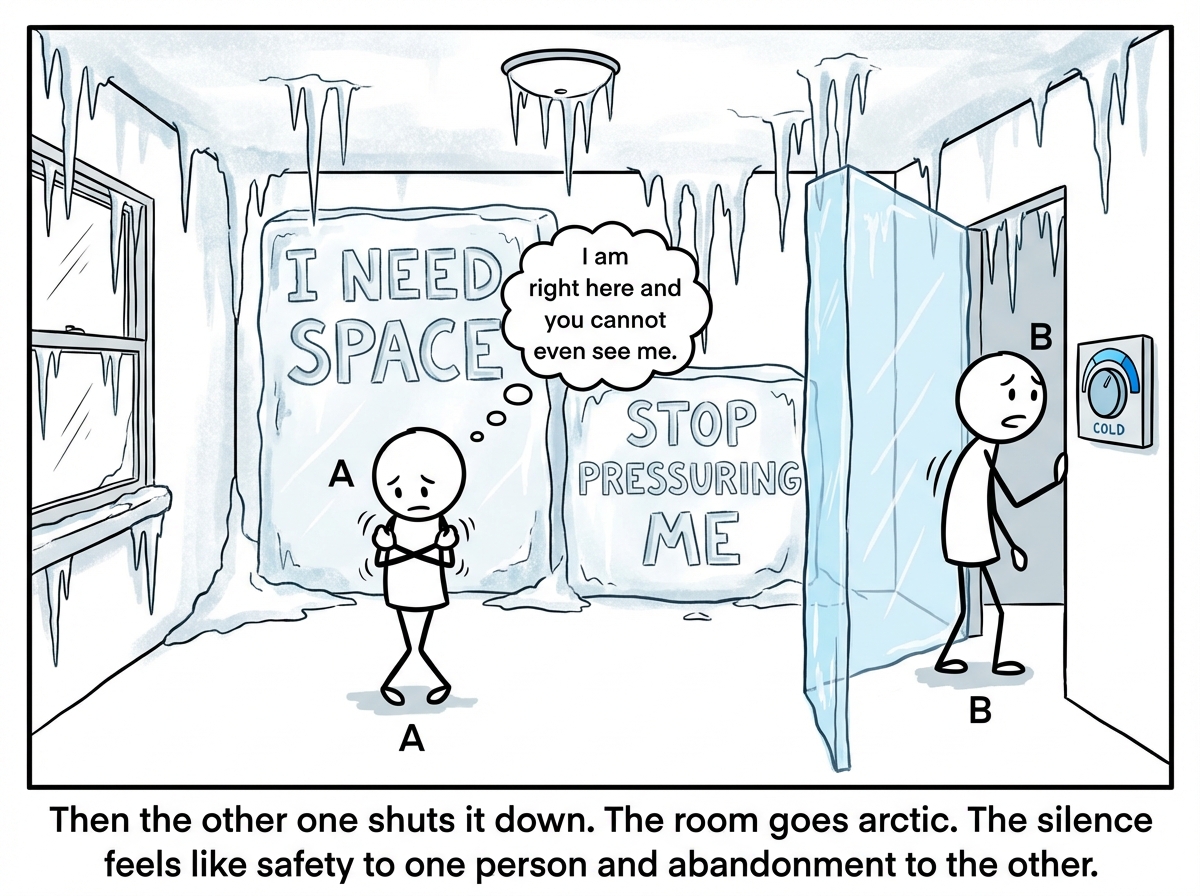
The thermostat war is a deceptively simple metaphor for one of the most common power struggles in relationships: the fight over who gets to set the emotional tone. One partner wants to talk about problems immediately; the other needs space. One craves closeness; the other feels suffocated. Neither is wrong, but both are grabbing for the thermostat -- the invisible control panel that determines whether the relationship runs hot or cold at any given moment. John Gottman's research found that the ability to accept influence from a partner is one of the strongest predictors of relationship success. But 'accepting influence' is not the same as surrendering. It means recognizing that your partner's preferred temperature is not a threat to yours -- it is information about what they need. The thermostat war escalates when each person interprets the other's setting as a rejection of their own, creating a cycle where the act of adjusting the temperature becomes the conflict itself. The resolution is not finding a compromise temperature. It is building a relationship where both people can say 'I am cold' or 'I am overheating' without the other person hearing it as an attack.
Key Takeaway
The fight was never about the thermostat -- it was about whether your needs would be heard without having to fight for them.