The Empty Chair at the Party
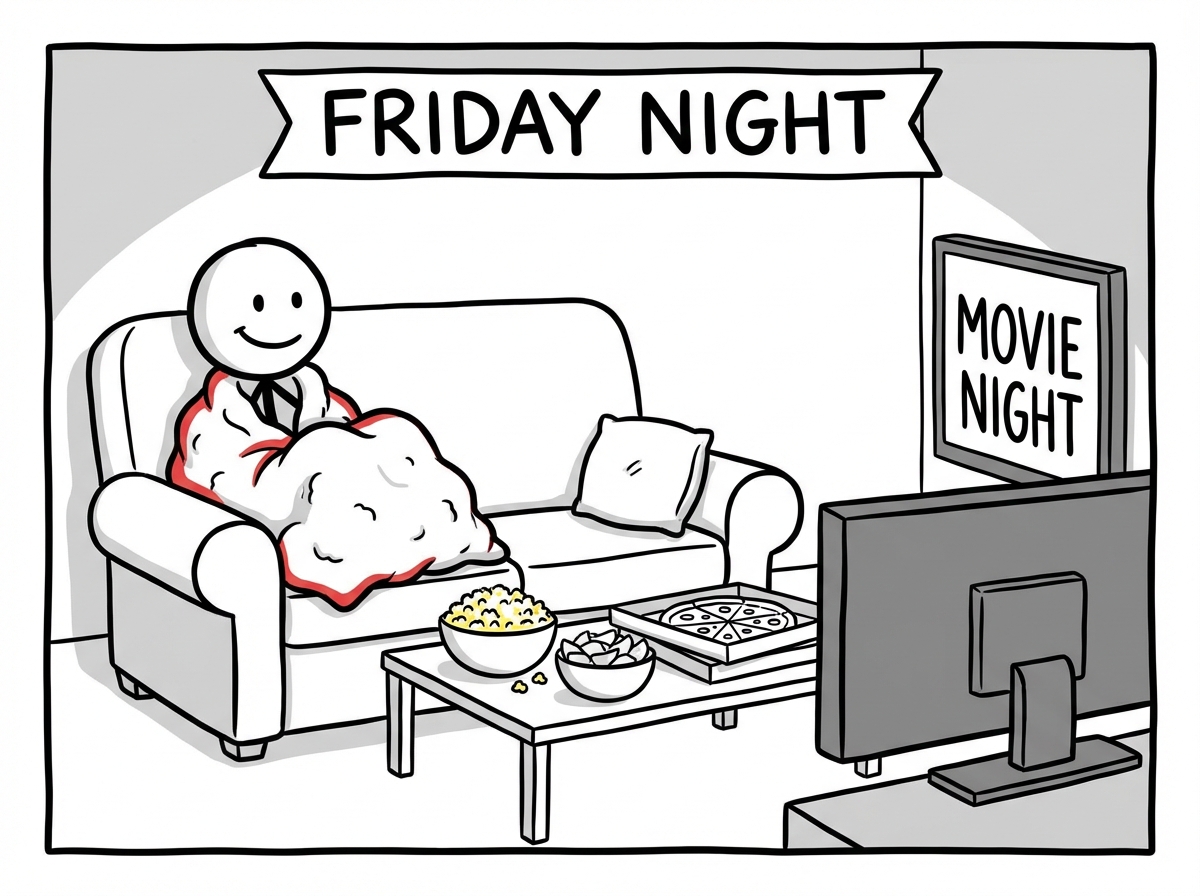
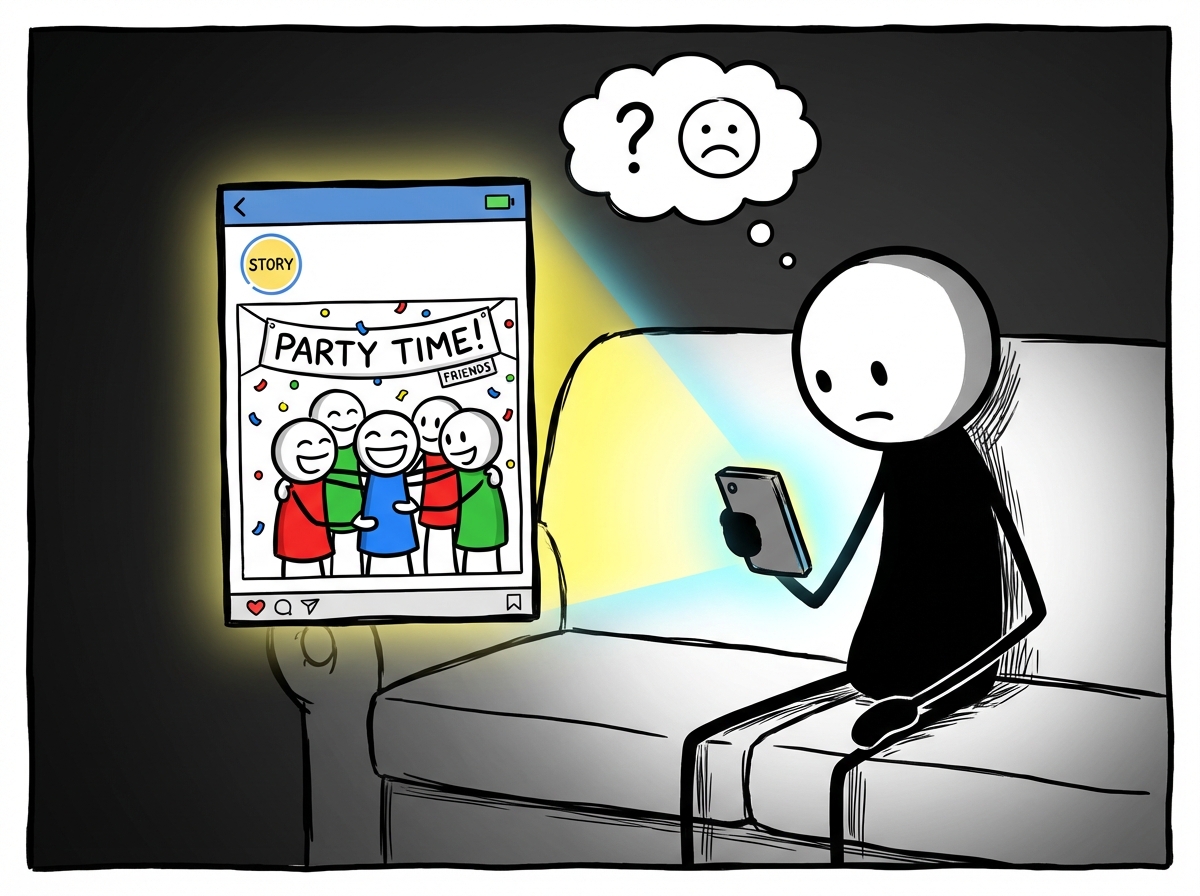
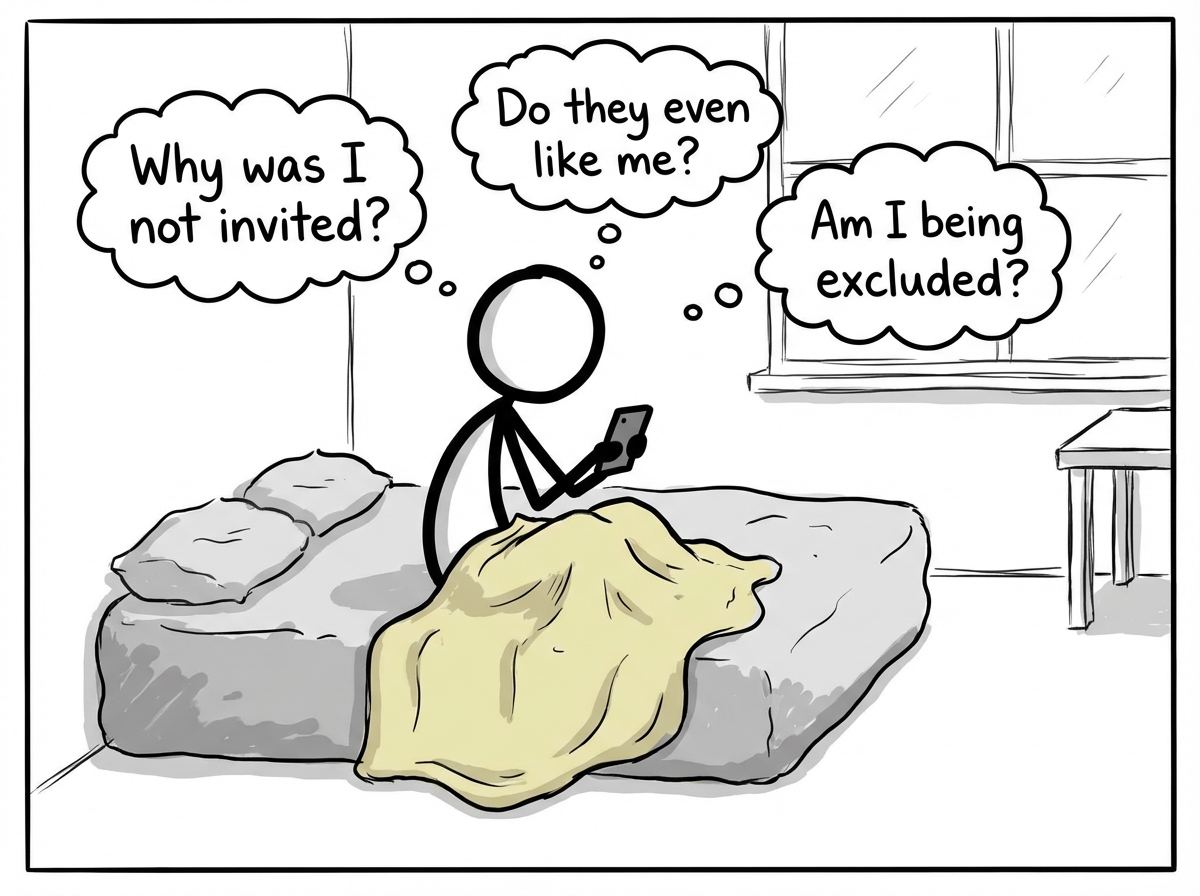
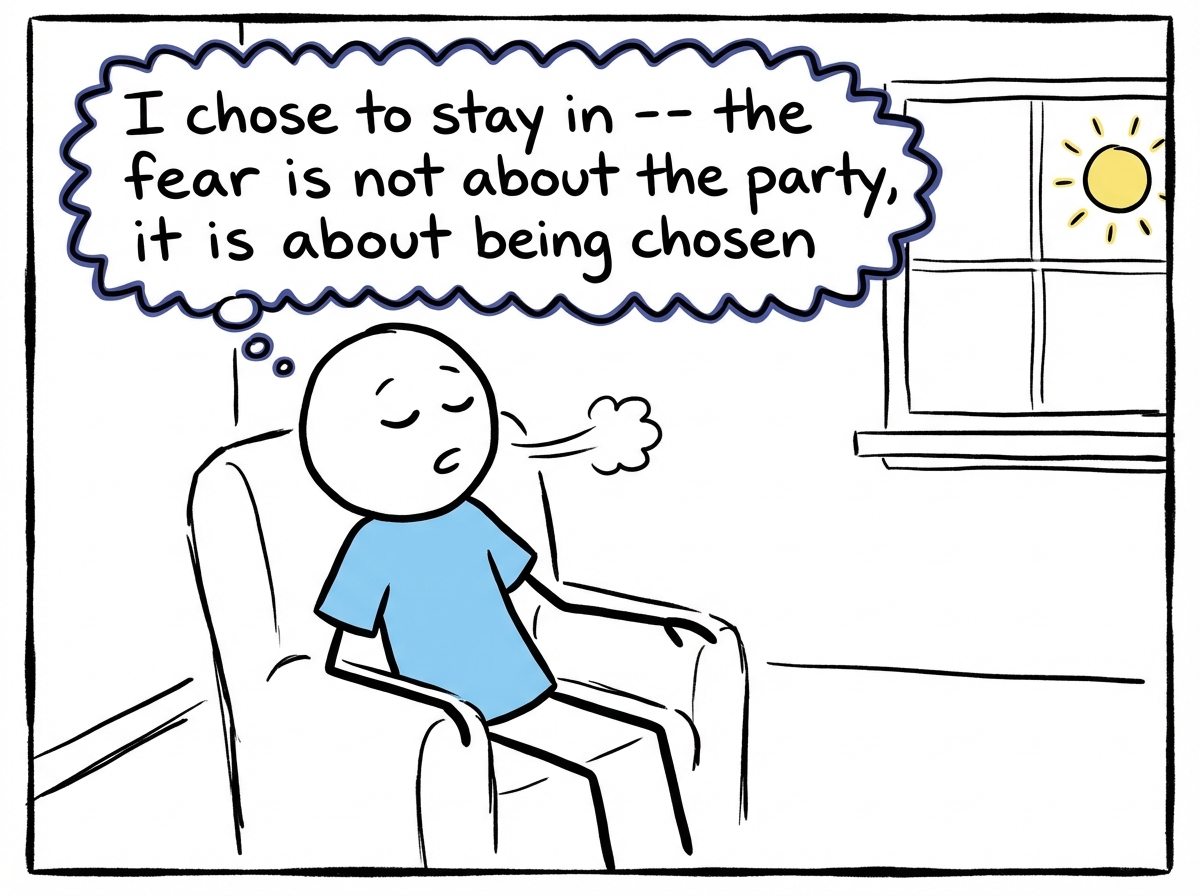
A person goes from perfectly content at home to spiraling about exclusion after seeing friends at a party on social media -- only to realize the fear was never about the party.
Explanation
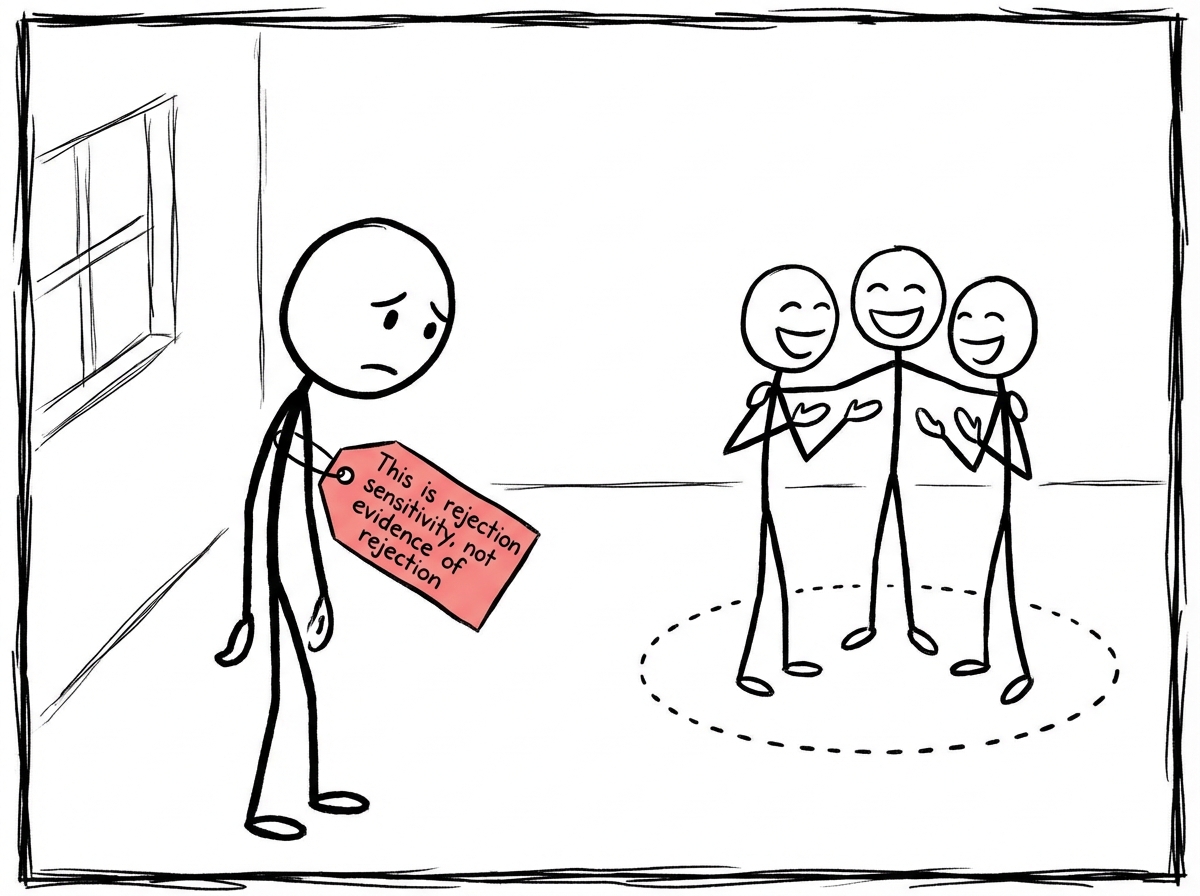
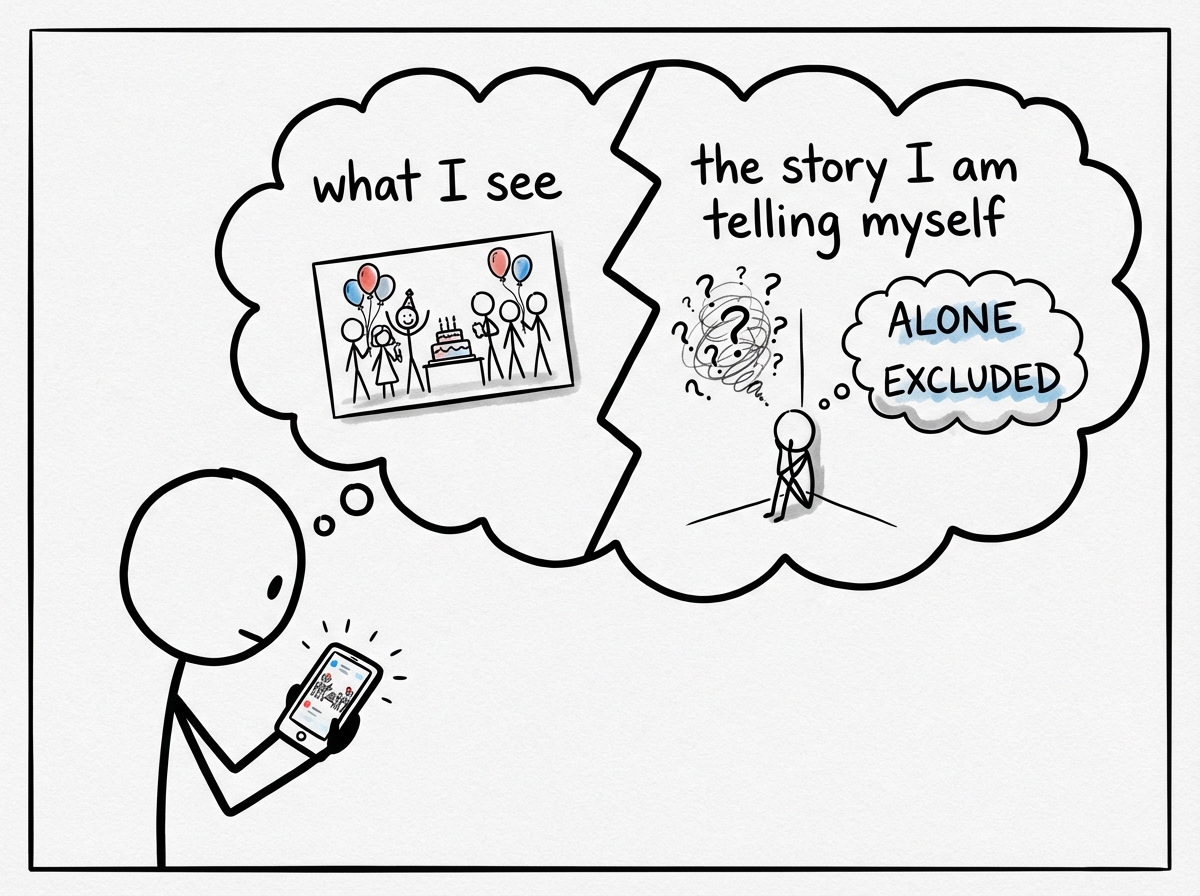
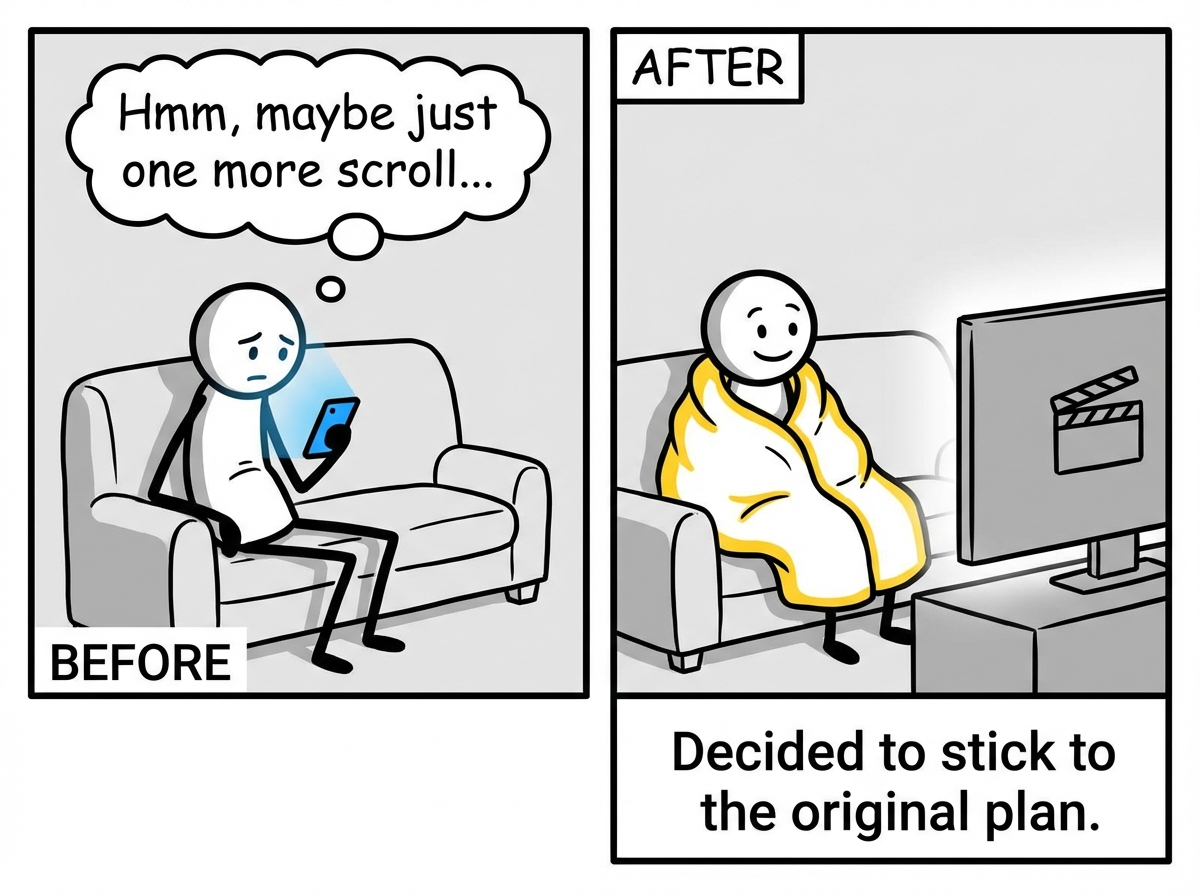
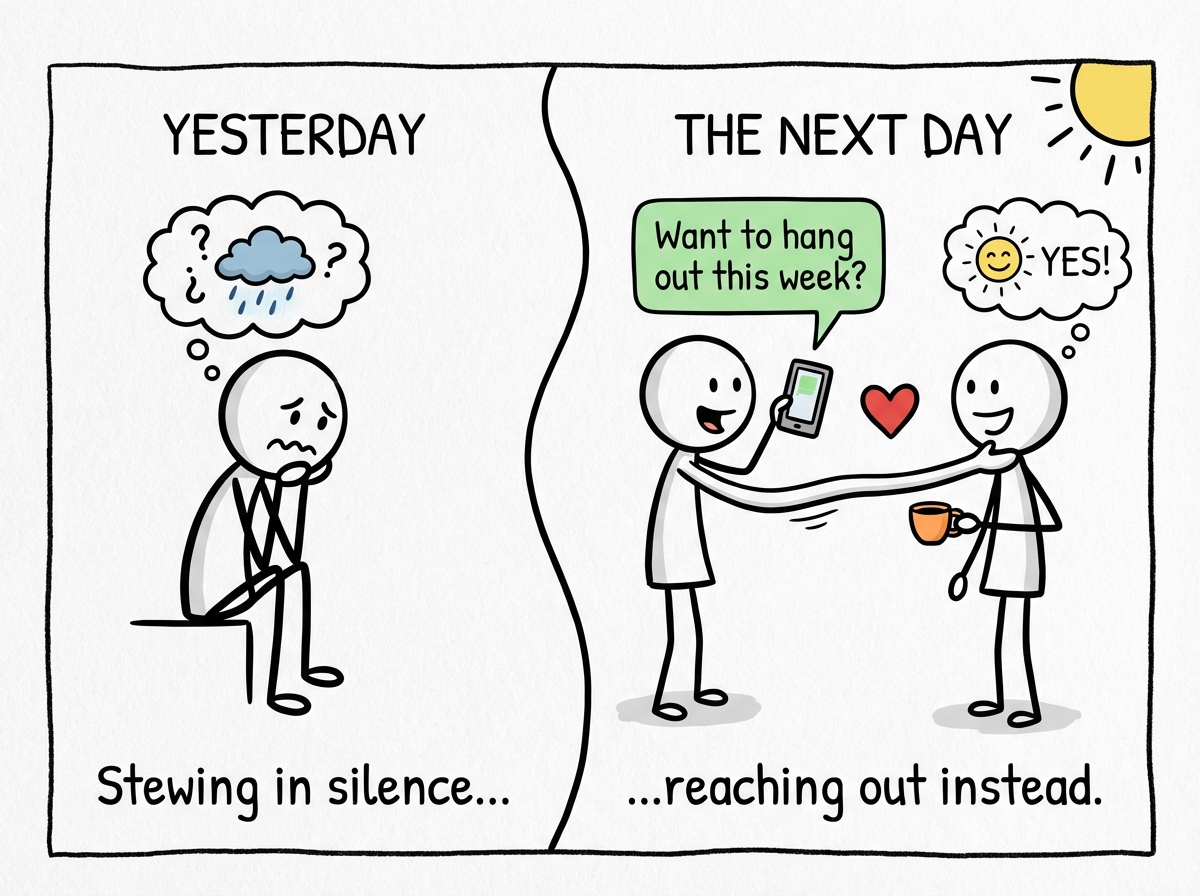
You are home on a Friday night. You chose this. Movie on, snacks out, blanket situation fully optimized. You are content -- genuinely, quietly content. Then your phone lights up. A story pops up: your friends, at a party, laughing, arms around each other. And just like that, the contentment evaporates. It is not that you wanted to go to this party. It is that you were not asked. The sting of exclusion is one of the most primal social pains humans experience -- neuroscience research shows that social rejection activates the same brain regions as physical pain. Your brain does not distinguish between being left out of a party and being left out of the tribe. What happens next is a cascade of social calculations. Why was I not invited? Did they forget or did they choose not to include me? Are they closer to each other than they are to me? Am I on the outside of a group I thought I was inside of? These questions feel urgent and important, but they are almost entirely constructed by your brain from a single curated image. You are building a narrative of rejection from a fifteen-second story that was posted to make the poster look social, not to exclude you. FOMO hijacks your rational mind and replaces it with a surveillance system designed to detect threats to your belonging. The antidote is not to stop feeling the sting -- that is hardwired. The antidote is to separate the feeling from the story. You can feel a pang of exclusion and simultaneously know that you chose to stay home, that one photo does not define your social standing, and that the fear is not really about the party. It is about a deeper question: am I wanted? And the answer to that question cannot be found in someone else's Instagram story.
Key Takeaway
The sting of seeing friends together without you is real -- but it is usually about a fear of not being wanted, not about the event itself.