
The Empty Well
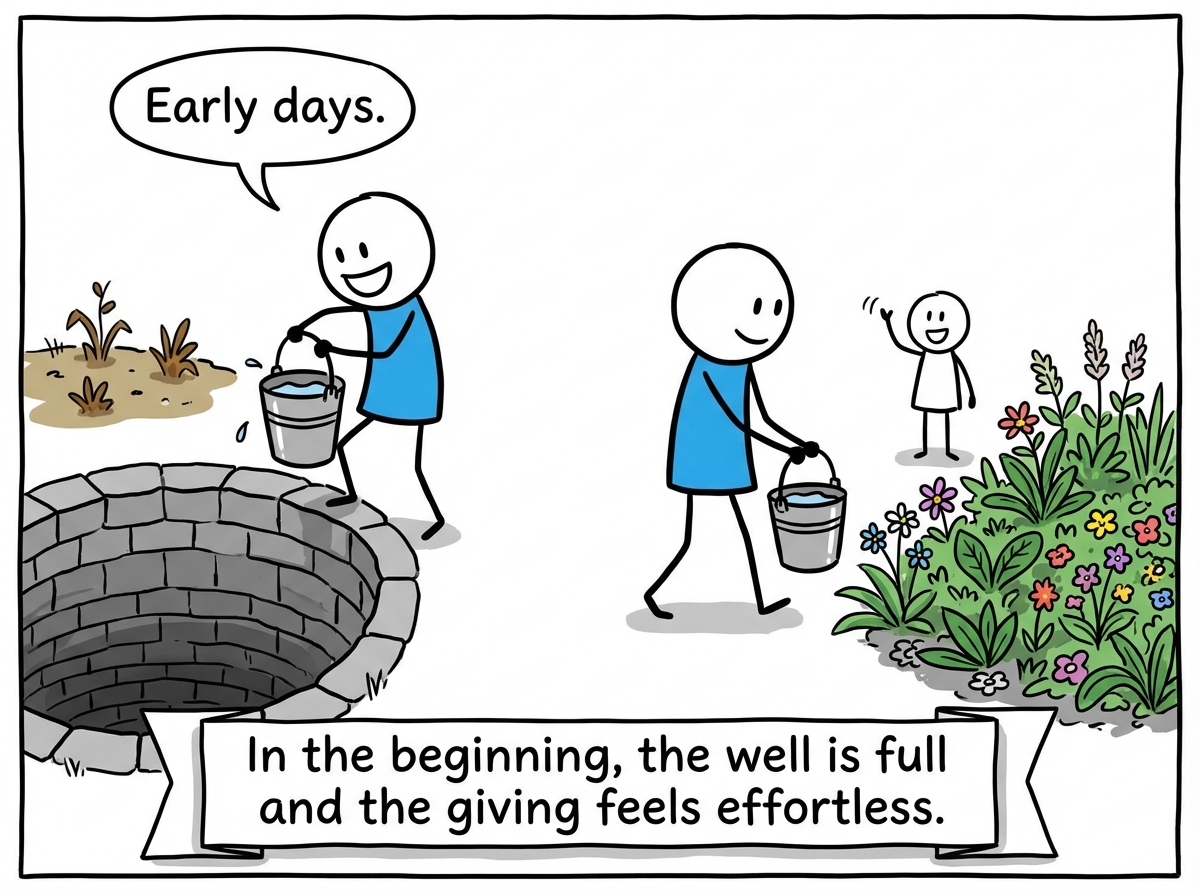
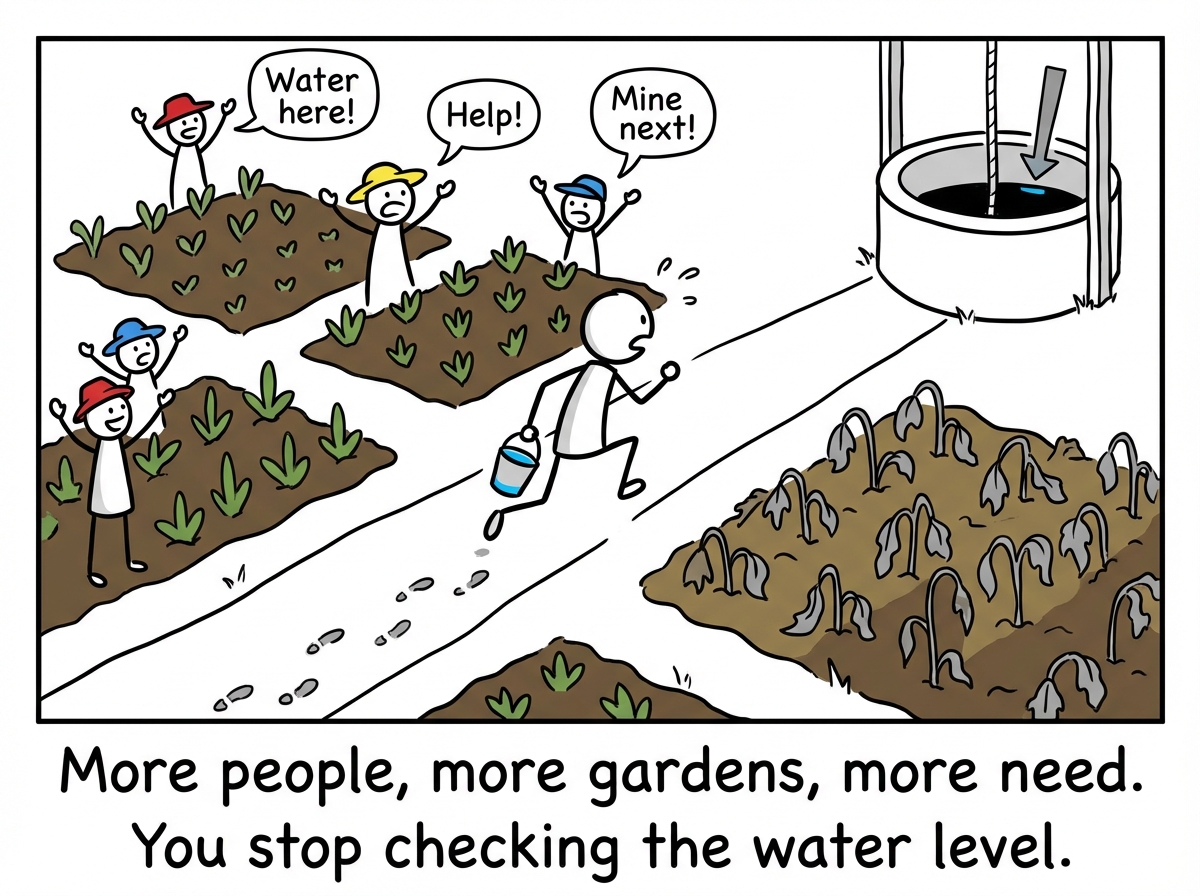
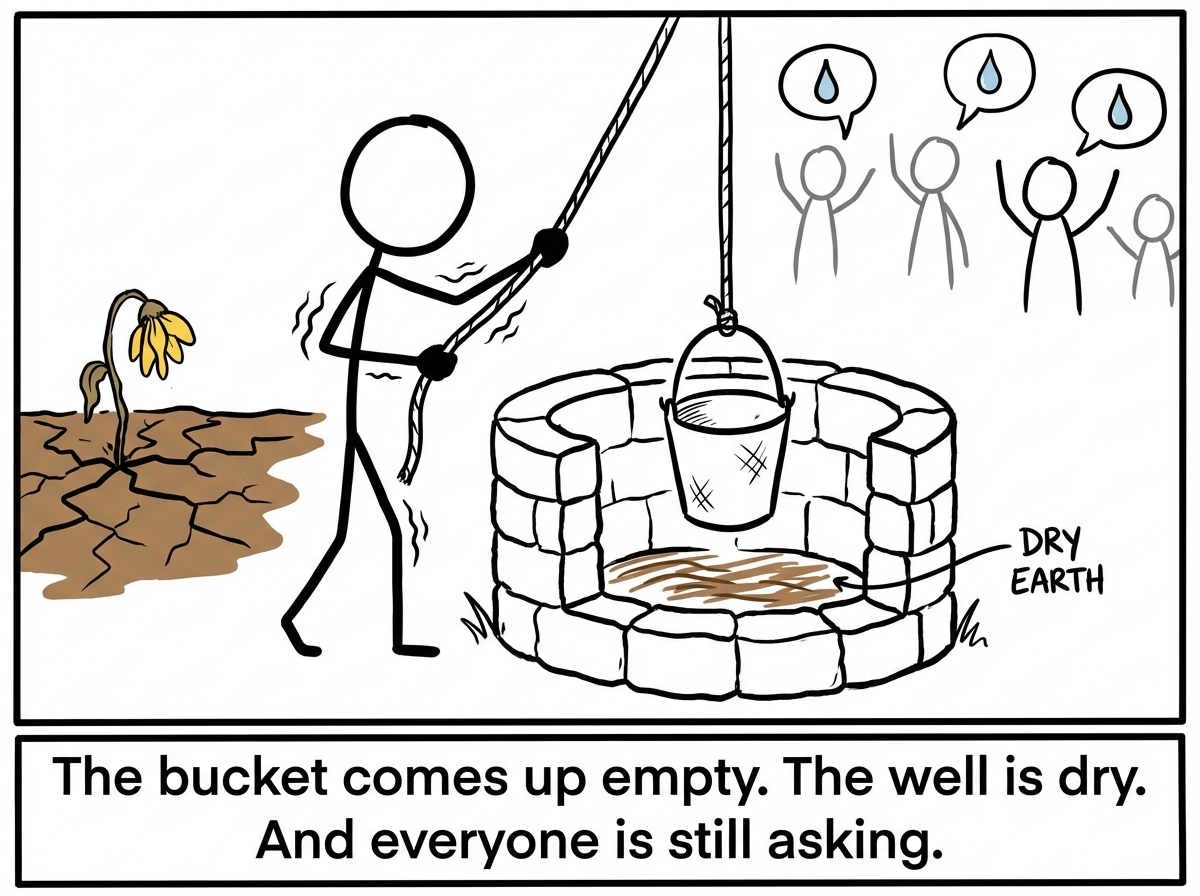
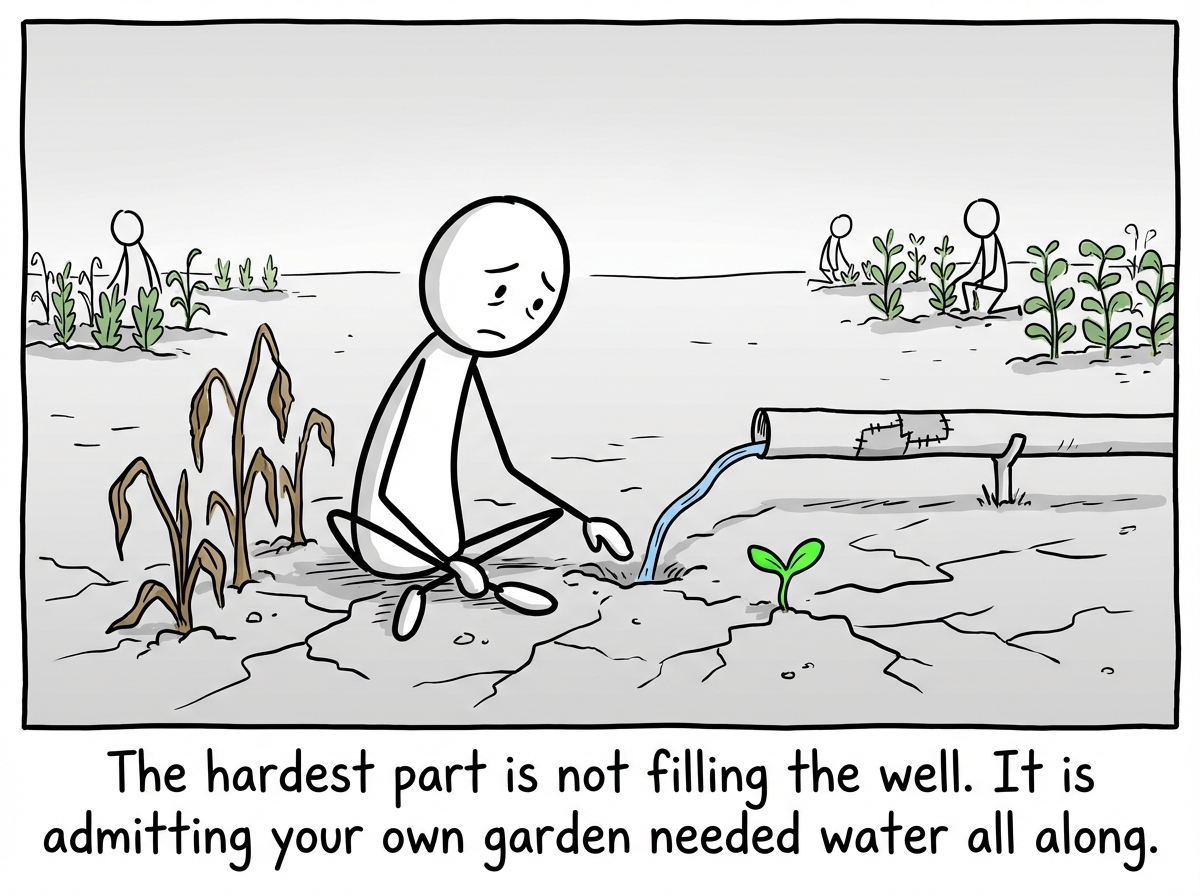
A person drawing from a well to water everyone else's garden while their own garden withers -- and the well is bone dry.
Explanation
You are the person everyone comes to. The listener, the fixer, the one who always has something left to give. You water their gardens -- their crises, their sadness, their overwhelm -- and you do it gladly, because caring is who you are. It is not a job; it is your identity. But lately the bucket comes up lighter. Then empty. Then you are just going through the motions of lowering it, hearing it scrape the dry bottom, and pretending there is still something there to give. Meanwhile, behind you, your own garden -- your joy, your hobbies, your rest, your relationships that are not about caretaking -- is cracking in the drought. You do not notice because you have not looked at it in months. Compassion fatigue, a term crystallized by Charles Figley's research on secondary traumatic stress, describes the depletion that occurs from sustained empathic engagement with others' suffering. Unlike standard burnout, which relates to workload and organizational factors, compassion fatigue strikes at the core of empathy itself. Mirror neurons -- the neural circuits that allow you to feel what others feel -- do not come with an off switch. For natural caregivers, the emotional absorption is automatic, and without deliberate replenishment, the well does not just run low. It runs dry. The signs are unmistakable once you know to look: emotional numbness, resentment toward the people you care about, cynicism that shocks you, and a bone-deep fatigue that sleep cannot touch. The hardest truth for caregivers is that the well needs to be filled from the inside. Not by giving more, trying harder, or adding another person to your care list. But by doing the deeply uncomfortable work of prioritizing your own garden -- not because you have extra resources, but because you are running on none. Compassion for others that does not include compassion for yourself is not sustainable. It is a countdown.
Key Takeaway
You cannot water everyone else's garden from an empty well -- and your own garden has been in drought the longest.
A stick figure lowering the bucket and hearing it scrape the bottom, finally pausing and saying 'I have nothing left to give.'
A stick figure gently telling the people waiting for water 'I need to stop for now,' some of them understanding, some walking away.
A stick figure kneeling by their own withered garden, pouring a small cup of water onto the cracked soil, a single sprout appearing.
A stick figure tending a growing garden, the well behind them slowly refilling, occasionally sharing water from abundance rather than depletion.