The Finish Line That Moves
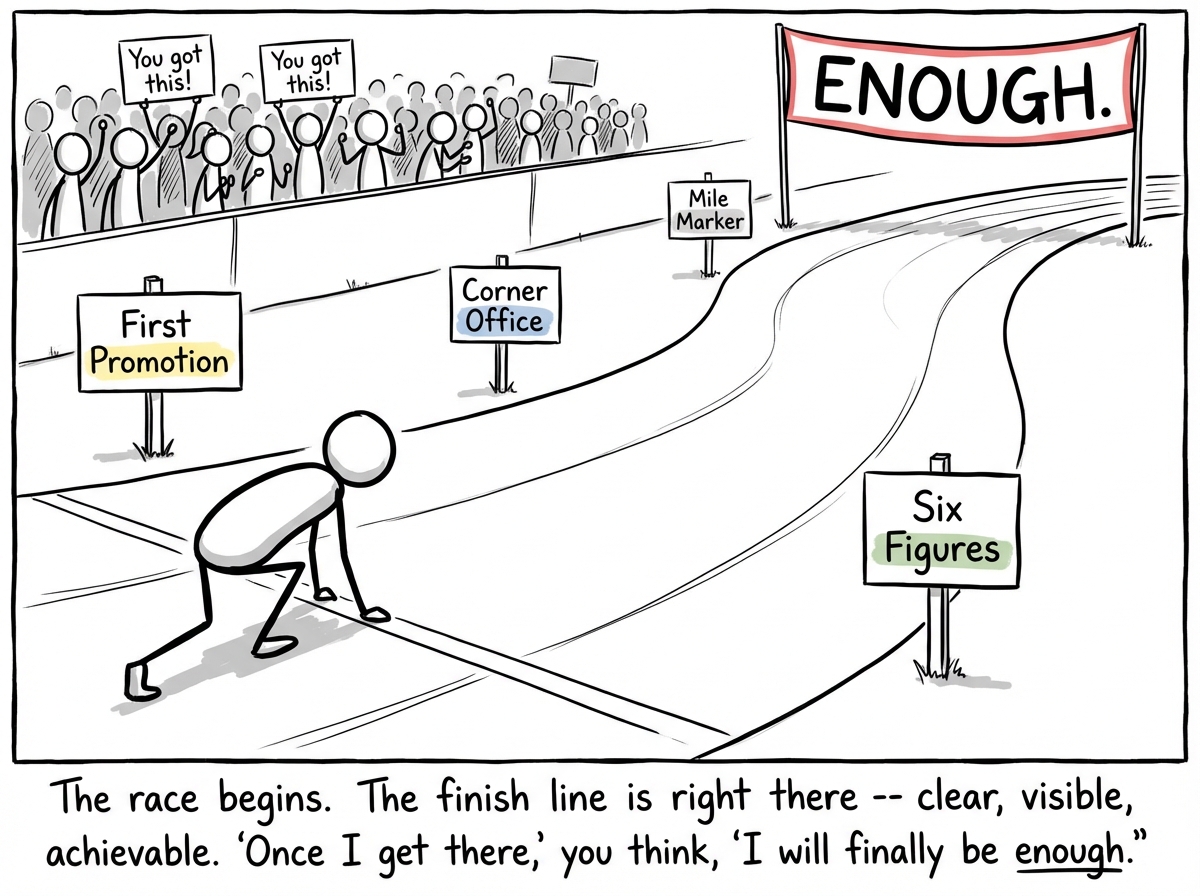
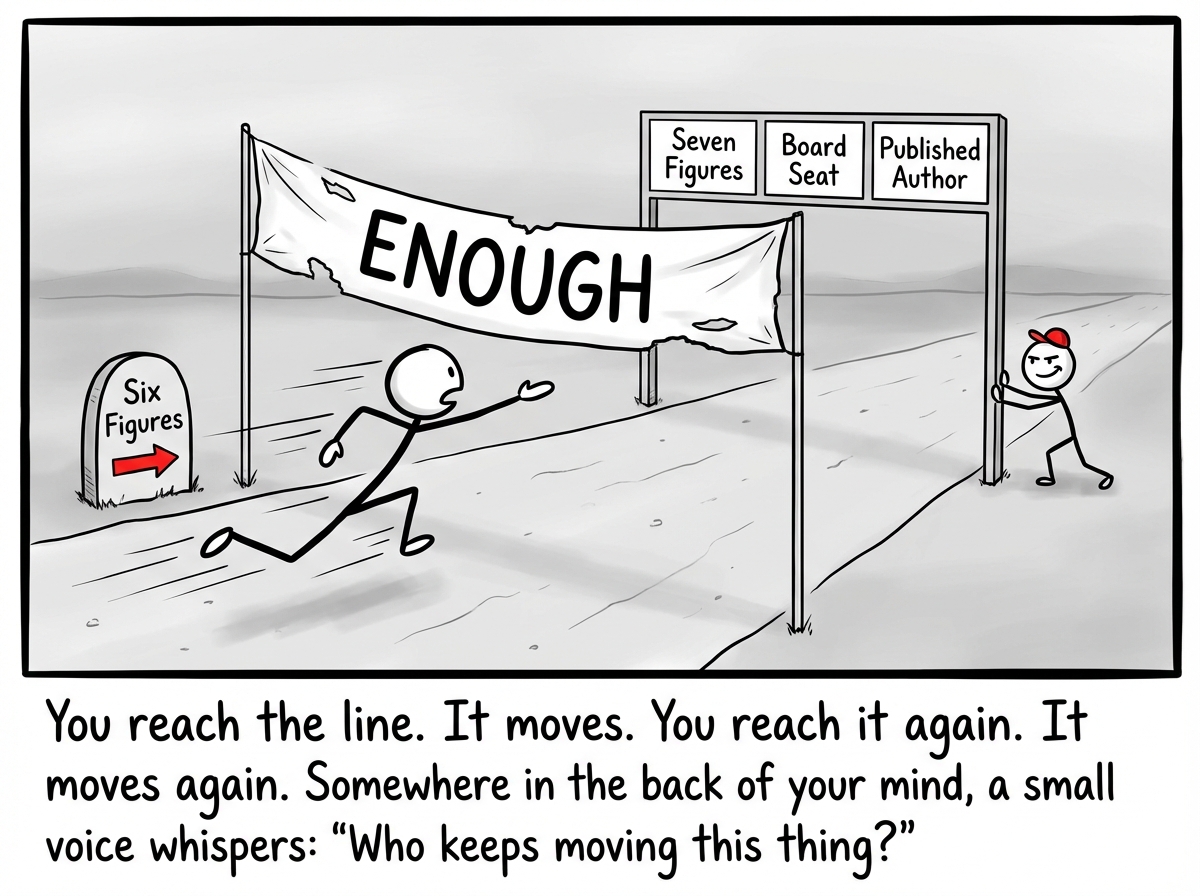
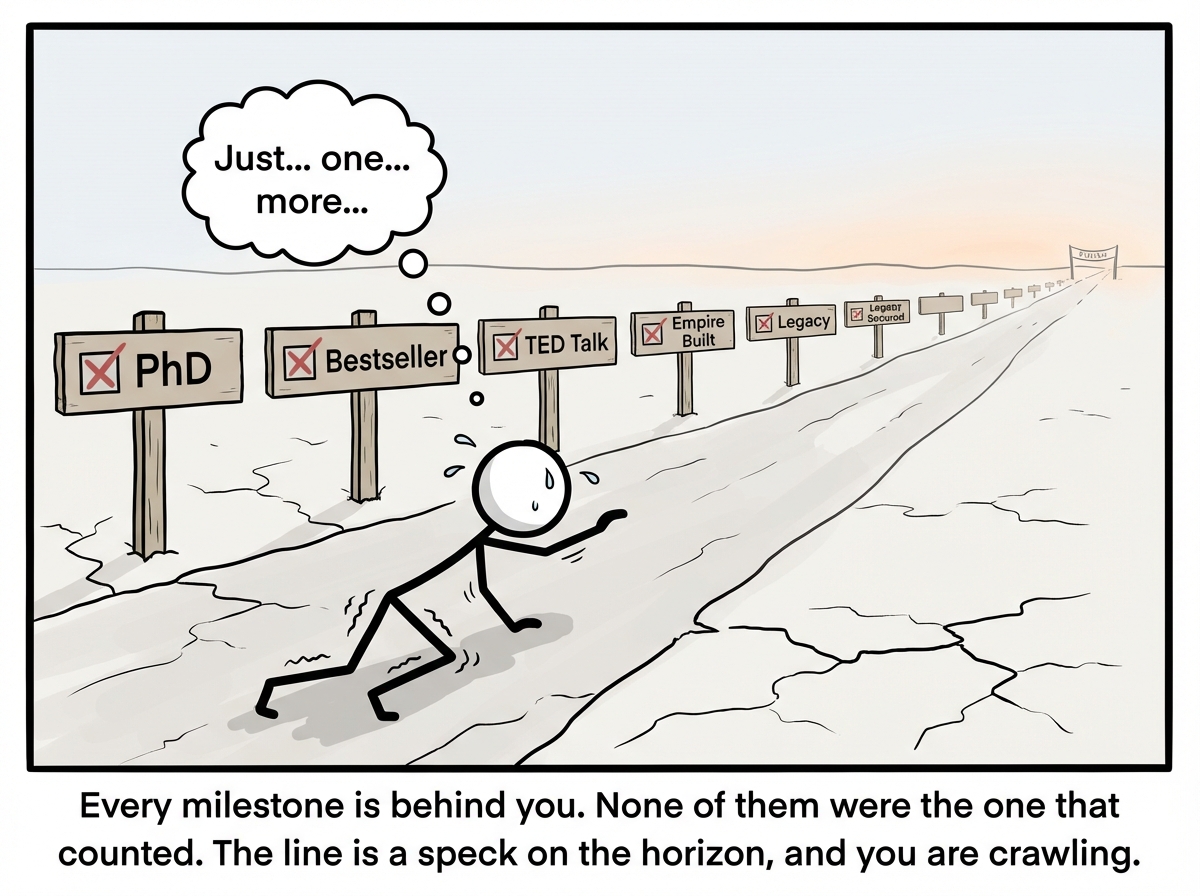
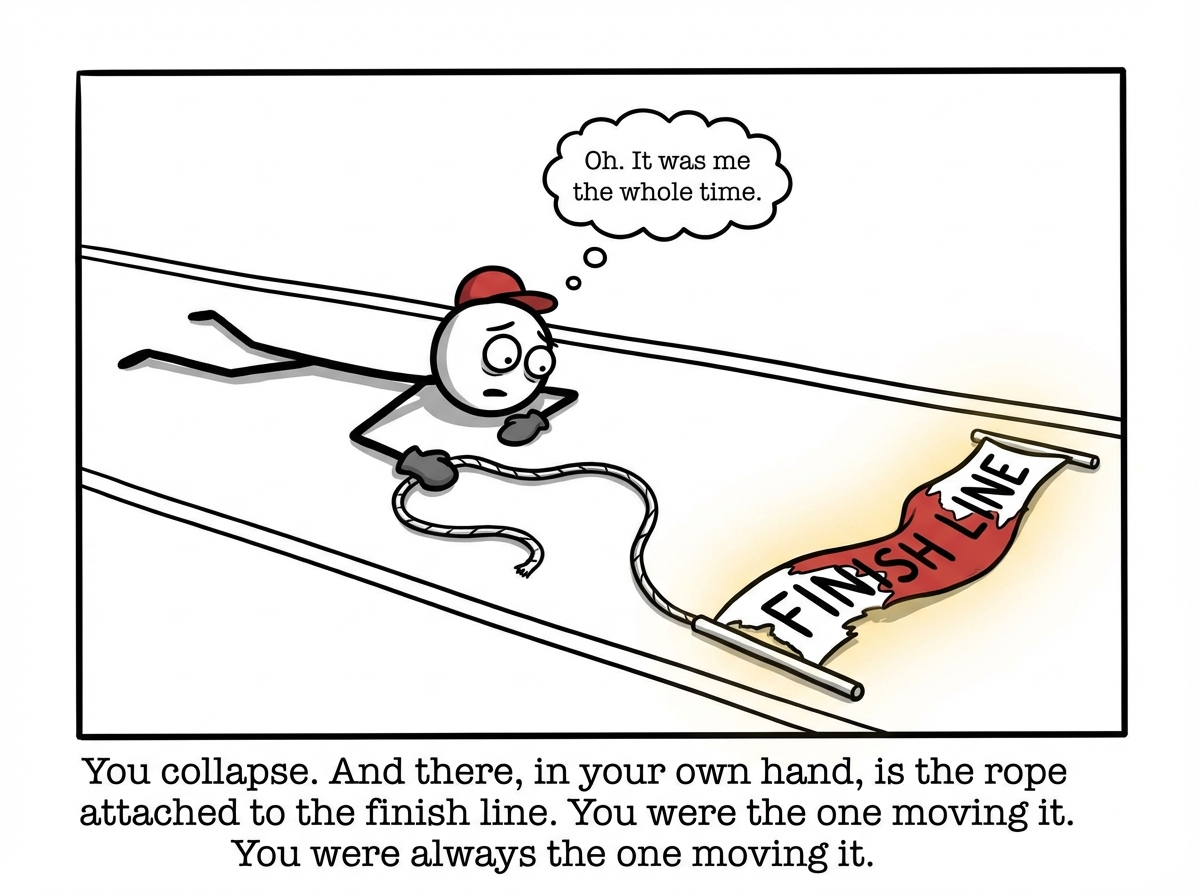
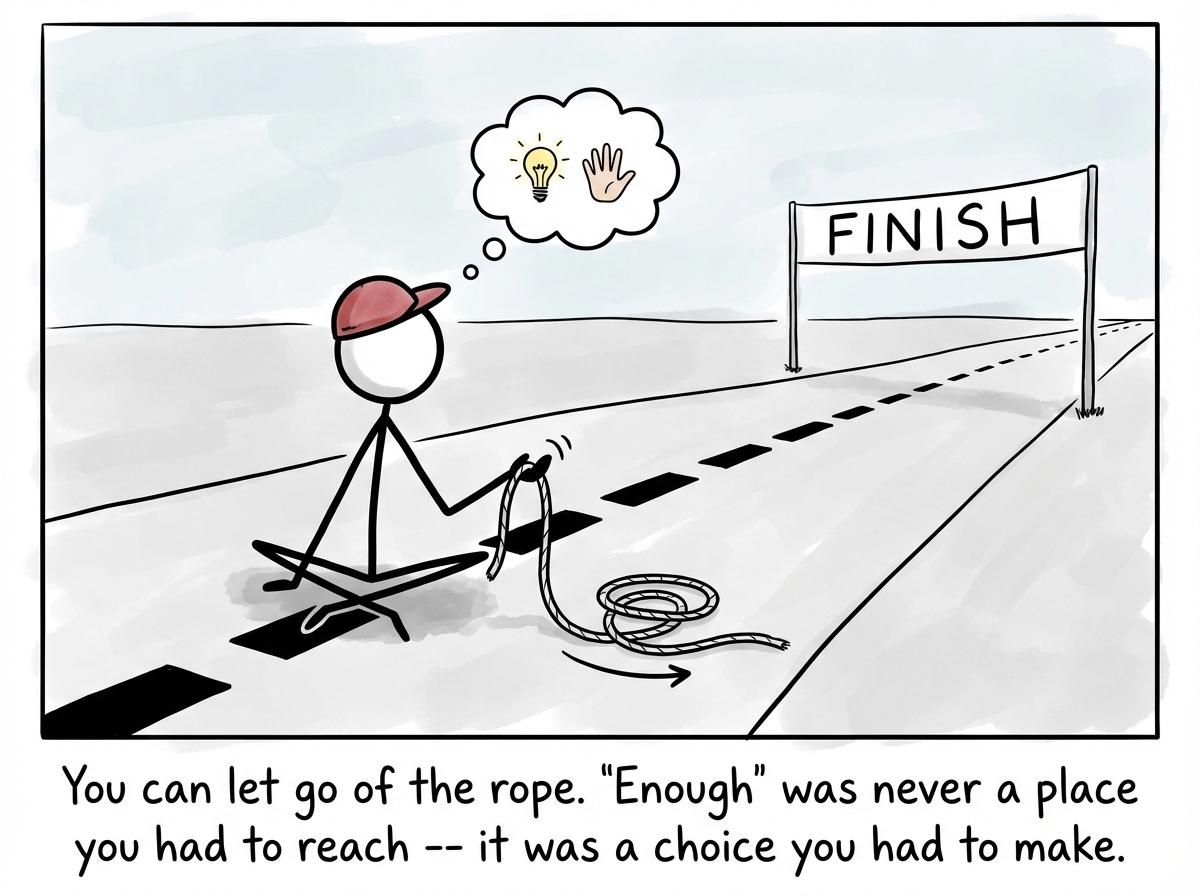
A person sprints toward a finish line that keeps sliding further away every time they get close, until they collapse and realize the race was rigged from the start -- by them.
Explanation
Achievement addiction operates on a mechanism psychologists call the hedonic treadmill -- the phenomenon where accomplishments produce a temporary spike in satisfaction that rapidly returns to baseline, requiring a larger accomplishment to produce the same effect. This cartoon literalizes that treadmill as a finish line that physically moves every time you approach it. The runner is not lazy or unmotivated -- they are sprinting at full capacity. But the system is designed so that arrival is impossible, because the person who set the finish line (you) keeps moving it before you can cross it. Karen Horney called this the 'search for glory' -- the neurotic pursuit of an idealized self that is always one achievement away but never actually attainable. The collapse at the end is not failure -- it is the body's honest response to an impossible demand. And the realization that follows is the first step toward recovery: understanding that you were both the runner and the person moving the line. Nobody else set this race up. The goalposts were always in your hands. Which means you are also the one who can choose to stop moving them.
Key Takeaway
The finish line was never the problem -- the problem was the person who kept moving it, and that person was you.