The Trophy Case That Cannot Hug You Back
A person fills a massive trophy case with awards, degrees, and gold medals, then sits next to it at night hoping to feel something, but the trophies just stare back, cold and silent.

When accomplishments become emotional armor -- stacking trophies to fill a void that trophies cannot reach.
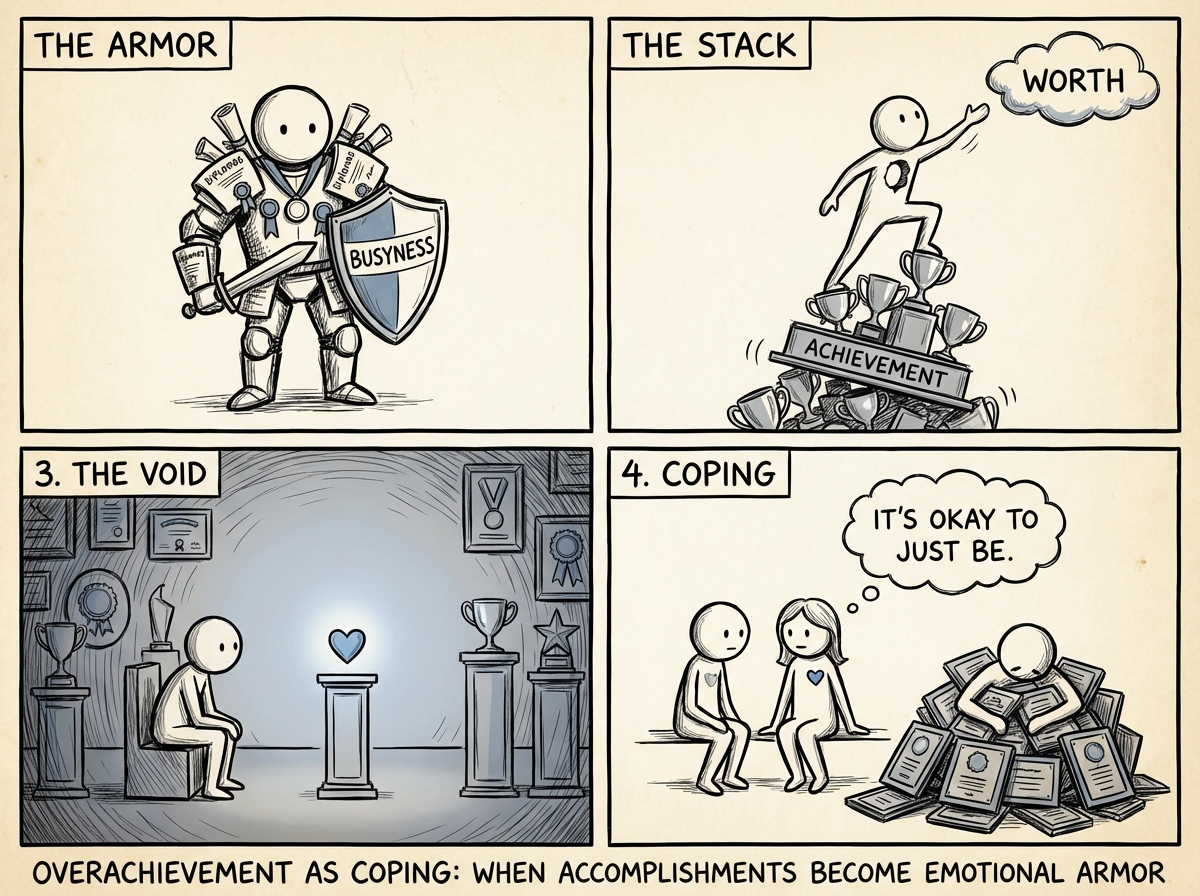
Overachievement as coping is the pattern of pursuing extraordinary accomplishments not out of passion or curiosity, but as a strategy to manage unresolved emotional pain. The awards, degrees, and accolades serve as external proof of worth that the person cannot generate internally. Psychoanalyst Alice Miller explored this dynamic extensively in 'The Drama of the Gifted Child,' describing how children who received love conditionally -- only when they performed, excelled, or pleased -- grow into adults who cannot separate their identity from their output. The achievement becomes a prosthetic self-esteem: functional, impressive-looking, but incapable of providing the warmth of genuine self-acceptance. Research by psychologist Edward Deci on self-determination theory shows that extrinsic motivation (performing to earn approval or avoid criticism) produces a fundamentally different psychological experience than intrinsic motivation (performing because the activity itself is meaningful). People who overachieve as a coping mechanism often report feeling hollow after their greatest accomplishments -- the PhD feels empty on graduation day, the promotion triggers anxiety instead of joy, the award ceremony ends and the silence returns. This is because the achievement was never about the achievement. It was about earning the right to exist, to take up space, to matter. The tragedy is that the evidence is never enough, because the courtroom where your worth is being tried does not accept external exhibits -- it only recognizes what you believe about yourself when nobody is watching.
No trophy case is tall enough to hold the love you were supposed to receive for free.