
The Funeral No One Held
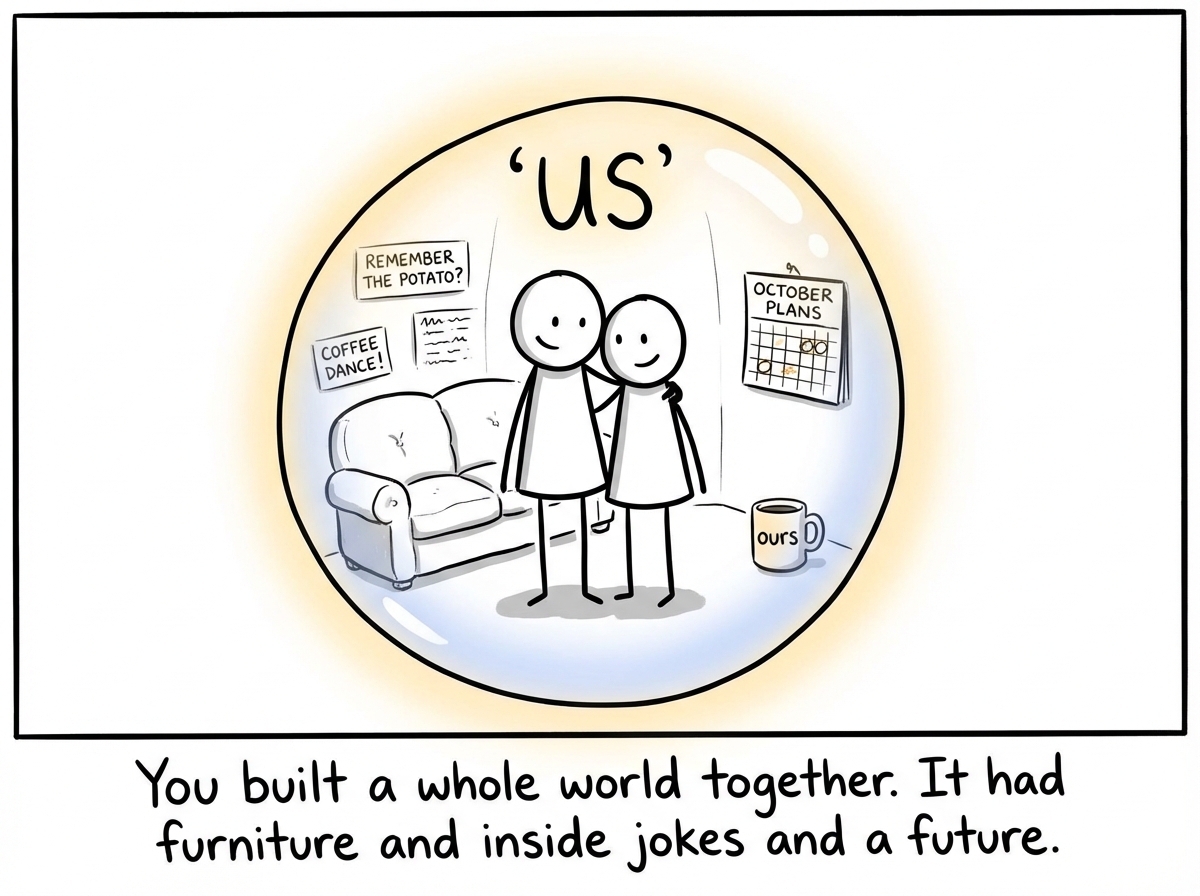
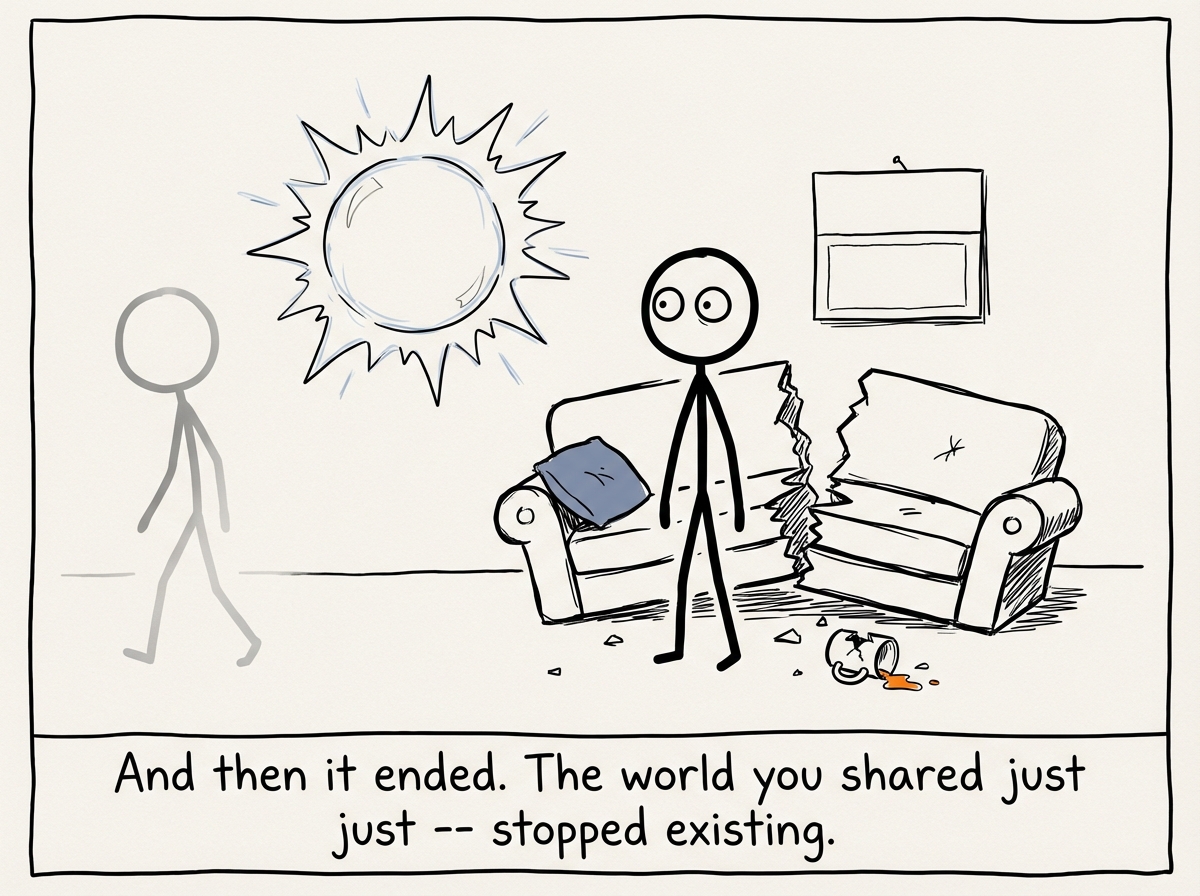
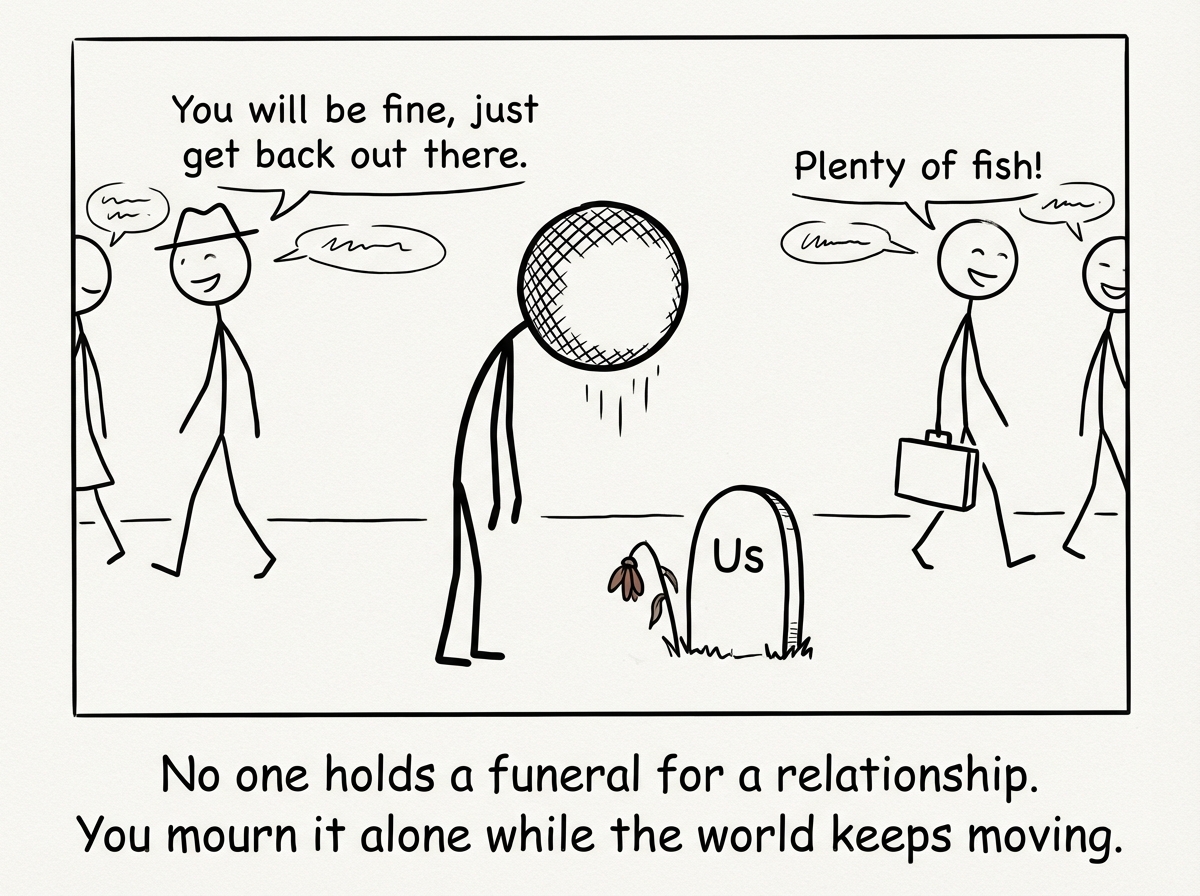
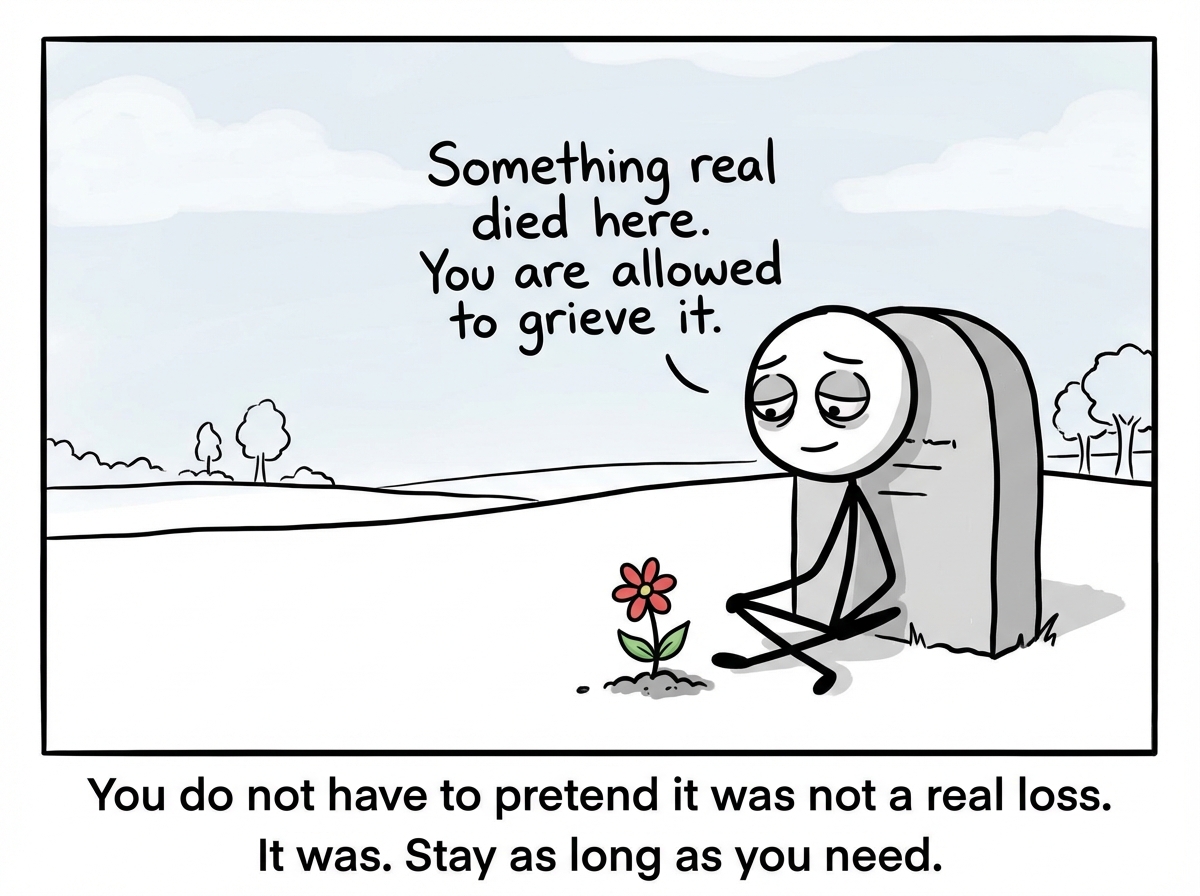
A person stands alone at a tiny gravestone that reads 'Us' while the world moves on around them -- mourning a relationship that died without a funeral.
Explanation
The relationship ended. There was no ceremony, no gathering, no one dressed in black. No one brought casseroles or sent flowers or said, 'I am so sorry for your loss.' Instead, people said, 'You will find someone else,' and 'At least now you can focus on yourself,' and 'Were you guys even that serious?' And you stood there in the wreckage of a world that used to have two people in it, wondering why the death of 'us' does not seem to register as a real loss to anyone but you. Post-relationship grief is profoundly disorienting because it involves multiple simultaneous losses. You are not just losing a person -- you are losing a daily structure, a shared language, an imagined future, and an identity. Neuroscientist Helen Fisher's research on the brain in love found that romantic rejection activates the nucleus accumbens, the same region associated with addiction and reward -- meaning your brain is literally going through withdrawal. Meanwhile, attachment theory tells us that a partner often serves as our primary attachment figure, our safe base. Losing them does not just hurt emotionally -- it destabilizes your entire nervous system. The grief is biological, psychological, and social all at once, and yet the world treats it like a minor inconvenience. Honoring post-relationship grief means allowing it to be as big as it actually is. It means resisting the pressure to rush through it, to perform being fine, or to replace the relationship before you have finished mourning it. Something real died. You are allowed to stand at its grave for as long as you need -- even if you are the only one there.
Key Takeaway
The end of a relationship is a real death -- of a shared world, an identity, a future -- and it deserves to be mourned like one.
A stick figure standing at the gravestone labeled 'Us,' placing a flower there deliberately, saying 'I am going to treat this like the real loss it is.'
A stick figure sitting down and writing a list titled 'What I lost' -- a daily rhythm, shared jokes, a planned future, a version of myself.
A stick figure talking to a therapist or trusted friend, saying 'It still hurts and I am tired of pretending it does not.'
A stick figure walking away from the gravestone at their own pace, not looking back with guilt but with tenderness, new ground under their feet.