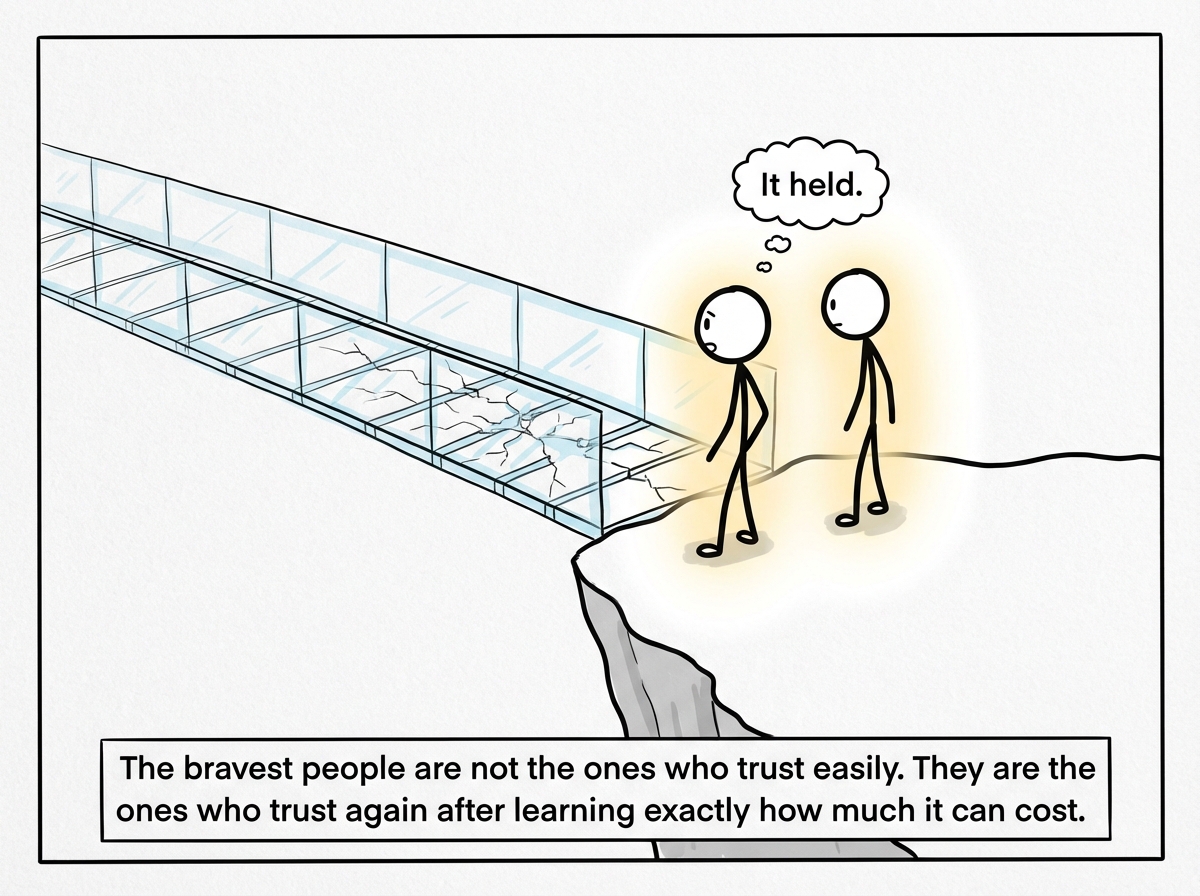
The Glass Bridge
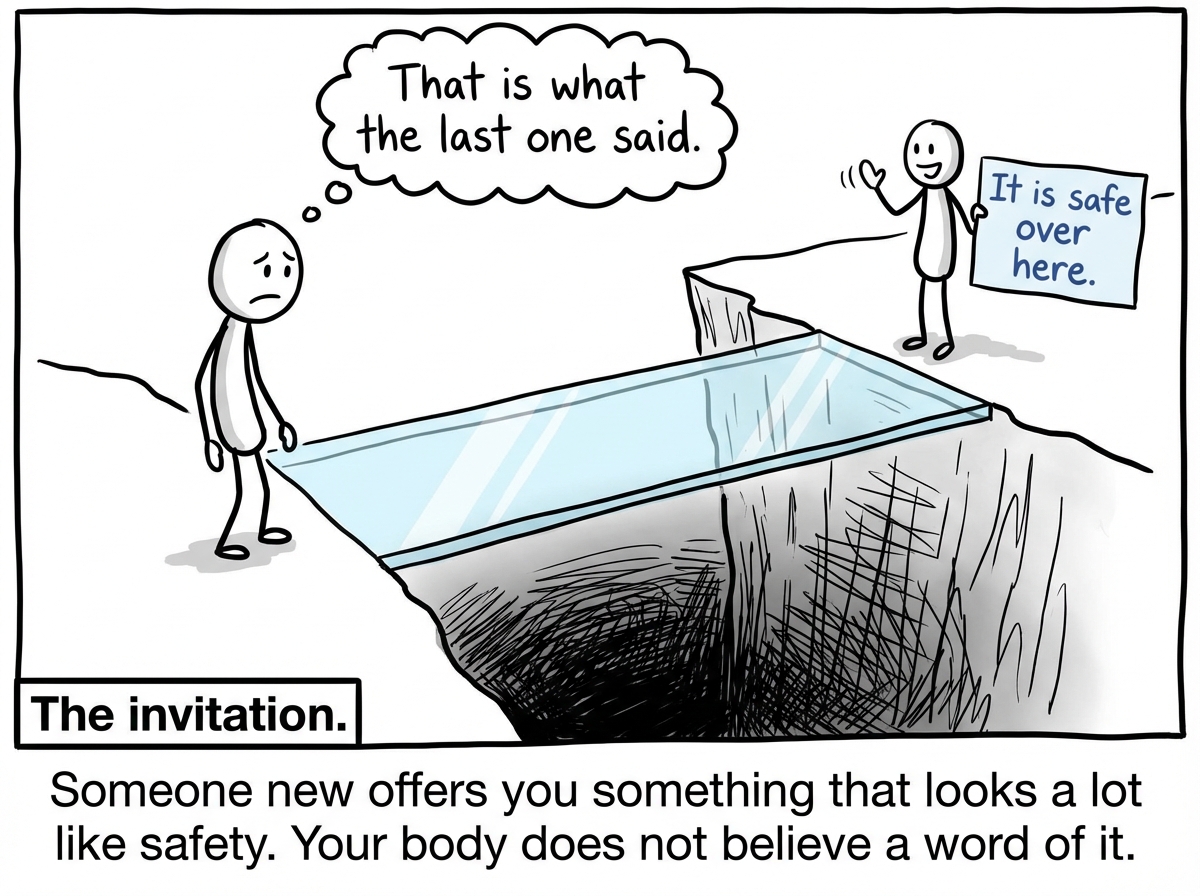
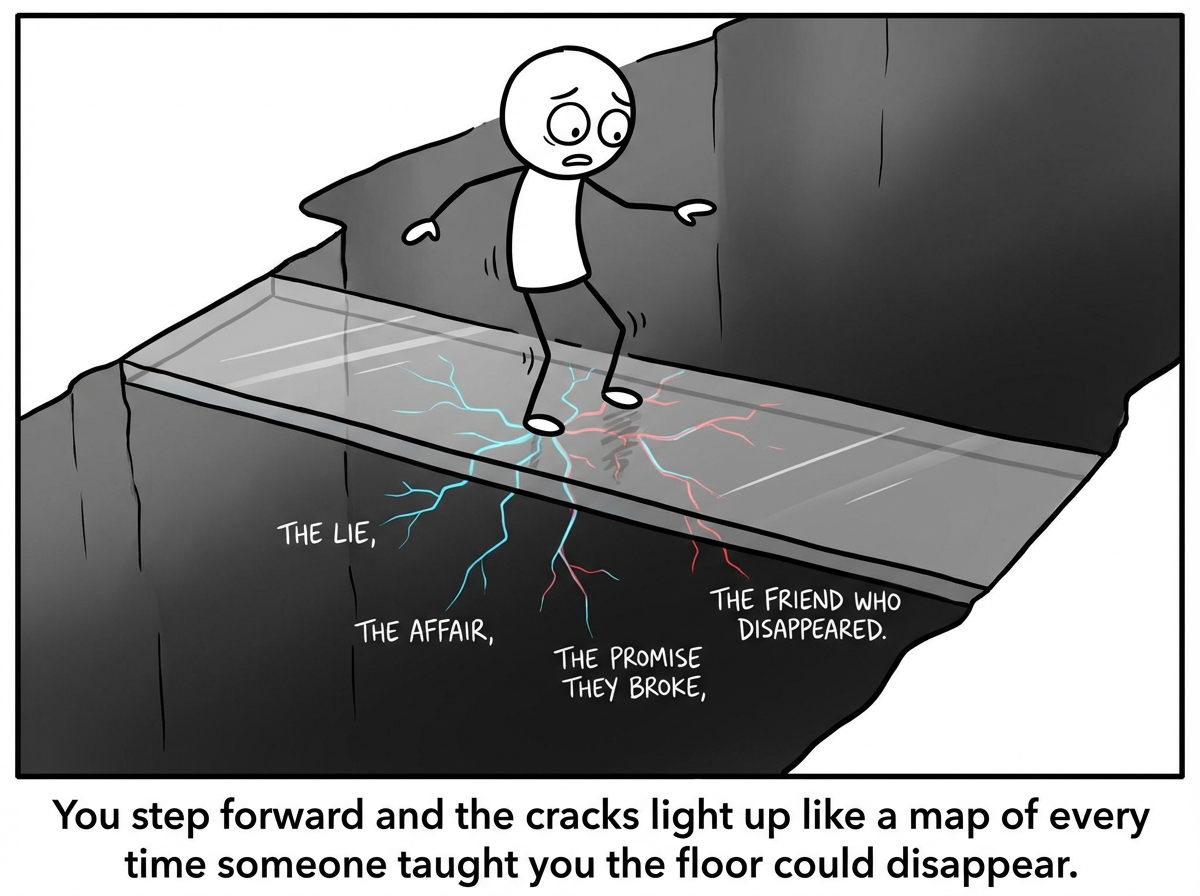
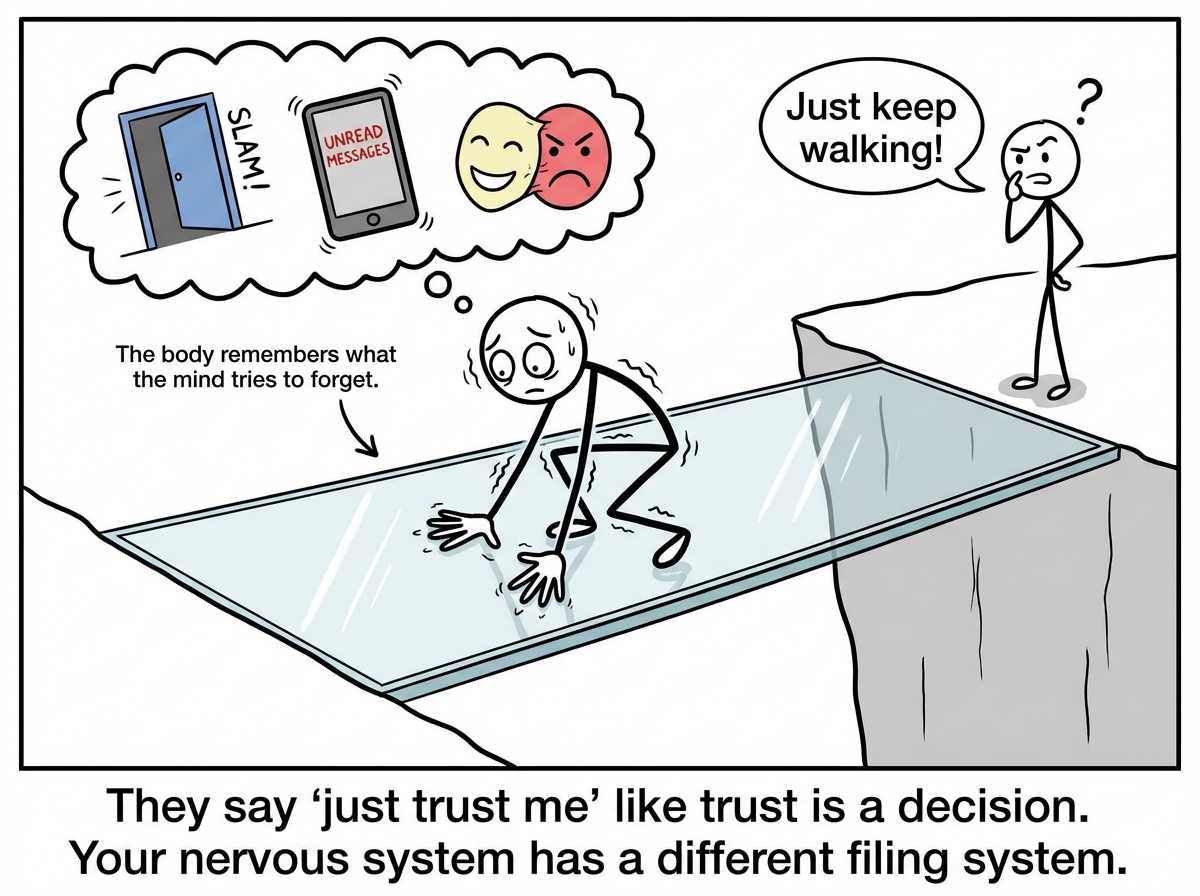
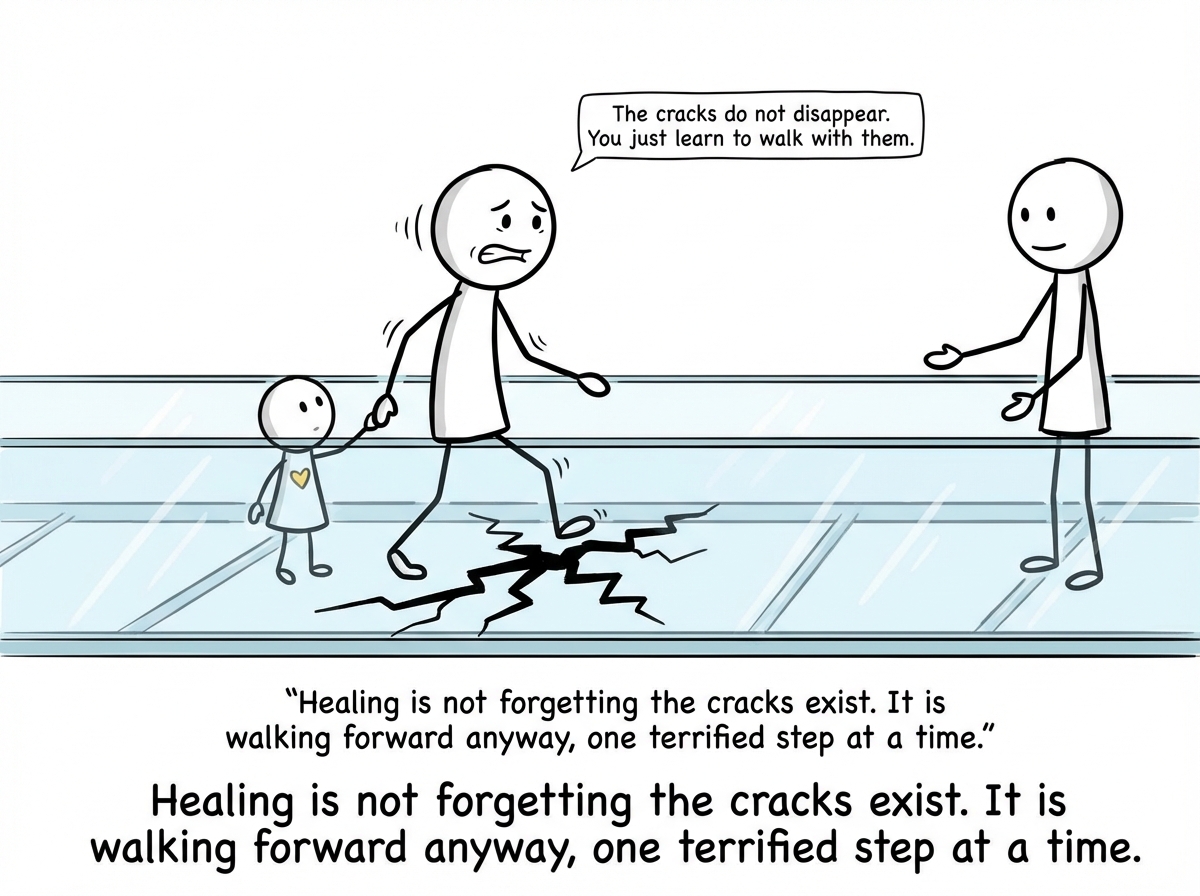
A person stands at the edge of a glass bridge over a canyon, being asked to walk across it, while every past betrayal has left cracks in the glass they can still see.
Explanation
Trust is not a switch you flip back on -- it is a bridge you have to walk across while remembering what happened the last time. Every betrayal leaves a visible crack in the surface, and your brain catalogs each one as evidence that the next step could be the one that breaks through. This is your attachment system working exactly as designed: it learned from experience that the ground beneath your feet is unreliable, so it floods you with fear to prevent you from stepping forward again. The tragedy is that the bridge might actually hold. The new person might be genuinely safe. But your nervous system does not differentiate between the person who cracked the glass and the person standing on the other side asking you to cross. It only knows that glass has broken before. Healing does not mean forgetting the cracks exist. It means learning to walk across anyway -- slowly, with support, testing each step -- and discovering that some bridges, even cracked ones, can still hold your weight.
Key Takeaway
Trust issues do not mean the bridge is broken -- they mean you remember every crack, and walking forward takes more courage than anyone standing on solid ground can understand.