
The Grief That Doesn't Count
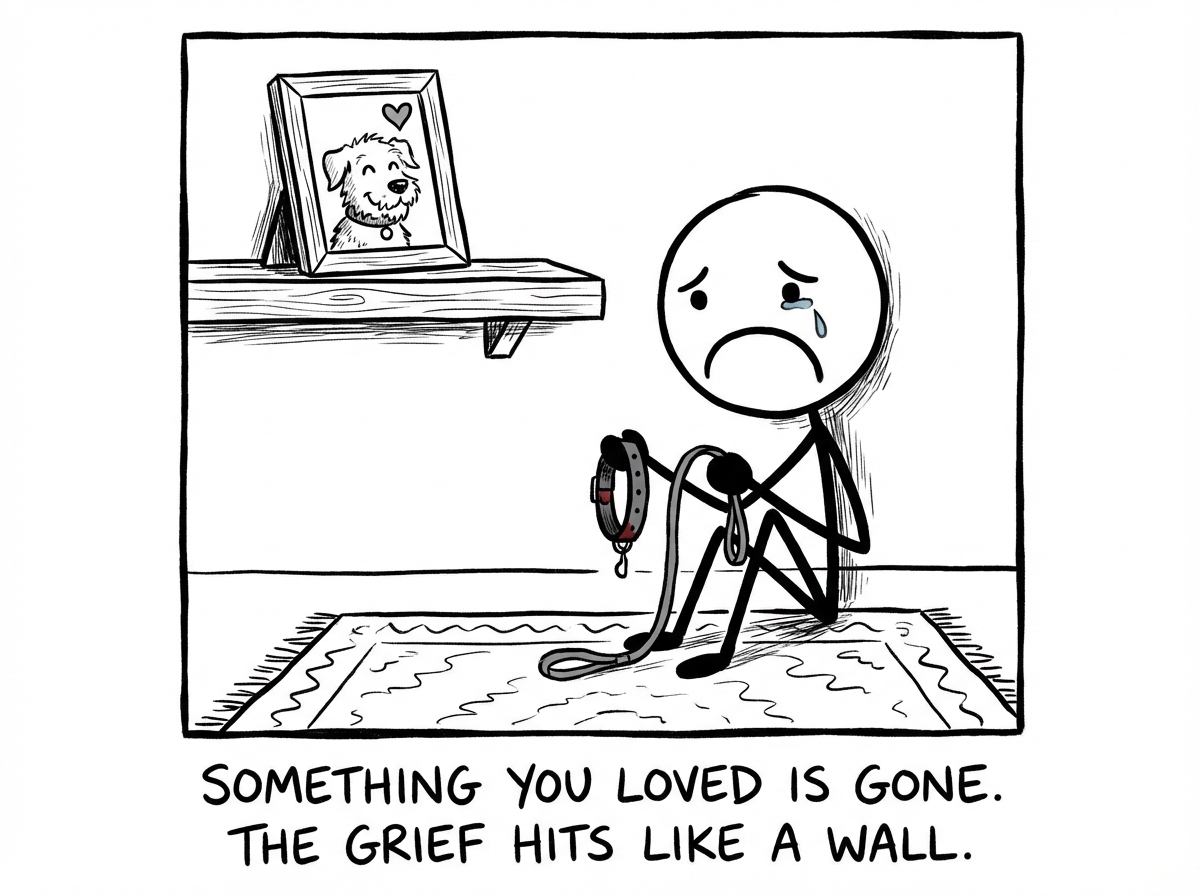
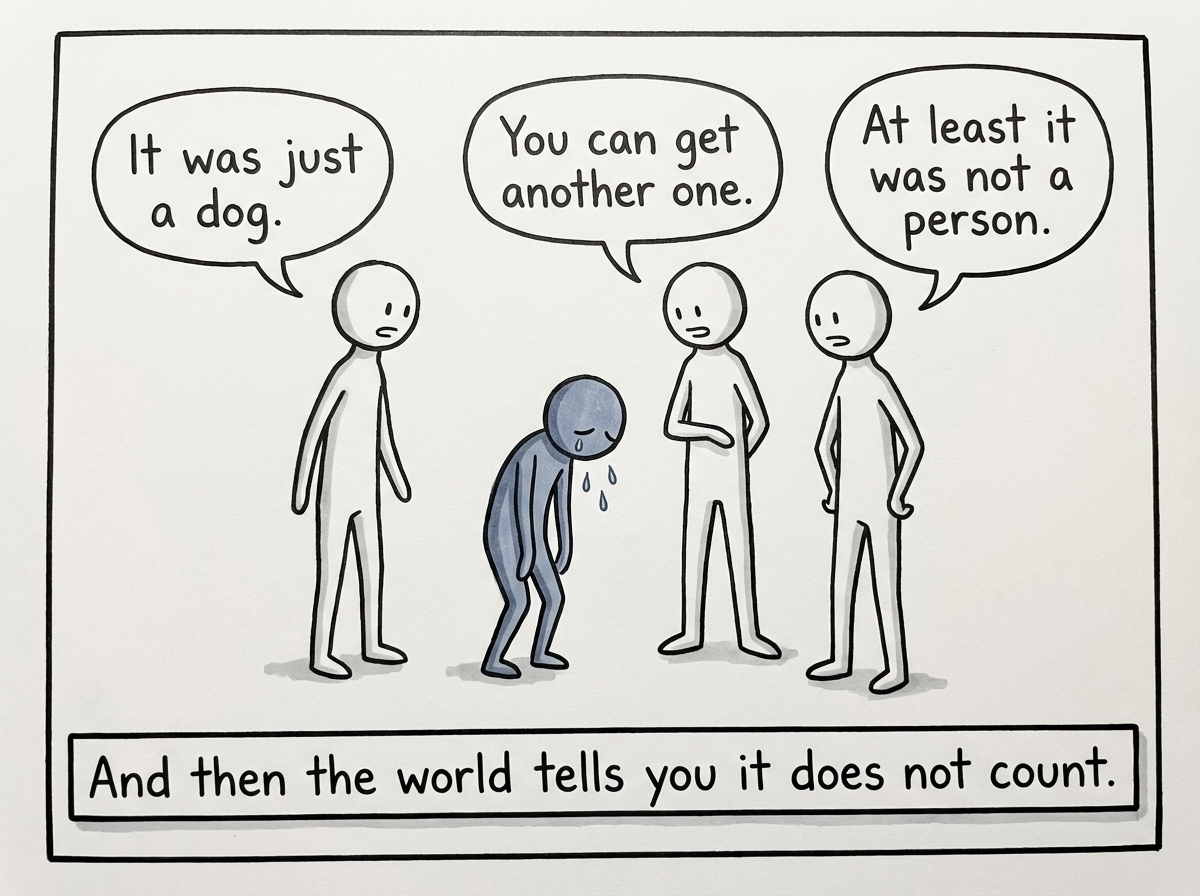
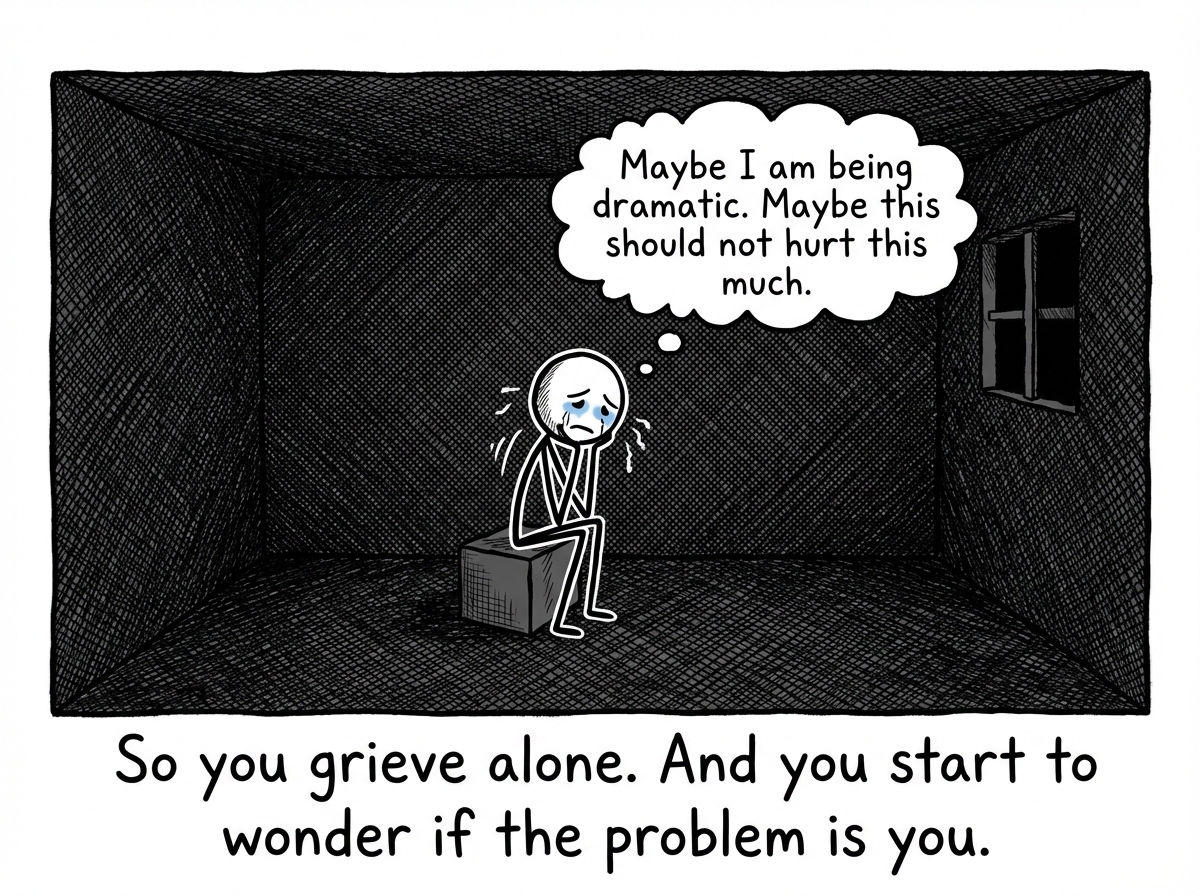
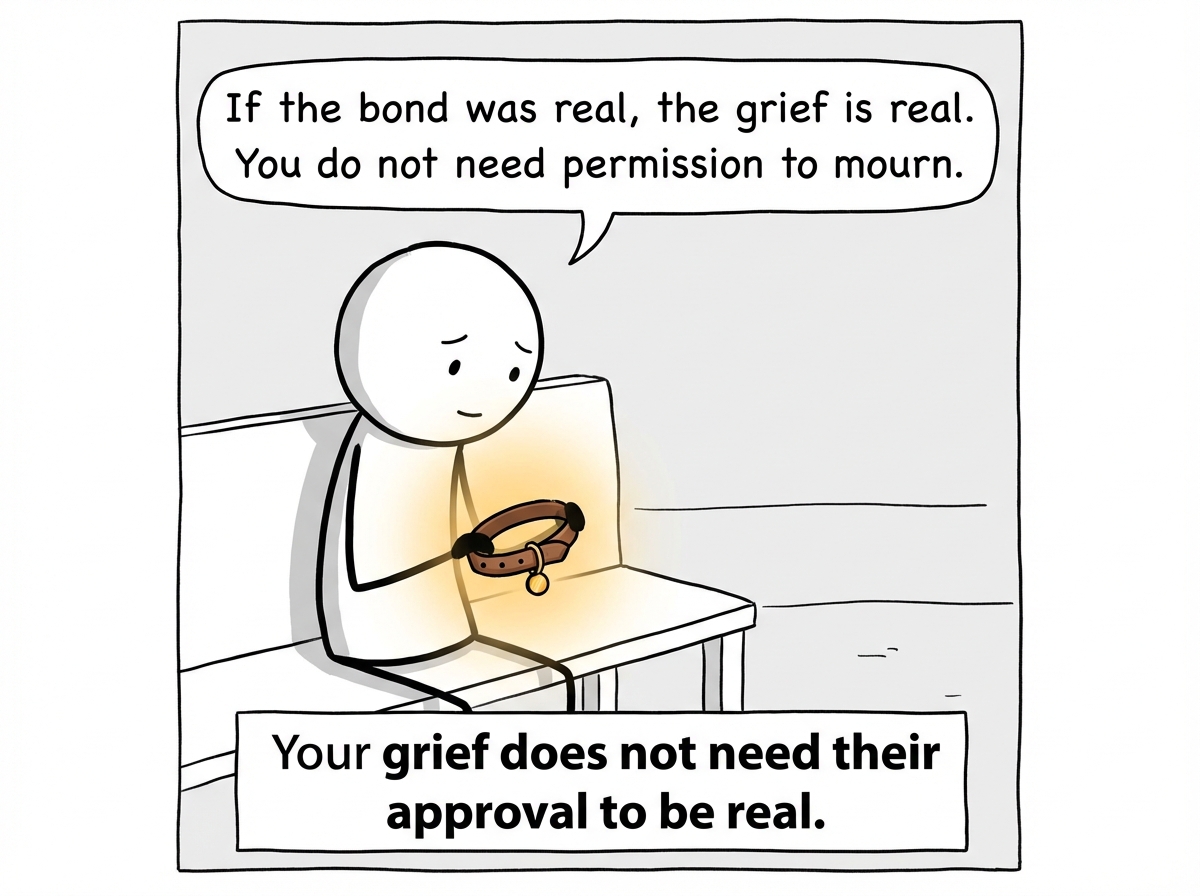
A person mourns a loss that everyone around them dismisses as not important enough to grieve -- a pet, a friendship, a miscarriage -- while being told to get over it.
Explanation
Your dog died and someone said, 'It was just a pet.' A pregnancy ended before anyone knew about it and you grieved alone because you did not know how to explain a loss that never had a name. A friendship of fifteen years dissolved and people shrugged because it was not a romantic relationship. You are standing in the middle of genuine devastation and the world is telling you the damage is not real. So you do what people do when their pain is dismissed -- you start to hide it. You grieve in private. You apologize for crying. You wonder if something is wrong with you for hurting this much. Grief researcher Kenneth Doka coined the term disenfranchised grief to describe exactly this -- losses that are real but socially unrecognized. The relationship was not considered significant enough. The loss was not a death. The griever is not seen as having the right to mourn. What Doka discovered is that disenfranchised grief often causes more psychological harm than acknowledged grief, precisely because the isolation compounds the pain. When you cannot share your grief, you cannot process it. When others invalidate your loss, the grief does not shrink -- it goes underground and turns into shame, self-doubt, and prolonged suffering. The truth is that grief does not check credentials. It does not ask whether the world approves of your attachment before it tears through you. If the bond was real, the grief is real. You do not need anyone's permission to mourn what mattered to you -- and the people who dismiss your pain are telling you more about their discomfort with grief than about the validity of yours.
Key Takeaway
If the love was real, the grief is real -- no matter what anyone else says.
A stick figure holding the collar to their heart, standing taller, saying quietly 'This was real. This loss is real.'
A stick figure creating a small memorial -- a framed photo, a written letter, a planted flower -- honoring the loss in private.
A stick figure sharing their grief with one compassionate friend who simply says 'Tell me about them.'
A stick figure walking forward carrying a small glowing light where the grief lives, no longer hiding it, no longer ashamed.