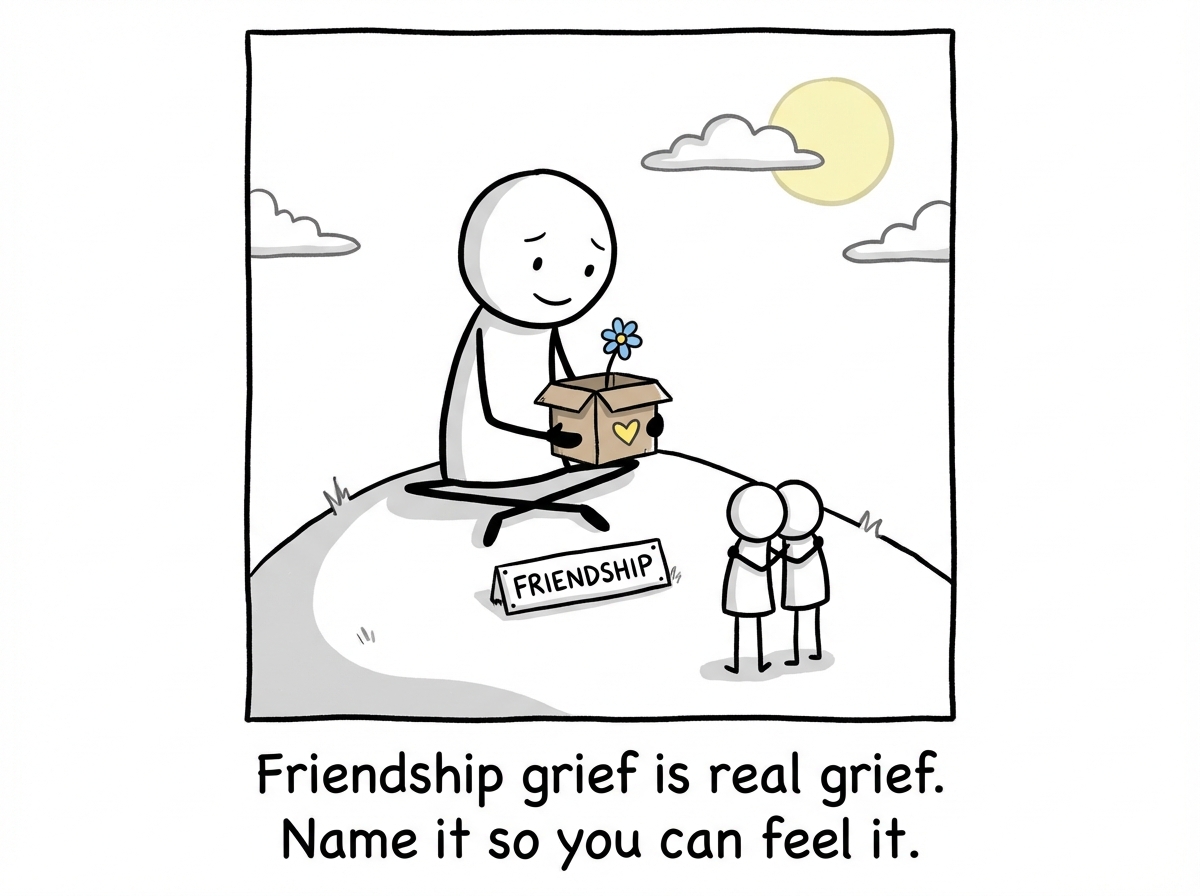
The Grief Without a Funeral
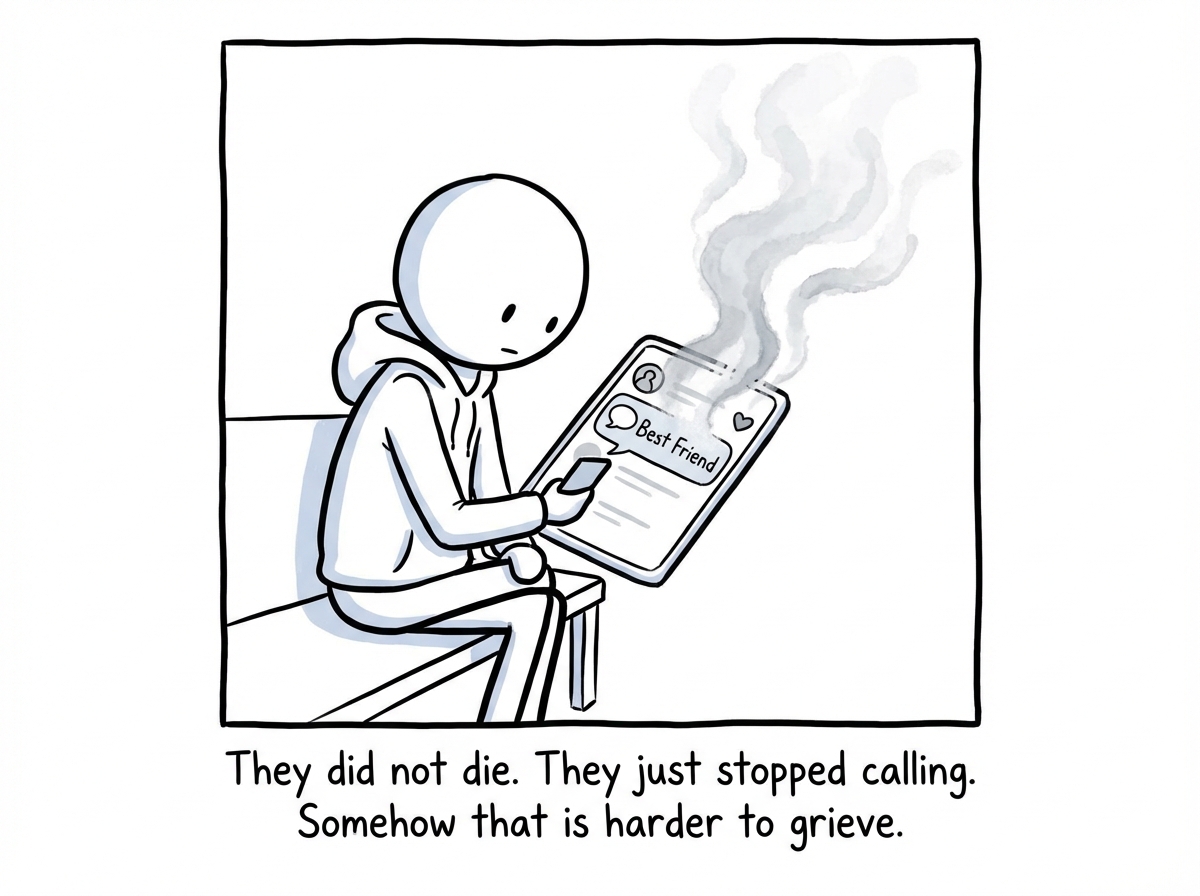
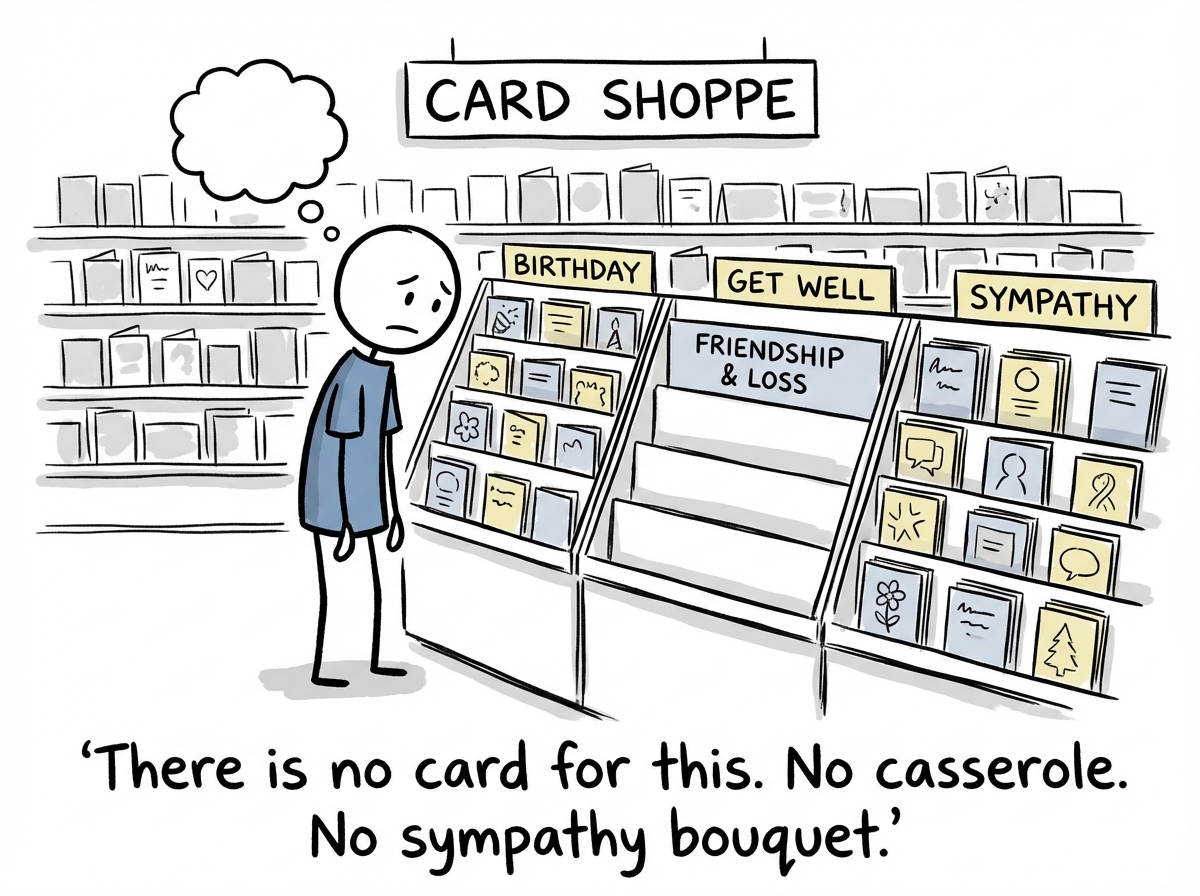
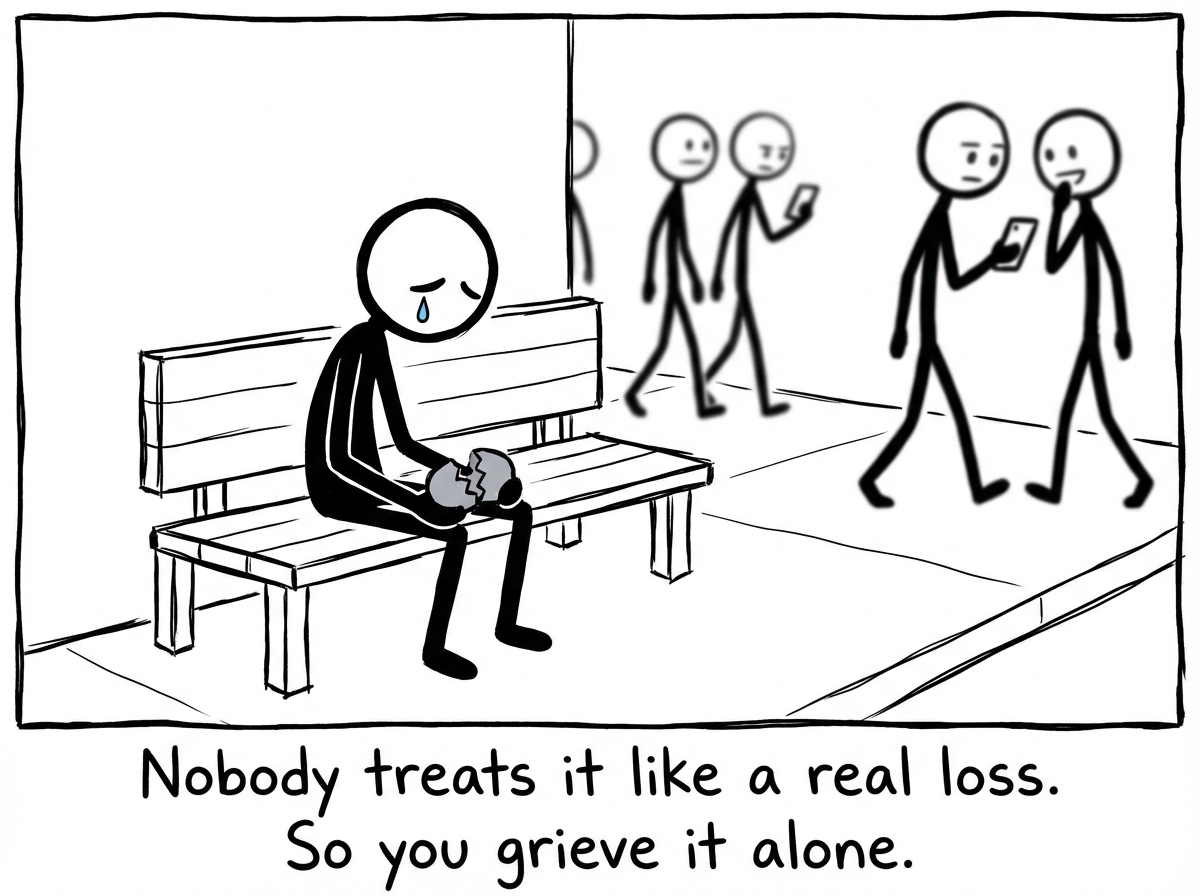
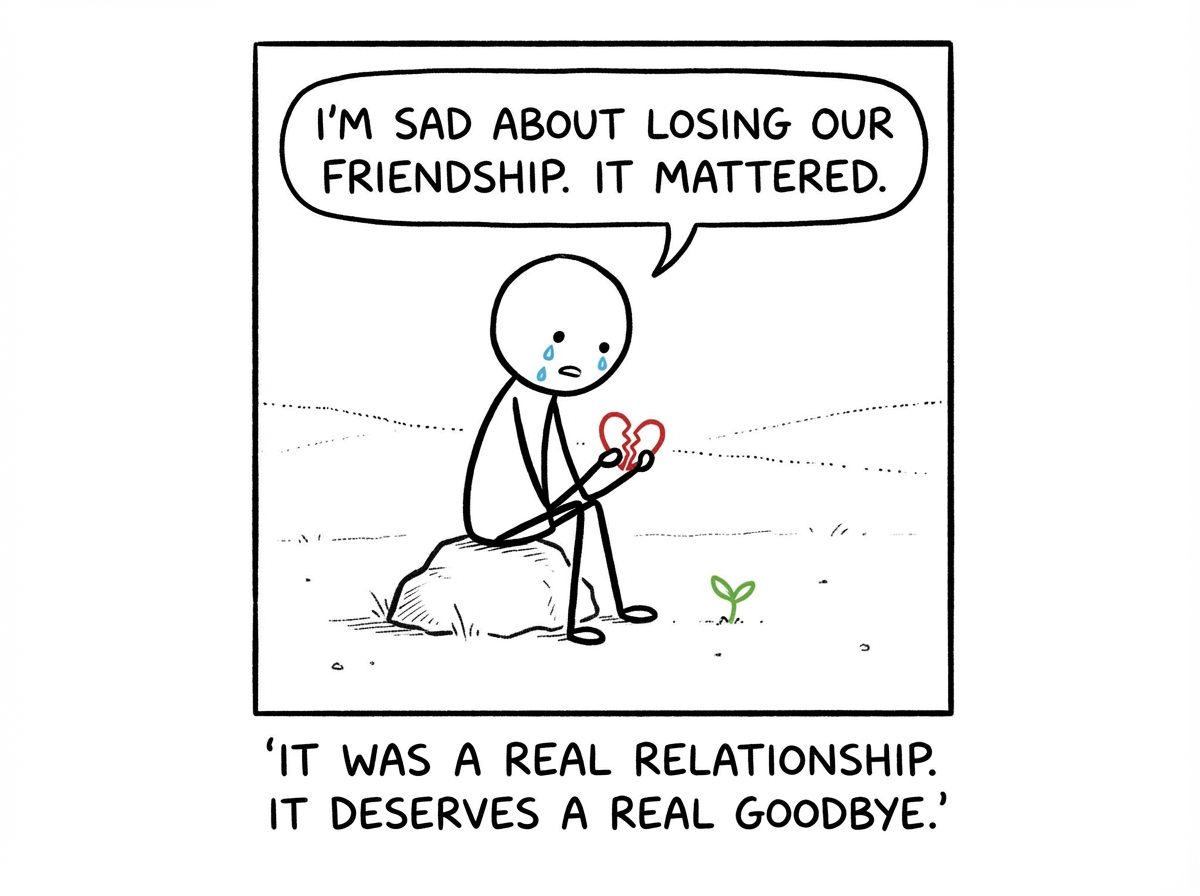
A person mourns a lost friendship but finds no ceremony, no card, and no cultural script for a grief that nobody treats as real.
Explanation
When a romantic relationship ends, the world offers you a script: sympathy, ice cream, playlists, time off. When a friendship ends, the world offers you nothing. There is no category for it. No condolence card in the store. No socially acceptable period of mourning. You are expected to simply absorb the loss and move on, as if a person who knew your most unguarded self disappearing from your life is a minor inconvenience rather than a genuine bereavement. Psychologist Miriam Kirmayer's research on friendship dissolution highlights that platonic losses often carry a unique sting because friendships are purely voluntary. There is no legal contract, no shared mortgage, no custody arrangement forcing contact. When a friend leaves, the implicit message is that they chose to -- which makes the rejection feel deeply personal. The ambiguity compounds the pain: most friendship breakups happen through slow fade rather than clean break, leaving you without a clear event to grieve or a story that makes sense. Disenfranchised grief -- a term coined by Kenneth Doka -- describes losses that society does not recognize or validate. Friendship breakups are textbook disenfranchised grief. The first step toward healing is simply naming what happened: this was a real loss, and it deserves real mourning, even if nobody else treats it that way.
Key Takeaway
A loss does not need a funeral to deserve your grief -- and a friendship does not need a label to leave a crater when it ends.