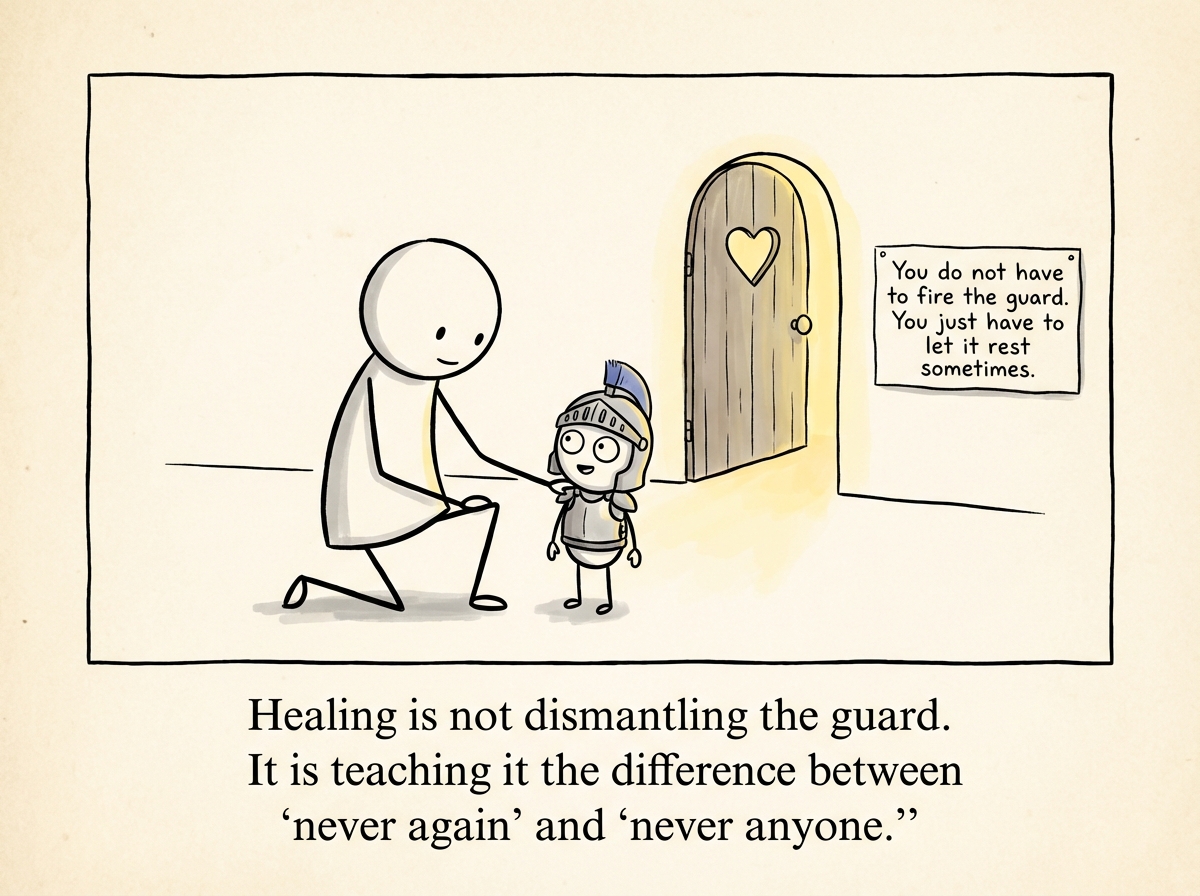
The Guard Who Never Sleeps
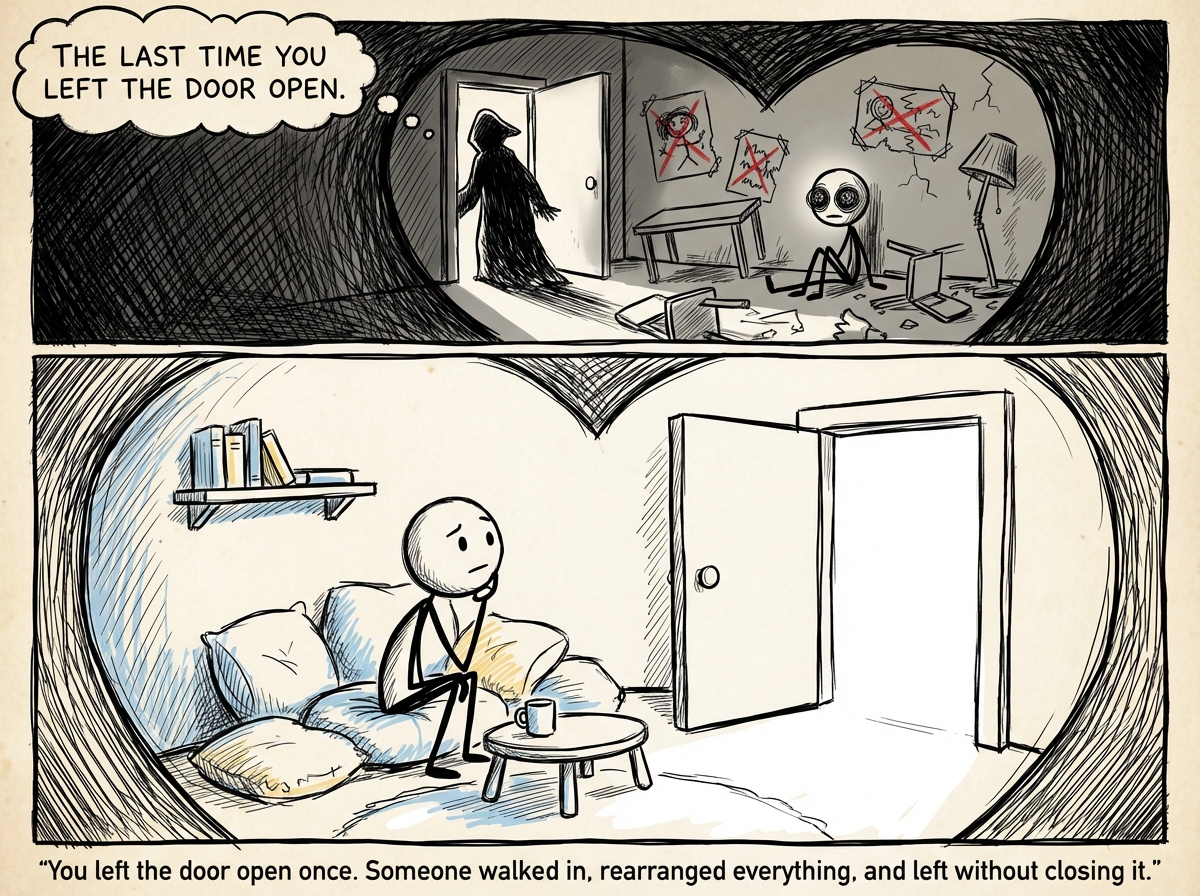
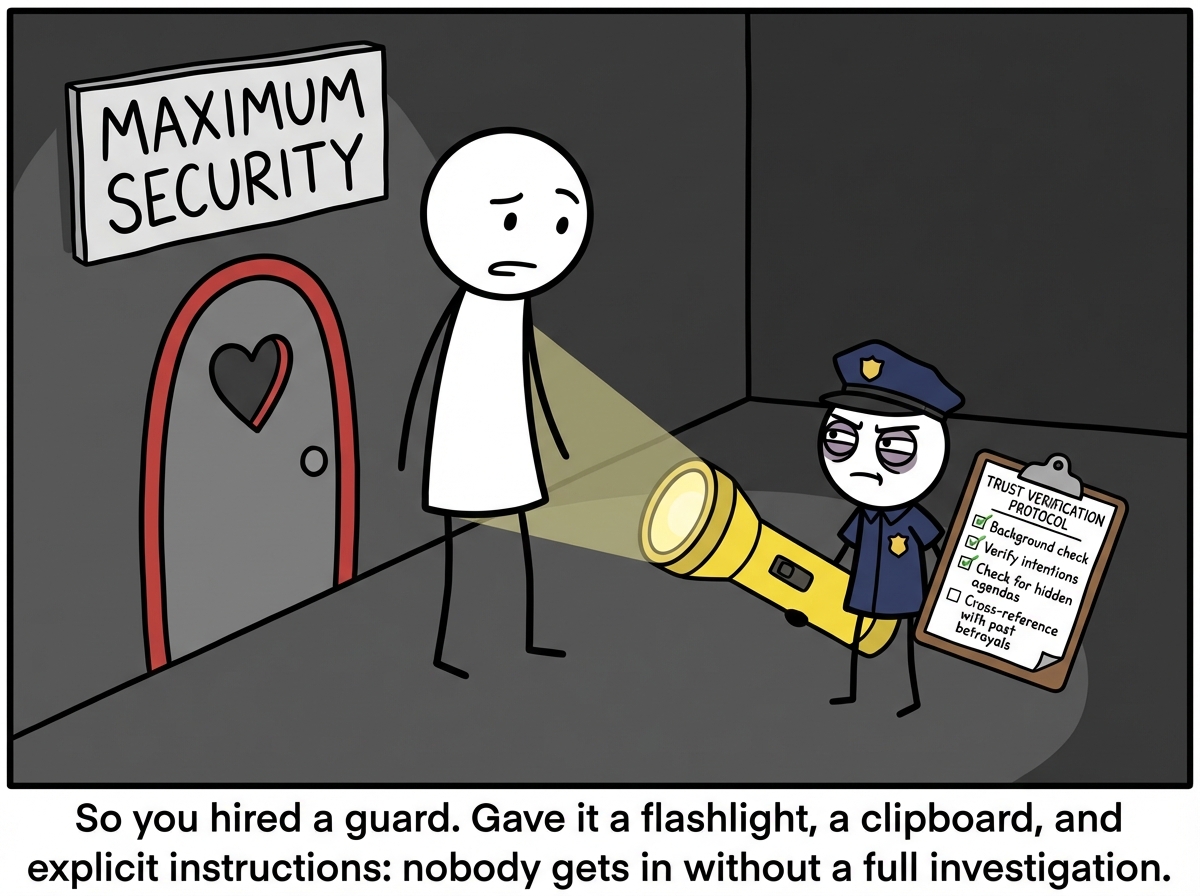
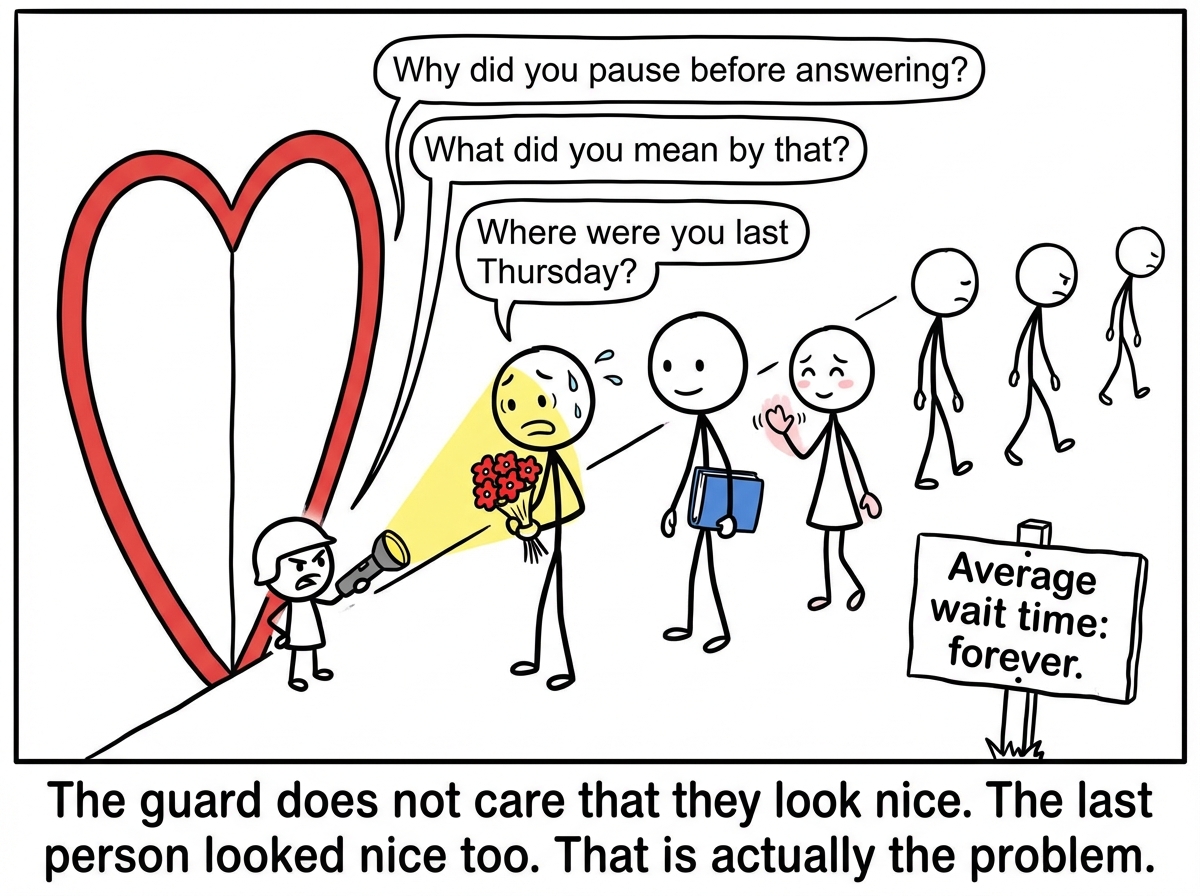
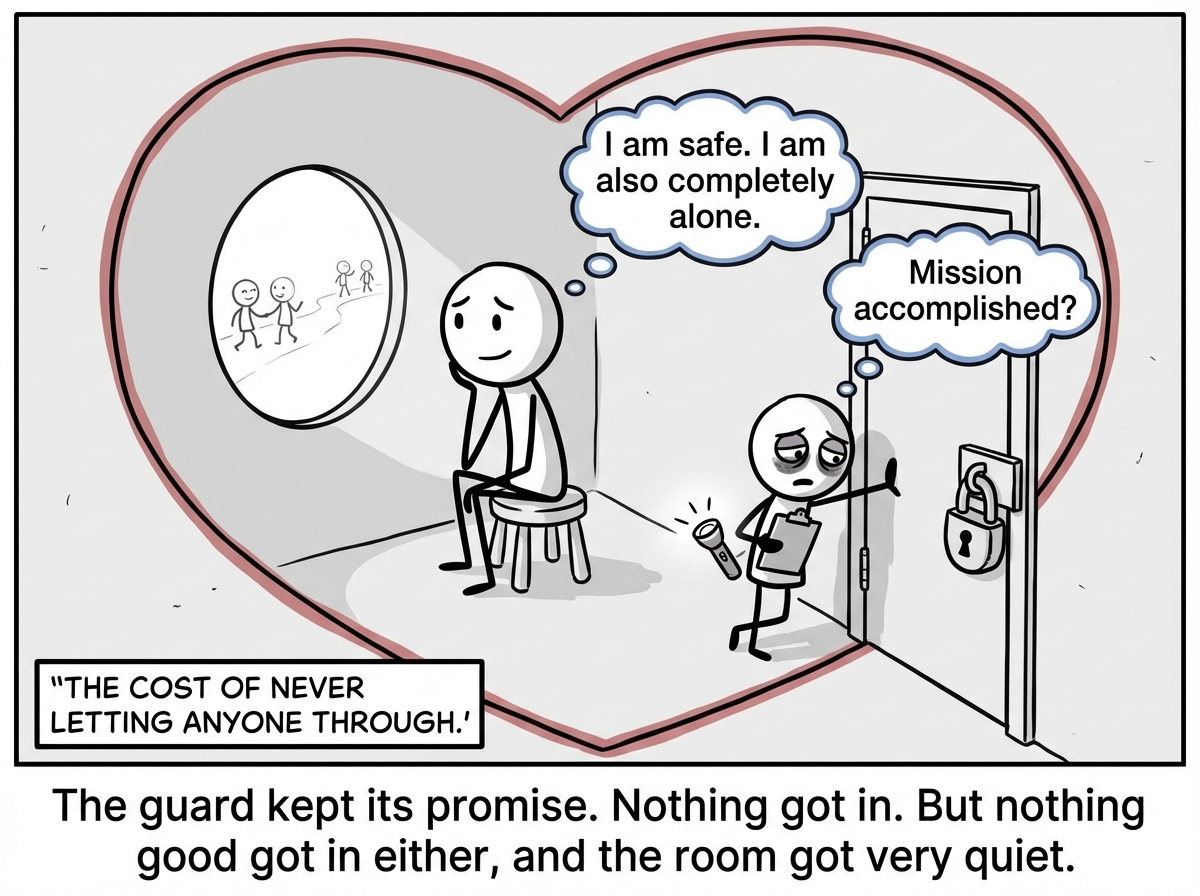
A person posts a tiny guard version of themselves at the entrance to their heart, who interrogates every new person with a flashlight and clipboard, never letting anyone through because the last time was catastrophic.
Explanation
After a significant betrayal, the nervous system installs a permanent sentry. This is hypervigilance -- the brain's attempt to ensure you are never caught off guard again. The guard does not differentiate between genuine threats and innocent visitors. It treats every new person with the same level of suspicion because the last person who looked safe turned out to be devastating. Stephen Porges' Polyvagal Theory explains this as a neuroception shift: your autonomic nervous system has recalibrated its baseline from 'safe until proven dangerous' to 'dangerous until proven safe.' The guard is not paranoia -- it is a trauma response doing its job with exhausting thoroughness. It checks body language, tone, word choice, and micro-expressions, running every interaction through a filter built from the worst moment of your life. The cost is enormous. The guard keeps you safe, but it also keeps you alone. Recovery does not mean firing the guard. It means gradually retraining it to distinguish between real threats and the echoes of old ones -- to let the guard take a break without dismantling it entirely.
Key Takeaway
The guard at the door of your heart is not your enemy -- it is the part of you that swore 'never again' and meant it. Healing means teaching it that 'never again' and 'never anyone' are not the same thing.