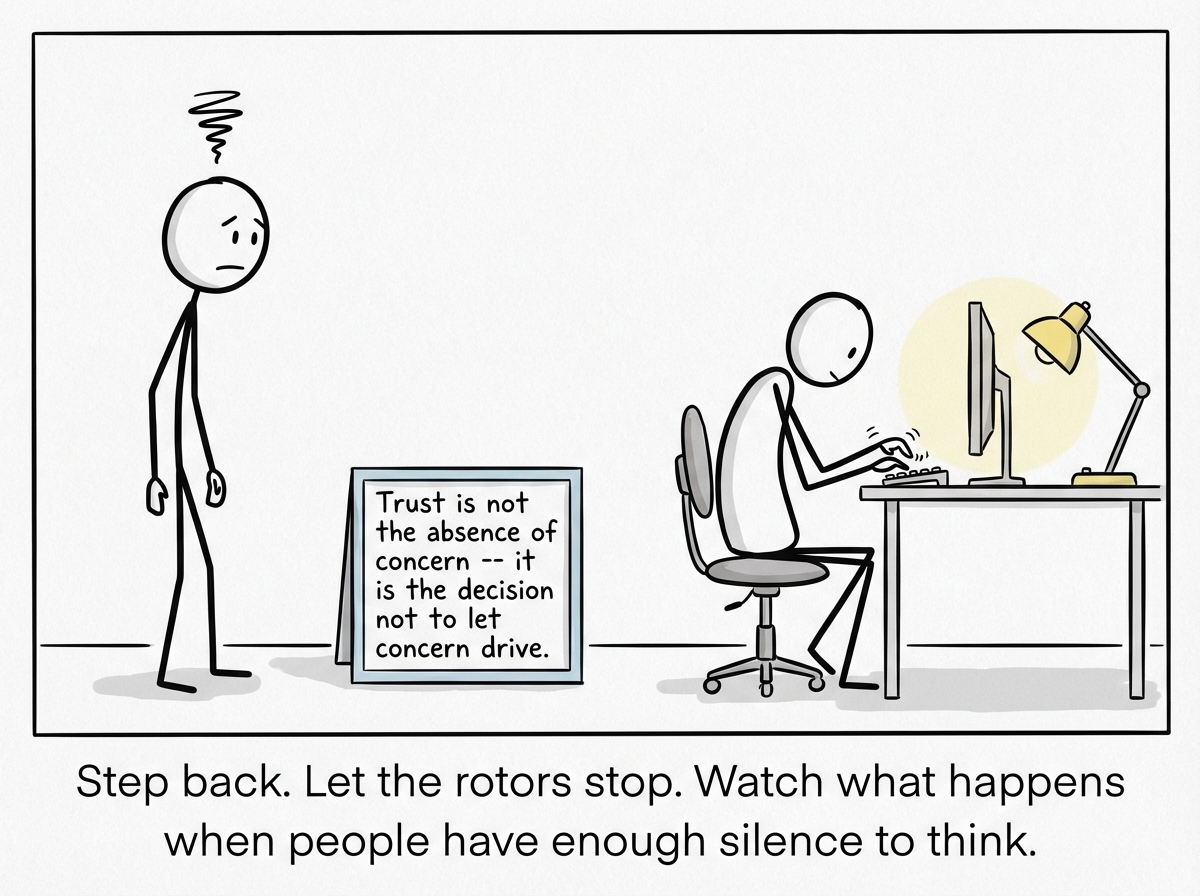
The Hovering Helicopter
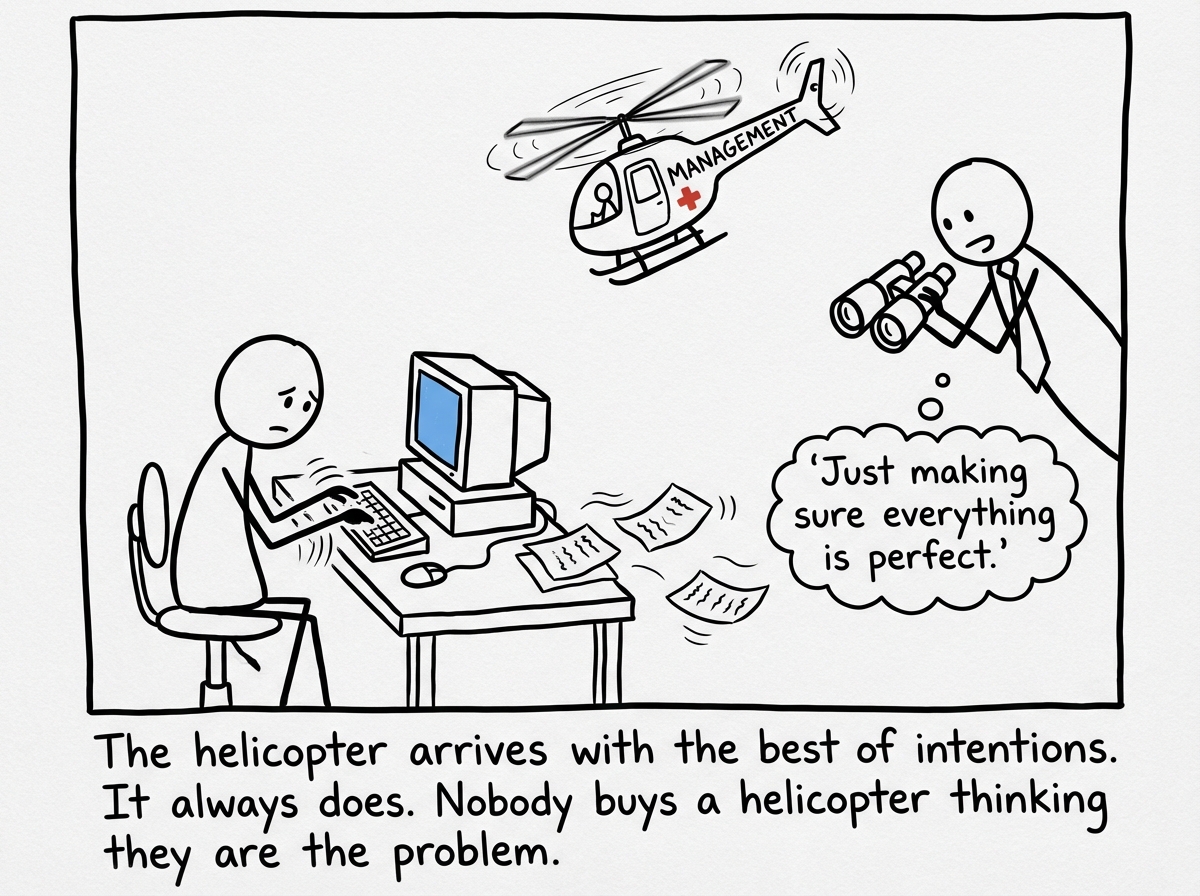
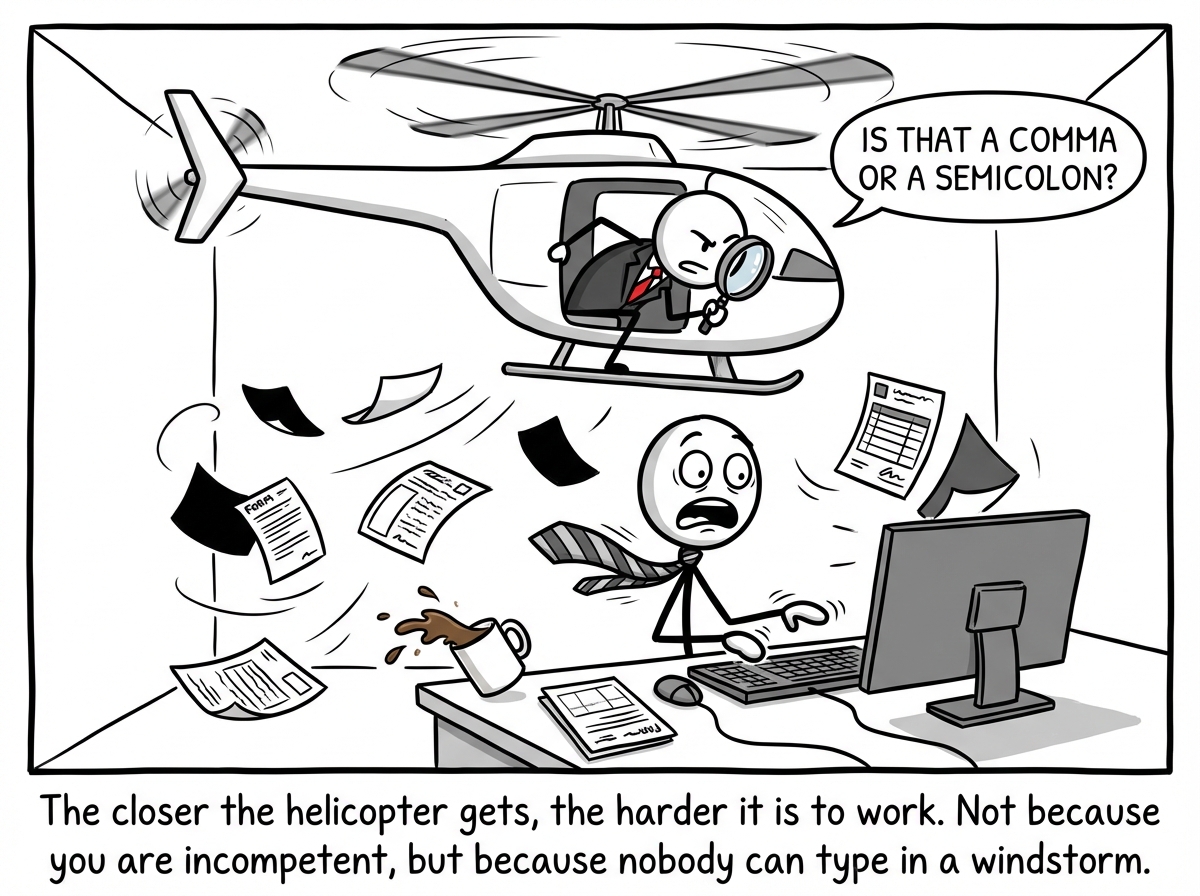
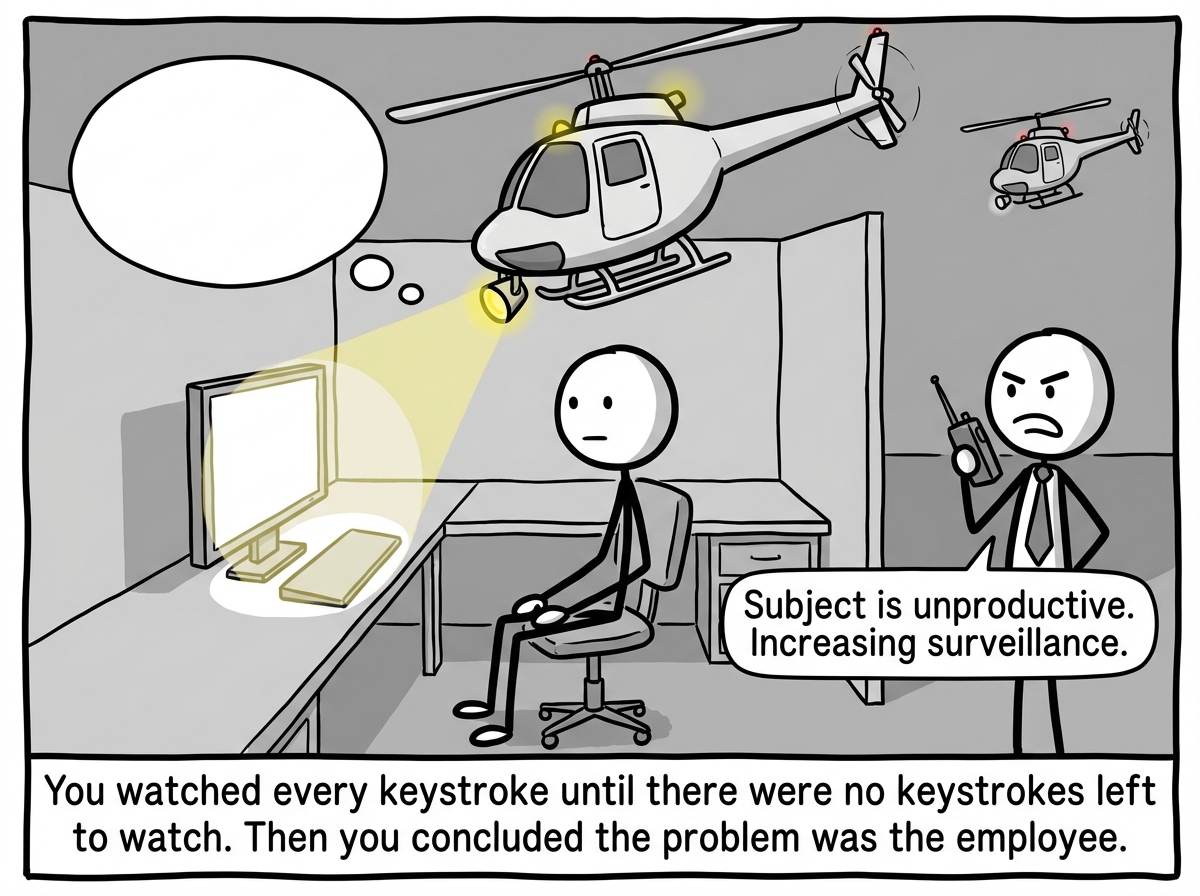
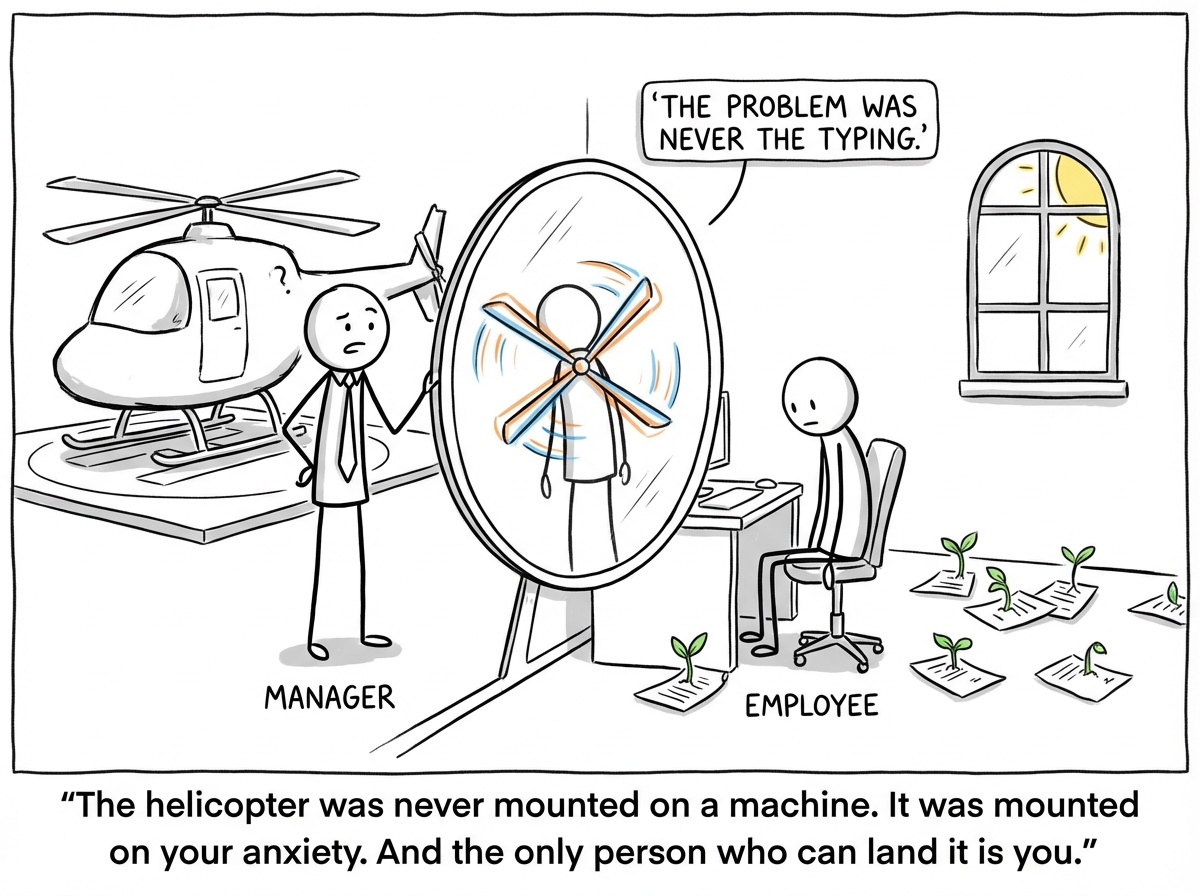
A manager literally hovers over an employee's desk in a tiny helicopter, checking every keystroke, until the employee stops being able to type at all.
Explanation
The hovering helicopter makes visible what micromanagement feels like from underneath: a constant, deafening presence that makes independent thought impossible. The manager in the helicopter genuinely believes they are helping. They are 'making sure things go right,' 'catching mistakes early,' 'being hands-on.' But from below, the noise of the rotors drowns out every thought, the downwash scatters every paper, and the spotlight makes every keystroke feel like a performance rather than work. Teresa Amabile's research at Harvard found that autonomy is essential for creative and productive work. When people feel watched and controlled, their intrinsic motivation collapses -- they shift from doing the work because it matters to doing the work because someone is watching. The output may look the same on the surface, but the capacity for initiative, problem-solving, and independent judgment quietly dies. The employee becomes exactly the person the micromanager feared: someone who cannot function without oversight. The helicopter is always about the pilot, not the landscape. Managers who hover are managing their own anxiety about outcomes by offloading it onto employees. The employee does not become more competent under surveillance -- they become more dependent on it, which is the opposite of what any manager claims to want.
Key Takeaway
The helicopter was never about making sure the work gets done -- it was about making sure the manager does not have to feel the terror of not being in control.