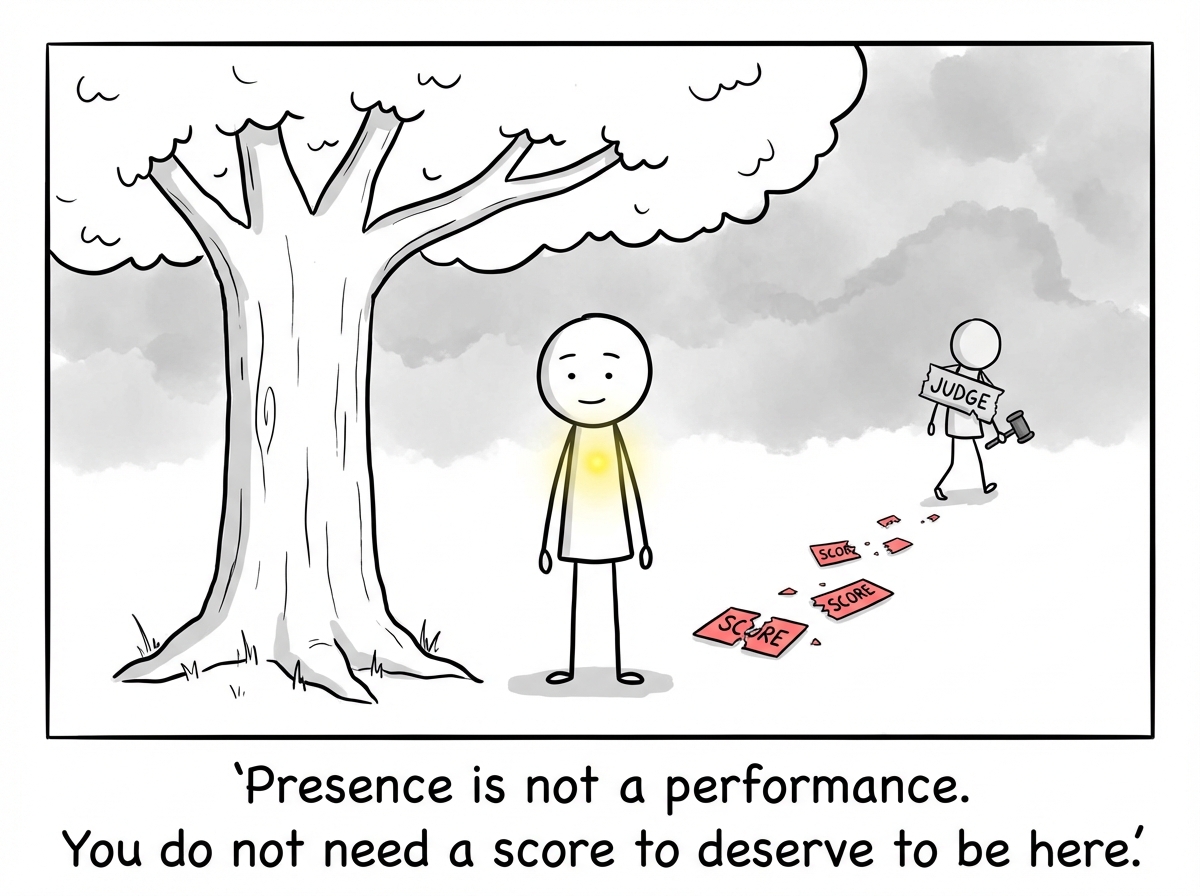
The Inner Scorekeeper
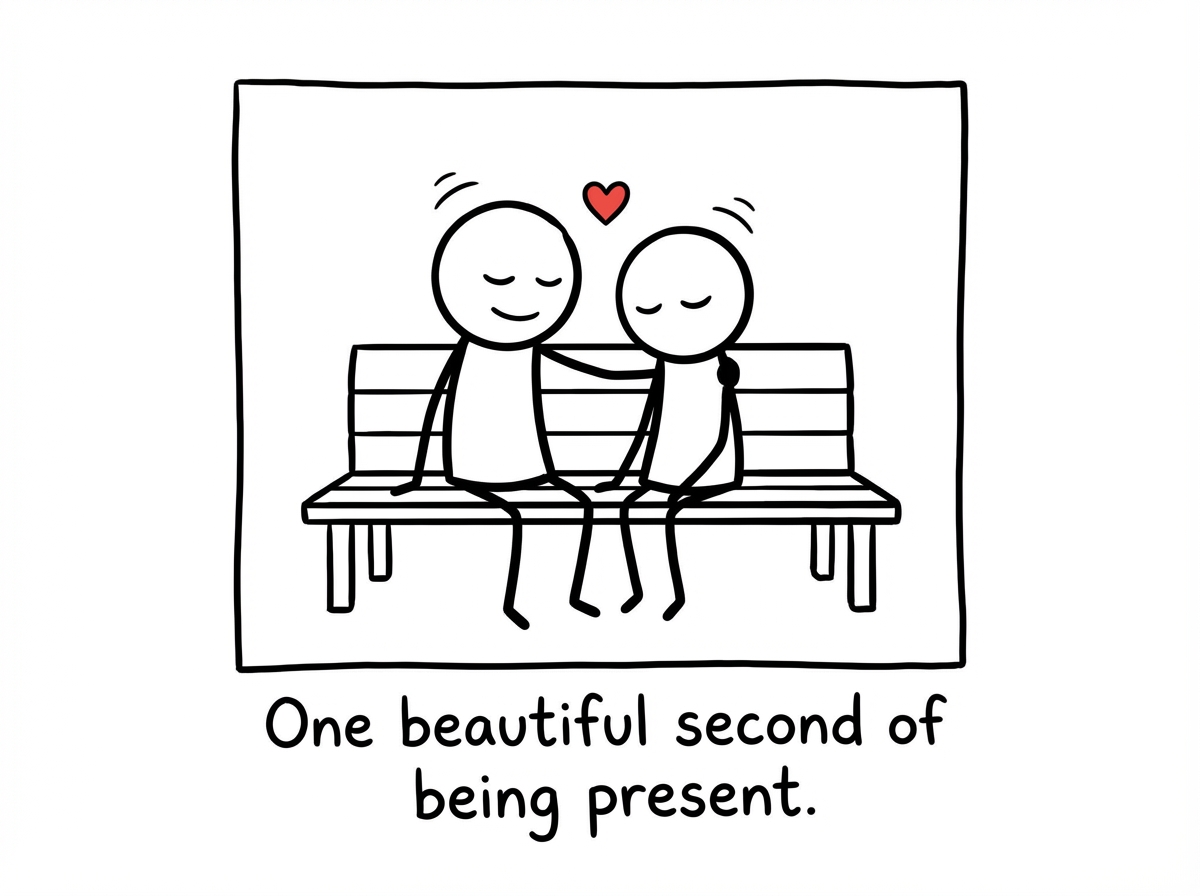
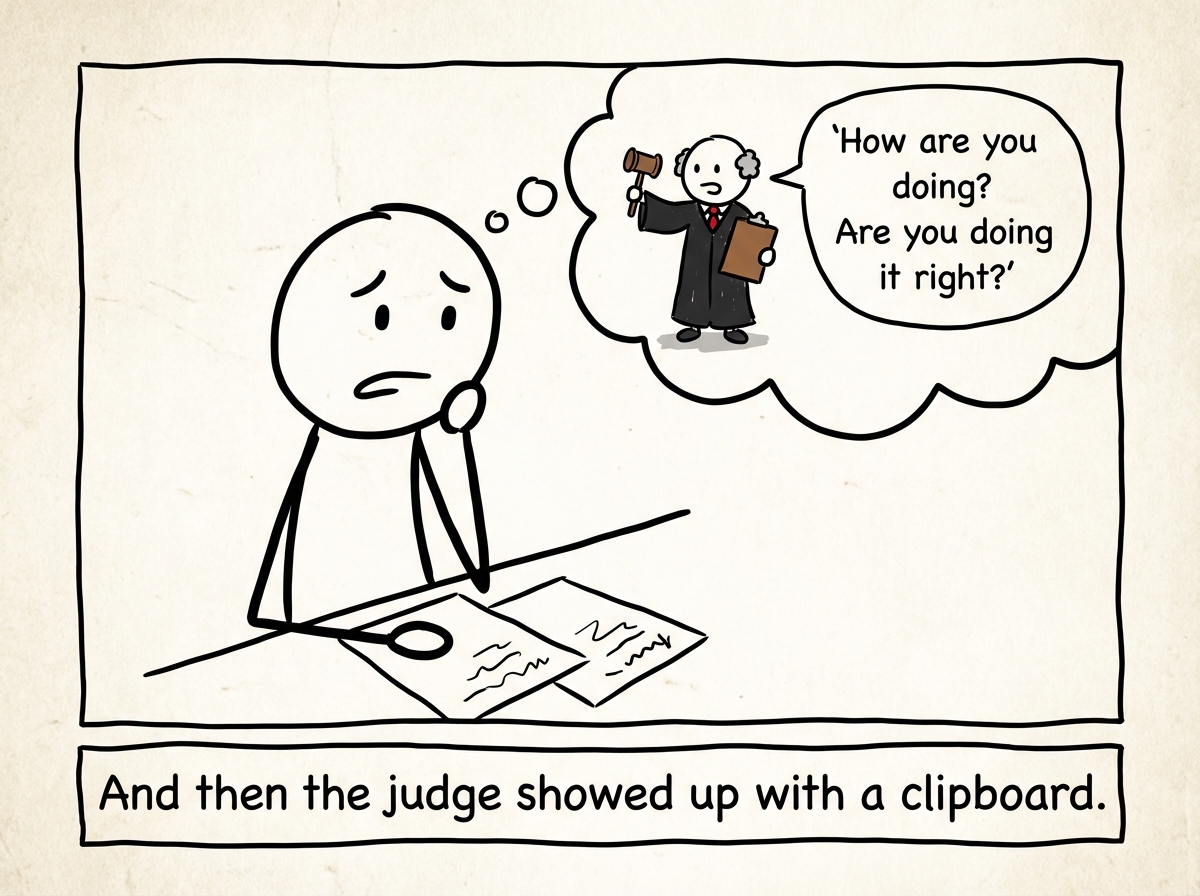
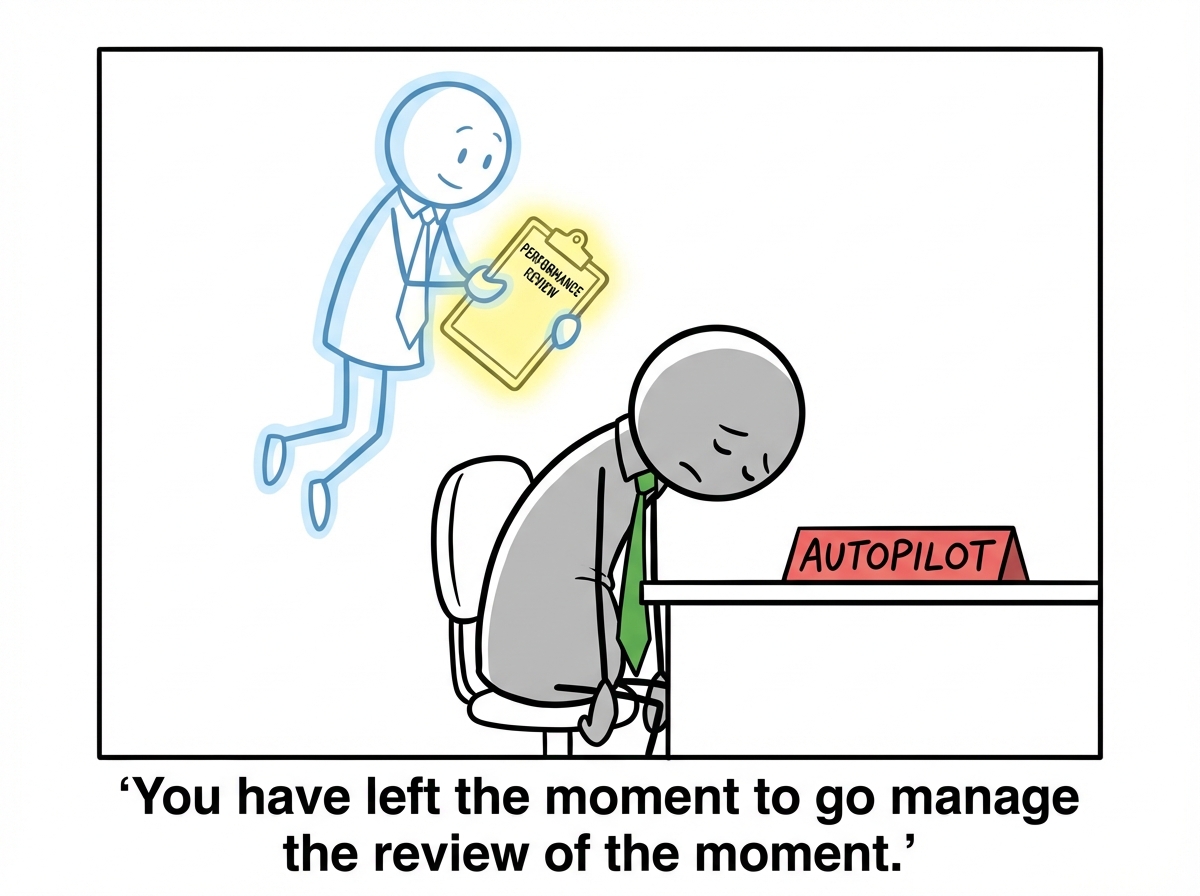
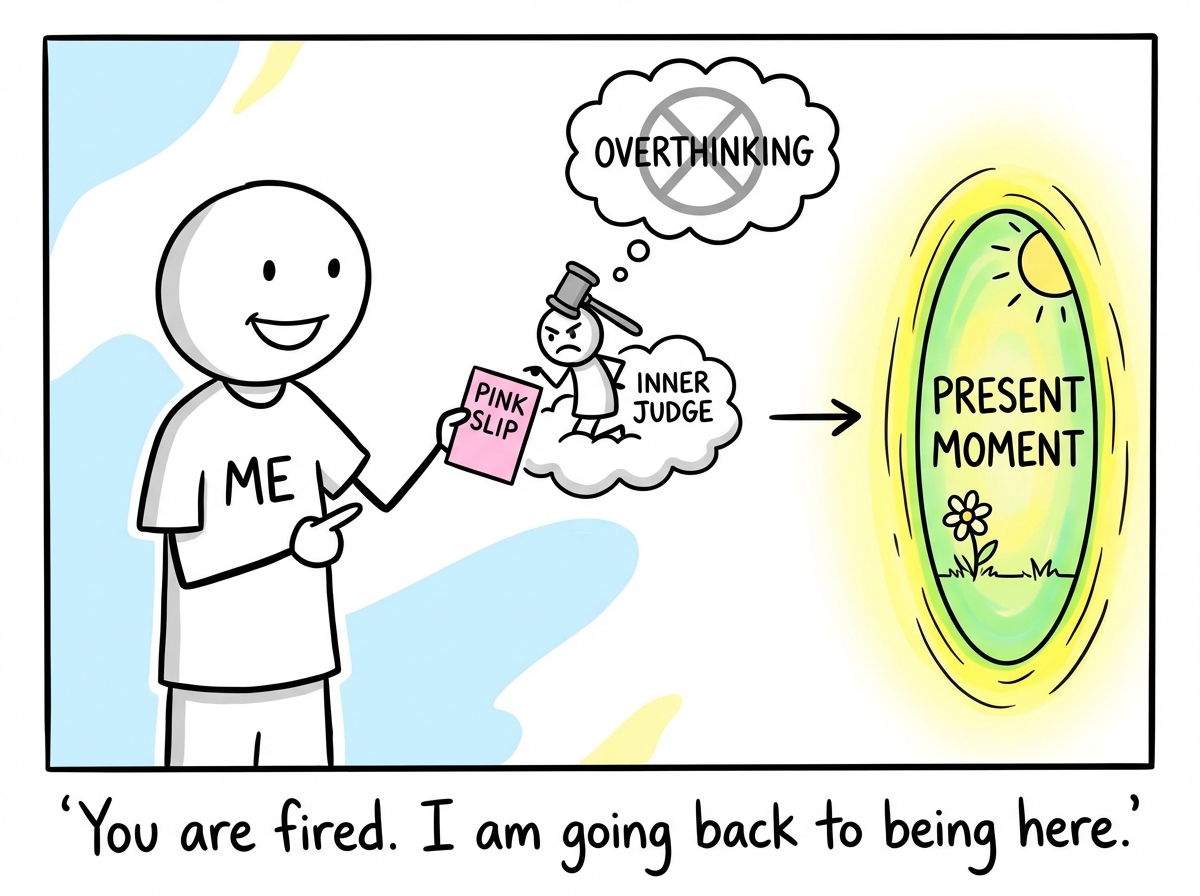
During an intimate moment, a tiny judge inside someone's head pulls out a clipboard and score cards, turning connection into a performance review -- until the person fires the judge and returns to the moment.
Explanation
Performance anxiety in intimacy is what happens when your mind evacuates your body and relocates to the press box. Instead of being present, you are commentating. Instead of feeling, you are evaluating. The inner scorekeeper keeps a running tally -- Am I doing this right? Are they enjoying this? What is my body doing? Is this taking too long? -- and the monitoring itself becomes the problem. Arousal requires exactly what anxiety prevents: presence, safety, and surrender. You cannot perform your way to connection any more than you can think your way to relaxation. The scorekeeper usually has origins. Maybe sex was first framed as something you could fail at. Maybe a partner's reaction once made you feel inadequate. Maybe cultural messaging taught you that your body should perform on command -- effortlessly, reliably, impressively -- like a machine rather than a living, responsive, context-dependent system. The scorekeeper believes that if you just monitor hard enough, you can control the outcome. But monitoring is the opposite of presence, and presence is the only thing that was ever going to work. Firing the judge does not mean you stop caring. It means you stop grading yourself long enough to actually be in the room with another person.
Key Takeaway
You cannot grade yourself into presence -- the scorekeeper has to go so the rest of you can actually show up.