The Inner Scorekeeper
During an intimate moment, a tiny judge inside someone's head pulls out a clipboard and score cards, turning connection into a performance review -- until the person fires the judge and returns to the moment.

When your brain turns intimate moments into a test and then grades you harshly for not being present.
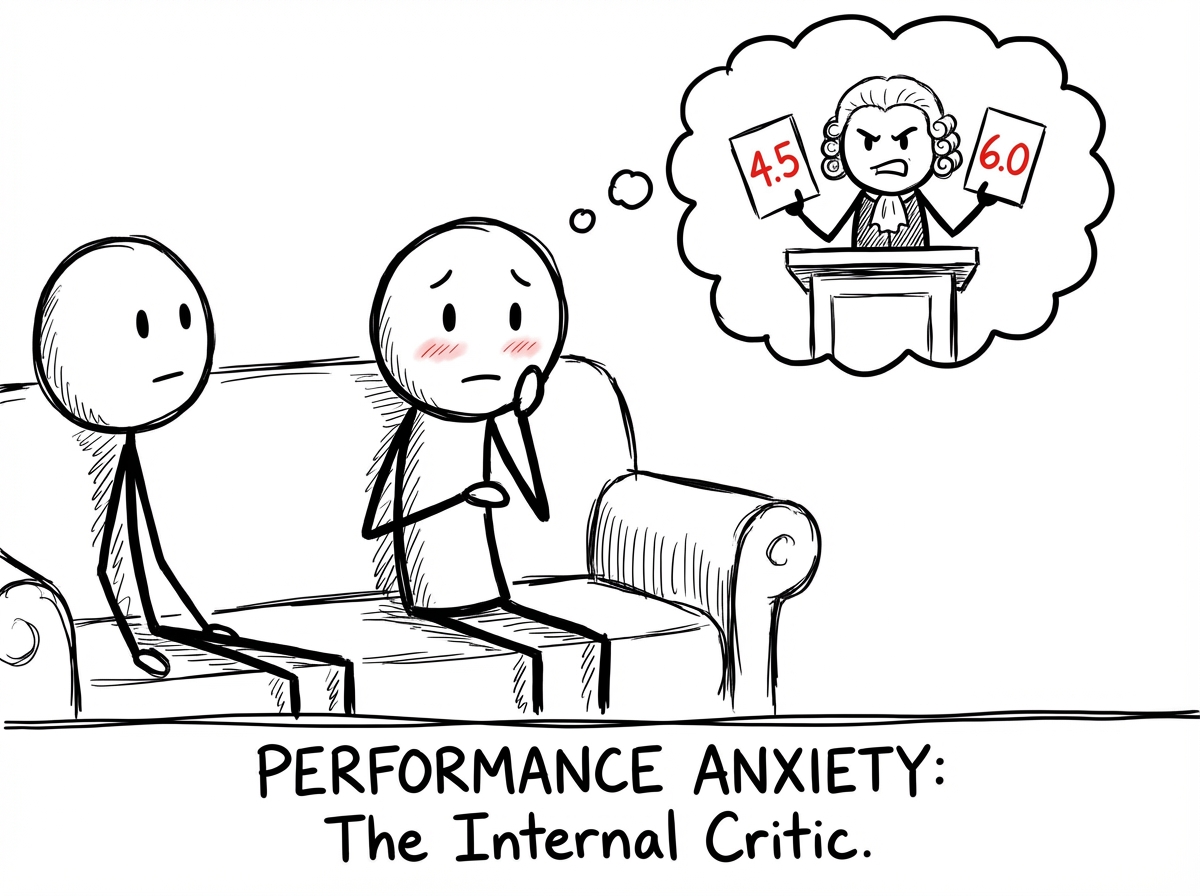
Performance anxiety in intimacy is what happens when your mind leaves the experience and climbs into the announcer's booth to provide live commentary on how you are doing. Instead of being in your body, you are monitoring it. Instead of connecting with your partner, you are evaluating the connection. Am I doing this right? Are they enjoying this? What if I cannot perform? What if they notice? The irony is brutal: the harder you try to control the outcome, the more your body refuses to cooperate, because arousal requires exactly what anxiety prevents -- presence, safety, and letting go. Performance anxiety is not a sign of dysfunction. It is your threat-detection system misfiring in a context that requires vulnerability, not vigilance. It often has roots in earlier experiences of shame, criticism, or sexual encounters where you felt judged or inadequate. Cultural messaging plays a role too -- the idea that sex should be effortless, that desire should be automatic, that your body should perform on command like a well-oiled machine. In reality, human sexuality is messy, responsive, and deeply context-dependent. The path out of performance anxiety is not trying harder. It is learning to stop keeping score and return to the only thing that actually matters: being here, in your body, with another person.
Performance anxiety is not solved by trying harder -- it is solved by stopping the habit of grading yourself and learning to actually be present.