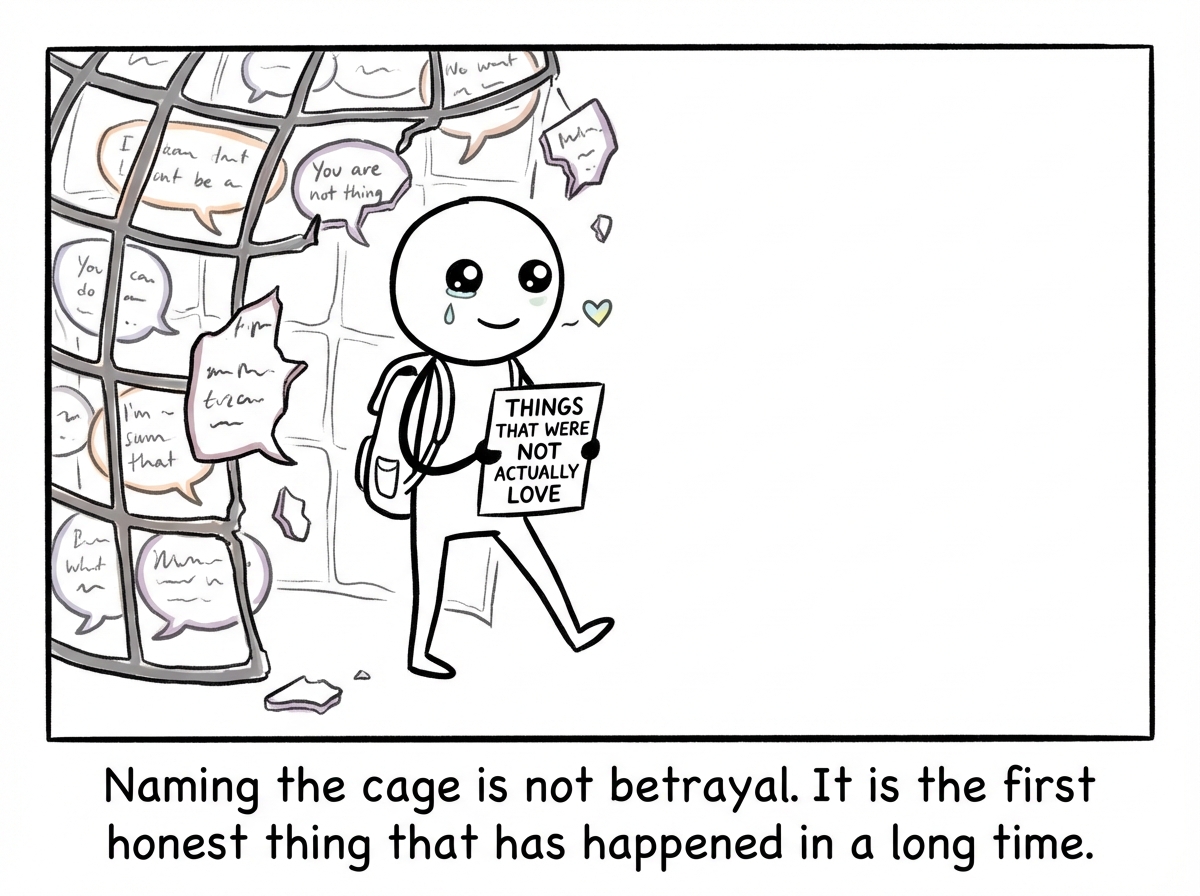
The Invisible Cage
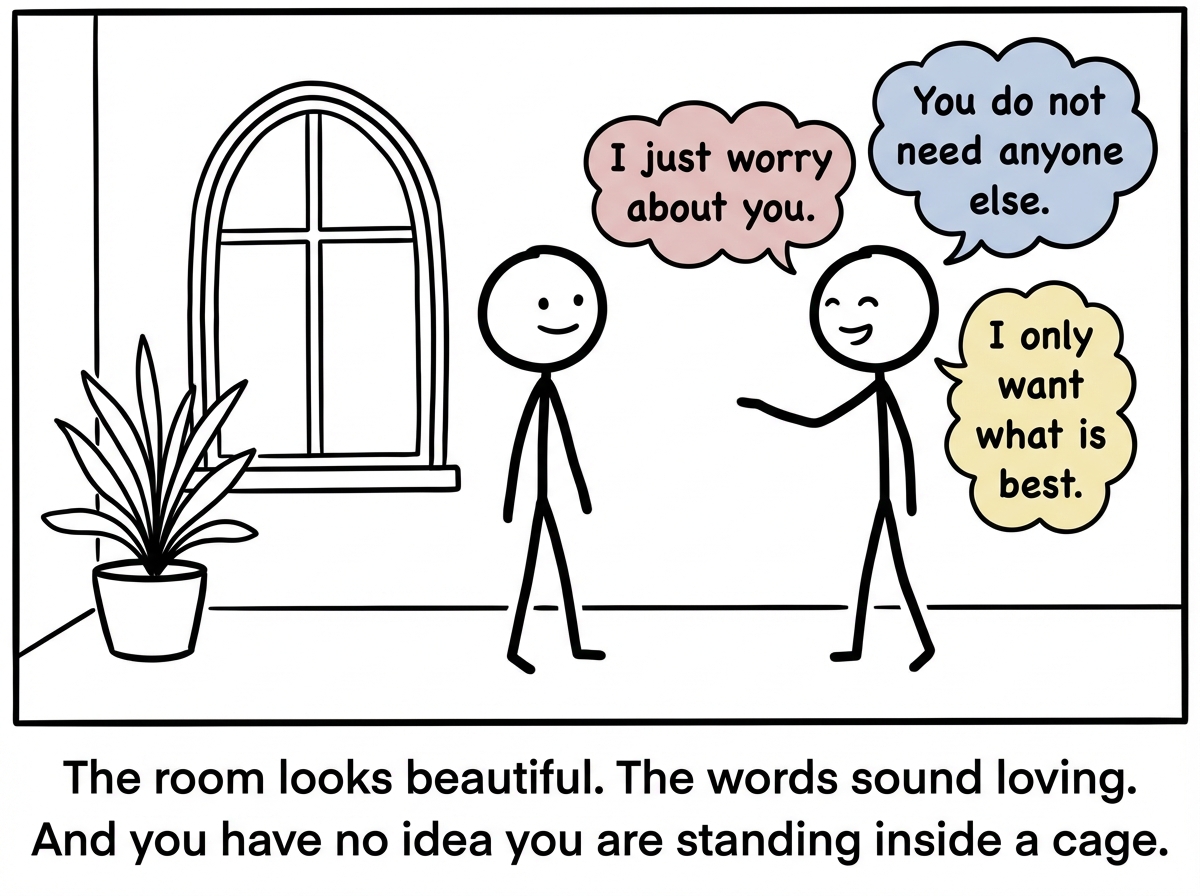
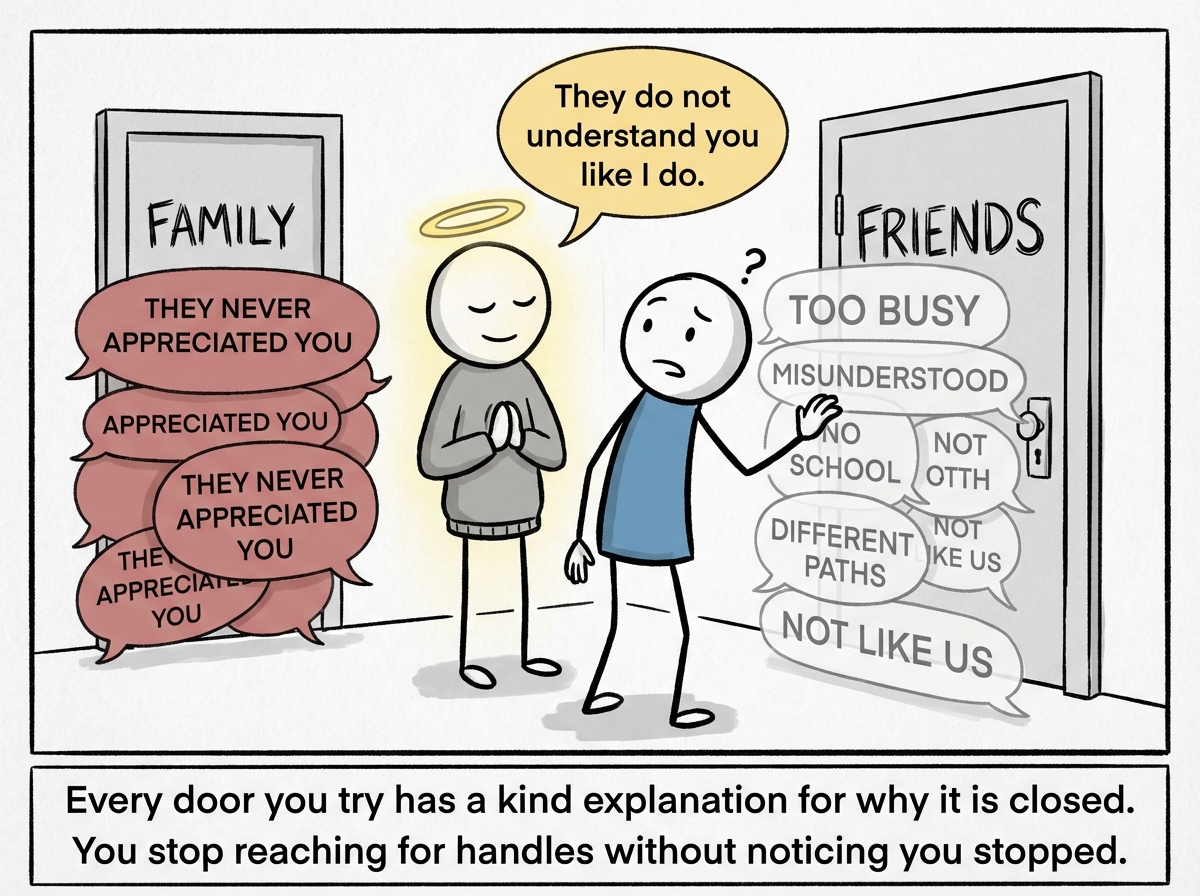
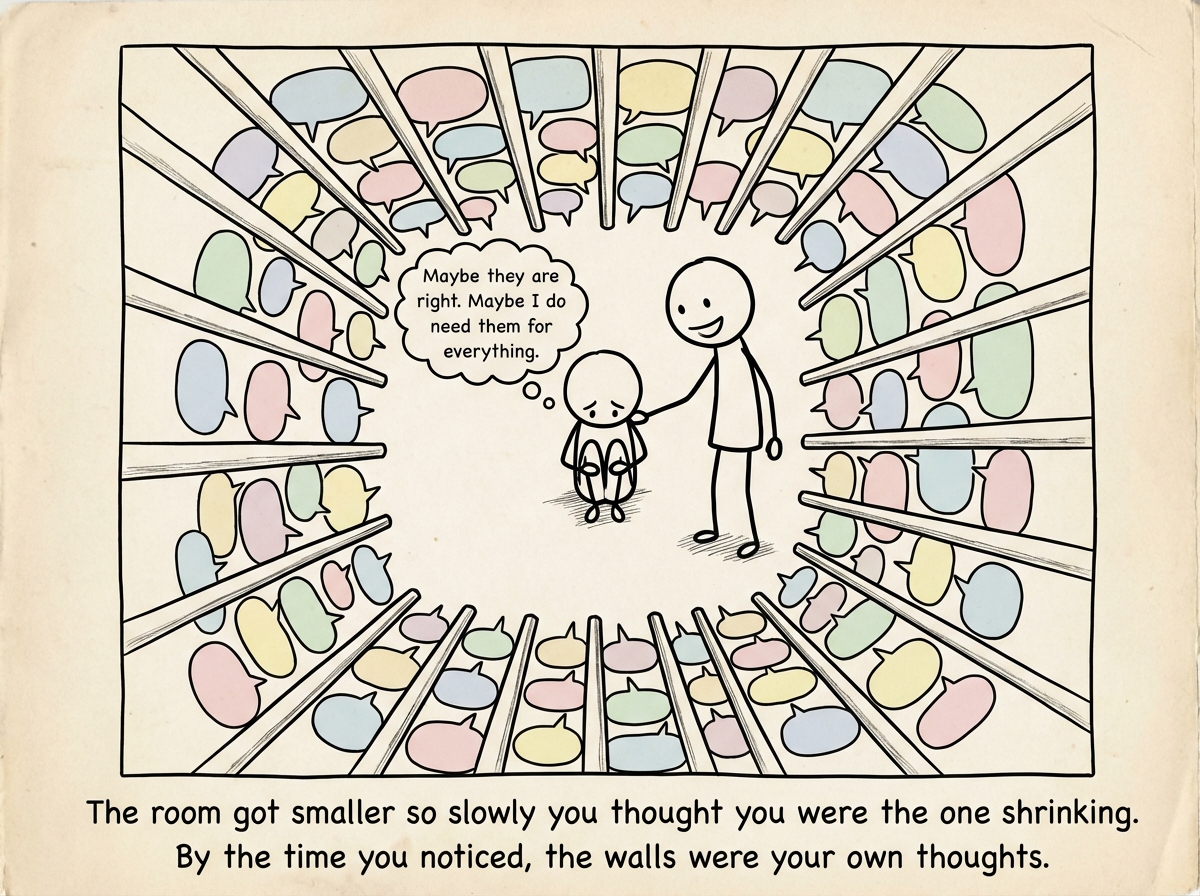
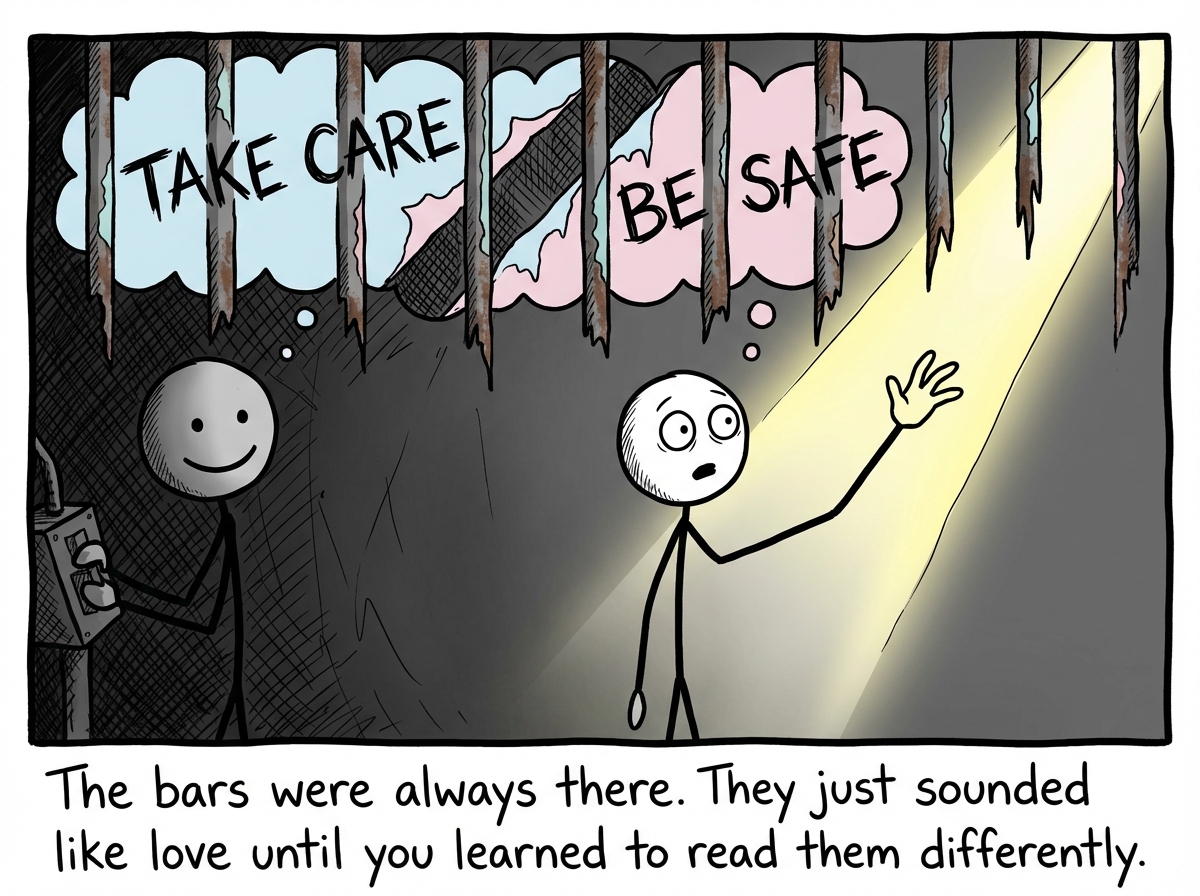
A person lives inside a cage with no visible bars, where the walls are made of rules disguised as kindness, until they finally see the cage for what it is.
Explanation
The invisible cage is what makes coercive control so devastating and so difficult to escape. Unlike physical abuse, which leaves evidence the victim and others can point to, coercive control operates through a web of restrictions that each appear reasonable in isolation. 'I just worry about you' sounds like love. 'I only want what is best' sounds like care. 'You do not need to see them, you have me' sounds like devotion. But stacked together, these phrases form walls as real as any prison. Evan Stark, who developed the framework of coercive control, emphasizes that the harm is cumulative and structural rather than incident-based. There is no single moment dramatic enough to justify leaving, which is exactly the point. The controller engineers an environment where the victim's reality is slowly replaced by the controller's narrative, a process so gradual that the victim often defends the cage before they can see it. The breakthrough moment is not escape -- it is perception. Seeing the bars for the first time is the most terrifying and liberating moment, because it means everything you believed about your safety was architecture, not love. Recovery begins with naming the pattern, but it requires rebuilding an entire sense of reality that was systematically dismantled.
Key Takeaway
The cruelest bars are the ones that whisper 'I am doing this because I love you' -- because you have to betray the story before you can leave the cage.