The Kitchen That Made You Eat Chips
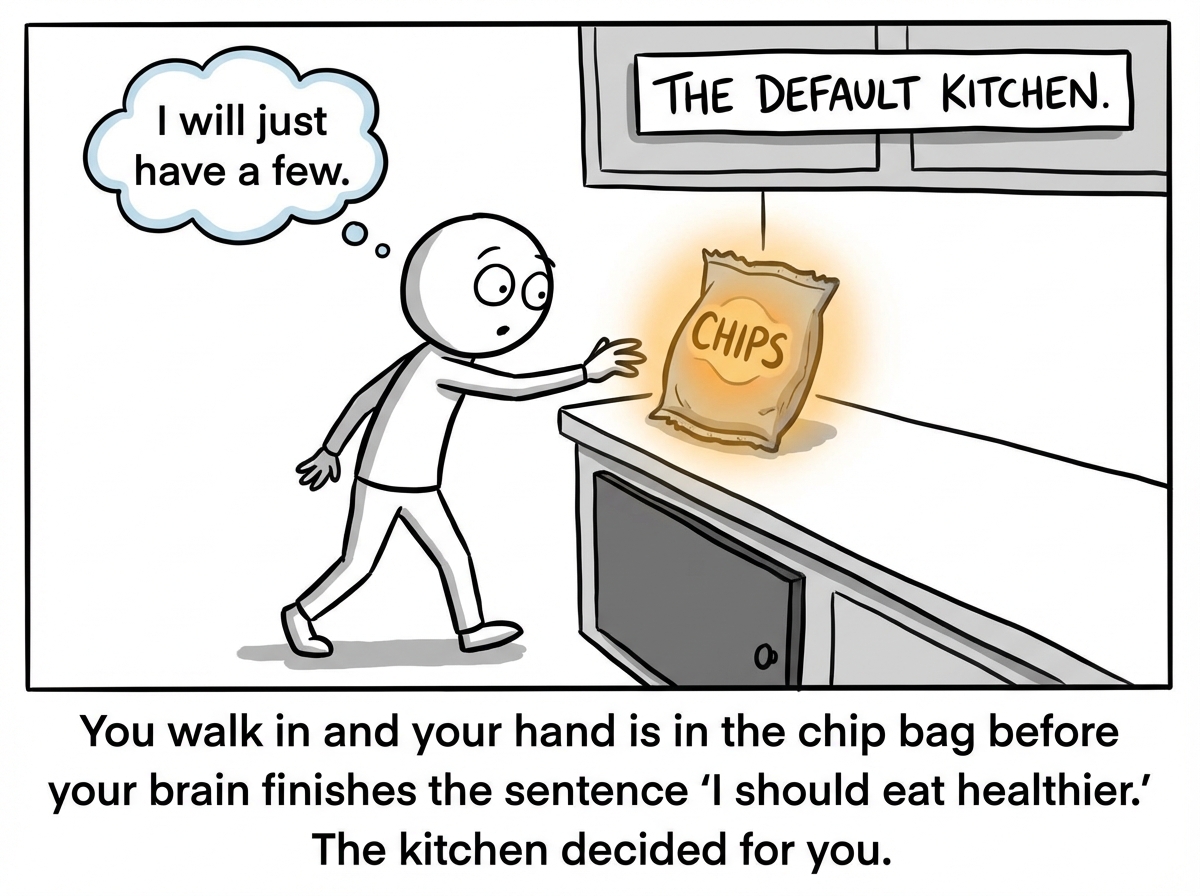
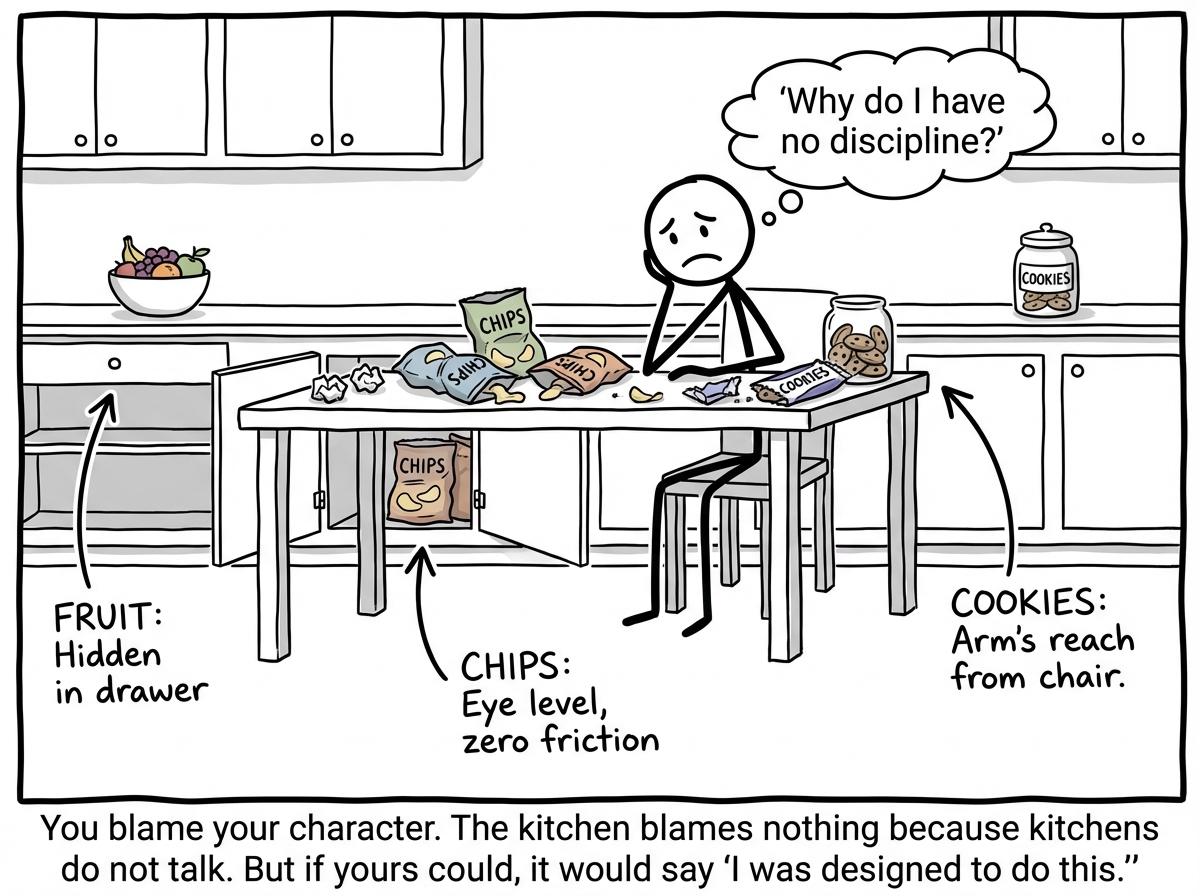
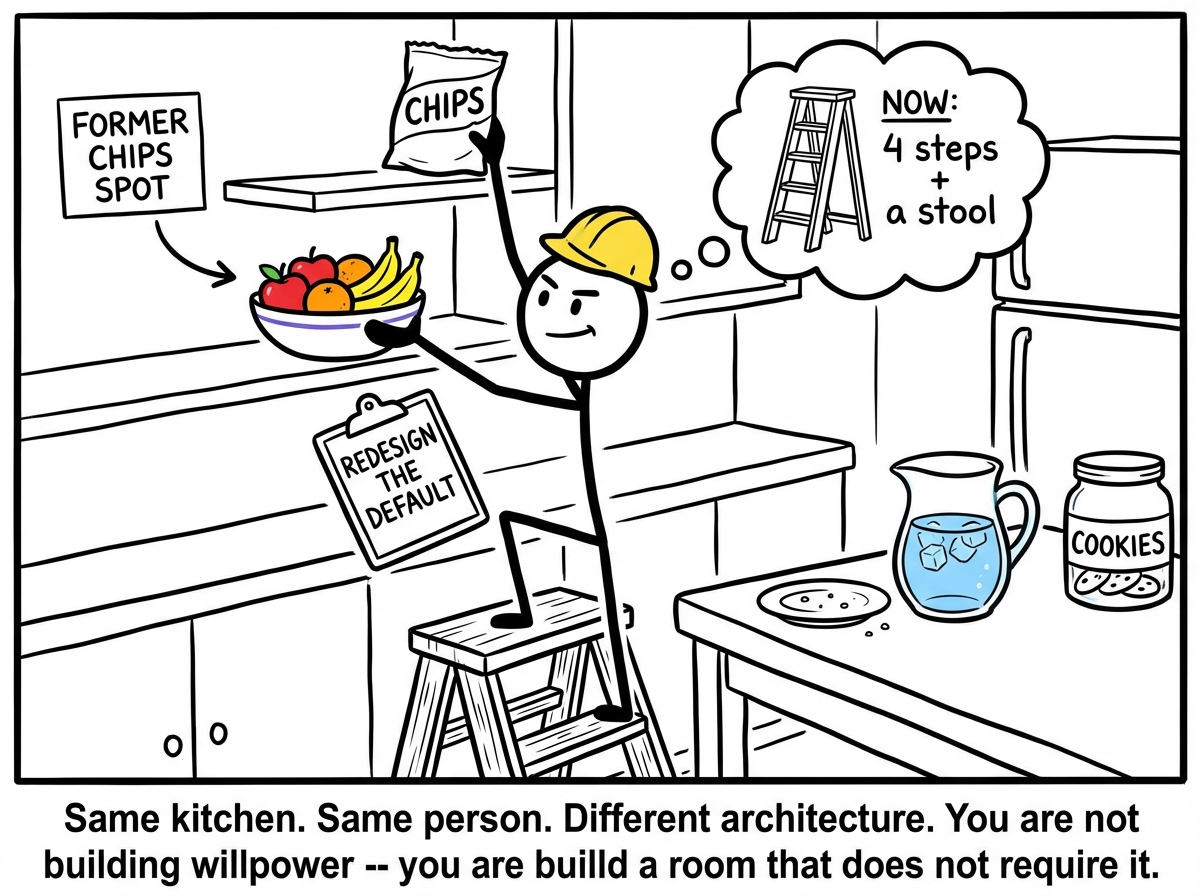
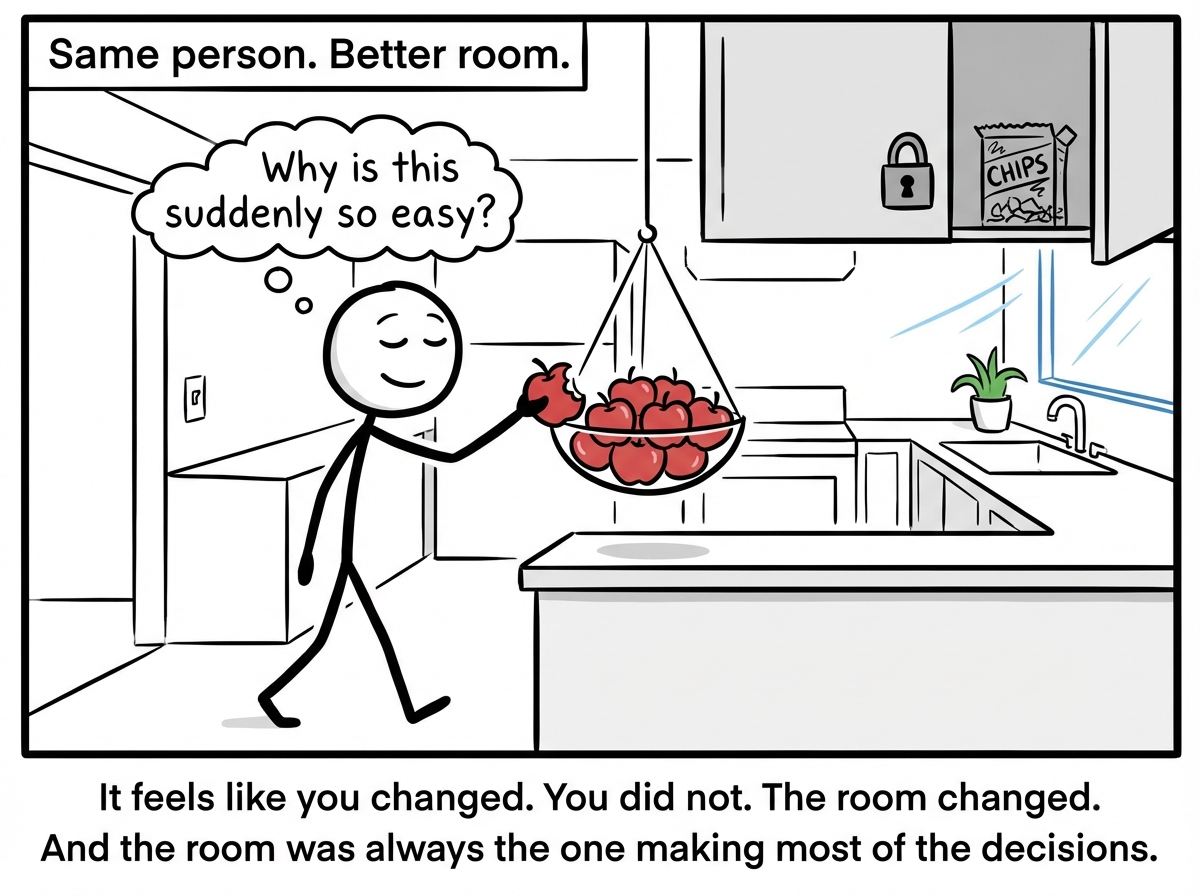
A person's kitchen is designed so that chips are at eye level and fruit is hidden in a drawer, then they redesign it and wonder why behavior change suddenly got easier.
Explanation
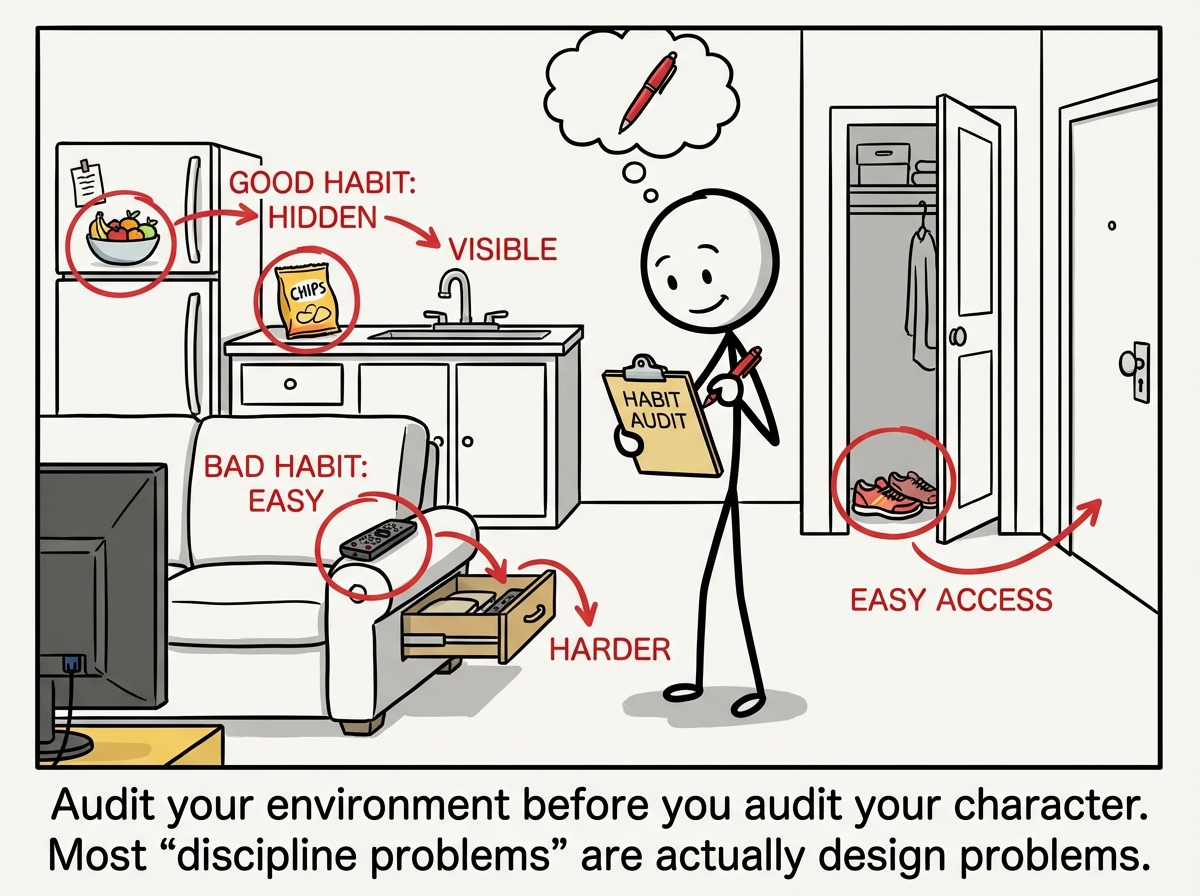
Environment design works because most daily decisions are not really decisions at all -- they are automatic responses to whatever is most visible, accessible, and convenient. Brian Wansink's decades of food psychology research showed that visibility and proximity are the two strongest predictors of consumption, far outweighing intention or willpower. When chips are at eye level, you eat chips. Not because you are weak, but because your brain defaults to the lowest-friction option thousands of times a day without consulting your prefrontal cortex. Kurt Lewin called these 'channel factors' -- small environmental features that guide behavior far more powerfully than attitudes or beliefs. The kitchen in this cartoon is not a metaphor for personal failure. It is a metaphor for the invisible architecture of choice that shapes behavior before conscious decision-making even activates. When the person redesigns the kitchen -- fruit visible, chips hidden -- they do not become a different person. They become the same person in a different environment, and the environment does the heavy lifting that willpower never could.
Key Takeaway
You were never losing a battle against chips -- you were losing a battle against shelf placement.