
The Love-Shaped Fix
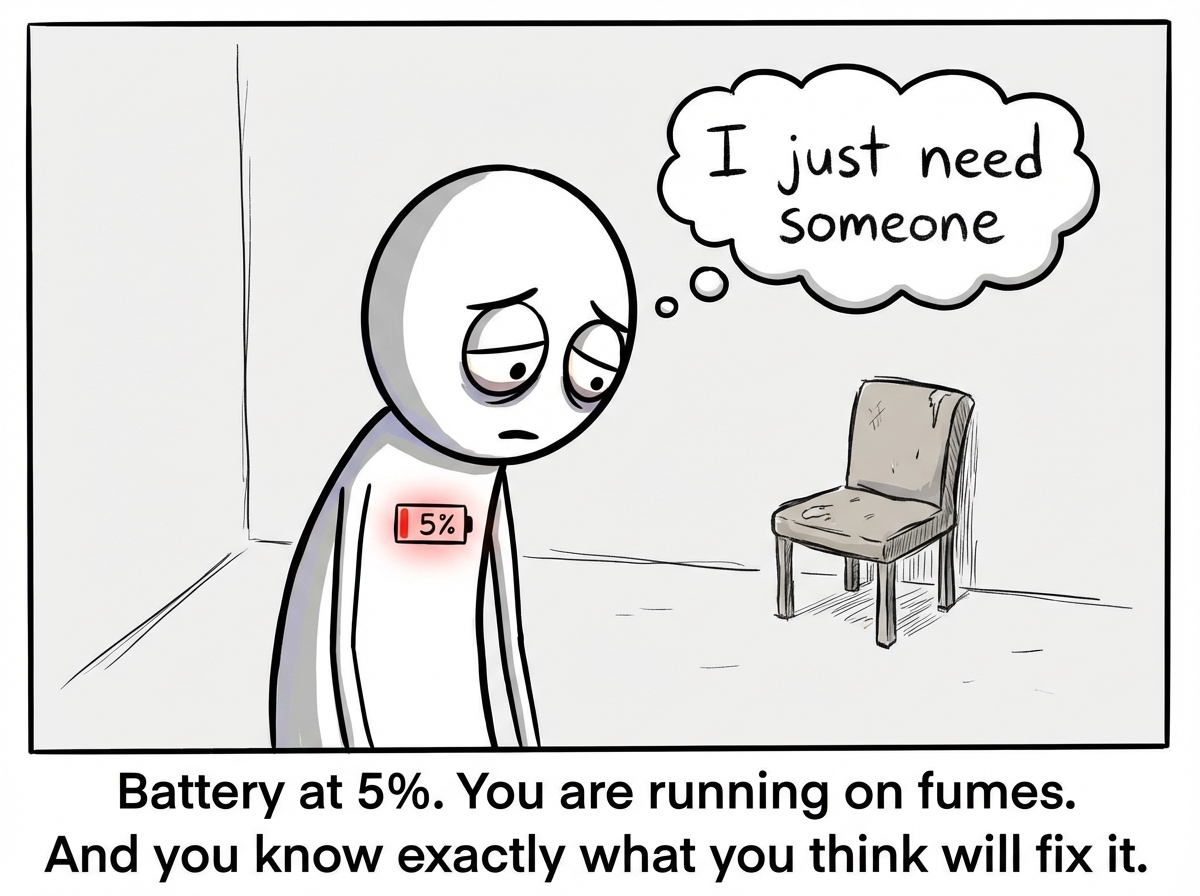
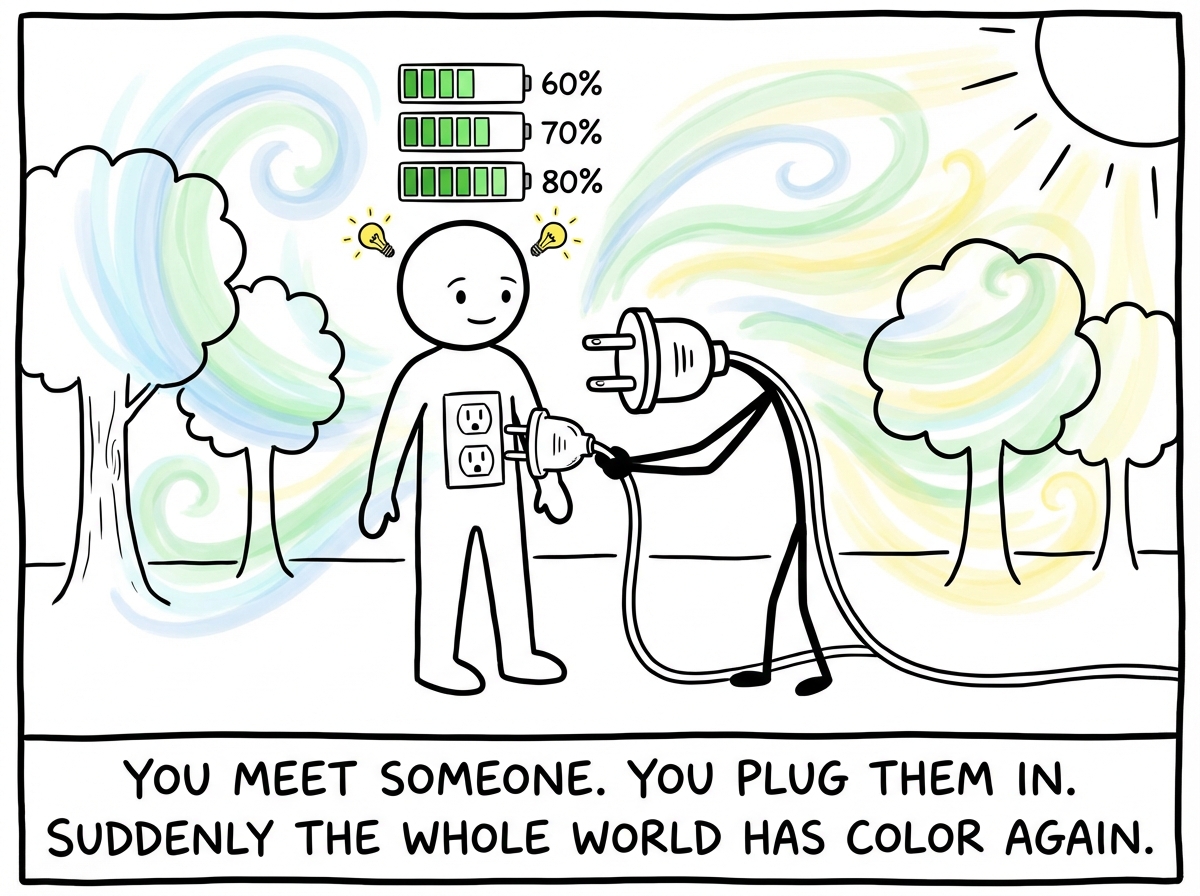
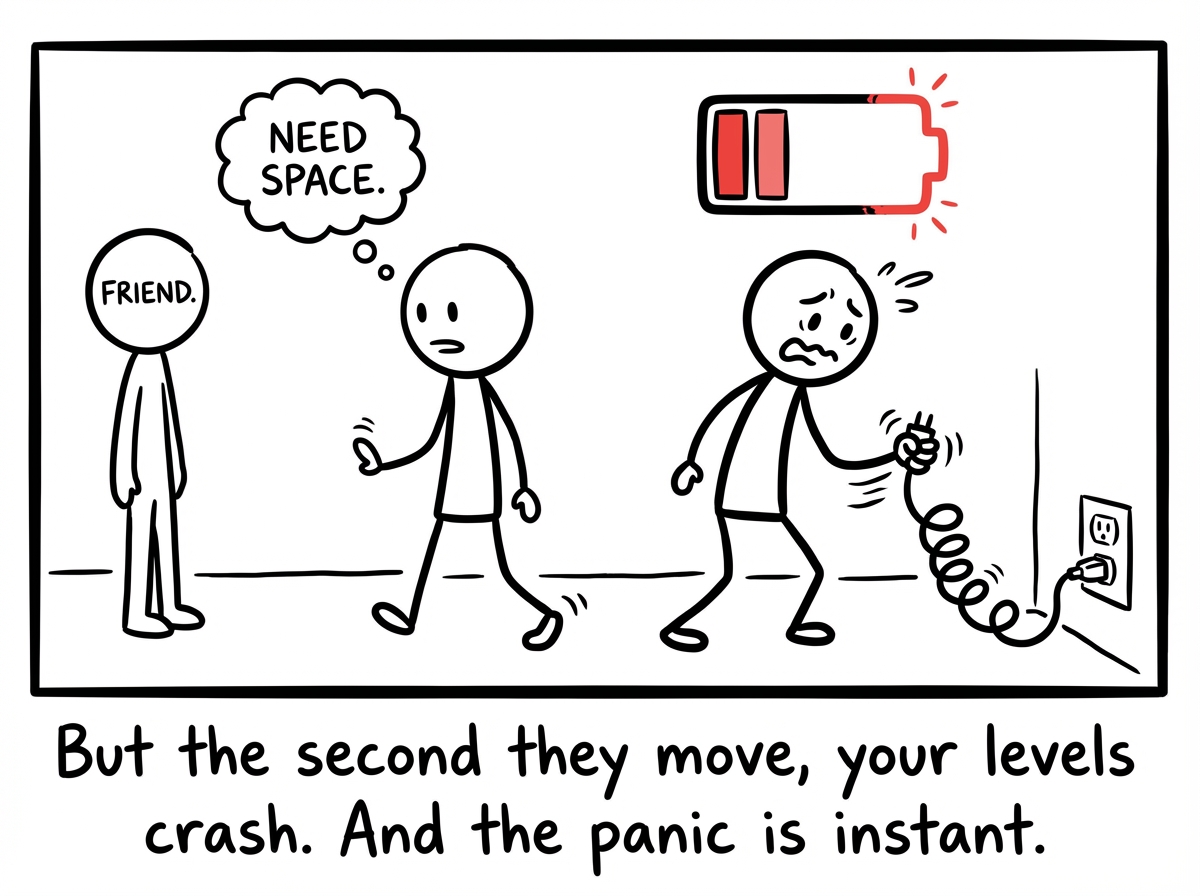
A person plugging another person into an outlet in their chest like a charger, desperate to reach 100% -- but the charge never holds.
Explanation
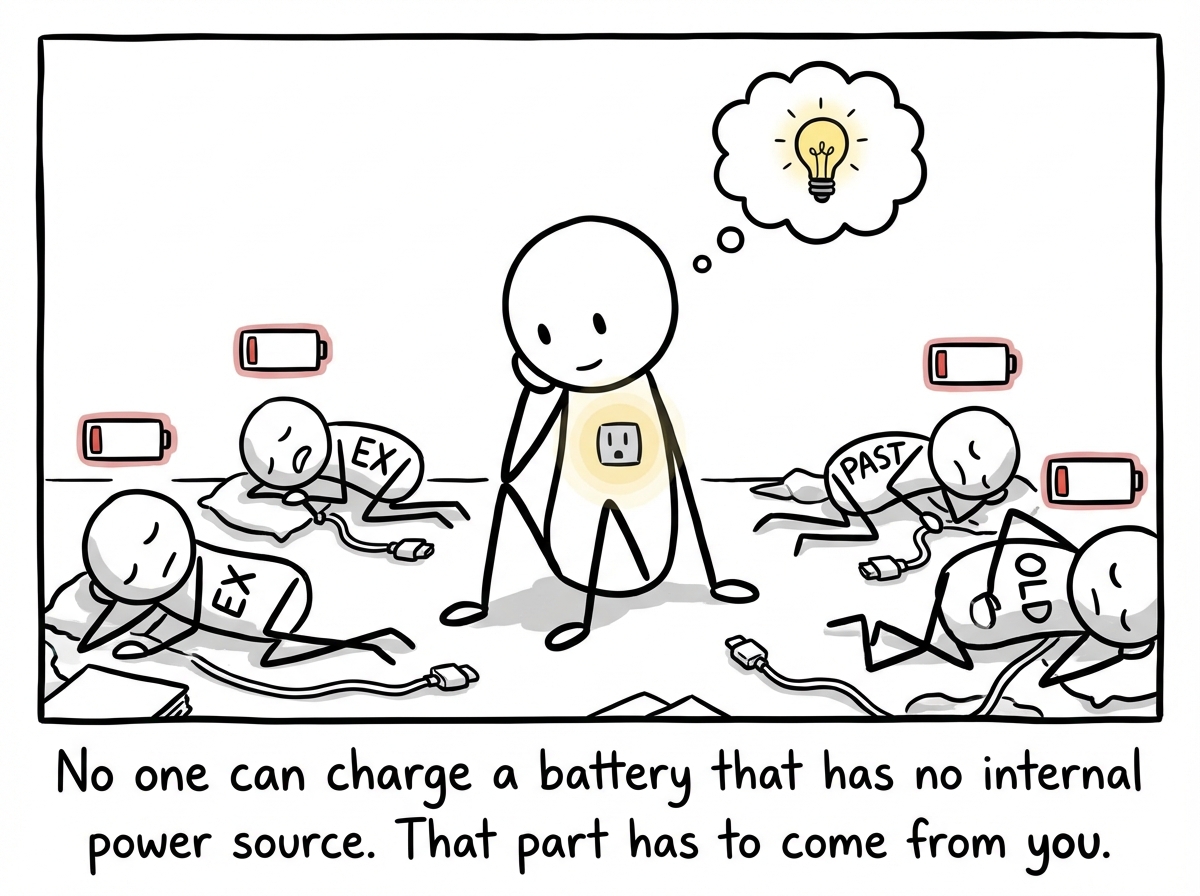
You know the feeling. You meet someone new and suddenly the world has color again. The anxiety quiets. The loneliness lifts. You feel whole, alive, worth something. You think: this is what I have been missing. This person is the answer. So you plug them into the empty socket in your chest and watch your battery climb. 60%. 80%. Almost there. But the charge never quite reaches 100%. And the moment they pull away -- even slightly, even just to live their own life -- your levels plummet and the panic sets in. So you cling harder, text more, need more, and the cycle accelerates. Relationship addiction, or love addiction, is rooted in what psychologist Pia Mellody calls 'carried shame' -- the deep-seated belief that you are fundamentally insufficient on your own. When this belief takes hold, another person's love becomes the only evidence that you are okay. Without it, you crash. Attachment theory helps explain the mechanism: if your early caregivers were inconsistent or emotionally unavailable, your nervous system may have learned to regulate itself through external connection rather than internal resources. You did not choose this pattern. It was installed before you had words for it. The hardest truth about relationship addiction is that the thing you are seeking -- unconditional acceptance, a stable sense of self-worth, the feeling of being enough -- cannot come from another person. Not sustainably. Other people can add to a life that already has a foundation, but they cannot be the foundation. Recovery means building an internal source of worth that does not depend on someone else's presence, attention, or approval. It means learning to be alone without being empty.
Key Takeaway
If you cannot feel whole without a relationship, the relationship is not love -- it is life support.
A stick figure looking at the empty socket in their chest, choosing not to plug another person in, sitting with the low battery instead
The stick figure starting to build a small internal generator -- therapy, journaling, self-knowledge, learning to enjoy their own company
The stick figure doing things alone and finding quiet enjoyment -- cooking, walking, reading -- battery slowly ticking up from the inside
The stick figure standing beside a partner, both with their own power sources, connected by choice not desperation, the battery stable at last