The Midnight Fridge Therapist
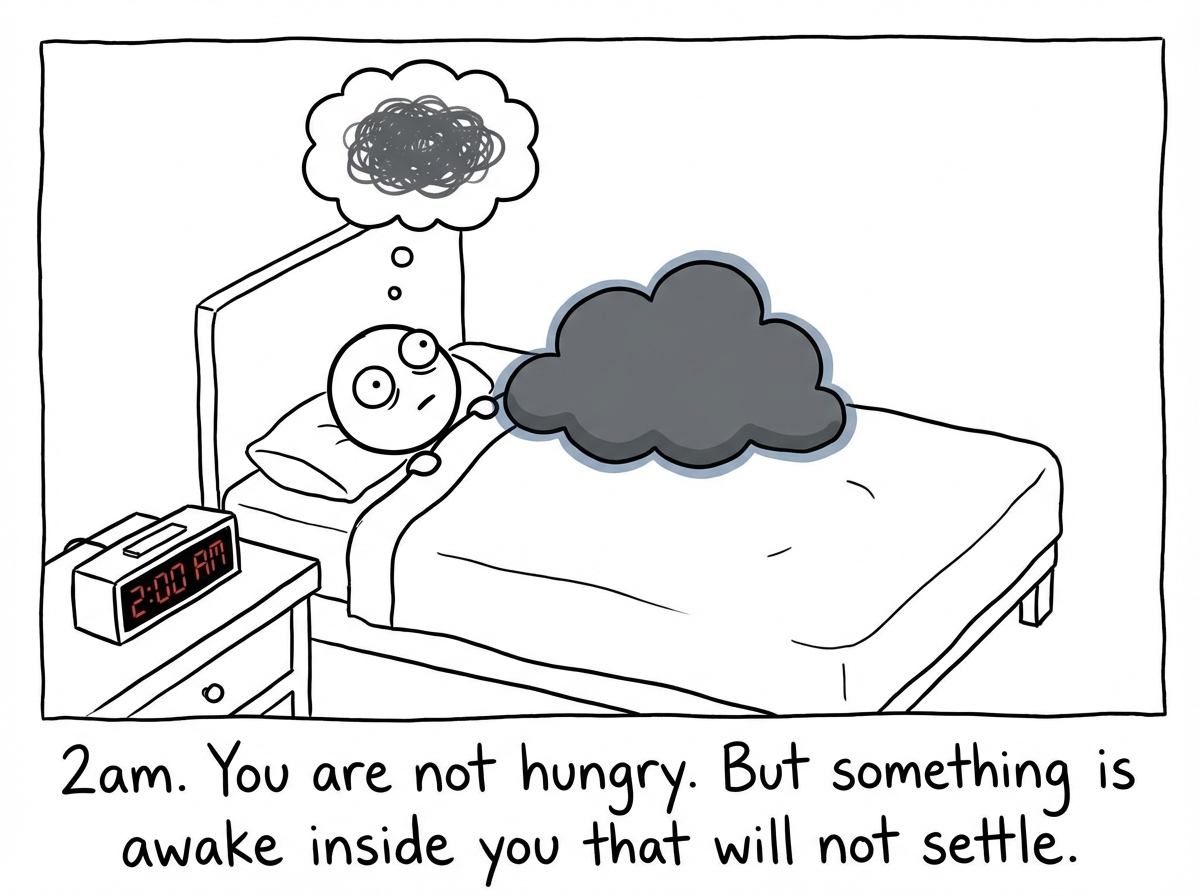
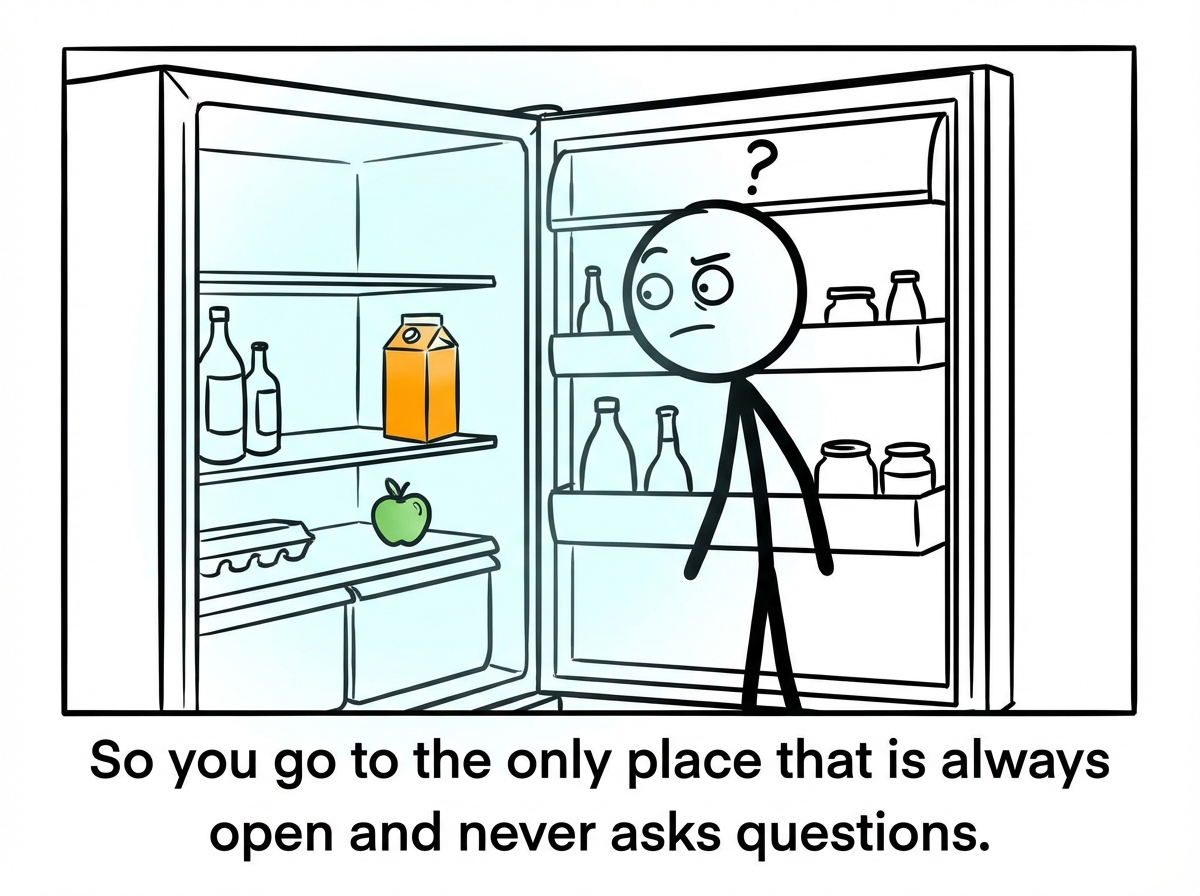
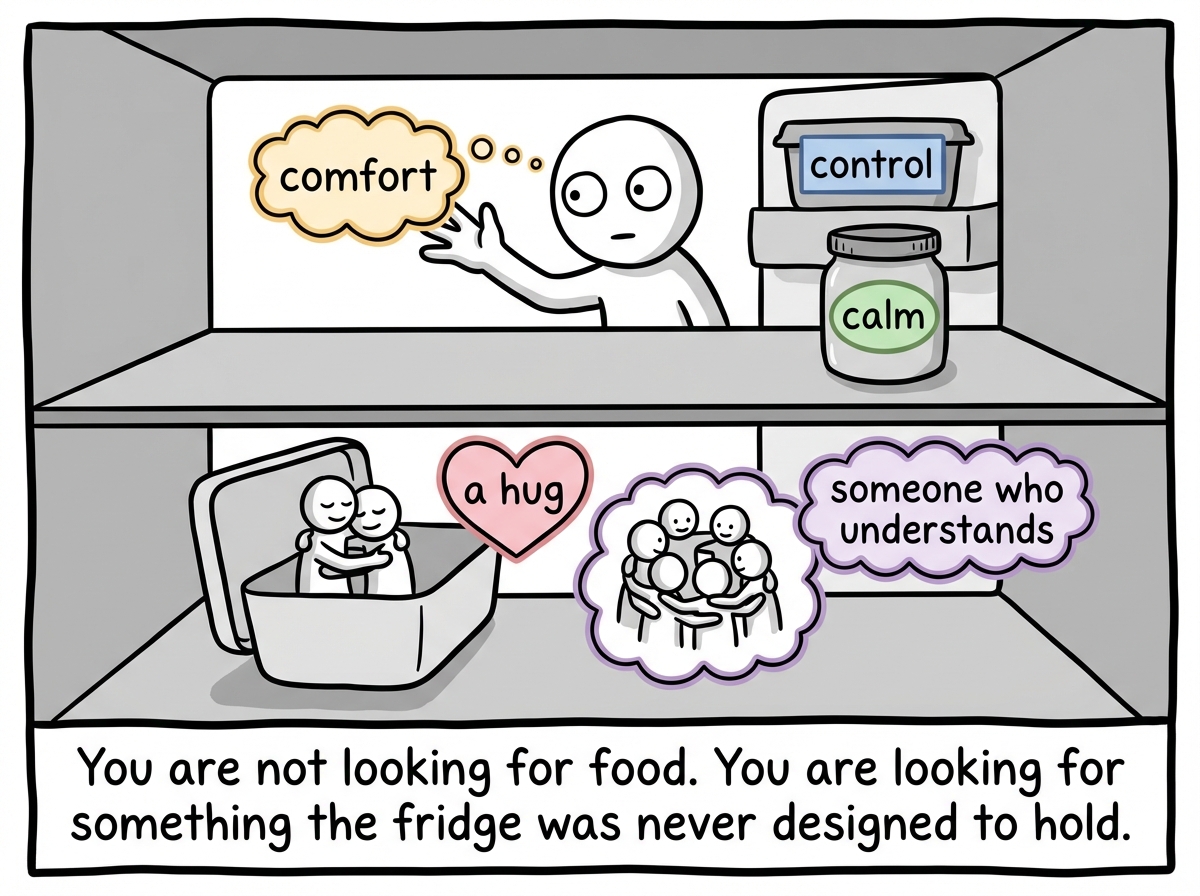
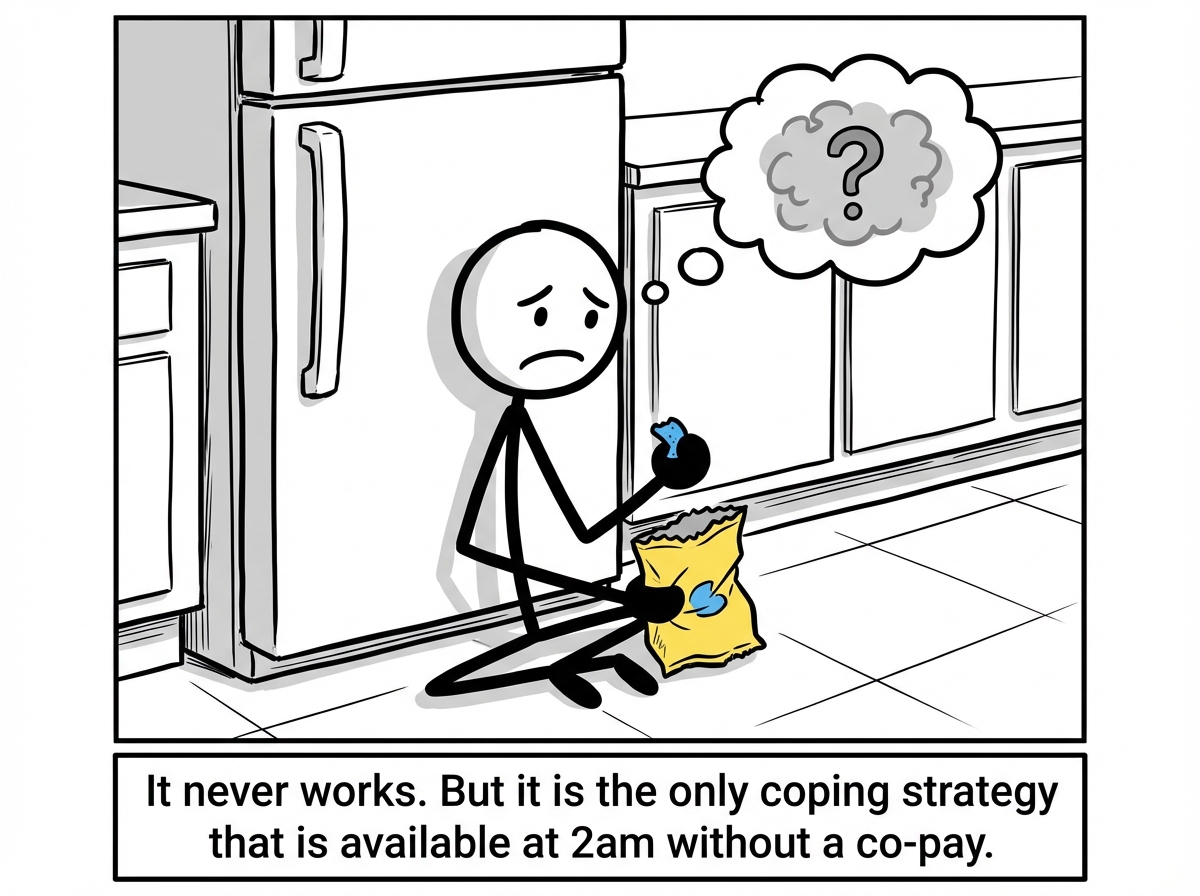
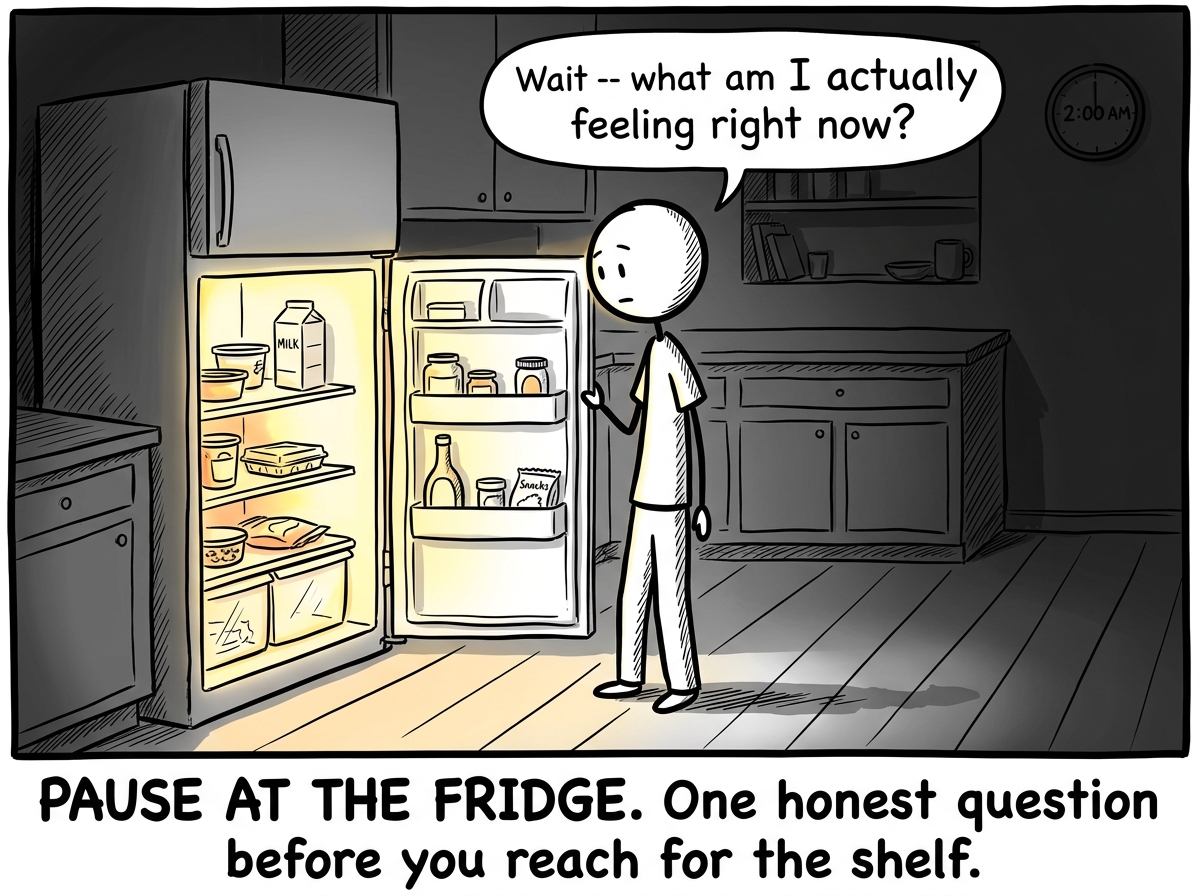
A person standing at an open fridge at 2am, not hungry but looking for something the fridge cannot provide -- comfort, control, or calm.
Explanation
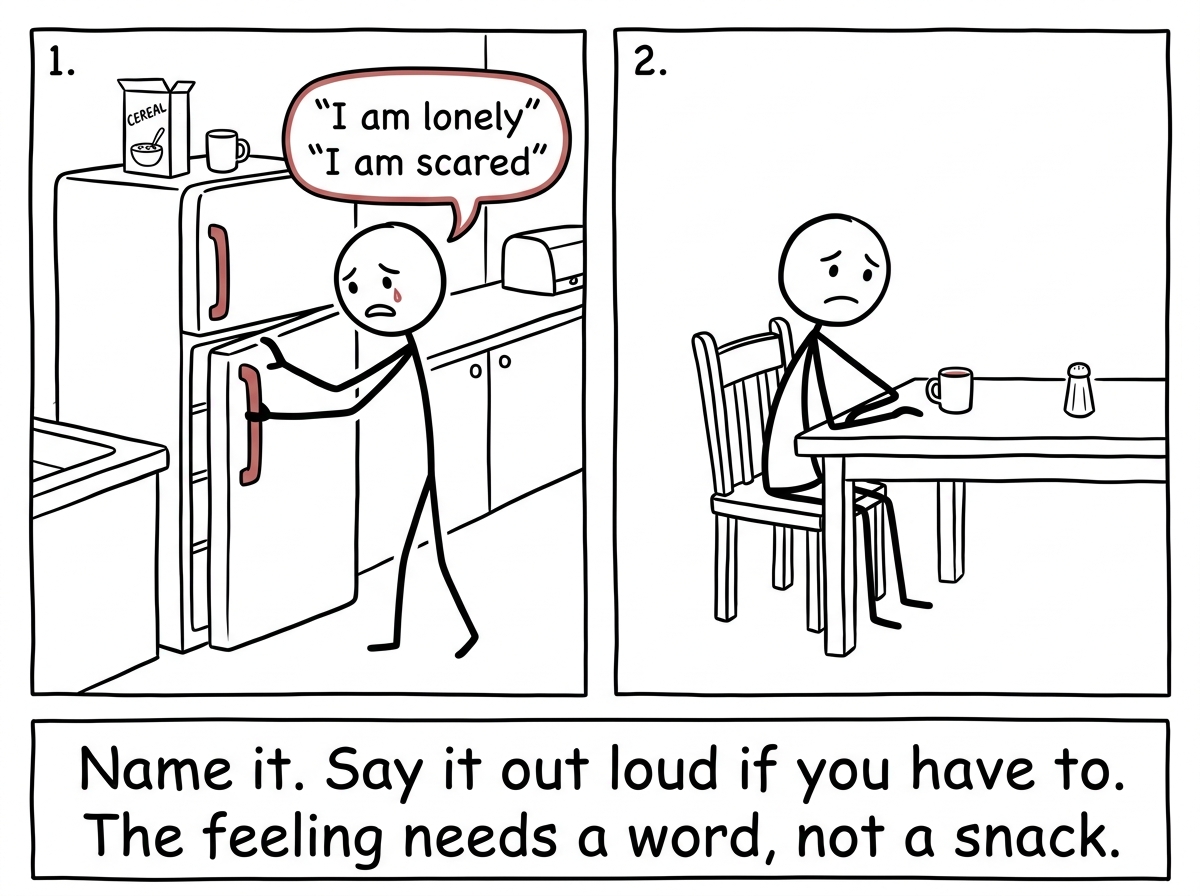
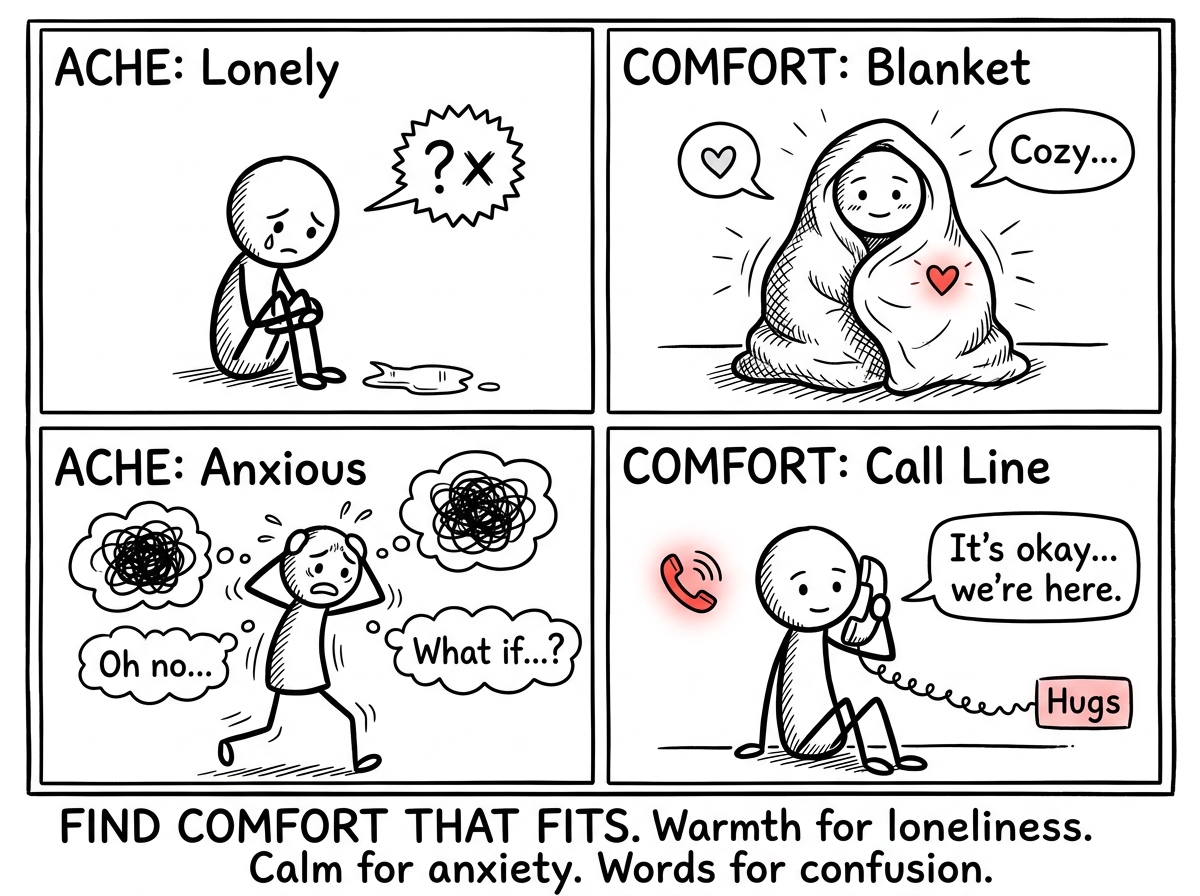
It is 2am. You are not hungry -- you ate dinner, maybe even a snack before bed. But something woke you up. Not a sound. A feeling. Something restless and unnamed sitting in your chest. And before you even fully register what is happening, you are standing in the glow of the open fridge, scanning the shelves like they might contain the answer. You are not looking for food. You are looking for something the fridge cannot stock: comfort, calm, a sense of control, a moment of pleasure in the middle of something that feels unmanageable. Emotional eating operates through a well-documented psychological mechanism. When you eat -- especially foods high in sugar, fat, or salt -- your brain releases dopamine and endorphins, creating a brief but real neurochemical shift in how you feel. For someone who struggles with distress tolerance or emotional regulation, this becomes a reliable shortcut: feel bad, eat, feel slightly better. Over time, the behavior becomes automatic, bypassing conscious decision-making entirely. Psychologist Susan Albers, who specializes in mindful eating, describes emotional eating as a 'body-level attempt to solve a mind-level problem.' The food is not the issue. The food is the messenger, pointing to an emotional need that has no other outlet. The path forward is not about restricting food or building willpower -- both of which tend to increase shame and reinforce the cycle. It is about building emotional vocabulary and distress tolerance. When you can name what you are feeling and sit with it for even thirty seconds before reaching for the fridge, you create a gap. And in that gap, you can make a choice instead of just reacting. The fridge does not need to be your therapist. But you might need one.
Key Takeaway
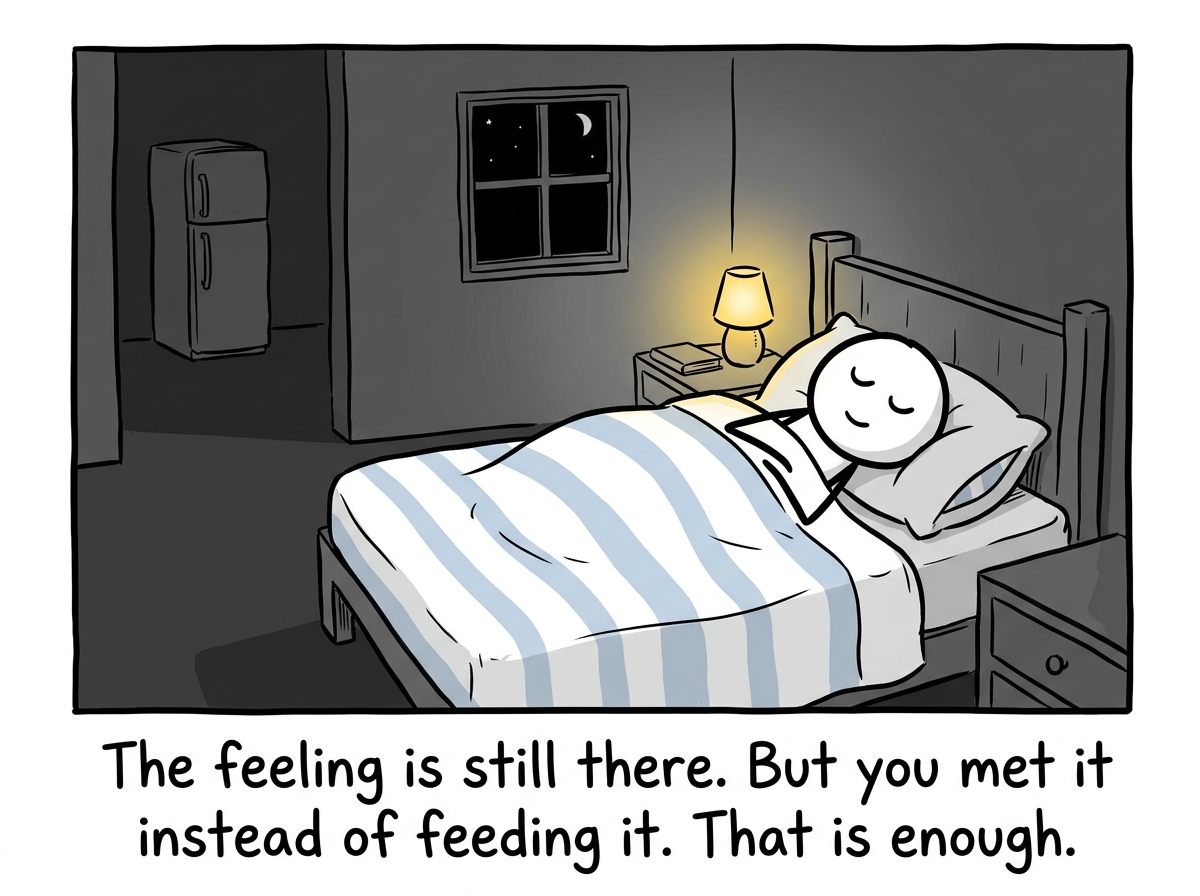
You are not hungry at 2am -- you are feeling something you do not have words for yet.