The Hamster Wheel of Numbing
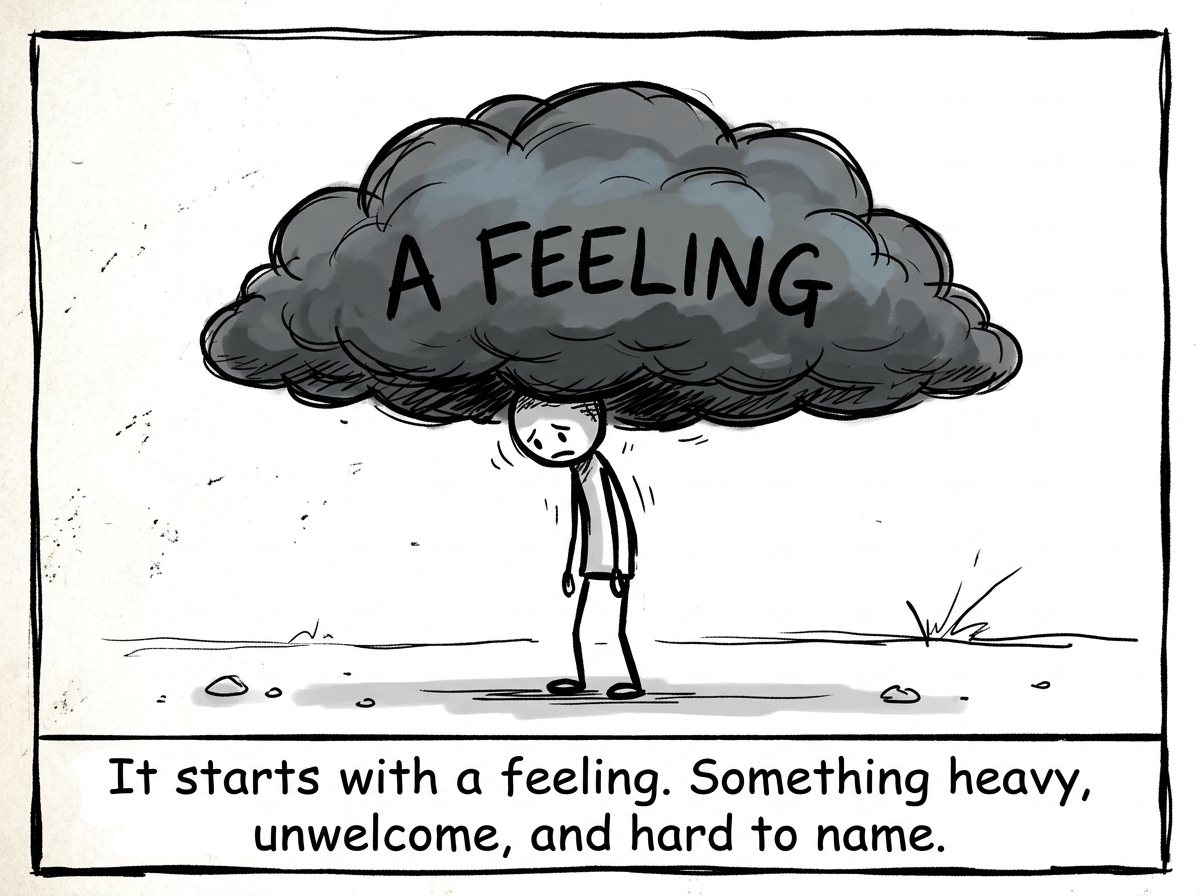
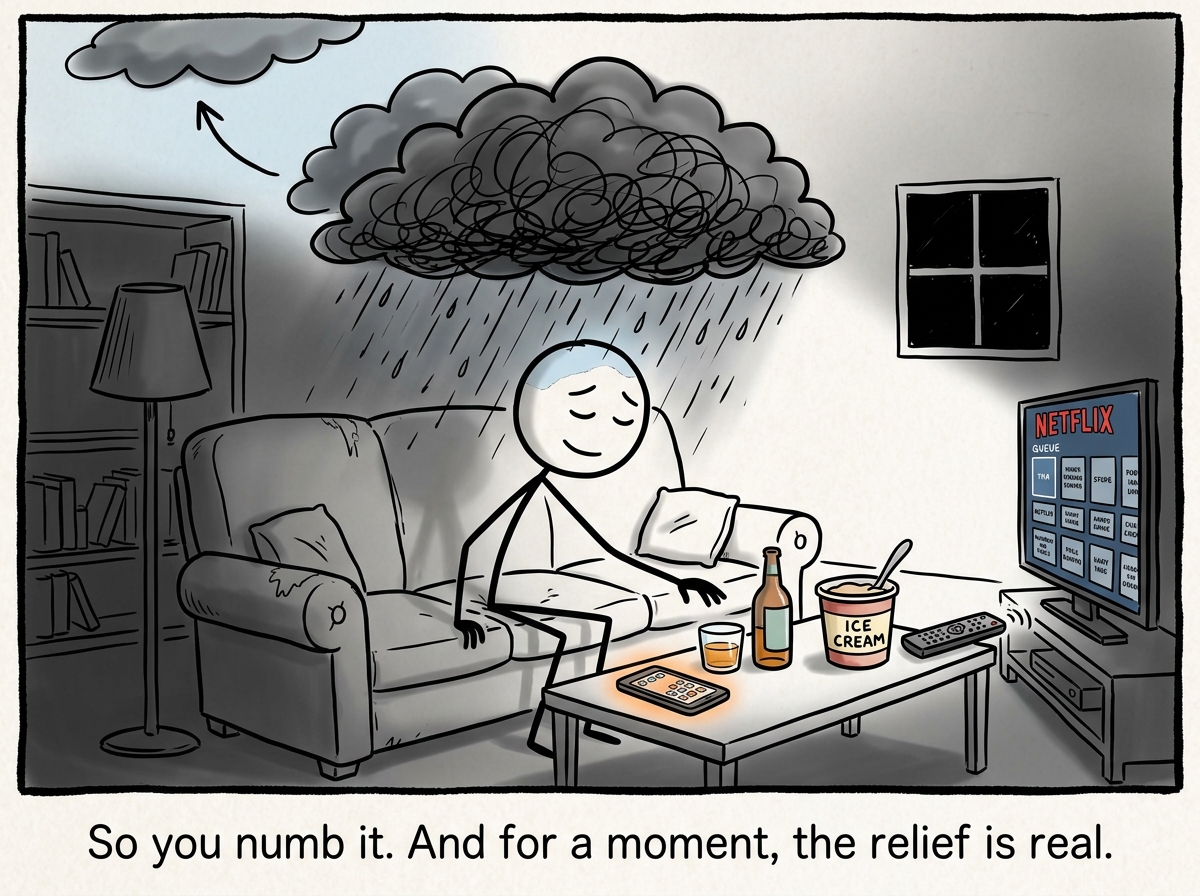
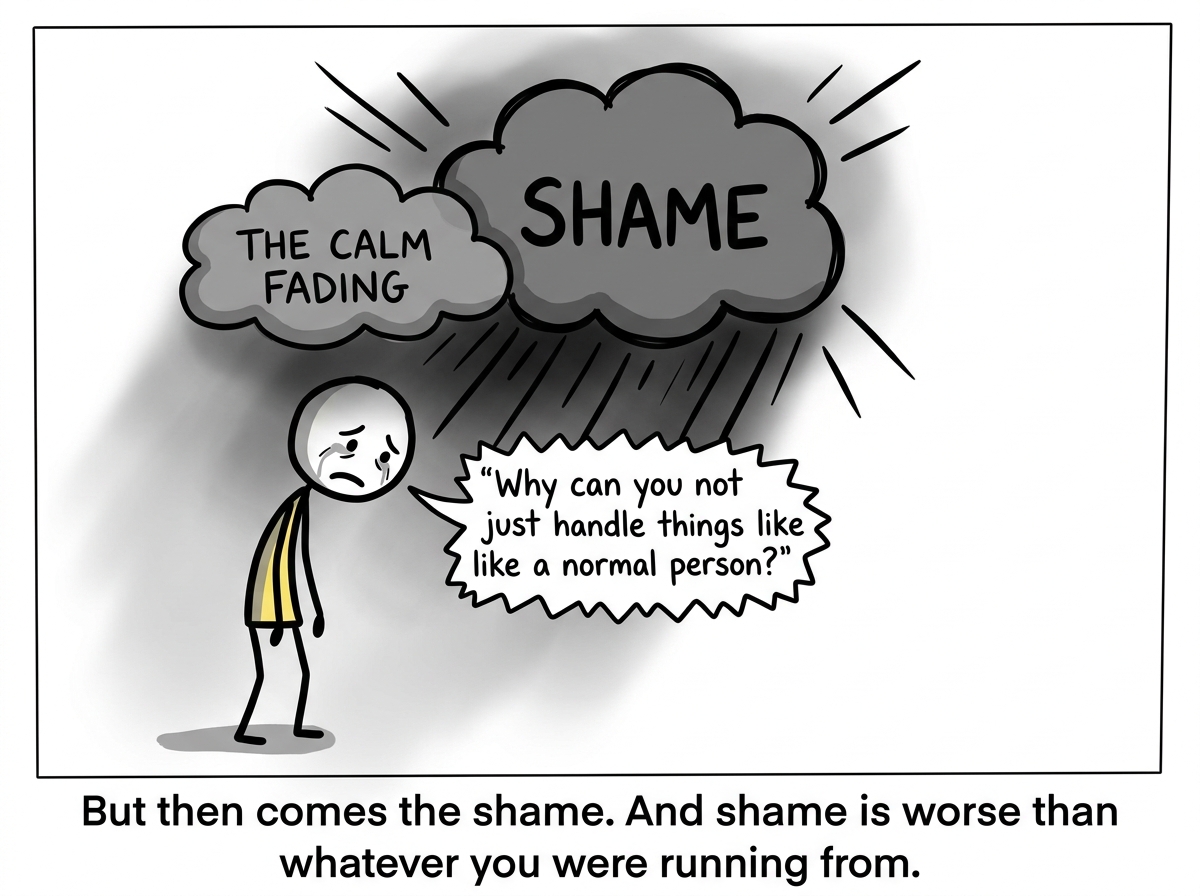
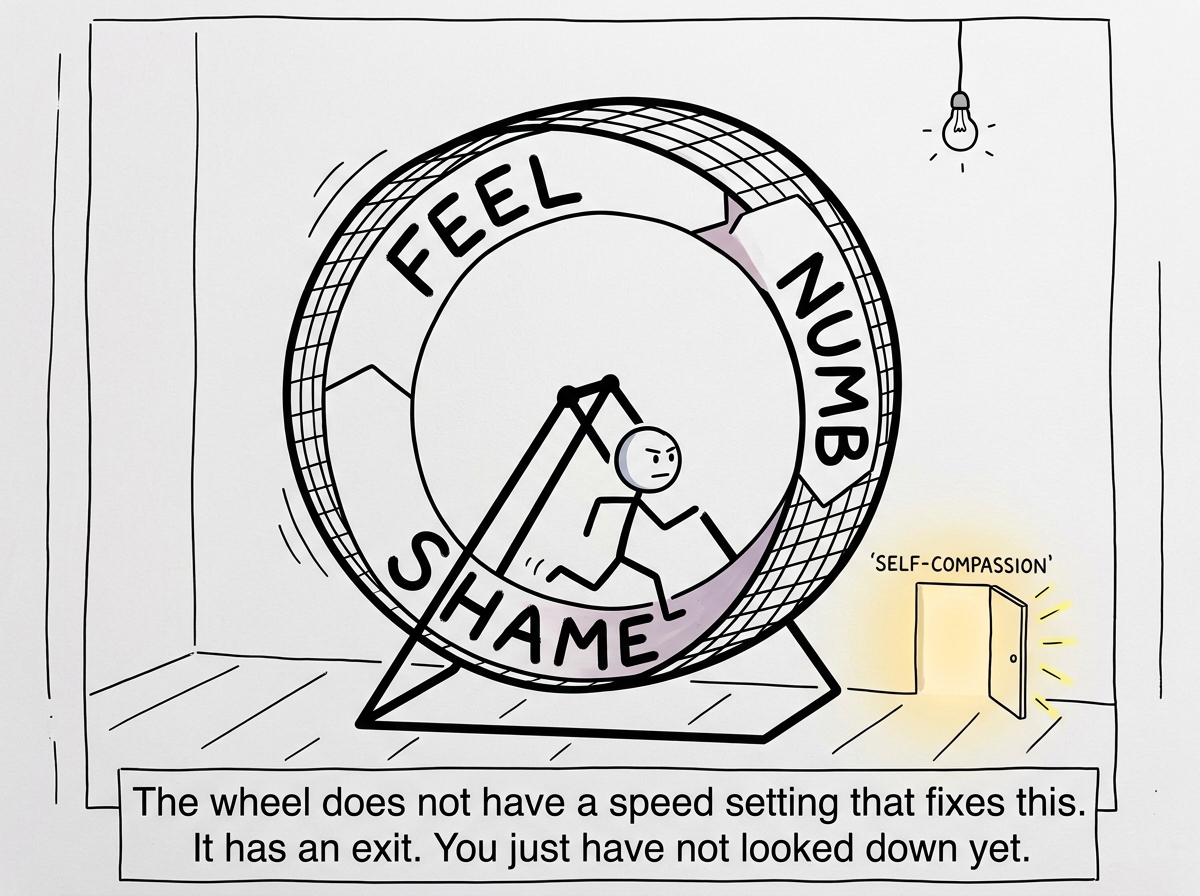
A person running on a hamster wheel with three stations: FEEL, NUMB, SHAME, repeat -- unable to find the exit.
Explanation
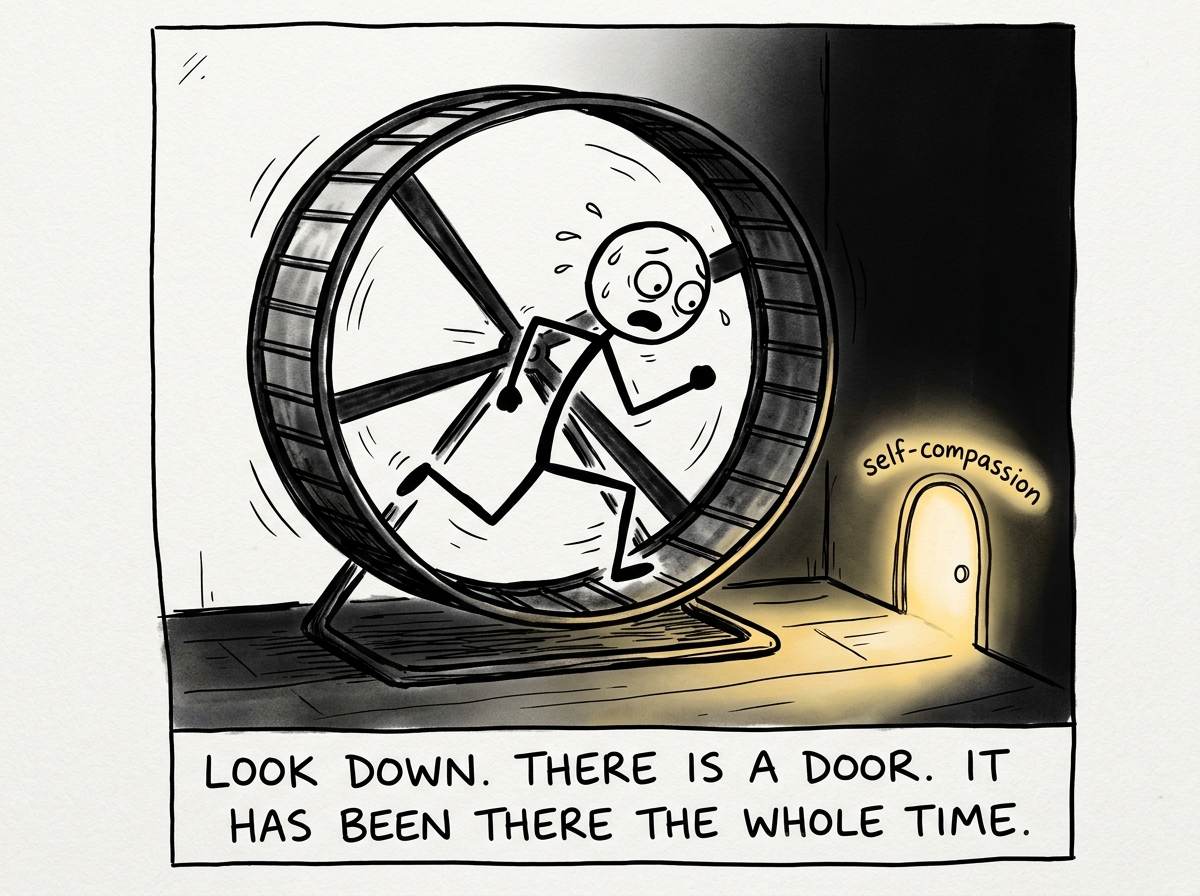
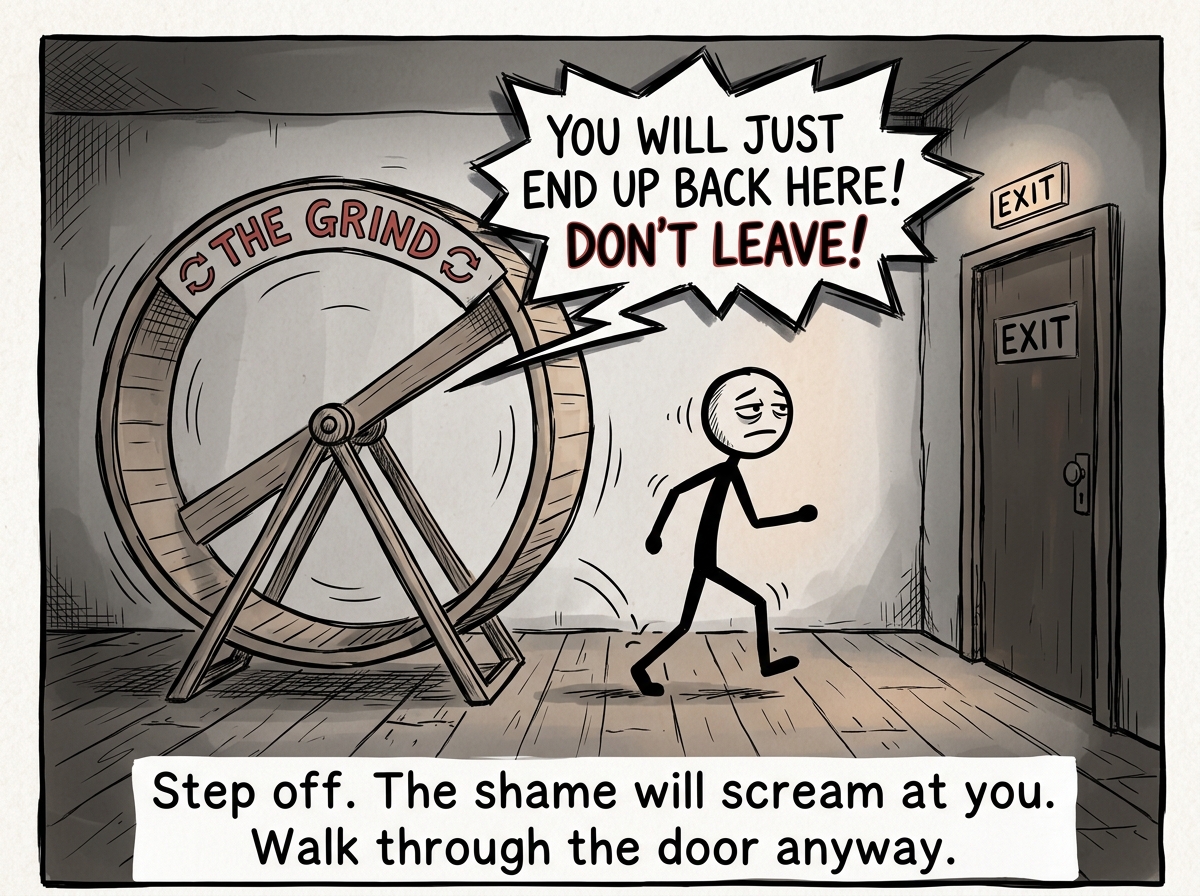
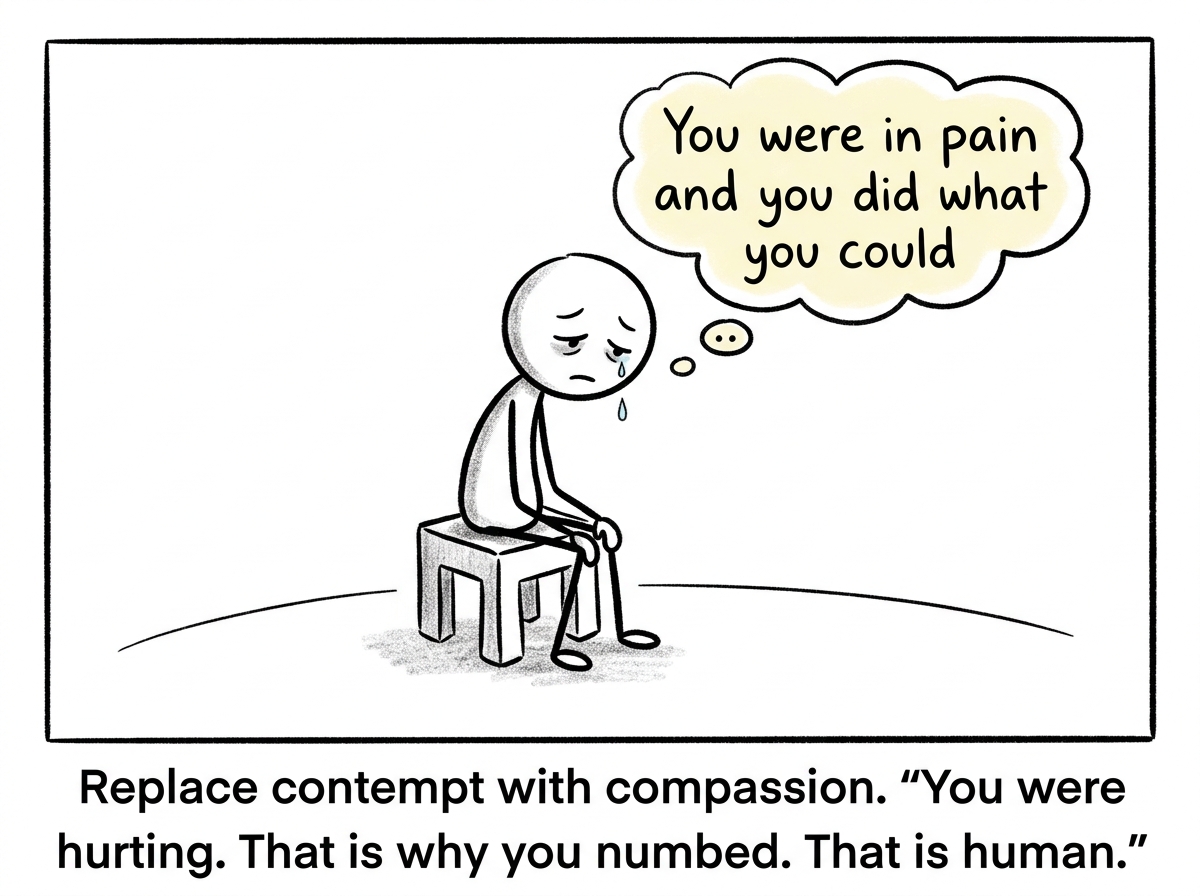
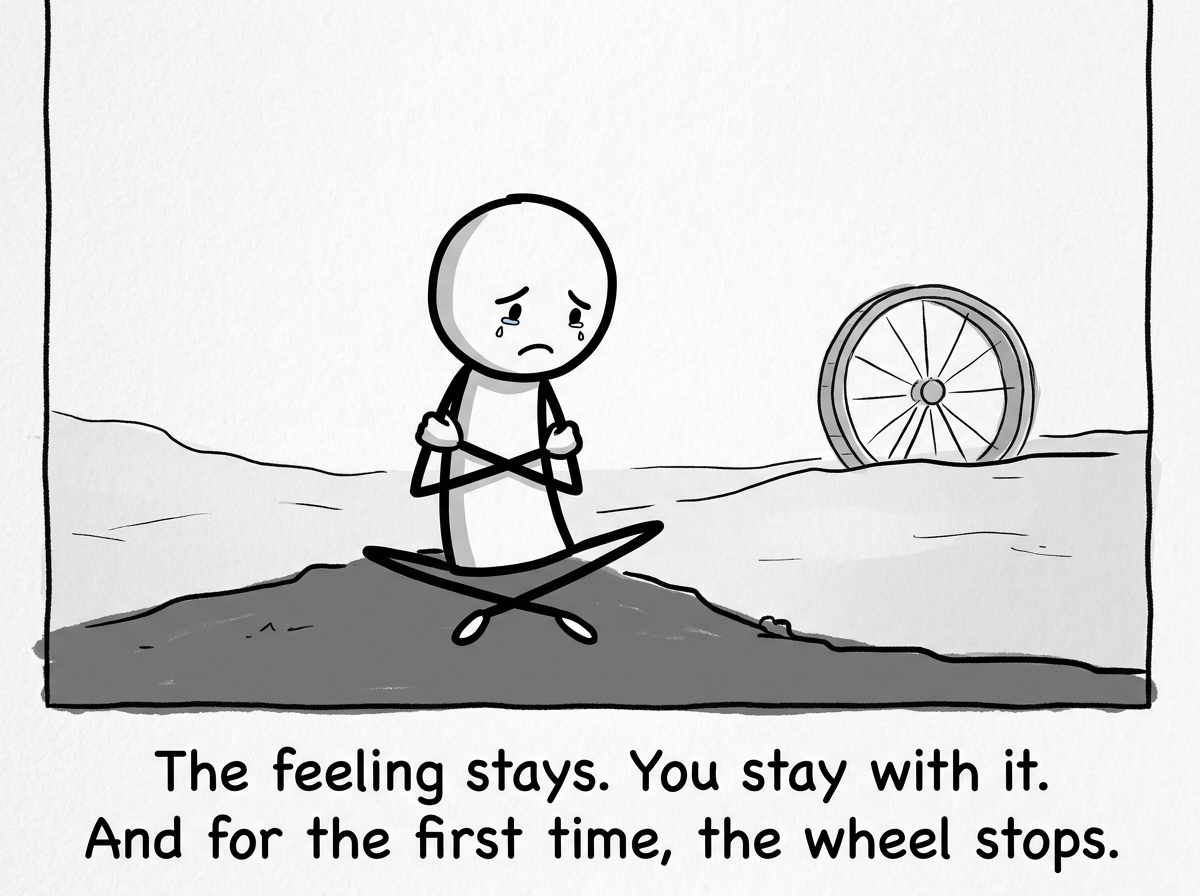
You know this loop. Something hurts -- a bad day, a difficult memory, a feeling that arrives without warning and sits on your chest like a stone. So you do what you always do: you numb it. Maybe with your phone, food, alcohol, shopping, overwork, or binge-watching until 3am. And it works, briefly. The pain recedes. But then a new feeling shows up, right on schedule: shame. Shame for numbing. Shame for not being able to just deal with it like a normal person. And because shame is one of the worst feelings a human can experience, you do the only thing you know -- you numb the shame. And you are right back where you started, running on a wheel that has no exit sign. The numbing-shame cycle is maintained by what psychologists call a 'self-reinforcing feedback loop.' Brené Brown's research on shame identified it as a fundamentally isolating emotion -- one that convinces you that your struggle is uniquely broken and that admitting it would confirm your worst fears about yourself. This makes the cycle incredibly difficult to break through willpower alone, because the tool you need most -- connection, vulnerability, asking for help -- is the very thing shame tells you that you do not deserve. The cycle is not a character flaw. It is a system operating exactly as designed, and it requires a system-level intervention to interrupt. The exit from the wheel is not discipline. It is not trying harder or shaming yourself into change. The exit is self-compassion -- the radical act of treating your own suffering with the same kindness you would offer a friend. When you respond to the numbing with 'you were in pain and you did what you could' instead of 'you are pathetic,' the shame loses its fuel. And without shame driving you back to numbing, the wheel begins to slow. It will not stop overnight. But it can stop.
Key Takeaway
The exit from the numbing-shame cycle is not willpower -- it is the moment you meet your own pain with compassion instead of contempt.