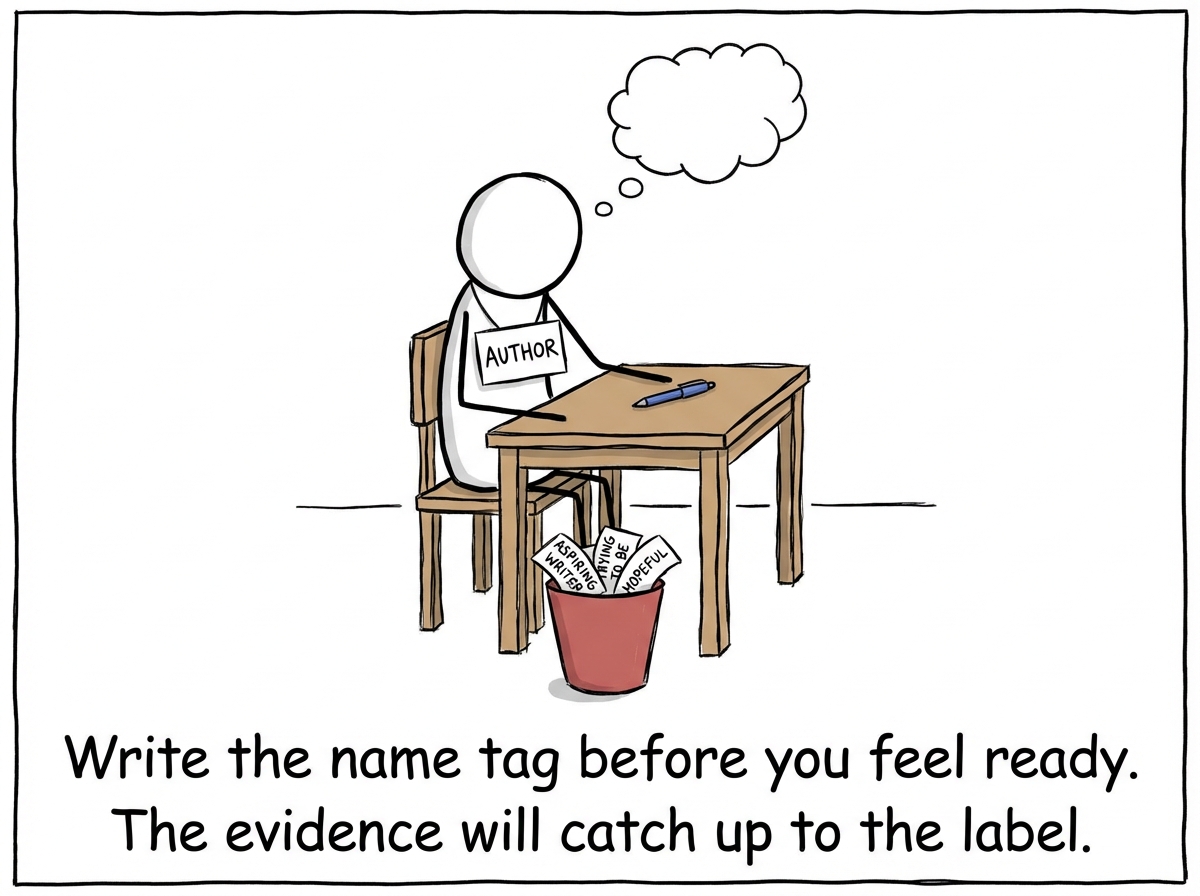
The Name Tag That Changed the Behavior
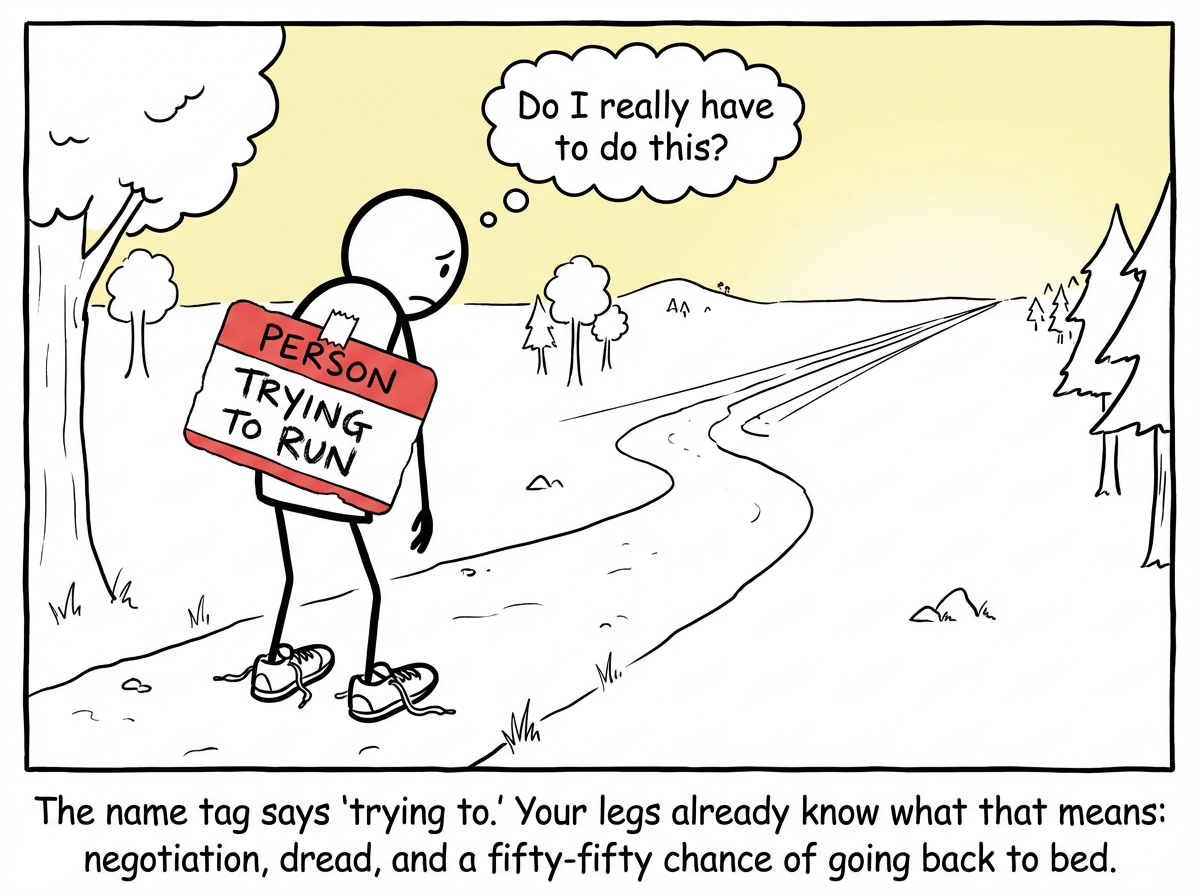
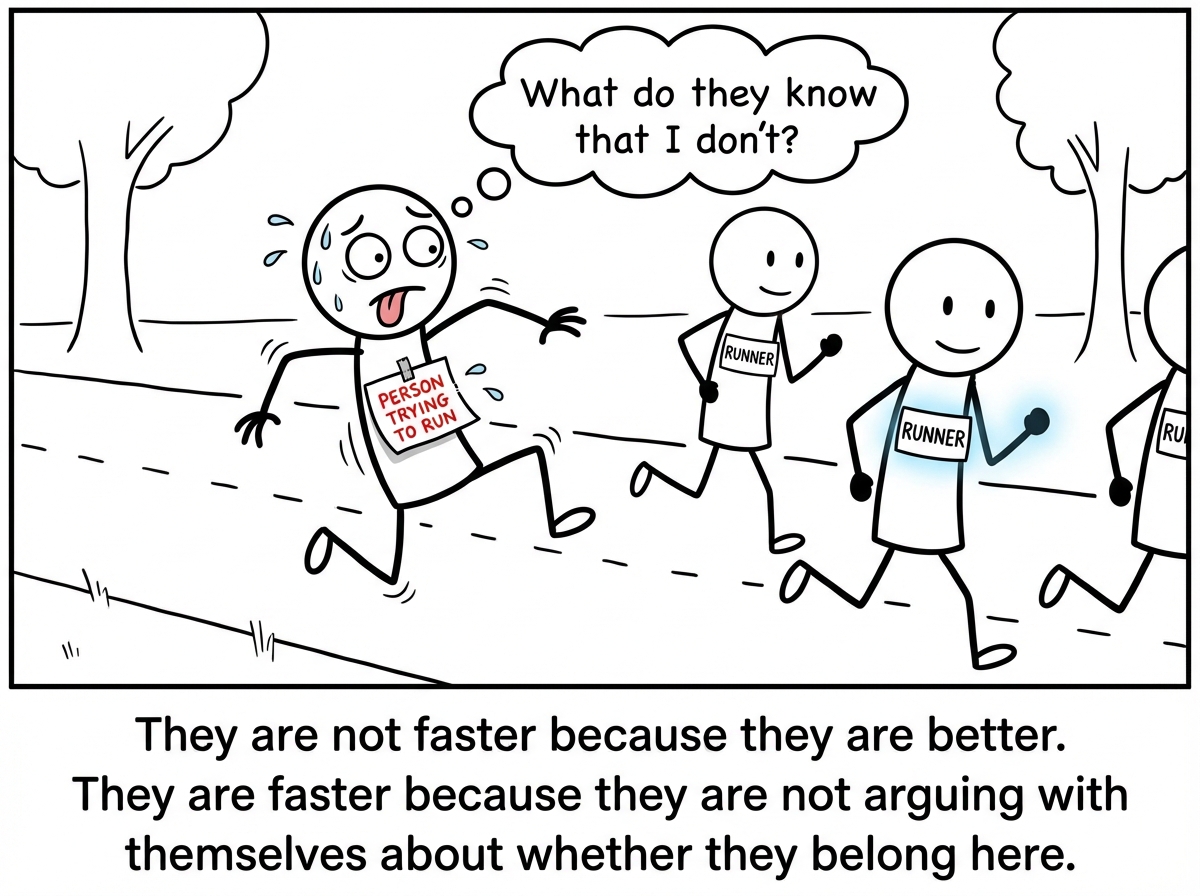
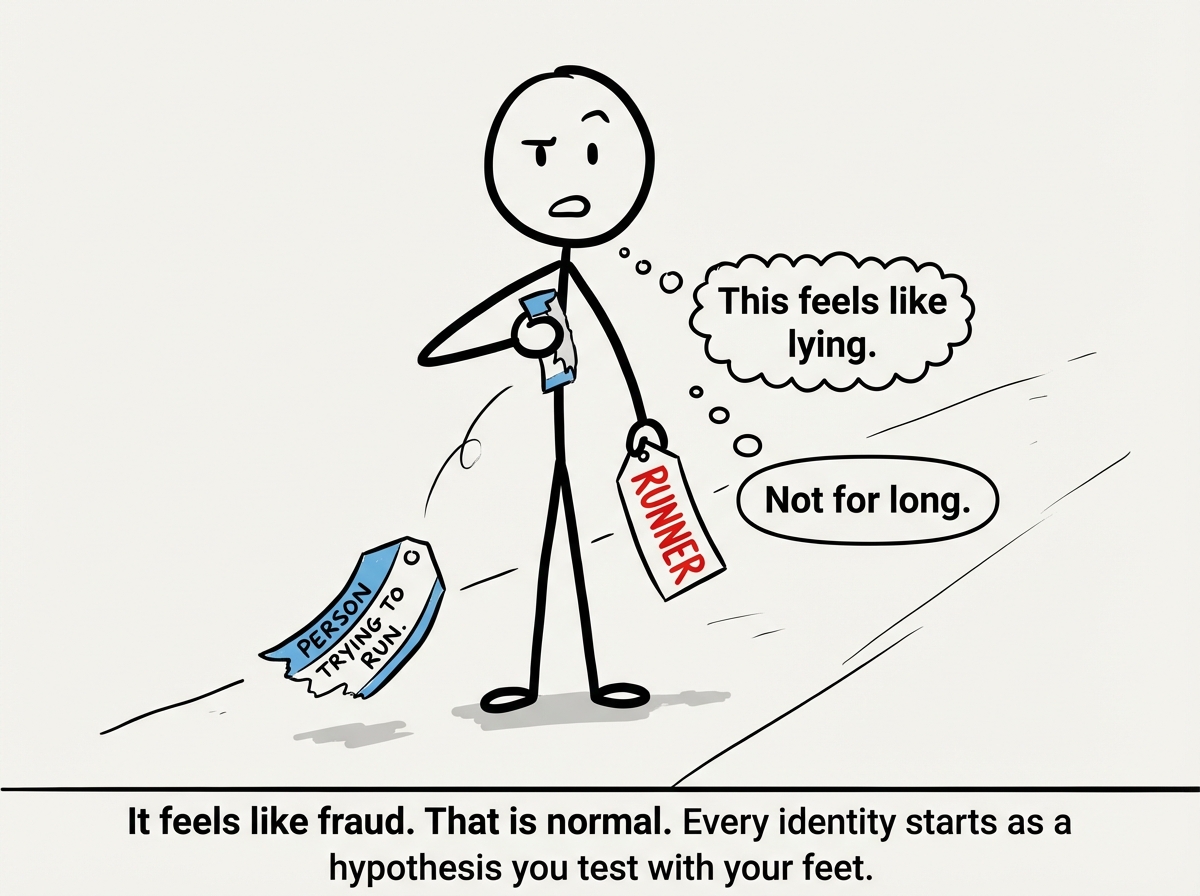
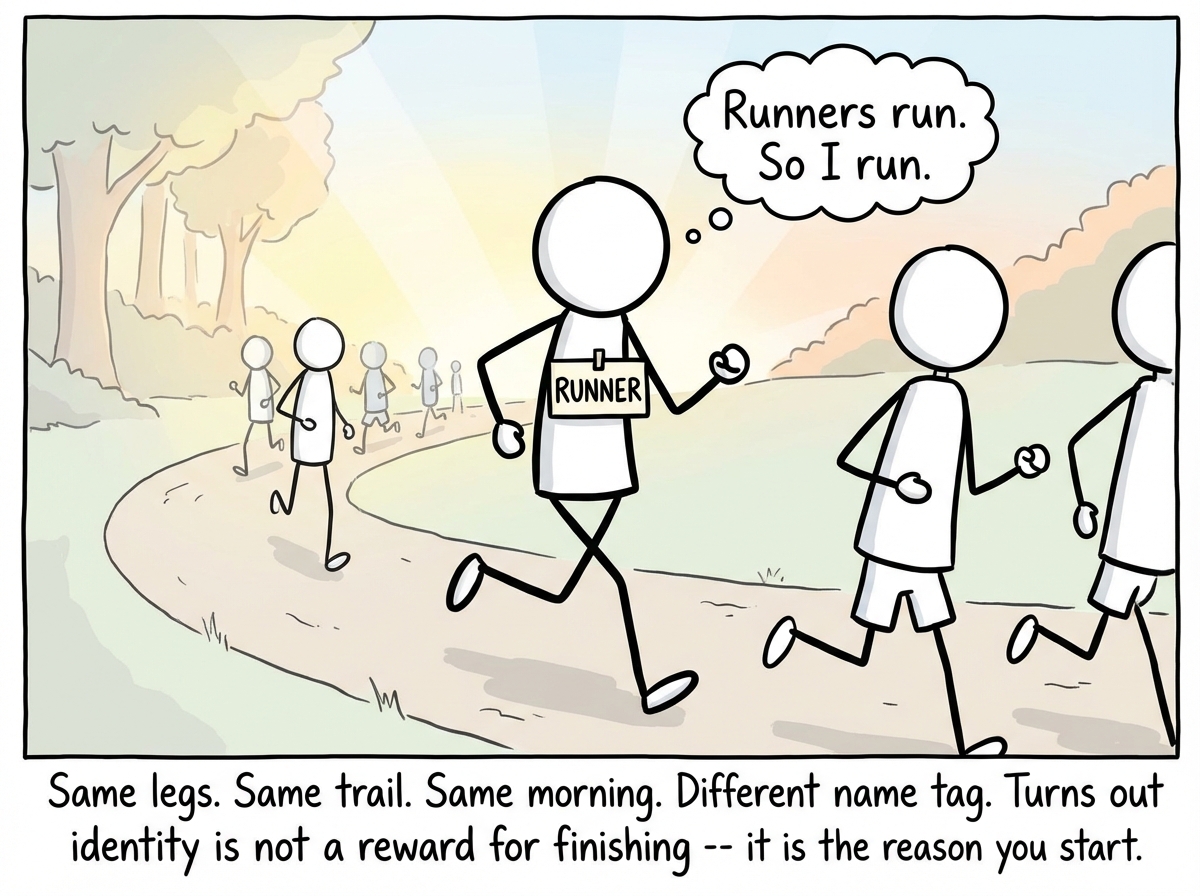
A person swaps their name tag from 'Person Trying to Run' to 'Runner' and finds the morning jog easier -- because behavior follows identity, not the other way around.
Explanation
Identity-based change works because the brain craves consistency between who you believe you are and what you do. Leon Festinger's cognitive dissonance theory explains why: when your actions conflict with your self-concept, the resulting discomfort drives you to resolve the gap -- usually by changing the behavior to match the identity. This is why the name tag swap in this cartoon is not just a semantic trick. When someone adopts the identity 'I am a runner,' skipping a morning run creates internal friction that the brain wants to eliminate. The behavior becomes self-reinforcing because it is identity-congruent. James Clear frames this as 'casting votes' for the person you want to become -- each small action is a ballot, and eventually the evidence is overwhelming enough that the identity shifts. The crucial insight is that you do not need to wait until you have earned the identity. You adopt it first, act from it, and let the evidence accumulate. The name tag comes before the marathon, not after.
Key Takeaway
You do not earn the identity by doing the behavior -- you claim the identity and the behavior follows.