
The Silent Scorekeeper
A person mentally tallies everything they do for others while never speaking up about their needs, building an invisible ledger of resentment that eventually explodes.
Explanation
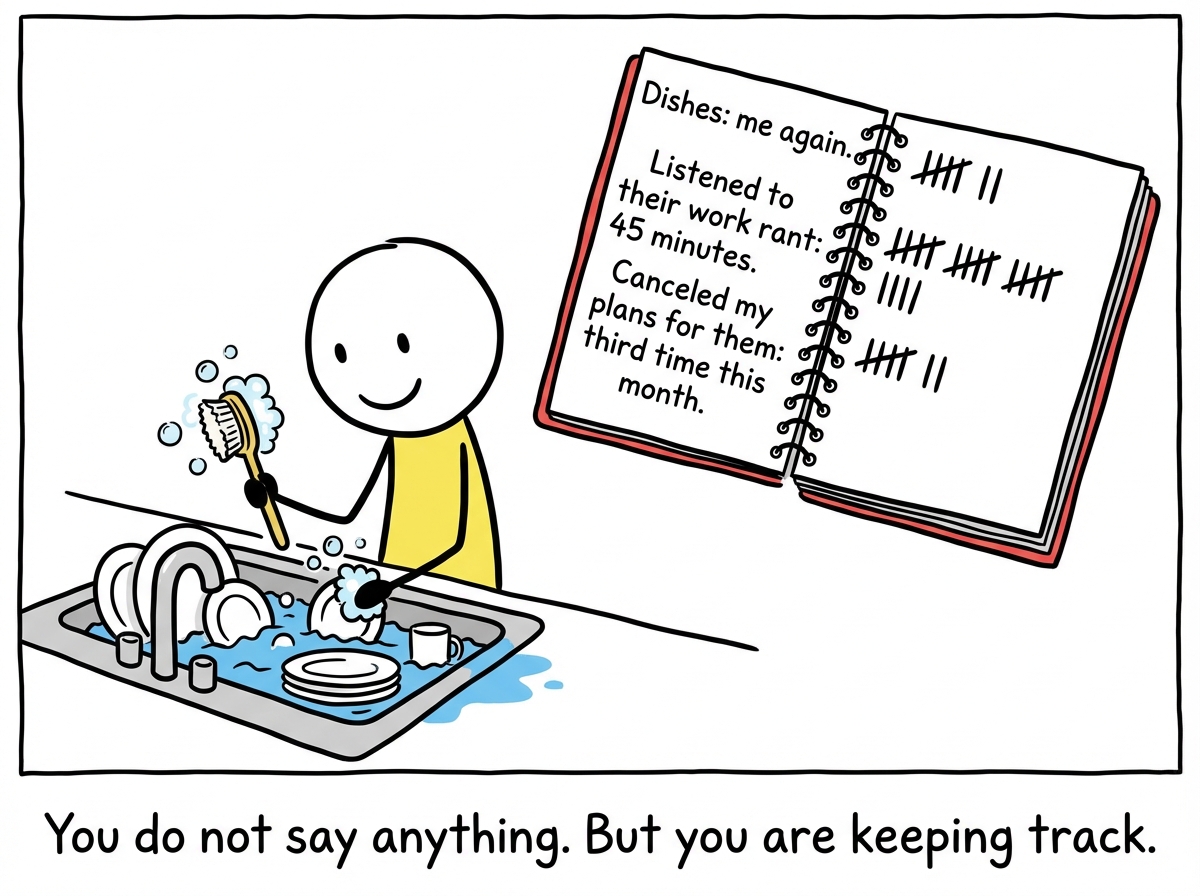
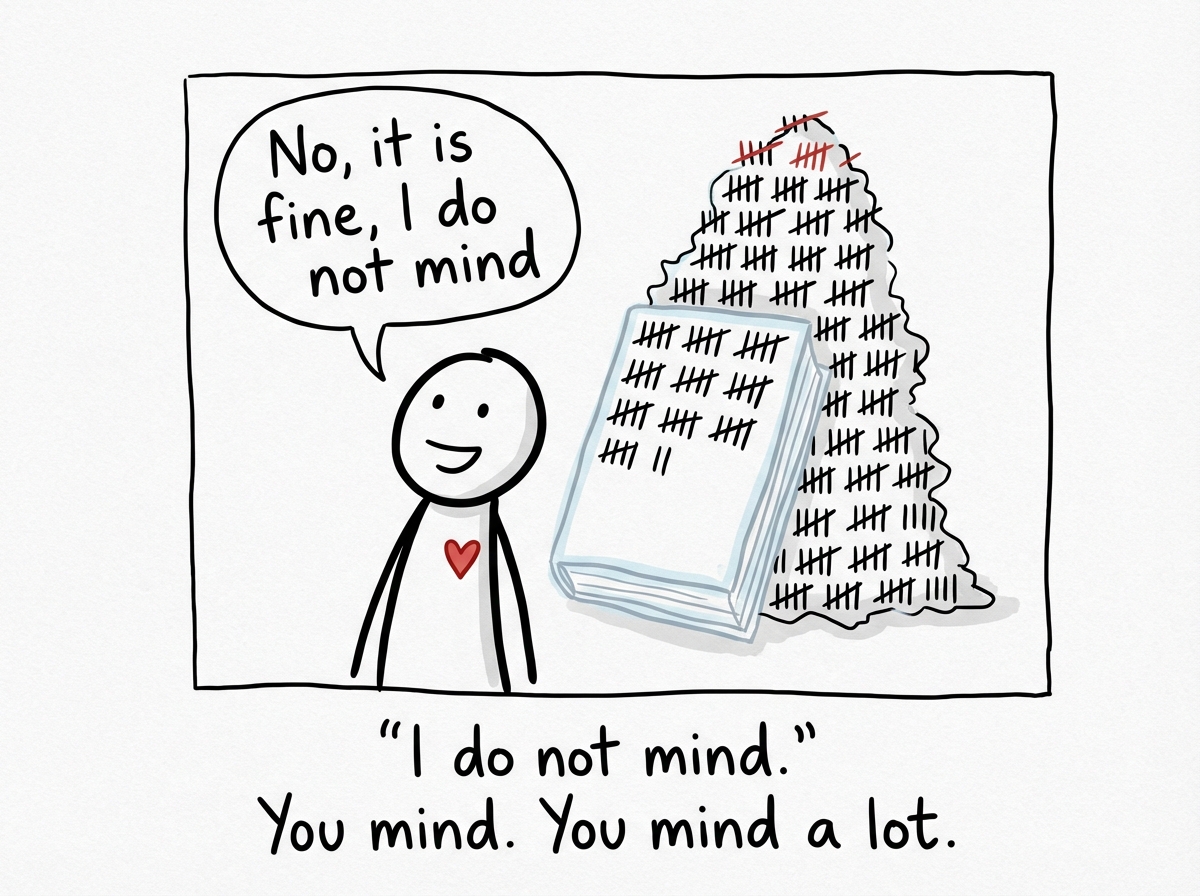
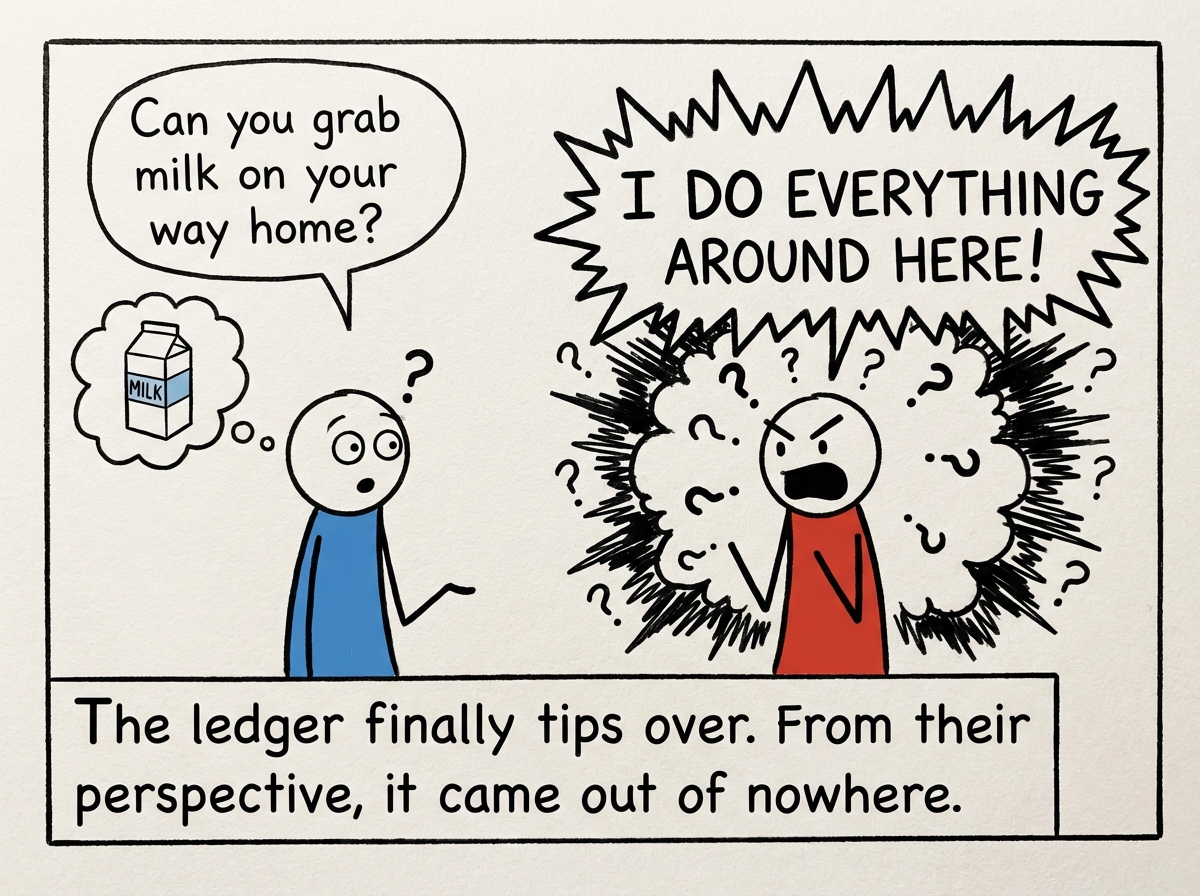
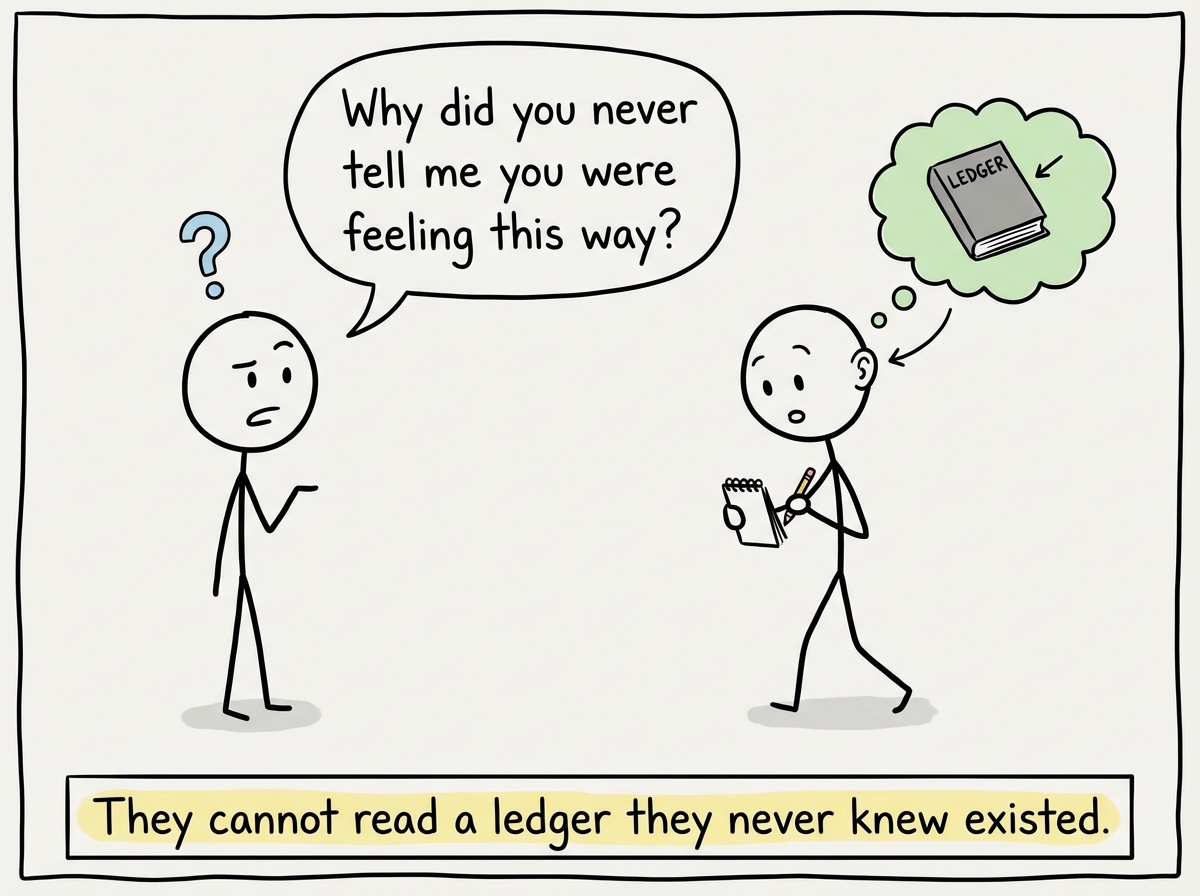
You did the dishes again. You listened to their problems again. You adjusted your schedule again. You did not say anything about it, because you should not have to. They should notice. They should reciprocate. They should just know. But they do not. And each unacknowledged sacrifice adds another line to the invisible ledger you are keeping in your head -- a ledger the other person does not know exists. This is the silent scorekeeper: the person who gives and gives while privately keeping track of every imbalance, every unreciprocated effort, every time they showed up and the other person did not. The scorekeeper never asks for what they need directly. Instead, they give with an unspoken expectation of return, and when the return does not come, they add it to the tally. Over weeks and months, the ledger grows into a mountain of resentment that the other person cannot see and therefore cannot address. Resentment is what happens when you have a need you will not voice, a boundary you will not set, or an expectation you will not communicate. It is the tax you pay for being indirect. The scorekeeper believes that asking for what they need would make them selfish, demanding, or high-maintenance. But the alternative -- giving silently and resenting the imbalance -- is far more corrosive. The antidote to scorekeeping is not giving less. It is speaking up before the ledger gets so heavy that no amount of reciprocation could balance it.
Key Takeaway
Resentment is not caused by what others fail to give you -- it is caused by what you fail to ask for.
A stick figure noticing the invisible ledger growing behind them and stopping to think 'If I am keeping score, I need to say something'
The stick figure sitting down with their partner and calmly saying 'I have been feeling like things are unbalanced, and I want to talk about it'
Both figures having a real conversation, redistributing tasks, the invisible ledger dissolving as words replace tallies
The stick figure doing the dishes alongside their partner, the ledger gone, replaced by an easy, spoken rhythm