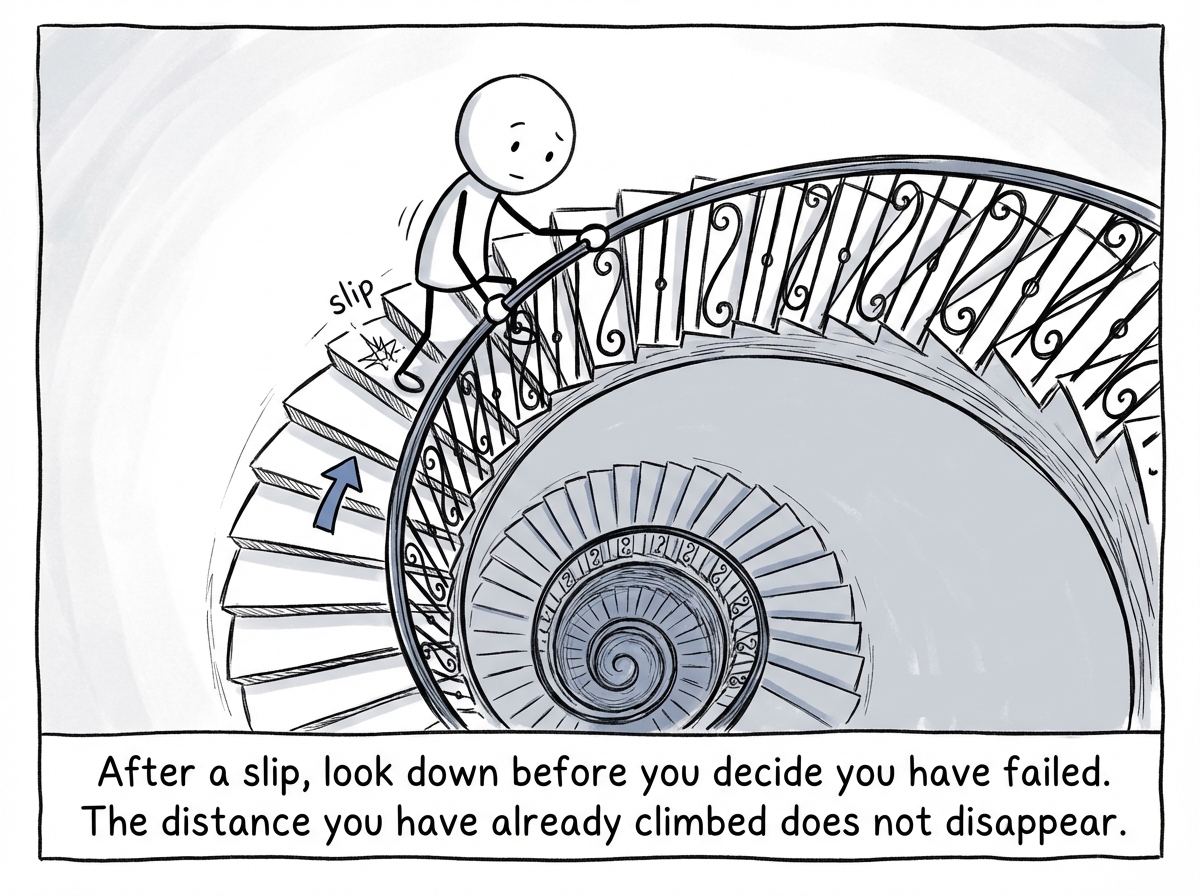
The Spiral Staircase
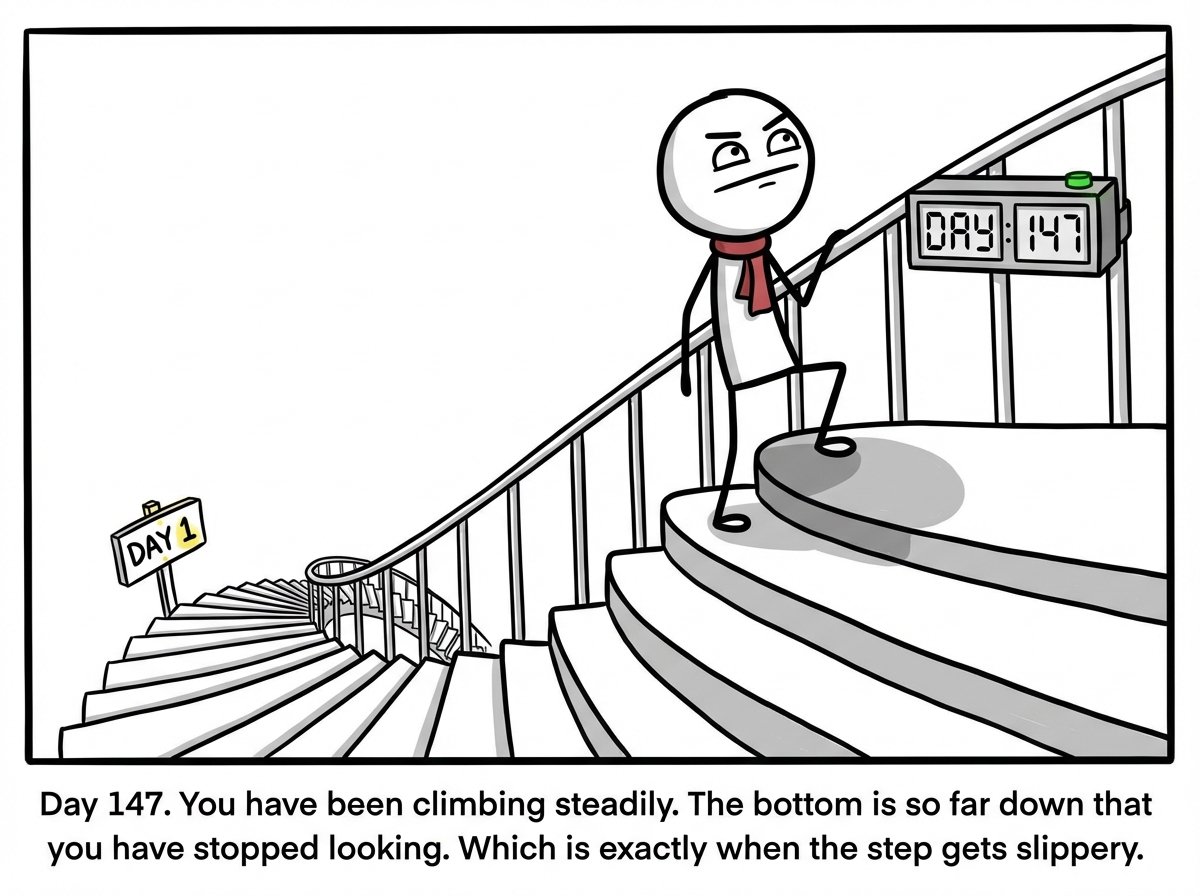
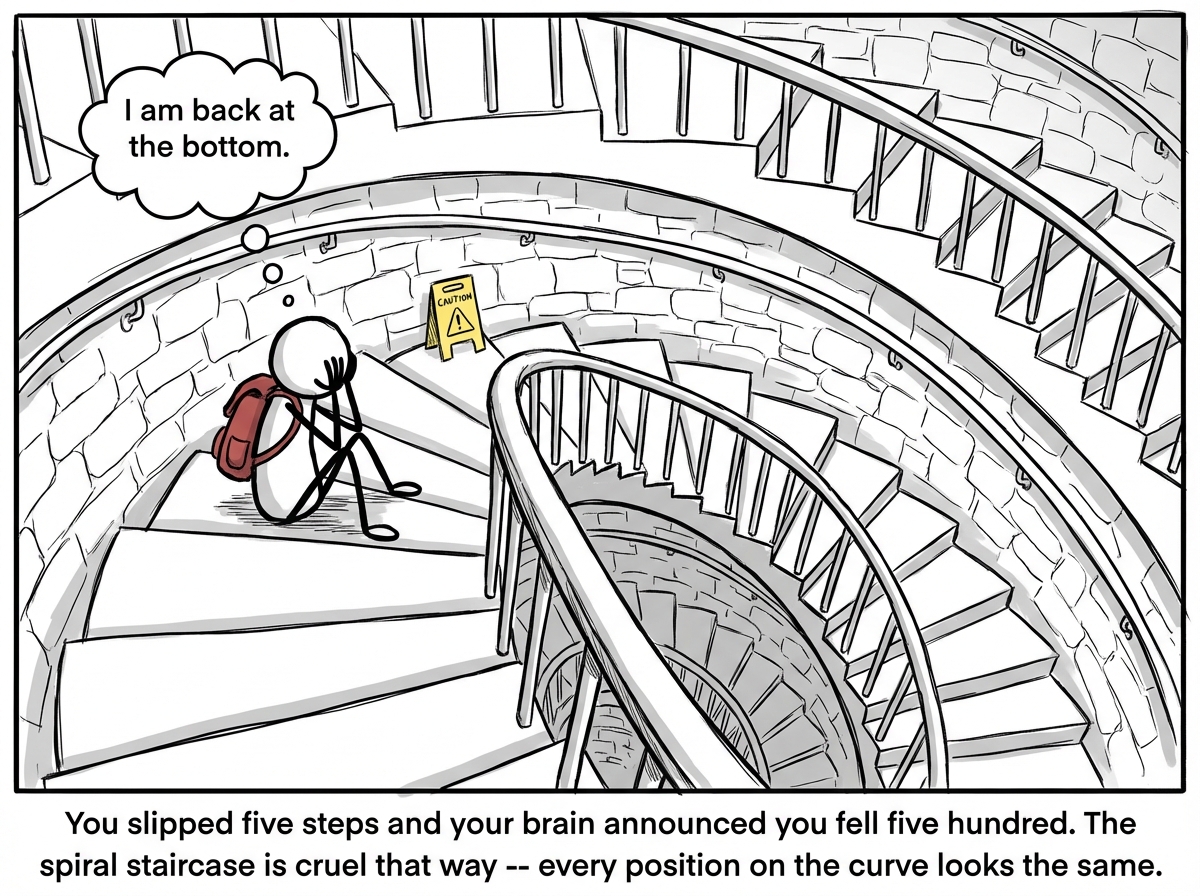
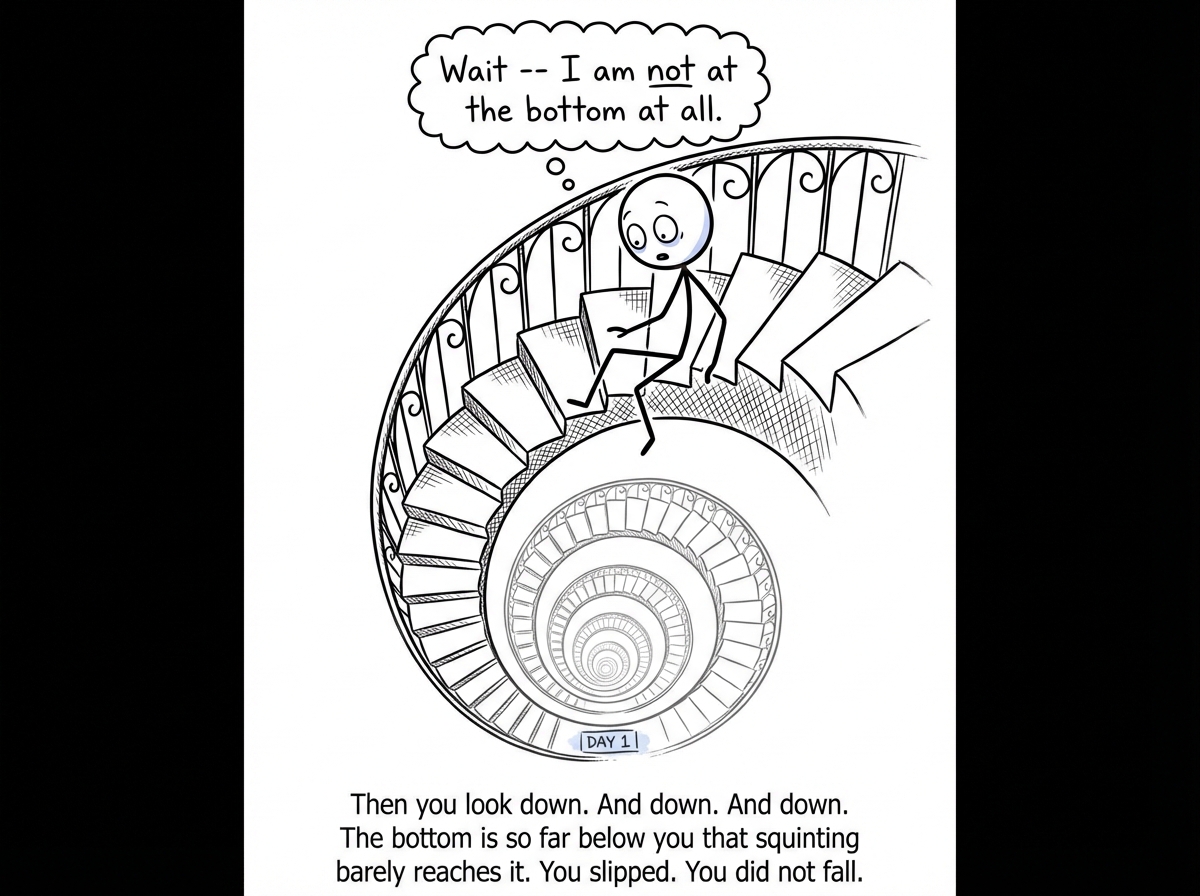
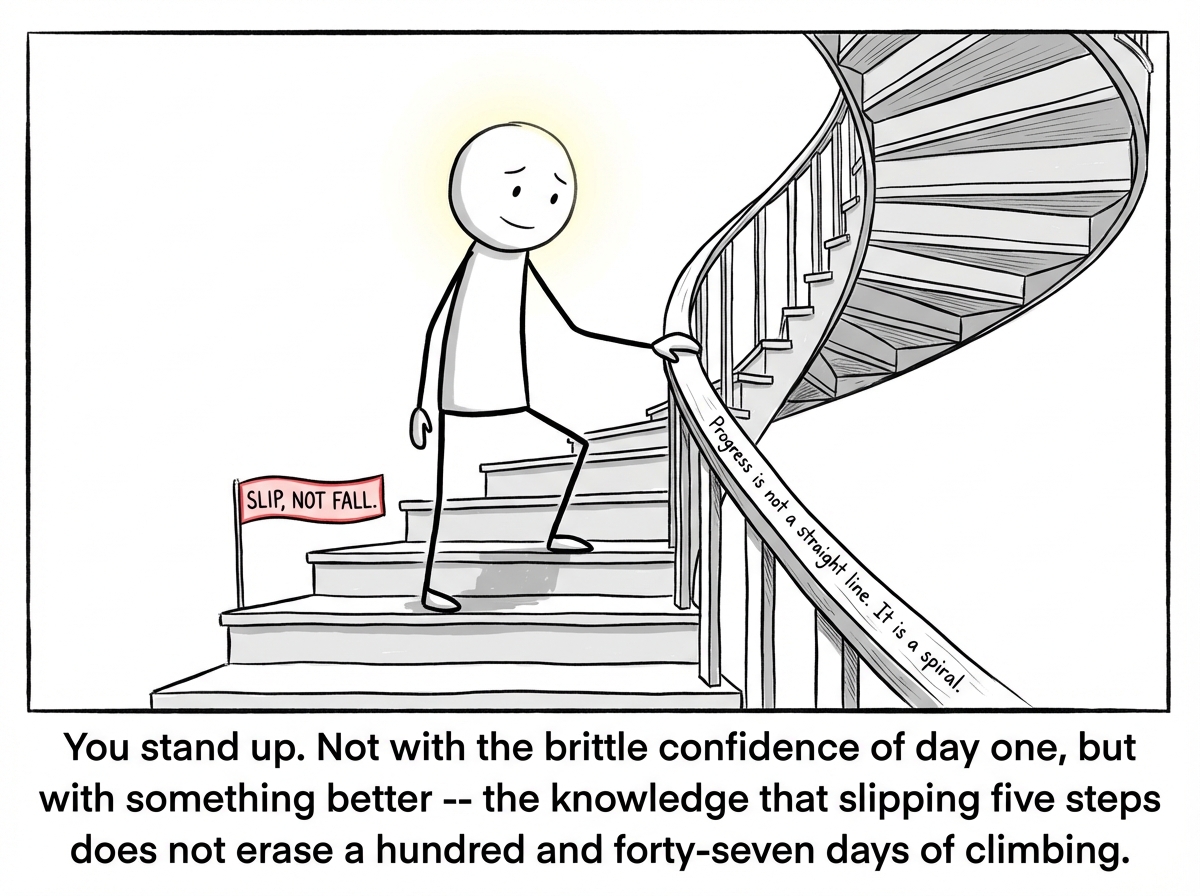
A person climbing a spiral staircase slips back a few steps and believes they are at the bottom again, until they look down and realize they are still much higher than where they started.
Explanation
Relapse triggers catastrophic thinking because the brain processes a slip through an all-or-nothing lens: one mistake erases all progress, and you are back at zero. Alan Marlatt called this the Abstinence Violation Effect -- the cognitive distortion that turns a single lapse into proof of total failure. But the spiral staircase reveals the lie. When you slip on a spiral staircase, you end up at the same position on the circle -- which feels like the same place -- but you are a full level higher than before. The skills you built, the awareness you gained, the neural pathways you rewired during months of progress do not vanish because of one stumble. Prochaska and DiClemente's Stages of Change model explicitly maps this: relapse is not a return to pre-contemplation. It is a return to an earlier stage, but with more knowledge, more self-compassion, and more practiced coping. The most dangerous part of a slip is not the slip itself -- it is the story you tell about it. 'I failed' leads to collapse. 'I slipped and I am still higher than I was' leads to recovery.
Key Takeaway
A slip on a spiral staircase takes you to the same spot on the circle -- but you are still a full level above where you started.