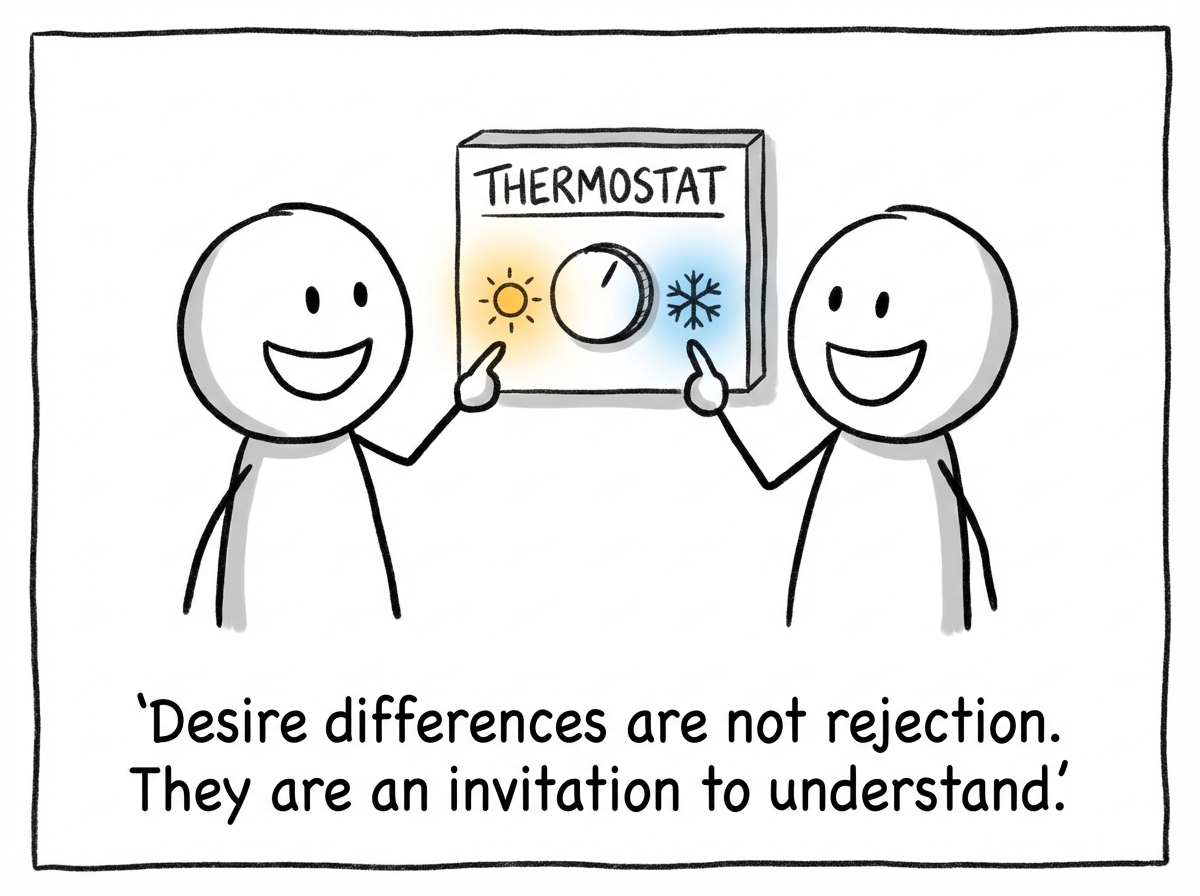
The Thermostat War
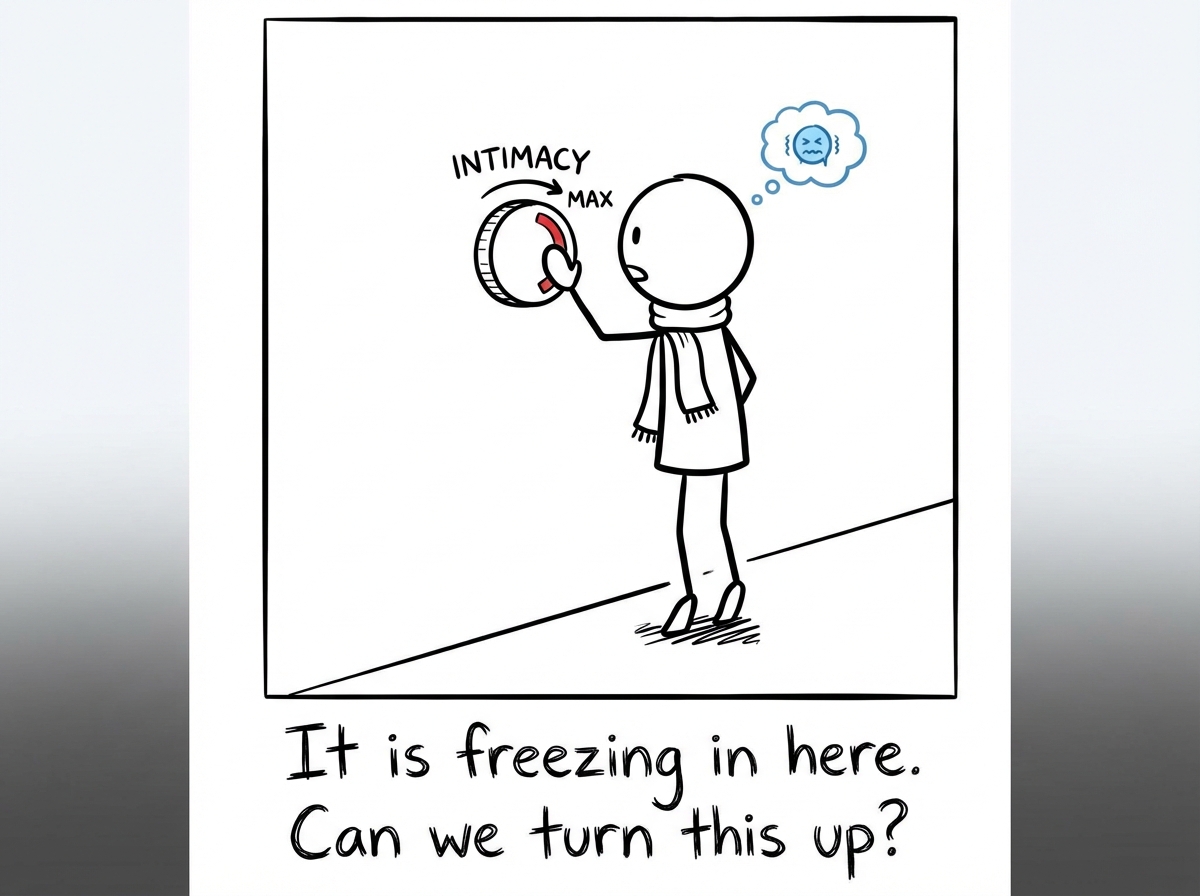
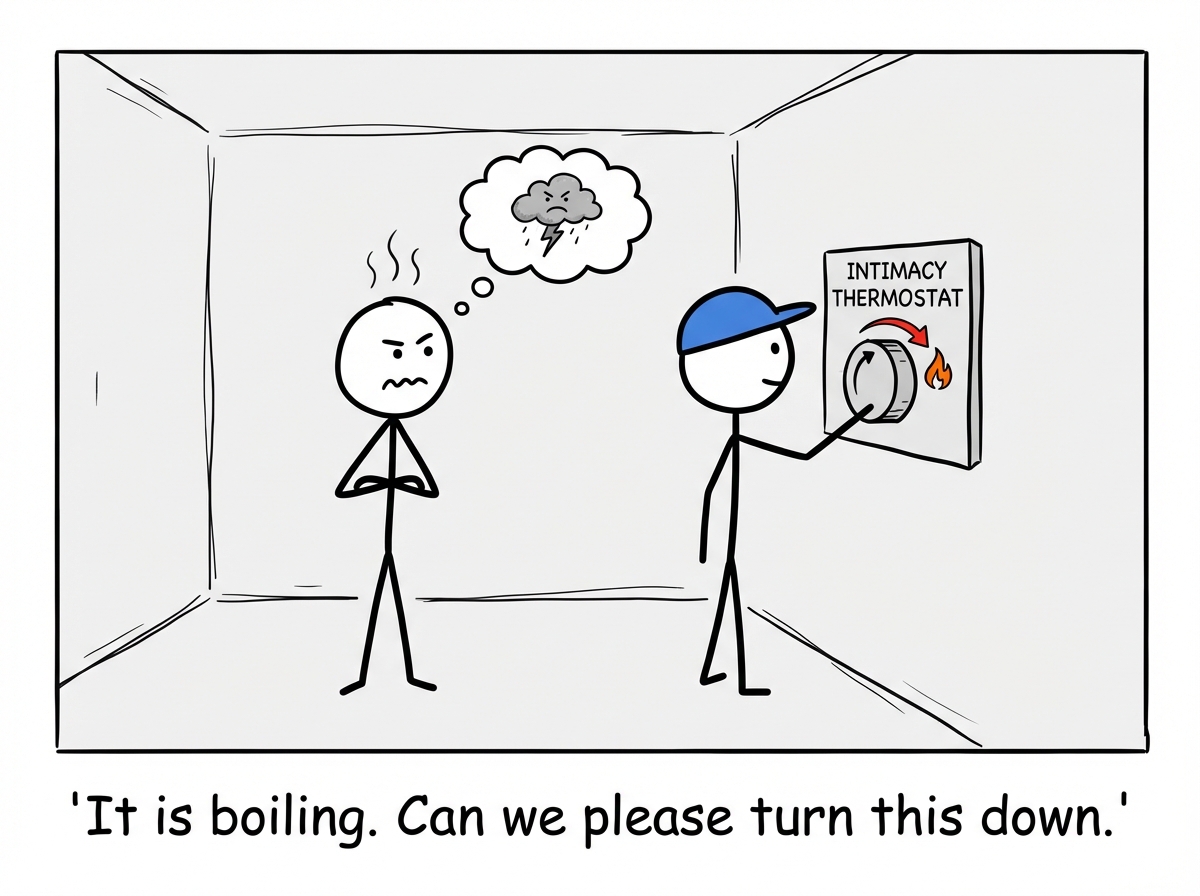
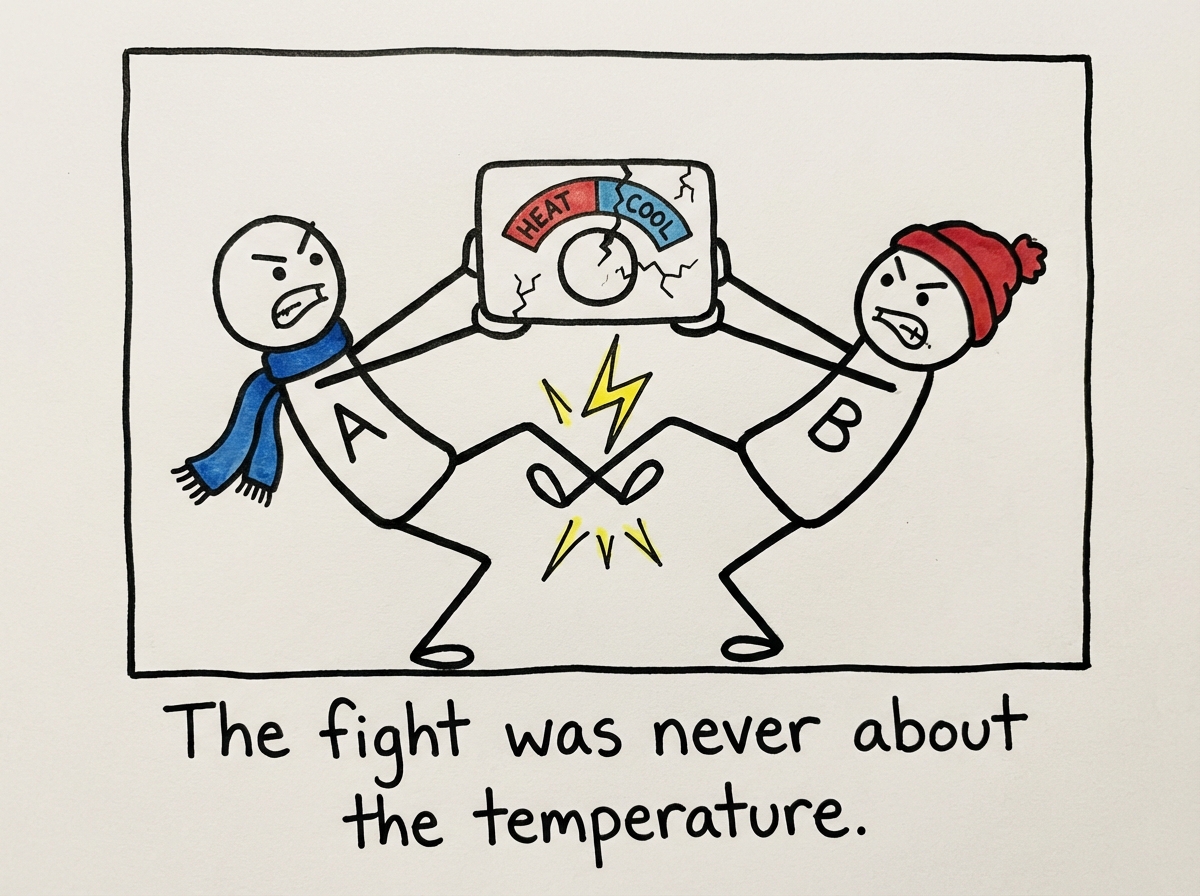
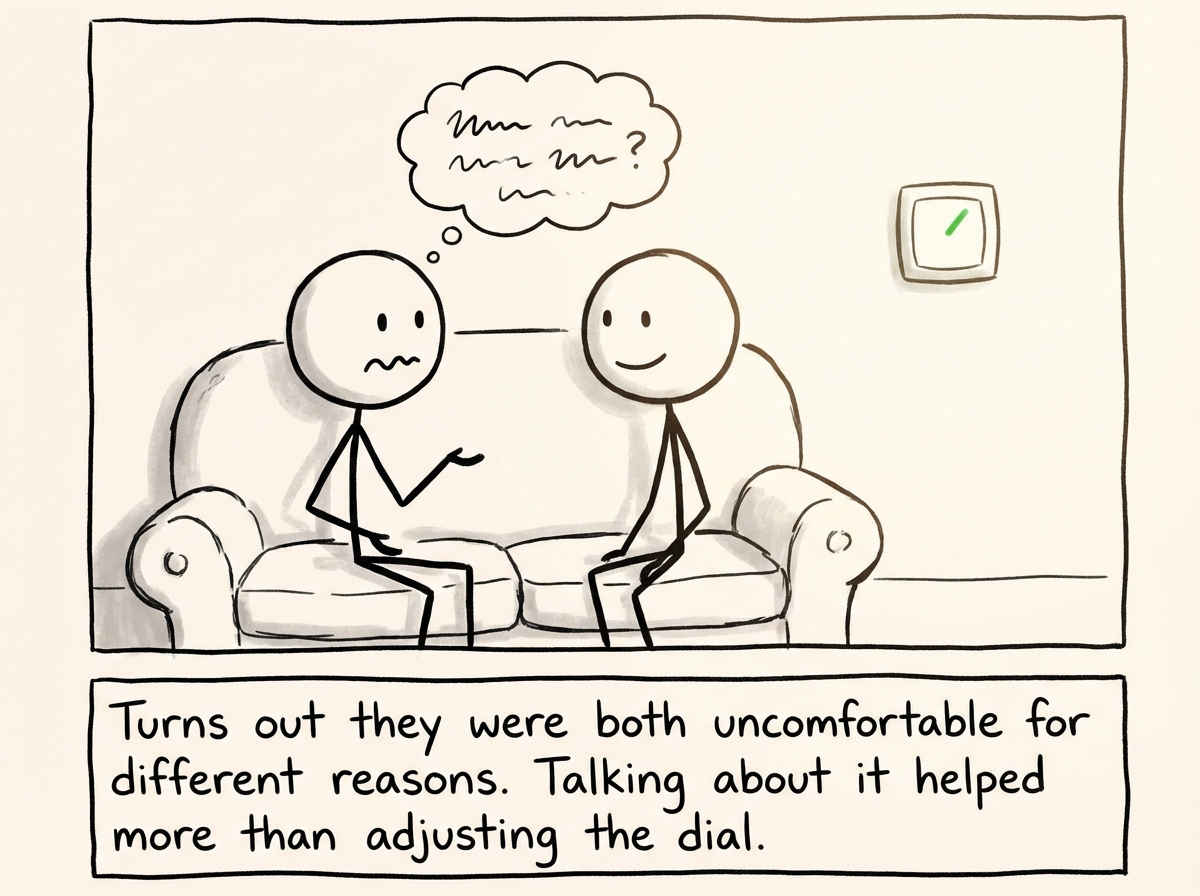
Two partners fight over a thermostat labeled 'Intimacy' -- one keeps turning it up, the other keeps turning it down -- until they realize they are both uncomfortable for different reasons and sit down to talk about the actual climate.
Explanation
Desire discrepancy is one of the most common conflicts in relationships, and one of the most poorly understood. It gets reduced to 'one person wants more, the other wants less,' which frames it as a simple math problem with a winner and a loser. But desire is not a fixed number on a dial. It is a responsive system shaped by stress, safety, attachment history, hormones, body image, exhaustion, and whether you feel emotionally connected to the person asking for closeness. The higher-desire partner often interprets the gap as rejection -- 'you do not want me.' The lower-desire partner often interprets the pressure as demand -- 'you only want one thing.' Both stories are wrong, and both stories cause real pain. Emily Nagoski's research on responsive versus spontaneous desire is critical here. Some people experience desire as a spark that ignites on its own; others need warmth, safety, and connection before desire shows up at all. Neither style is broken. The thermostat war ends not when someone wins, but when both partners stop arguing about the number and start talking about what temperature actually feels safe, desired, and sustainable for each of them. The goal is not a compromise that leaves both people lukewarm. The goal is understanding what each person's system actually needs.
Key Takeaway
The fight is never really about the number on the dial -- it is about what each person needs to feel safe enough to want closeness.