
Skip to content

Desire Discrepancy

When one partner wants more intimacy and the other wants less, and both feel like something is wrong with them.

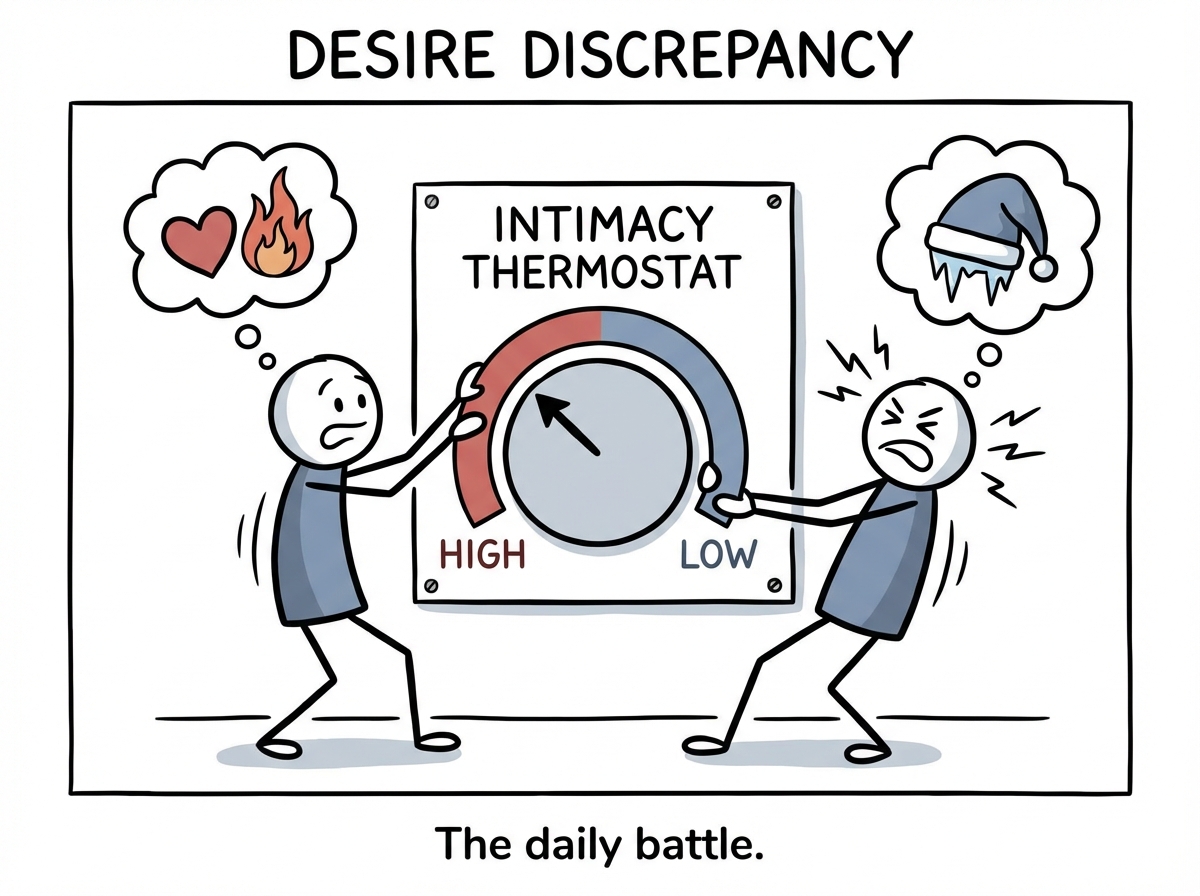
Desire discrepancy is one of the most common issues couples face, and one of the most misunderstood. It is the gap between what one partner wants in terms of sexual or physical intimacy and what the other wants -- in frequency, type, or timing. The knee-jerk interpretation is that someone's attraction has faded, but that is almost never the full story. Desire is not a fixed drive like hunger. It is a responsive system shaped by stress, emotional safety, attachment patterns, body image, past trauma, medication, hormonal shifts, and whether you had to clean up after the kids for the third time today. Researcher Emily Nagoski's work on responsive versus spontaneous desire has been a game-changer here: some people feel desire first and then seek intimacy, while others need intimacy, safety, or arousal to be underway before desire kicks in. Neither style is broken. The real damage happens not from the discrepancy itself, but from the stories each partner tells about what it means. The higher-desire partner feels rejected and undesirable. The lower-desire partner feels pressured and broken. Both withdraw, and the gap widens. Bridging it requires dropping the scoreboard and getting curious about what desire actually needs in order to show up.

Key Takeaway

Desire discrepancy is not a sign that something is wrong with either partner -- it is an invitation to get curious about what desire actually needs to show up.

Desire Discrepancy Cartoons