Good Vibes Only
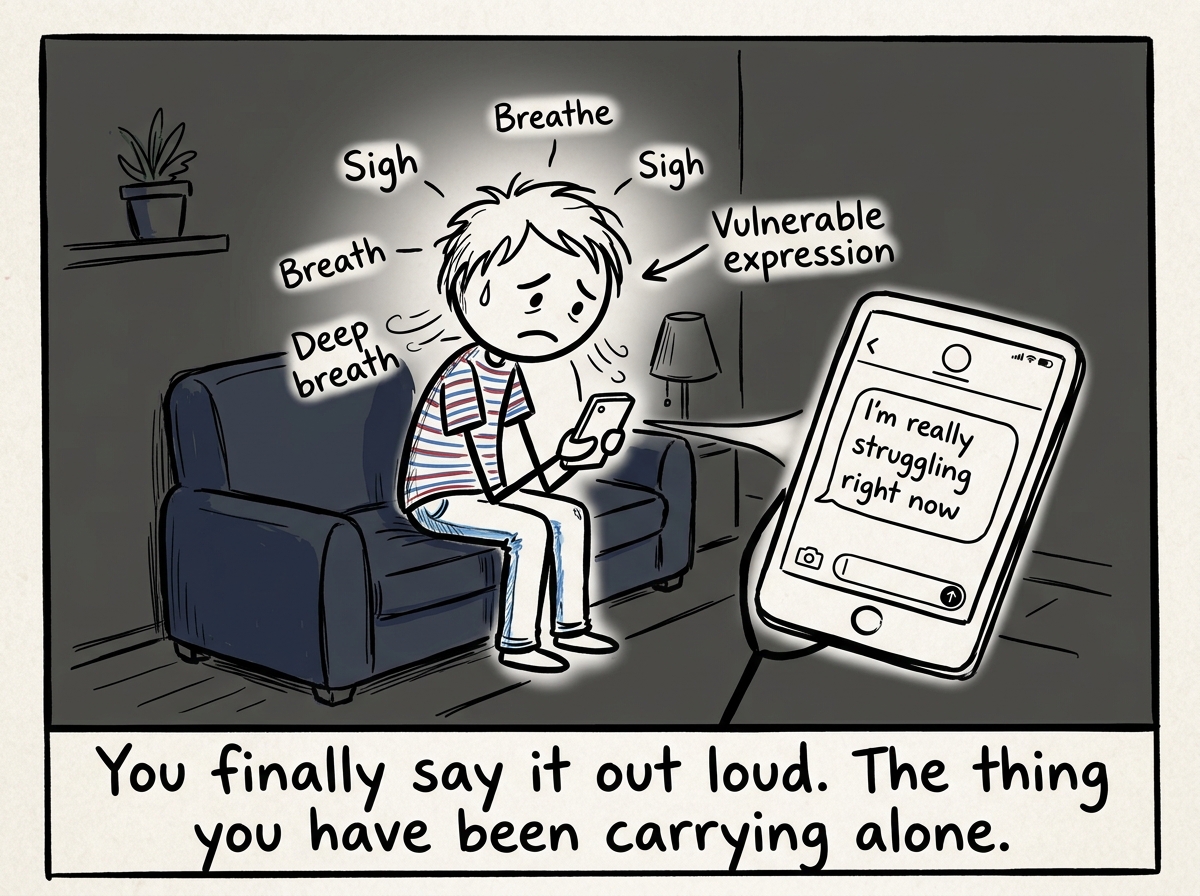
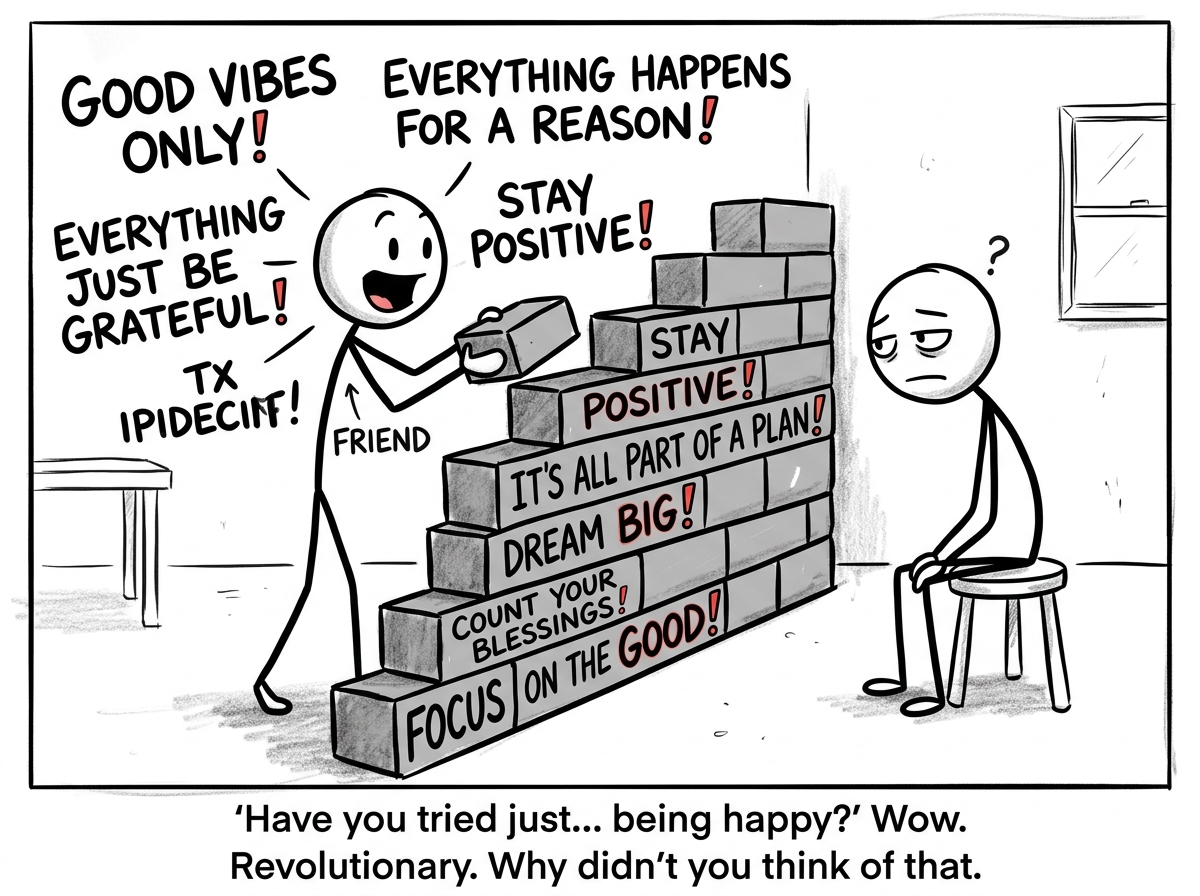
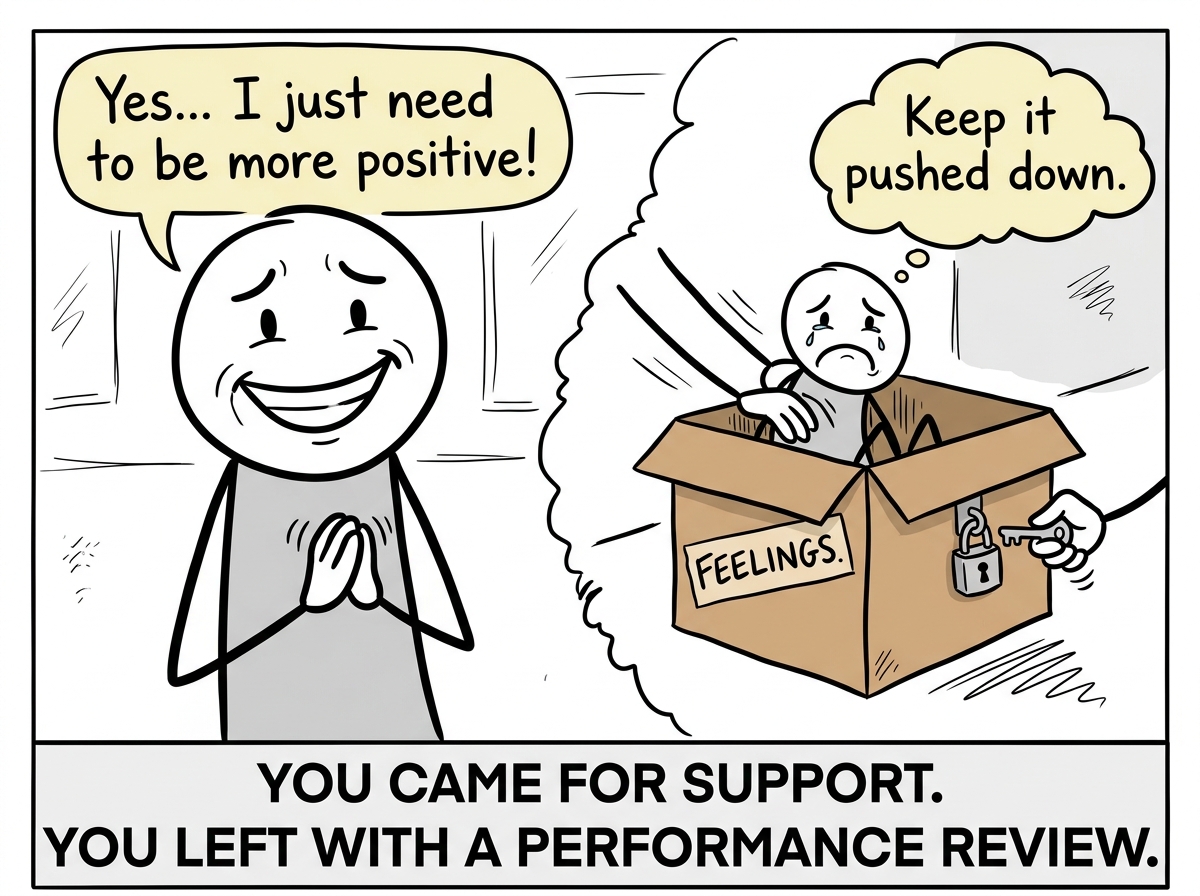
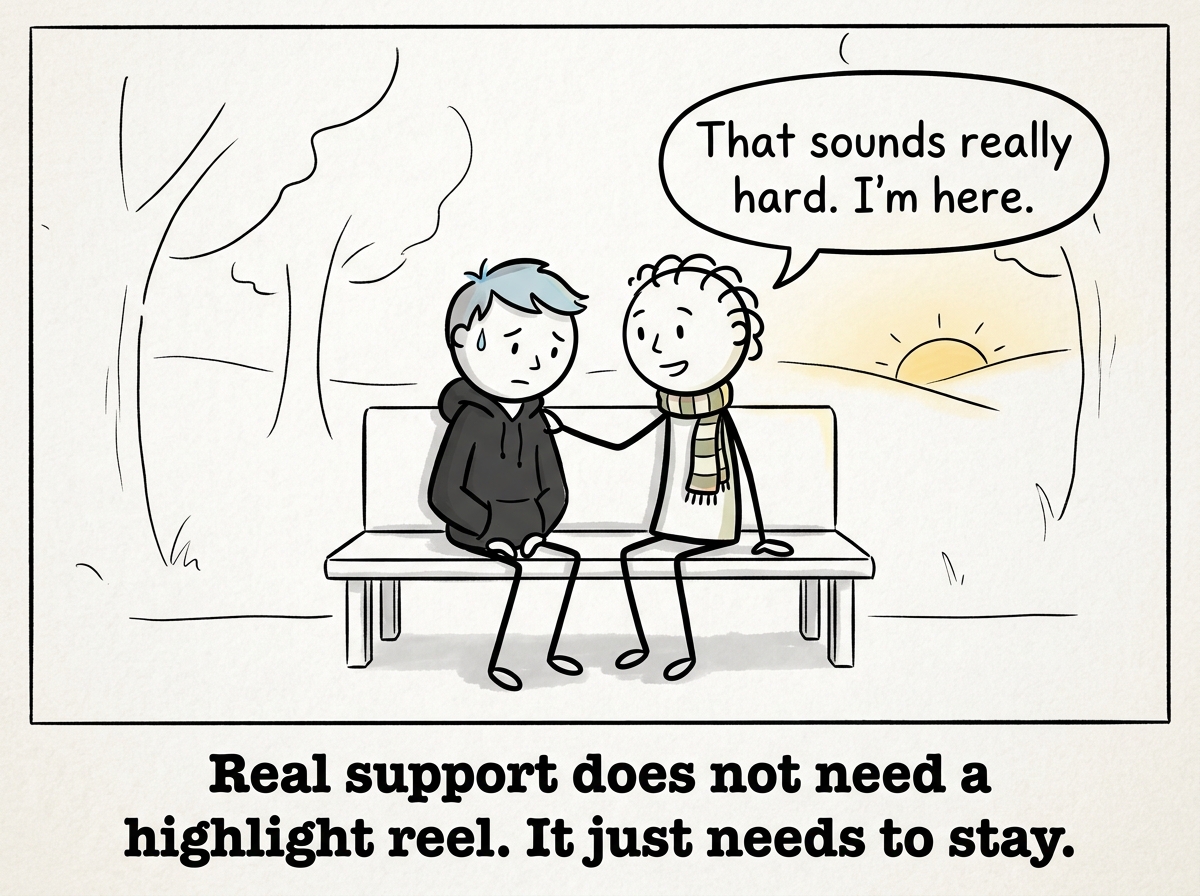
A person tries to share that they are struggling and gets hit with a wall of relentless positivity that leaves them feeling worse than before they opened up.
Explanation
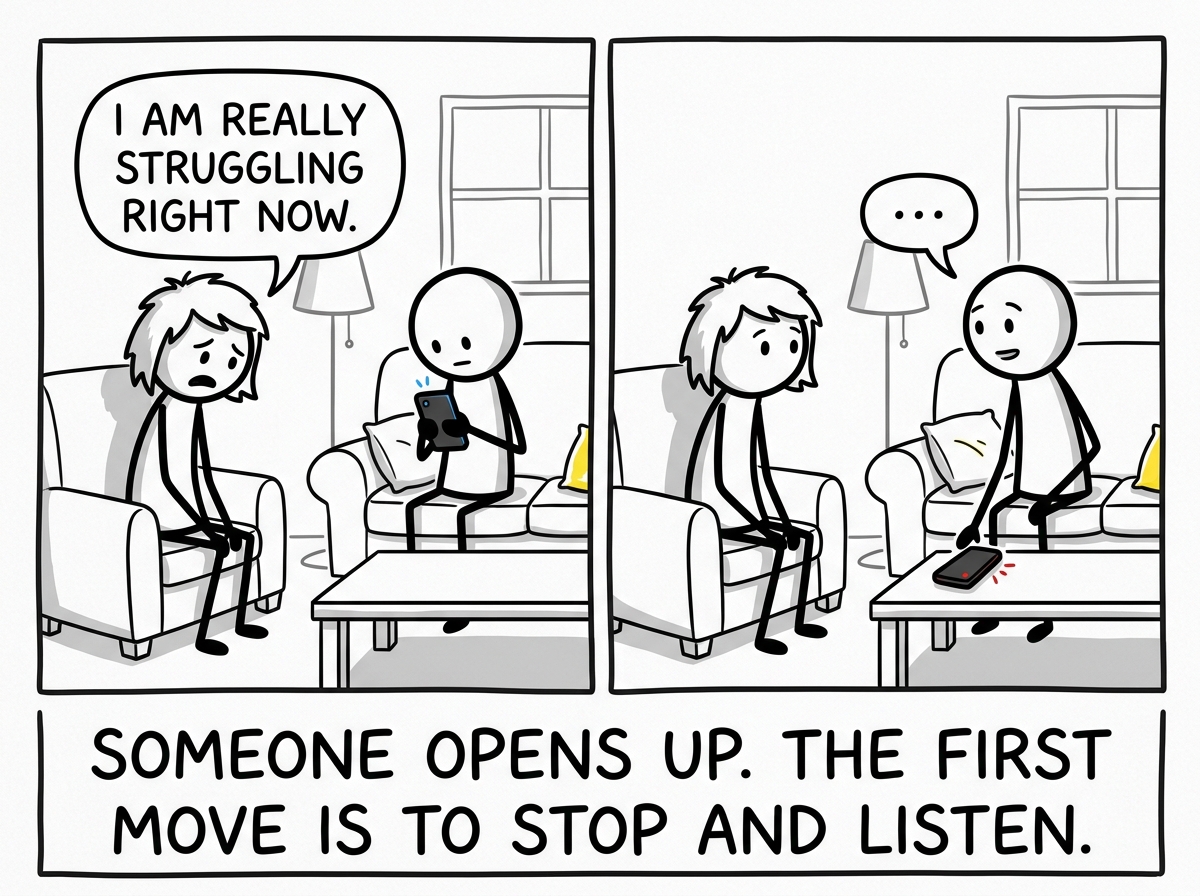
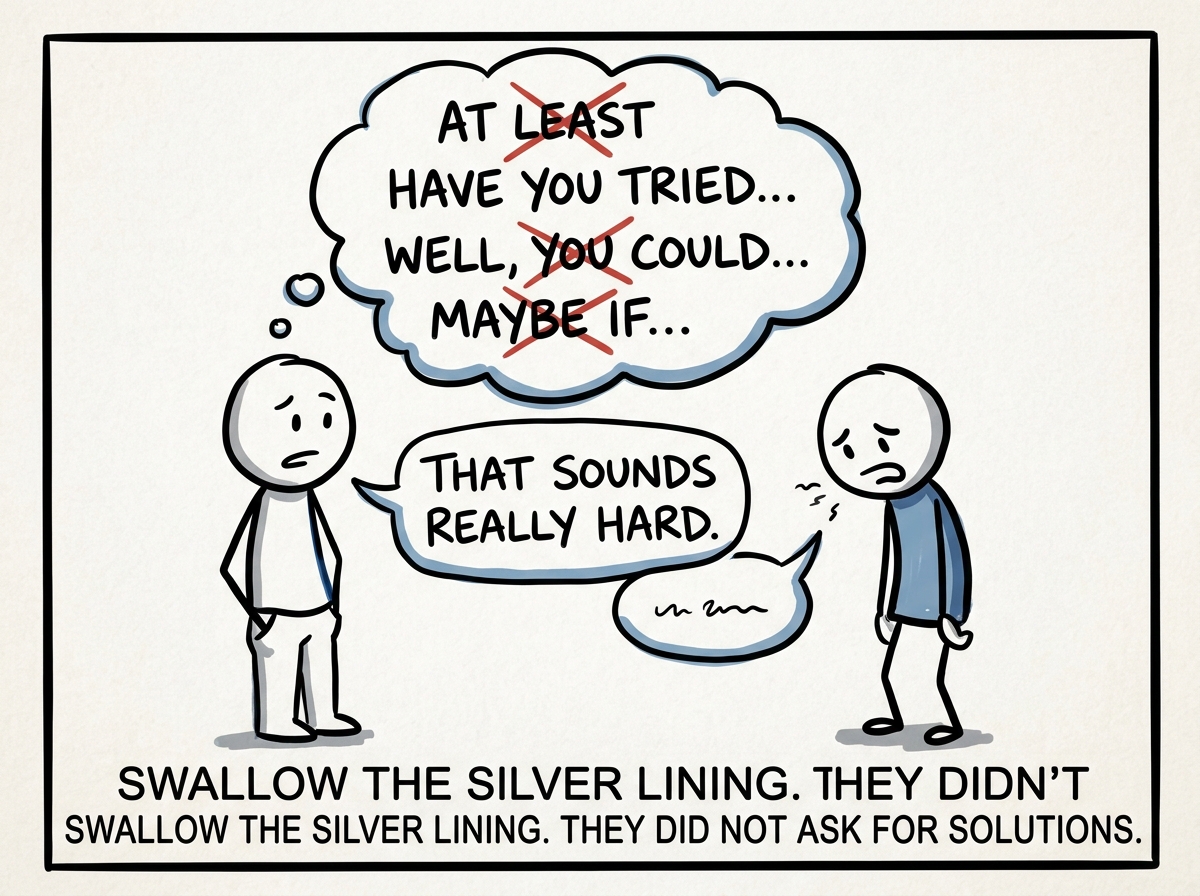
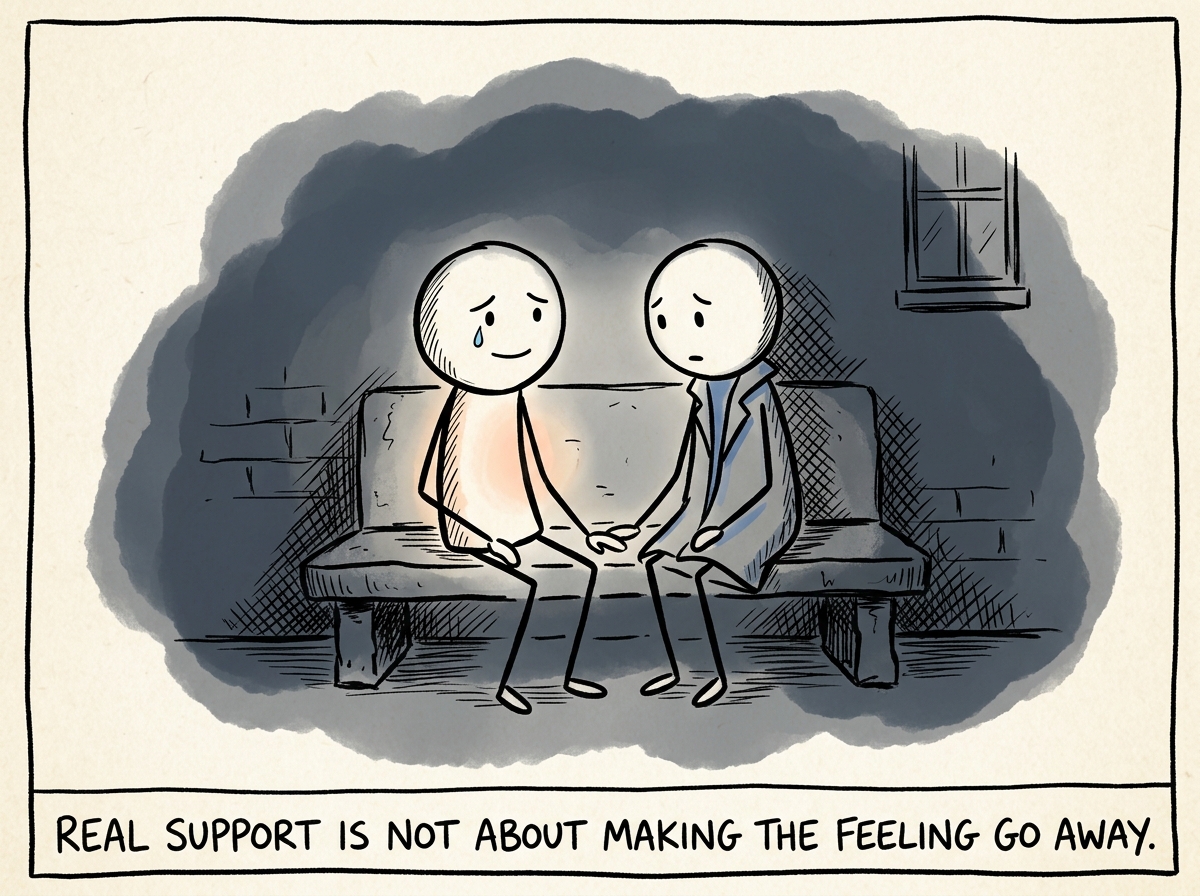
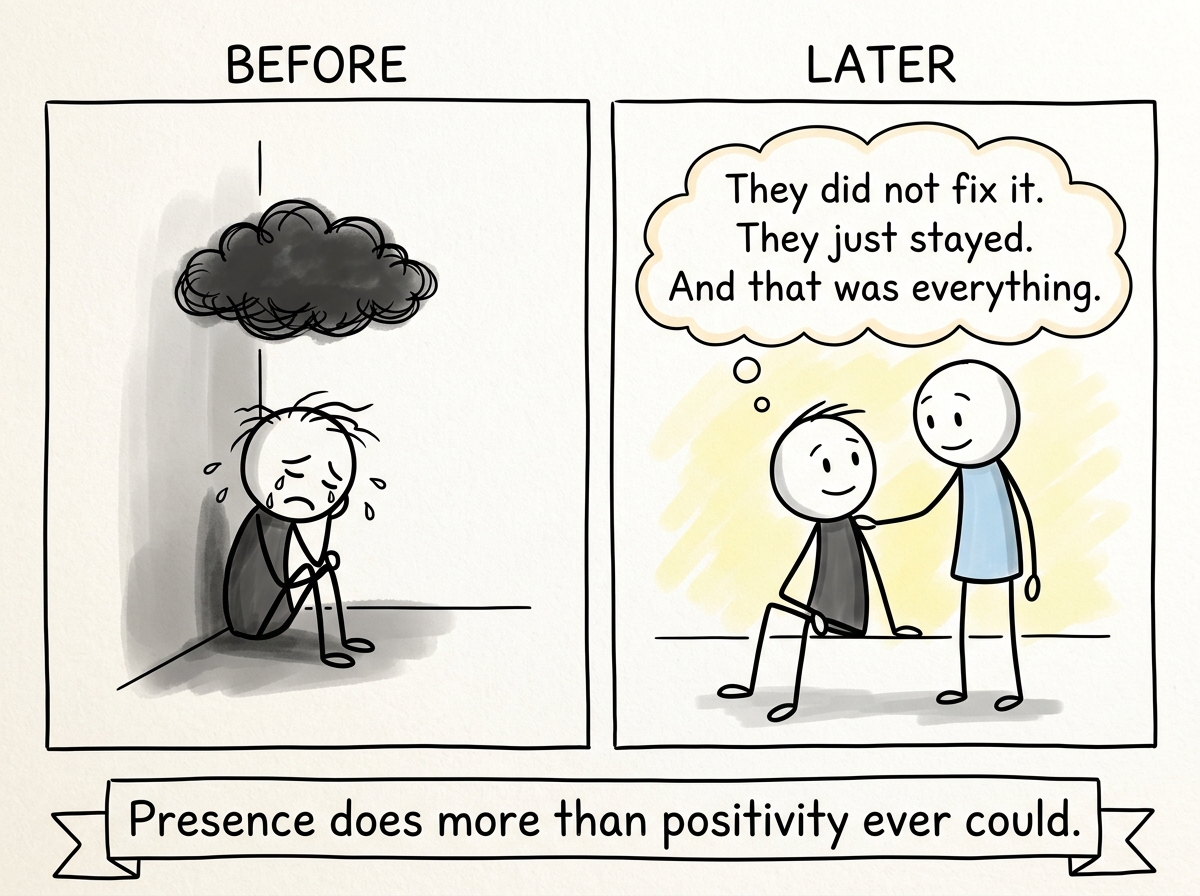
You finally work up the courage to tell a friend you are having a hard time. Before you even finish your sentence, the responses start flying: 'Everything happens for a reason.' 'Just focus on the positive.' 'Good vibes only!' Each one lands like a door closing. By the end of the conversation, you are smiling and agreeing that yes, you just need to be more grateful. You hang up feeling lonelier than when you called. This is toxic positivity in action. It is not the same as genuine optimism, which acknowledges difficulty while holding hope. Toxic positivity refuses to acknowledge difficulty at all. Psychologist Susan David's research on emotional agility shows that when people are told to suppress negative emotions, those emotions do not weaken -- they amplify. The pressure to be positive creates a paradox: you are now dealing with the original pain plus the shame of not being able to think your way out of it. The person offering the positivity usually means well, but they are prioritizing their own comfort over your honesty. Healthy support looks radically different from toxic positivity. It sounds like 'That sounds really hard' instead of 'At least it is not worse.' It makes space for the full range of human emotion instead of curating for only the pleasant ones. If you find yourself reflexively reaching for a silver lining when someone is in pain, pause. They do not need you to fix their feelings. They need you to sit with them in the mess.
Key Takeaway
If someone can only support you when you are happy, that is not support -- it is a comfort zone.