The Gratitude Guillotine
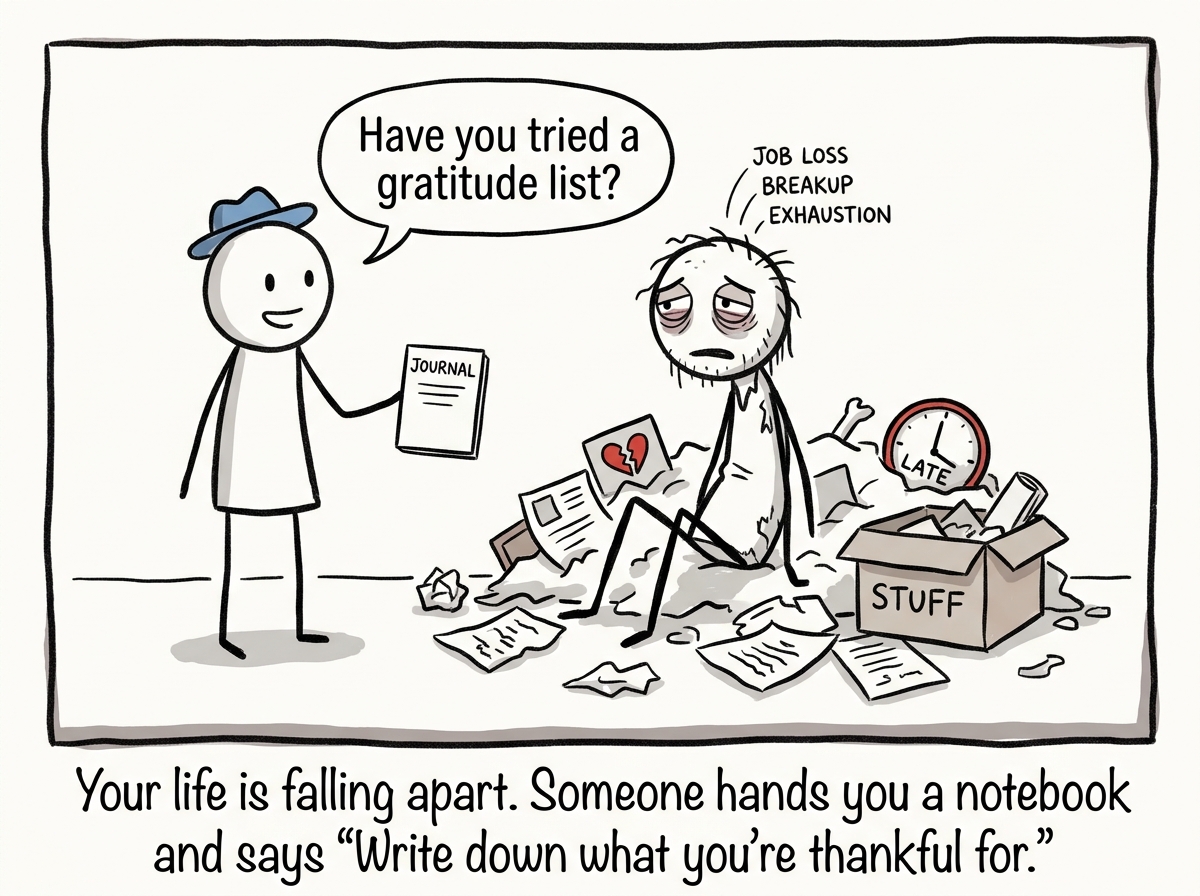
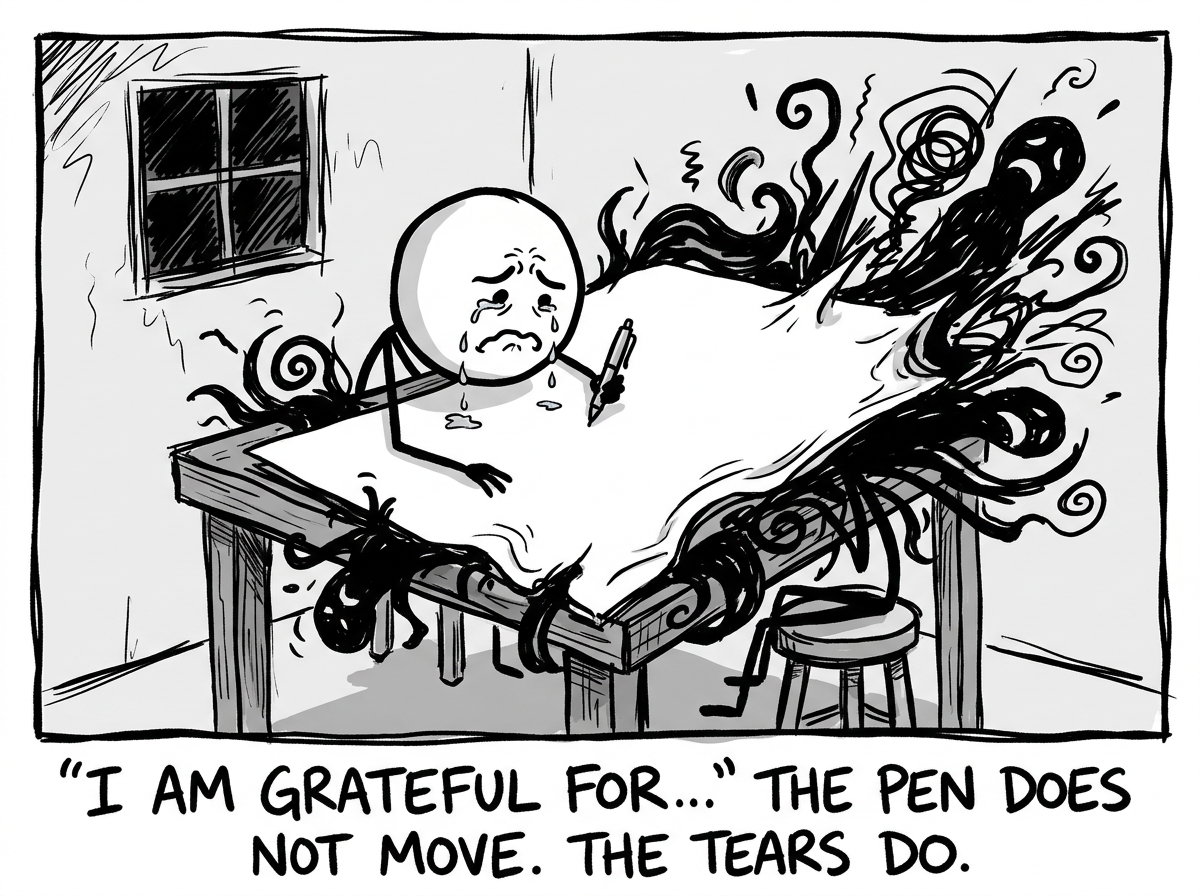
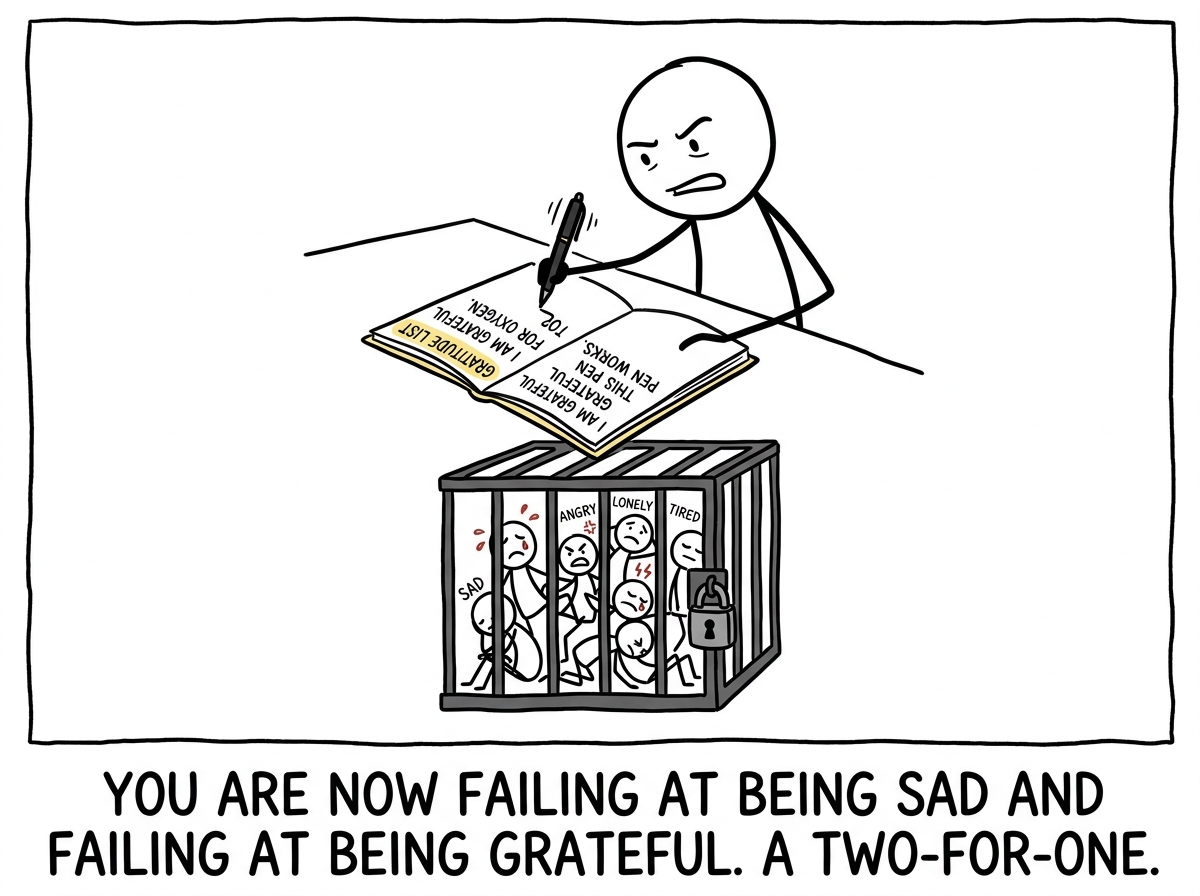
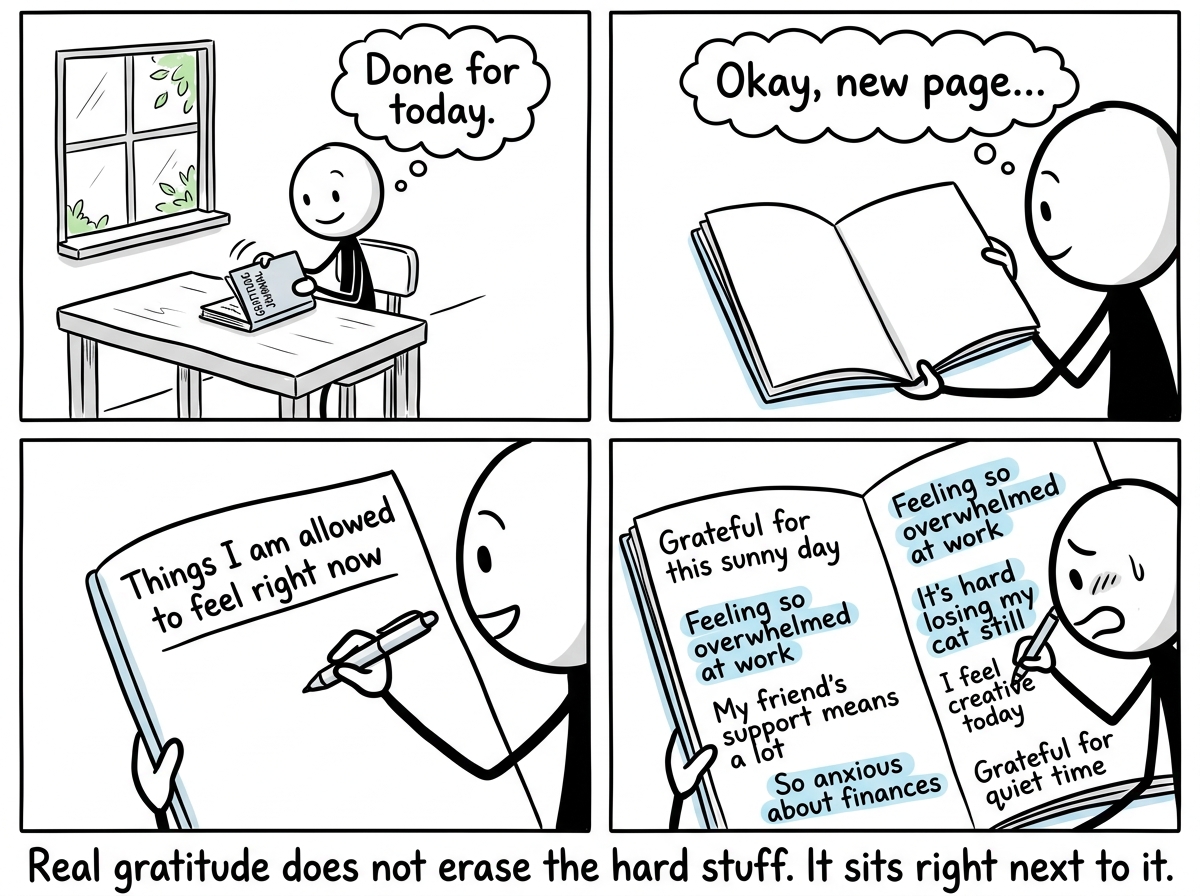
A person going through a genuinely hard time is told to write a gratitude list, and the exercise becomes another way to silence the pain instead of processing it.
Explanation
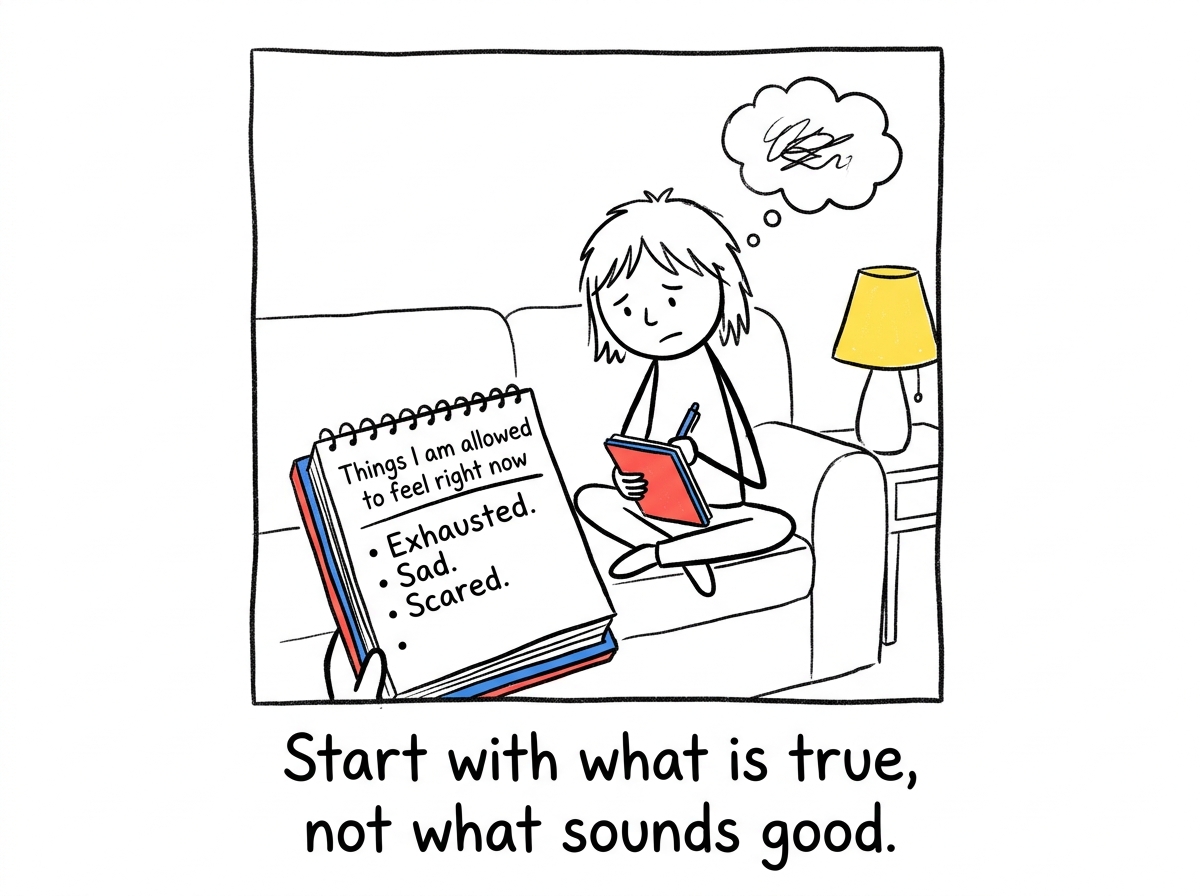
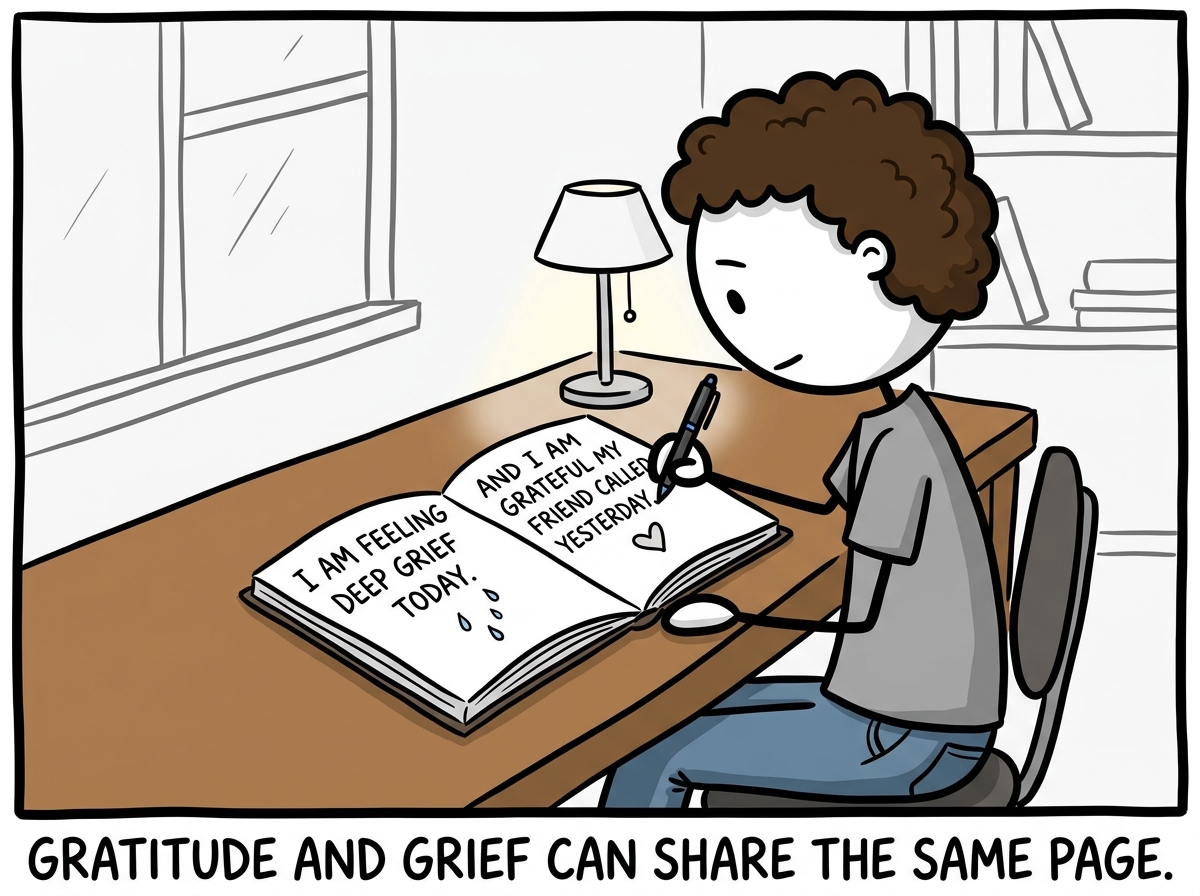
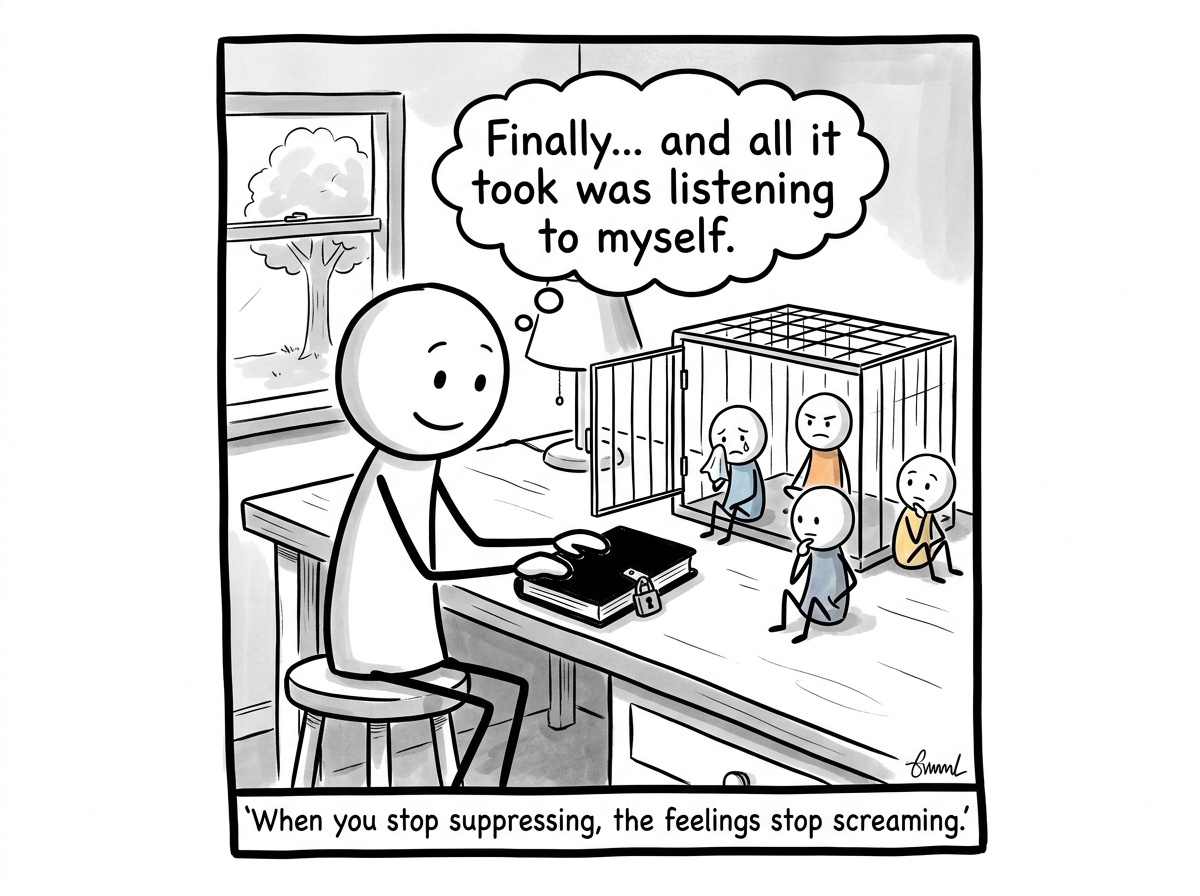
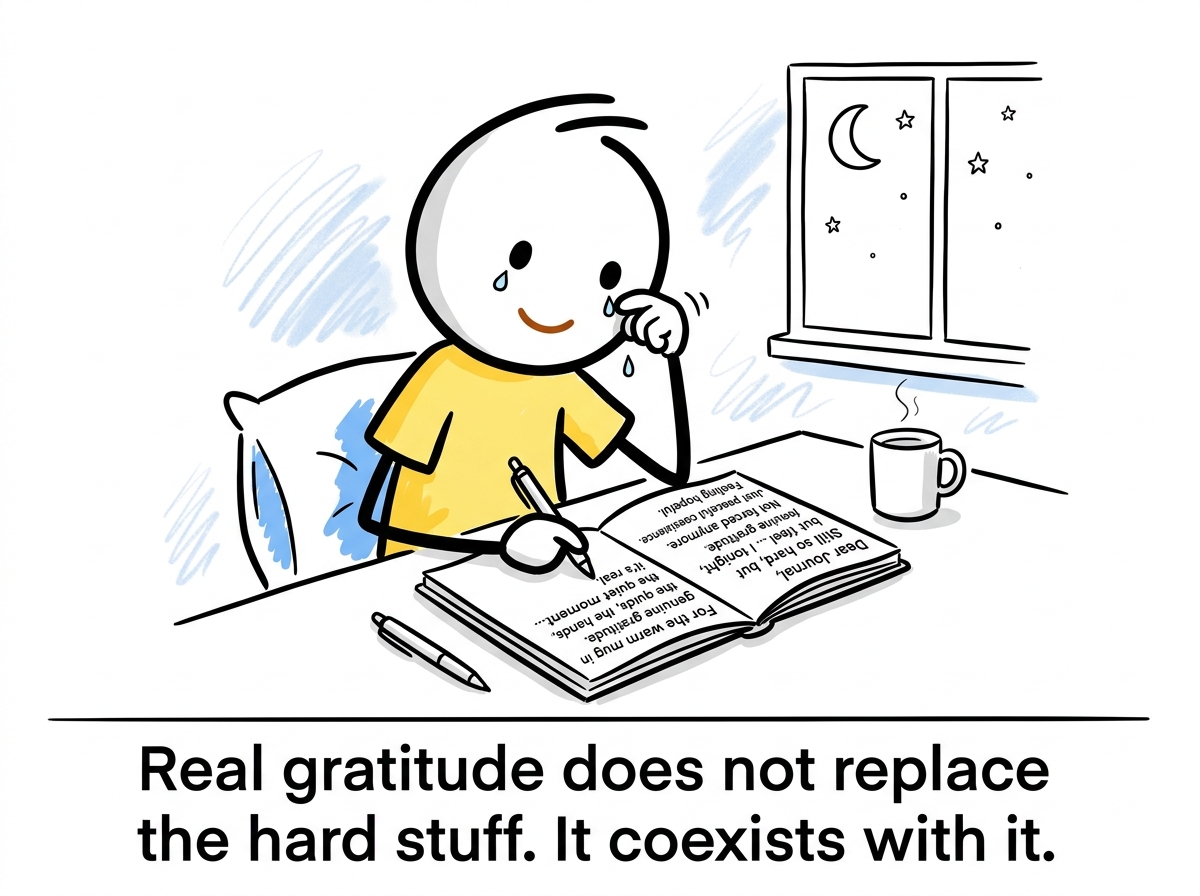
You are going through the hardest year of your life. You lost your job, your relationship ended, and you are barely sleeping. Someone tells you to start a gratitude journal. So you sit down and write: 'I am grateful for my health.' But your health is suffering from the stress. 'I am grateful for my friends.' But you have been too ashamed to call them. The exercise that was supposed to lift you up now feels like a test you are failing at. You cannot even be sad correctly. Gratitude practices are evidence-based and genuinely helpful -- when used appropriately. The problem arises when gratitude is weaponized as a bypass for pain. Psychologists distinguish between authentic gratitude, which coexists with difficult emotions, and performative gratitude, which is used to suppress them. When someone tells you to be grateful while you are drowning, they are not offering a life raft -- they are telling you the water is not that deep. Research on emotional processing shows that premature reframing -- trying to find the silver lining before you have fully acknowledged the storm -- actually delays recovery. Healthy gratitude and honest grief can share the same page. You can be grateful for what you have and devastated by what you have lost -- simultaneously, without contradiction. The key is sequence: feel the pain first, process it, and then let gratitude emerge naturally rather than using it as a lid to slam over emotions that need air. Gratitude is medicine. But like all medicine, the dose and the timing matter.
Key Takeaway
Gratitude is not supposed to be a gag order on your pain -- if it silences your grief, it is not gratitude, it is suppression.